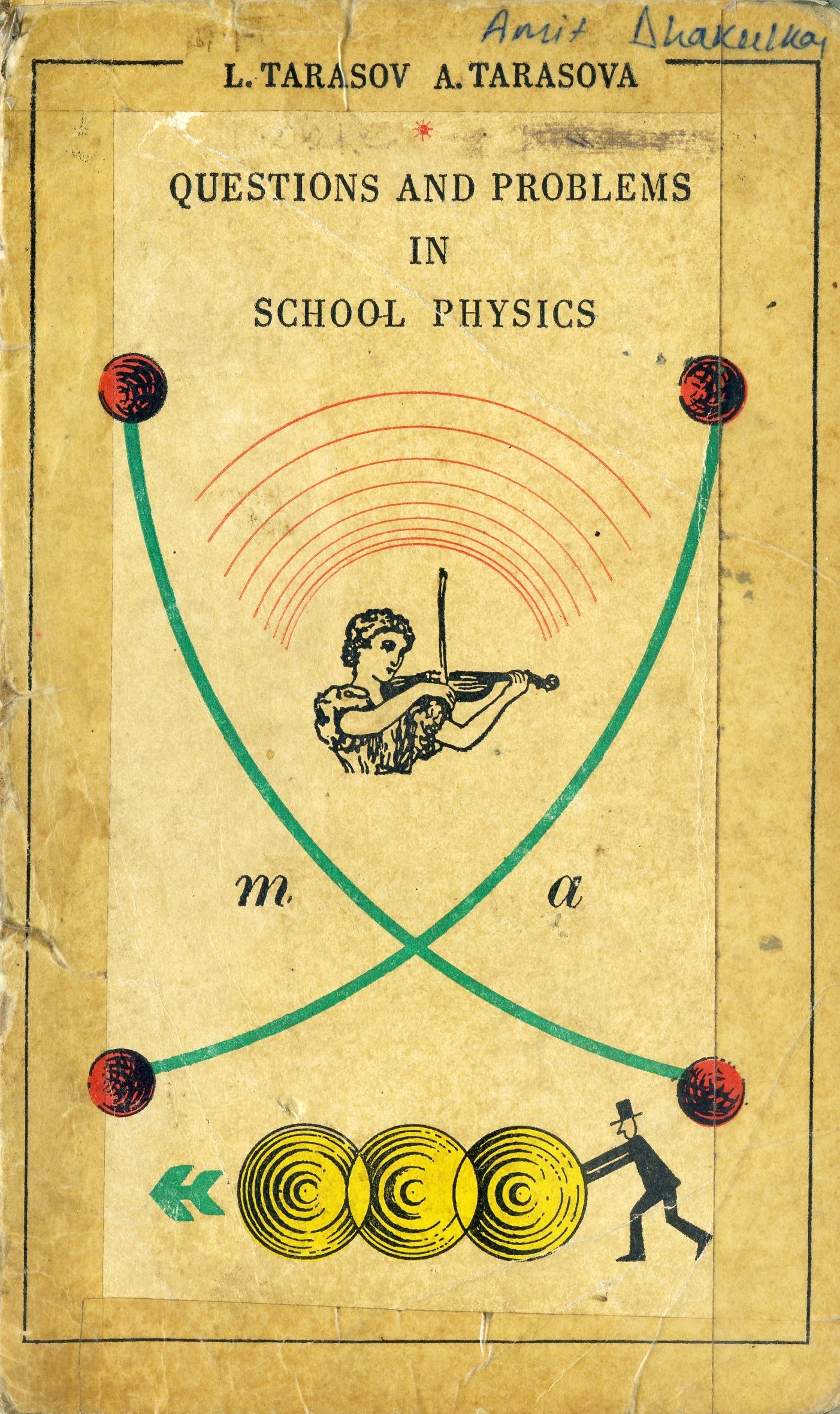
One of the very first physics books that I had purchased in Nagpur from the used book sellers which was not a story book was a book by Aldina Tarasova and Lev Tarasov. The title of the book was Questions and Answers in School Physics. The book was written in style of dialogue between a teacher and students, with misconceptions of the students explored in all branches of basic physics at the school level.
To put it in the words of the authors themselves:
(Reader) will find this text to be perhaps more like a freely told story or, rather a freely conducted discussion.
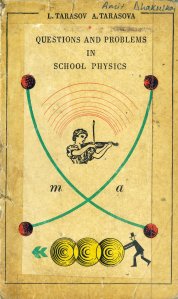
This is a book on physics education. But apart from this book there are other wonderful books by these authors. The English edition of this book was published in 1973 and was translated from the Russian by Nicholas Weinstein.
You can download this wonderful book from here and here.
Electronic copy typeset in LaTeX here and here.
I do not know if there are translations of this book in Indian languages, if you know of any please let me know.
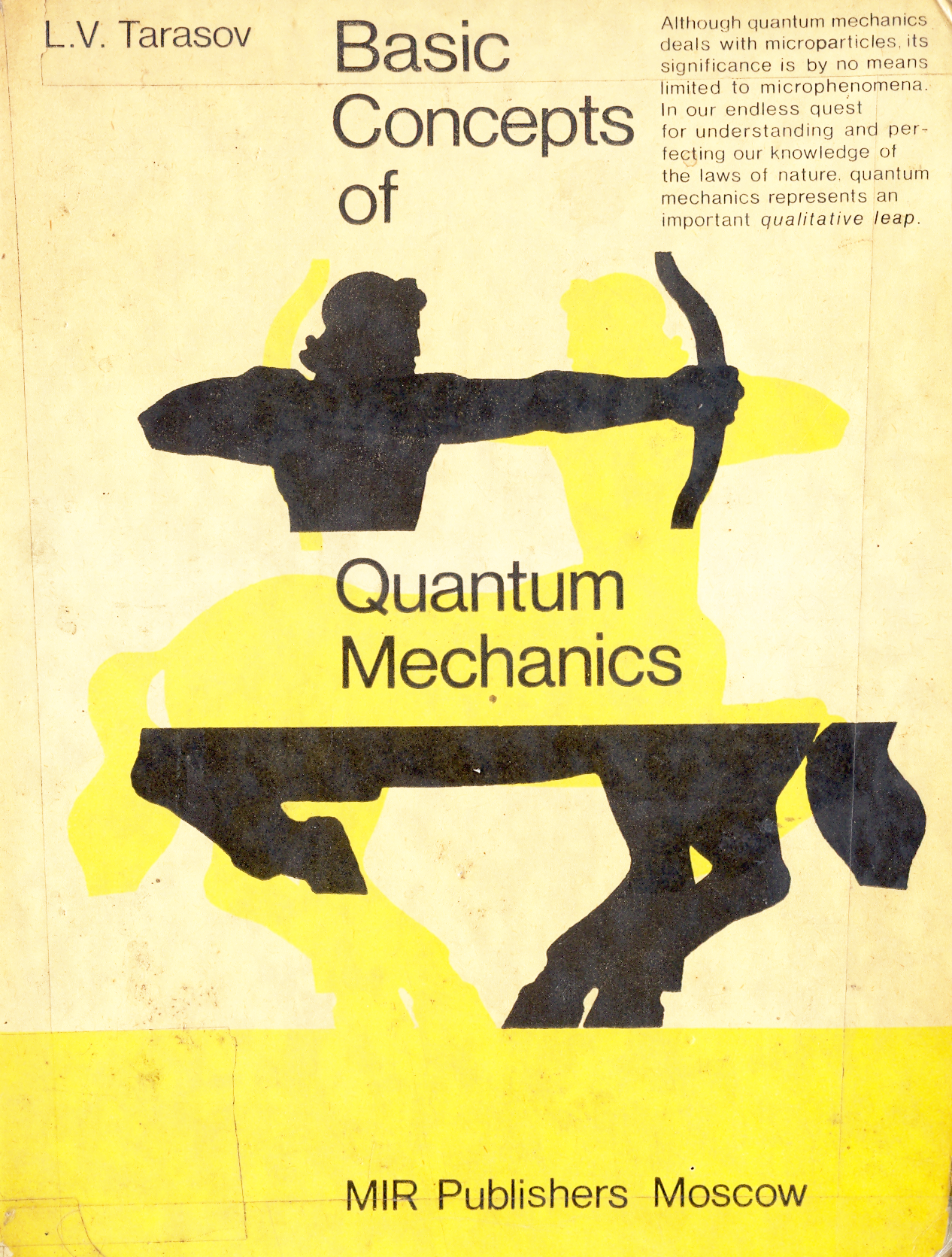
The second book that I got of Tarasov was Basic Concepts of Quantum Mechanics. This is again a gem of a book. Many of my misconceptions in Quantum Mechanics got cleared from this book. The book also has prelude and interlude where a classical physicist and a quantum physicist (the author) argue about many interesting physical and philosophical matters pertaining to physics.
The aim of this book is to acquaint the reader with the concepts and ideas of quantum mechanics and the physical properties of matter; to reveal the logic of its new ideas, to show how these ideas are embodied in the mathematical apparatus of linear operators and to demonstrate the working of this apparatus using a number of examples and problems of interest to engineering students.

The English edition was published in 1980. I definitely know that there is a Bengali version of this book, but am unaware of any other translations in Indian languages. Please let me know any other Indian languages that you are aware of.
You can download this book from here and here.
Electronic copy typeset in LaTeX here and here.
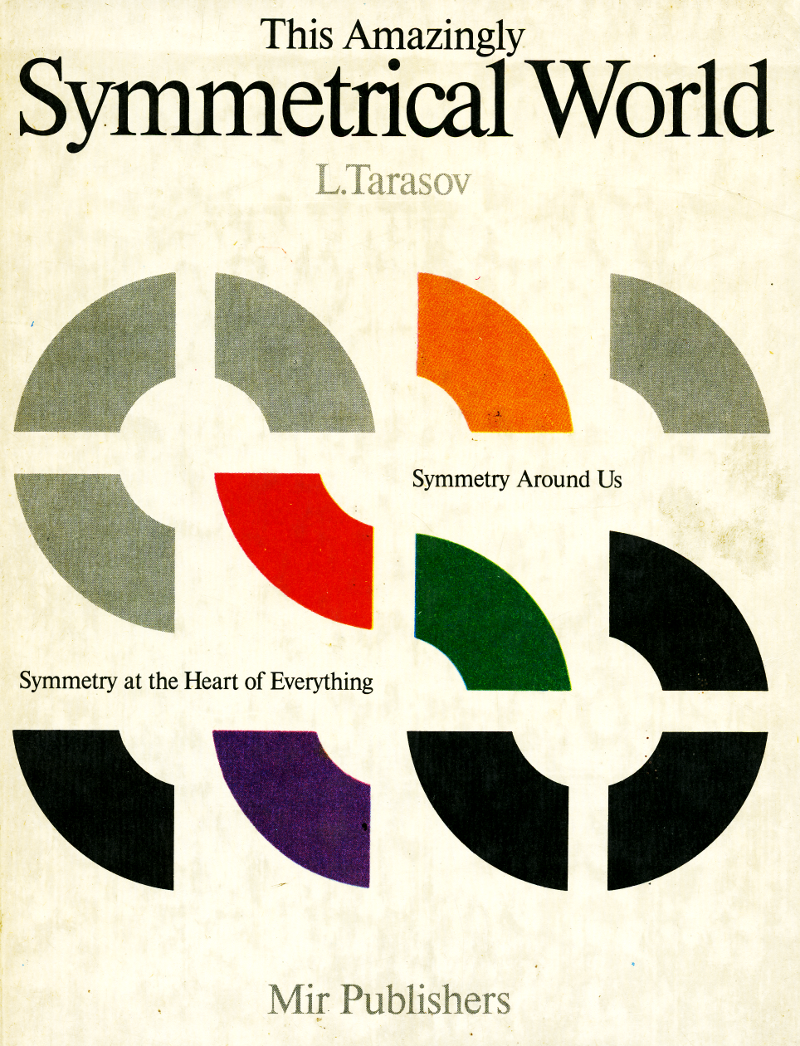
One more amazing book by Lev Tarasov is titled This Amazingly Symmetrical World. This book explores the concept of symmetry starting from everyday concepts and going all the way upto symmetry in Quantum Mechanics. This is one of the few Mir books which were technical and was printed completely in color. I know only of English hardbound edition of the book. I do not know if translations in other Indian languages exist.
You can get the book here and here.
Electronic copy typeset in LaTeX here and here.

Calculus by Tarasov is one of the most elusive books that I have been after. I was told by someone that this book exists, I did not see any advertisement of this book, in the back of any book. And I searched in vain in all the libraries and contacts that I have, but could not find it. Then a friend of mine located it through the wonderful internet resource called http://worldcat.org . This particular website has catalogs of books from the thousands of libraries of the world, and what is interesting is that, if your library is part of their network then you can get books from other libraries as inter-library service. So he got hold of the book (in a month’s time ) and send me a scanned copy.
Thanks to Anish.Dot for the scan.
You can download the book from here and here.
Electronic copy typeset in LaTeX here and here.
Another copy of the book can be obtained here. Thanks to Dr. Narayanan for this copy.

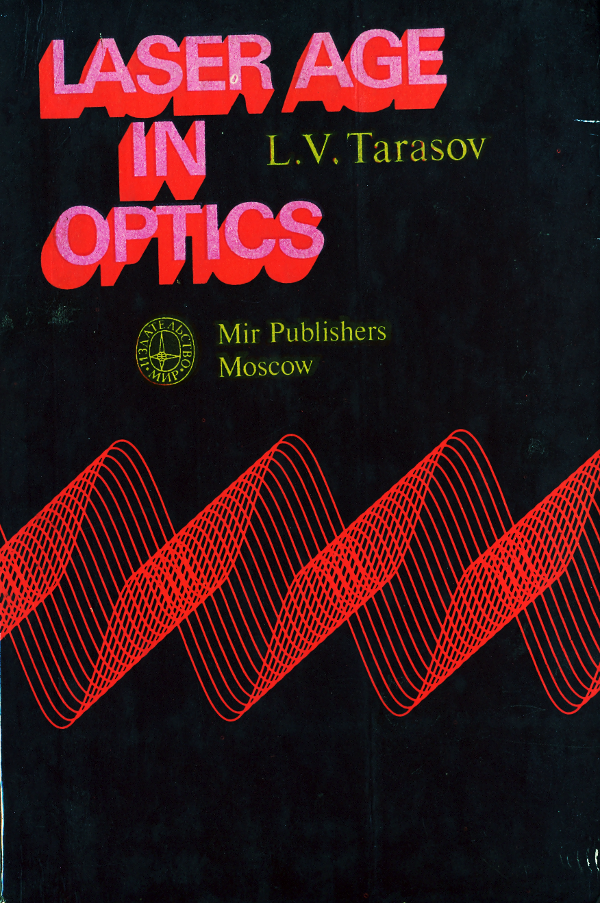
Lev Tarasov has also written 3 books on lasers. Their titles are Laser Age in Optics, Laser Physics and Applications and Laser Physics. In this I do not have the last one. Laser Age in Optics is a popular science book concerned with new trends in optics arising from development of the laser. The book has clear and concise description of many of the concepts in lasers and holograms and many things which are usually ignored are also talked about and is presented for a school level student.
Laser related books


The English edition was first published in 1981 by Mir Publishers. The book titled Laser Physics and Applications (English translation published in 1986) is a bit more technical and can be a good textbook for beginners of a laser course. I have not seen the contents of the book just titled Lasers, the English edition was published in . I do not know if there are translations of any of these 3 book in Indian languages.
Laser Age in Optics here and here
Laser Physics here and here
Laser Physics and Applications here and here
Discussions on Refraction of Light: I have given description of this book in the Science for Everyone series. But I am mentioning this book again with some details. The book is lively and written with lot of historical anecdotes and good problems at the end of each chapter.

Why does a beam of light change its direction when passing through the interface between two media? Why does the setting sun appear oblate on the horizon? What causes mirages? Why does a prism disperse sunlight into different colours? How can one calculate the angular dimensions of a rainbow? Why do distant objects appear close when we view them through a telescope? What is the structure of the human eye? Why does a light ray get broken into two in a crystal? Can the plane of the polarization of a ray be turned? Can light rays be bent at will? Is the refractive index controllable?
This book will give the reader answers t o all these questions. He will get to know how the law of refraction was discovered, how Newton’s theory of the refraction of light in the atmosphere was nearly lost forever, how Newton’s experiments changed radically the old ideas concerning the origin of colours, how the telescope was
invented, how it took twenty centuries to understand the anatomy of human vision, and how difficult it was t o discover the polarization of light. To make the historical and the physical aspects of the book more convincing, the authors have introduced a number of problems and their detailed solutions, geometrical constructions, and optical diagrams of some instruments and devices. No doubt, the reader will get a better understanding of some excerpts from the classics of physical optics (for example, Newton’s “Optics” or Huygens’ “Treatise on Light”) after they have been illustrated with the help of diagrams, constructions and concrete problems. Thus, as he explores the world of refracted rays, the reader will be able to familiarize himself not only with the physics of the topics being considered but also with the evolution of some of the concepts of physics and their practical applications to problems, constructions and optical schemes. It is the authors’ hope that this journey will be both instructive and enjoyable.
This book was first published in English in 1984 by Mir in the Science for Everyone series. This was found by using world cat mentioned above.
You can download the book from here and here.
I do not know if there are translations of these books in other Indian languages.
So these are some of the books by the wonderful authors to whom I am grateful for a lot of things that they have taught me from their books. And I think a lot many people who are out there who will have a resonating feeling inside them. If there are any other books by Lev Tarasov and Aldina Tarasova that are not mentioned here please let me know.
Update: Gordon has pointed out another book by Tarasov it is titled The World is Built on Probability and was published by Mir in 1988. It was translated from the Russian by Michael Burov. I have not seen this book, so lets hope this one gets through to the electronic media soon. Okay we have the book.
The World is Built on Probability by Lev Tarasov here and here.
Completely Electronic edition here and here.

Want Magnet Links/ Torrents, go here.
Problems? See FAQs

























 Mir Books