A History of India Volumes 1 and 2 – Antonova, Bongard-Levin, Kotovsky

In this post, we will see two volumes of the book A History of India by  K. Antonova, G.  Bongard-Levin, and G. Kotovsky.

About the books:

Soviet historians compiled and published a four-volume History of India in 1959-1969 which was well received in the country concerned. This work, some of whose authors and editors have contributed to the present study as well, has been drawn on for this new History of India in two books. At the same time use has also been made of the latest research into Indian history carried out by scholars from both the

Soviet Union and many other countries. It is hoped that this book will provide the reader with a deeper knowledge of India and the history and culture of its peoples, and thus promote friendly relations between India and the Soviet Union.

The books were translated from the Russian by Katherine Judelson and designed by Y. Lilov. The books were first printed by Progress Publishers in 1979.

The Internet Archive Link for Book 1 and here

PDF | Bookmarked | Cover | 265 pages

The Internet Archive Link for Book 2 and here

PDF | Bookmarked | Cover | 343 pages

The original scans can be found here and here by this IA user.  We cleaned, dewarped the 2-in-1 scans, did OCR, added bookmarks and covers.

Contents

Book 1

Preface 7

ANCIENT INDIA (G. Bongard-Levin)

INDIA IN THE MAGADHA AND MAURYAN PERIODS

New Stages of Political Development 59
The Mauryan Empire During the Reign of Ashoka 66
The Deccan and Southern India in the Magadha and Mauryan Periods 82
Economic Development and Social Structure 84
The Republics of Ancient India 98
The Culture of the Mauryan Era 101
Religious Teachings of the Mauryan Period 105

INDIA IN THE KUSHANA AND GUPTA PERIODS

North-Western India in the First Century B.C. and the First Century A.D. 116
The Western Kshatrapas and the Satavahanas 125
Economic Development and Social Structure 129
Religious Trends and Philosophical Schools in the Early Centuries A.D. 138
The Culture of the Kushana and Gupta Periods 168
The Historical and Cultural Links Between Ancient India and Other Countries 175

INDIA IN THE MIDDLE AGES (K. Antonova)

INDIA BE1WEEN THE SIXTH AND TWELfTH CENTURIES
The Political History of India from the Sixth to the Twelfth Century 184
The Development of Feudal Relations Between the Sixth and Twelfth Centuries 189
Indian Culture Between the Sixth and Twelfth Centuries 196

INDIA DURING THE PERIOD OF THE DELHI SULTANATE (THIRTEENTH AND EARLY FOURTEENTH CENTURIES)
The Political History of the Delhi Sultanate 202
The Economic Position of the Delhi Sultanate 210
Southern and Western India 215
Indian Culture Between the Thirteenth and Sixteenth Centuries 225

INDIA AT THE TIME OF THE MOGHUL EMPIRE (SIXTEENTH-EIGHTEENTH CENTURIES)

The Formation of the Moghul Stale 230
The Reign of Akbar 232
The Reign of Jahangir 245
The Reign of Shahjahan 250
The Reign of Aurangazeb 254
Indian Culture in the Sixteenth and Seventeenth Centuries 262

Book 2

THE BRITISH CONQUEST OF INDIA (EIGHTEENTH CENTURY)
by K. A. Antonova 11
The Fall of the Moghul Empire 11
The Struggle Between the British and the French for India (1746-1763) 19
The British Conquest of South India 32
The Policies of the Colonial Authorities in India: Late Eighteenth and Early Nineteenth Centuries 50
The Economic Development of India in the First Half of the Nineteenth Century 60
The Final Stage of the Conquest of India 63
Anti-Colonial Protest 65
The Emergence of a Movement of the Bourgeoisie 68
The Great Popular Uprising of 1857-1859 70
Indian Culture in the Eighteenth and Early Nineteenth Centuries 76

INDIA AT THE ONSET OF IMPERIALISM (1860-1897) by G. G. Kotovsky 85
Changes in the System of Colonial Administration 85
India’s Economic Development Between the 1860s and the 1890s 90
The National Liberation Struggle of the Peoples of India Between the 1860s and the 1890s 101
The Emergence of Bourgeois Nationalism and Its Various Trends 110

INDIA IN THE PERIOD OF PRE-WAR IMPERIALISM, AS ASIA AWAKENS (1897-1917) by G. G. Kotovsky 116
Mounting Contradictions Between Britain and India 116
The Rising Tide of the Revolutionary Movement in 1905-1908 123
India on the Eve of the First World War and During the War Years 134

RECENT HISTORY OF INDIA THE FIRST REVOLUTIONARY ONSLAUGHT AND THE EMERGENCE OF POLmCAL MASS ORGANISATIONS (1918-1927) by G. G. Kotovsky 153
High Tide of the National Liberation Movement 153
The Counter-Offensive of British Imperialism 171
The Emergence of a Communist Movement in India and the Formation of Workers’ and Peasants’ Political Organisations 176

THE RISE OF THE ANTI-IMPERIALIST MOVEMENT AND THE STRUGGLE FOR A UNITED FRONT (1928-1939) by G. G. Kotovsky 185
A New Chapter in the National Liberation Struggle 85
The Left Forces Assume a Stronger Position in the National Movement. Struggle for Leadership Intensifies 203 Progress Towards a United National Front. The Intensification of the Struggle Within the Congress 209

INDIA IN THE SECOND WORLD WAR by G. G. Kotovsky 218
The Position of the Political Parties and the Anti-Imperialist Movement
During the Early War Years (1939-1941) 218
The “August Revolution” of 1942 and British Colonial Rule 224
The Economic and Political Situation in India in the Last Years of the
War: (1943-1945) 226

THE FINAL STAGE IN THE STRUGGLE FOR INDEPENDENCE (1945-1947) by G. G. Kotovsky 233
The Mass Movement in 194.5-1946 and the Political Manoeuvring of the
British Imperialists 233
On the Road to Freedom 243

THE DOMINION OF INDIA by G. G. Kotovsky 249
First Steps on the Road to Independence 249
Intensified Struggle 260

THE REPUBLIC OF INDIA: BUILDING THE FOUNDATIONS
OF INDEPENDENCE (1950-1964) by G. G. Kotovsky 266
Internal Political Situation of the Early 1950s 266 Economic and Social Policy 274
The Emergence of the Nehru Une in India’s Domestic and Foreign Policy 288

THE STRUGGLE TO PURSUE THE NEHRU LINE (1964-1972) by G. G. Kotovsky 310
The Growing Economic and Political Crisis 310
Consolidation of the Left Forces 319

INDIA IN THE MID-SEVENTIES: DEEPENING CONTRADICTIONS
IN THE INTERNAL DEVELOPMENT (1973-1977) by G. G. Kotovsky 327
Economic Situation in the Mid-Seventies 327
Internal Political Situation in 1973-1975 330
A Turning-Point in India’s Internal Political Development: the Emergency and the 1977 Elections 333
Foreign Policy 337


Posted in books, history, progress publishers, soviet | Tagged , , , , , , , , , , , , , , , , , , , , , | 1 Comment

Can Man Change The Climate? – Borisov

In this post, we will see the book Can Man Change The Climate? by P. Borisov.

borison-can-man-change-climate

About the book:

This book examines the ways to solve the very important problem of improving the climate and reducing agriculture’s dependence on Nature to a minimum. The evolution of the Earth climate from the Paleogene to the present day,
the causes and laws of the climatic changes and the role of the World Ocean in the formation of climates are all unveiled. The reader will learn about the suggested projects for reforming Nature and the possibilities of putting them into effect.

Man’s attempts to control the weather and improve the climate over vast territories date back to ancient times. This desire was reflected in folklore, the Bible and folk legends, ritual rain dances” and historic documents. Scientists, too, contributed their efforts to finding the causes of climatic changes. Various projects for the improvement of climate were advanced time and again. The problem was approached in different ways. It was suggested, for example, to destroy the ice in the Arctic Ocean and thus save many countries in the moderate and northern latitudes from the ill effects of Arctic cold. Today the problem is acquiring practical importance. Having objectively analysed paleogeographic data, the author of this book, Soviet engineer P. Borisov, challenges the idea that the conservatism and inertia of climate cannot be overridden. He claims that the reconversion of climate is one of the most important international and social problems. P. Borisov is confident that there is a great future in store for his project which envisages a complex of hydrotechnical installations to create a direct flow of Atlantic waters through the Arctic Ocean, which could thus prevent the formation of the ice cover in the Arctic Basin.


The book was published in 1973 and was translated from the Russian by V. Levinson.

PDF | OCR | Cover | Bookmarked | 174 pages (pages 6-7 and 172-173 are missing)

The Internet Archive link. and here

Original scan can be found here. We cleaned the 2-1 page scan, did the OCR and bookmarking.

Continue reading

Posted in books, geology, meteorology, progress publishers, science, soviet, technology | Tagged , , , , , , , , , , , , , , , , , , , , , , , , | Leave a comment

Einstein – Kuznetsov

In last few posts, we have seen two books on Einstein and his work (Albert Einstein’s Philosophical Views and The Theory of Relativity and Einstein and the philosophical problems of 20th-century physics). In this post, we will see yet another book on a similar theme, Einstein by Kuznetsov.


About the book:

This book is a biographical sketch of Einstein’s personal and professional life. It starts from his childhood, charts his professional career at various places, and finally ends with his death and legacy. Ideas and opinions of Einstein about other personalities like Mozart, Dostoyevsky and schools of thought like positivism, rationalism are explored. His ideas about theoretical concepts in physics, where he made fundamental contributions, the photo-electric effect, Brownian motion, the special and general theory of relativity and finally quantum mechanics are described. All through this Einstein’s journey from city to city- Bern, Prague, Zurich, Berlin and finally Princeton are described. There is a chapter on Nazi regime and also one on the atomic bomb. Finally, Einstein’s death and his legacy are seen.

The book was translated from the Russian by V. Talmy and was published by Progress Publishers in 1960. The current scan is from a copy published by People’s Publishing House in New Delhi.

Original scan by DLI, thanks to Siddharth for point the book. We did OCR and bookmarking.

PDF | OCR | Bookmarked | Cover | 387 pages

The Internet Archive link. and here

The book is available in Bengali too.

Contents

Introduction 5
Chapter 1. Adolescence 18
Chapter 2. Student Days 25
Chapter 3. Bern 35
Chapter 4. The “Extra-Personal” 48
Chapter 5. Rationalism 53
Chapter 6. Einstein and Positivism 67
Chapter 7. Dostoyevsky and Mozart 83
Chapter 8. Mathematics and Reality 94
Chapter 9. Points of View in the Selection of Scientific Theories and the Foundations of Classical Physics 111
Chapter 10. Brownian Movement 129
Chapter 11. Photons 138
Chapter 12. The Constancy of the Velocity of Light 143
Chapter 13. The Principle of the Constancy of the Velocity of Light and Classical Physics 150
Chapter 14. The Lorentz Contraction 156
Chapter 15. Space, Time, Energy, and Mass 162
Chapter 16. Prague and Zurich 171
Chapter 17. Berlin 192
Chapter 18. The General Theory of Relativity 200
Chapter 19. Confirmation of the Relativity Theory 206
Chapter 20. Fame 212
Chapter 21. Travels 231
Chapter 22. The Nazi Regime in Germany 248
Chapter 23. Princeton 254
Chapter 24. Einstein’s Attitude Towards Quantum Mechanics 269
Chapter 25. Relativity, Quanta, and Unified Field Theory 297
Chapter 26. “The Evolution of Physics” 325
Chapter 27. The A-Bomb Tragedy Chapter 337
Chapter 28. Death 352
Chapter 29. Immortality 362
Selected References 371
Name Index 373

Posted in books, philosophy, physics, progress publishers | Tagged , , , , , , , , , , , , , , | Leave a comment

Introductory Mathematics for Engineers – Myškis

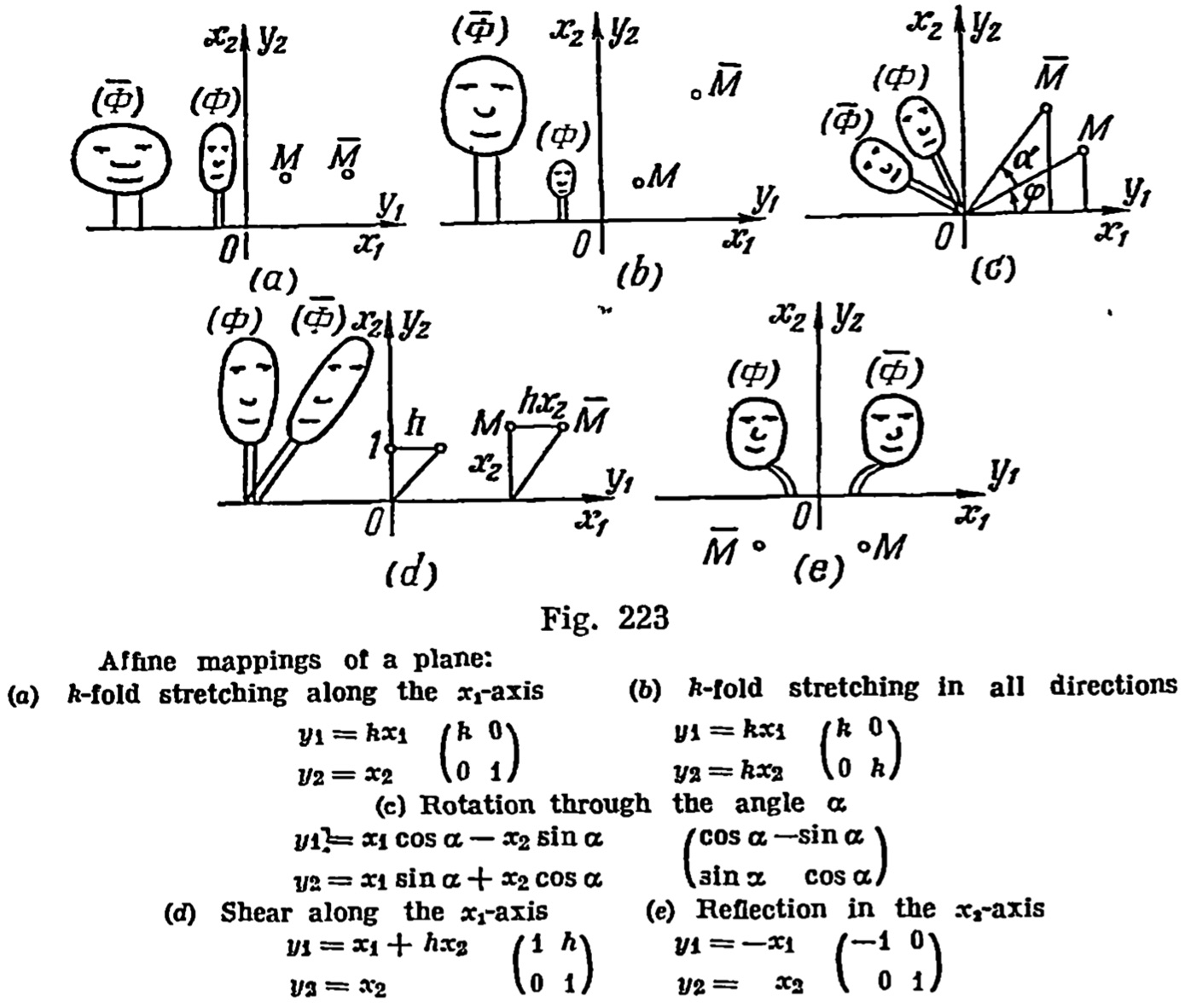
In this post, we will see the book Introductory Mathematics for Engineers: Lectures in Higher Mathematics by A. D. Myškis. The book is around 800 pages and is very exhaustive in the number of topics it deals in. Starting from functions and their graphs, it traverses the mathematical landscape of plane and solid analytic geometry, limits and continuity, matrices and systems of linear equations, differential and integral calculus, definite, indefinite and multiple integrals, partial derivatives, differential equations, vectors, linear algebra, complex numbers, functions of several variables, series, probability etc.

About The Book

The present book is based on lectures given by the author over a number of years to students of various eng1!1eermg and physics. The book includes some optional can be skipped for the first reading. The corresponding Items m the table of contents are marked by an asterisk.

The book is composed in such a way that it is possible to use it both for studying in a college under the guidance of a teacher and for self-education. The subject matter of the book is divided into small sections so that the reader could study the material in suitable order and to any extent depending on the profession and the needs of the reader. It is also intended that the book can be used by students taking a correspondence course and by the readers who have some prerequisites in higher mathematics and want to perfect their knowledge by reading some chapters of the book.

The book can be of use to readers of various professions dealing with applications of mathematics in their work. Modern applied mathematics of many important special divisions which are not included m this book. The author intends to write another book devoted to some supplementary topics such as the theory of functions of a complex argument, variational calculus, mathematical physics, some special questions of the theory of ordinary differential equations and so on.

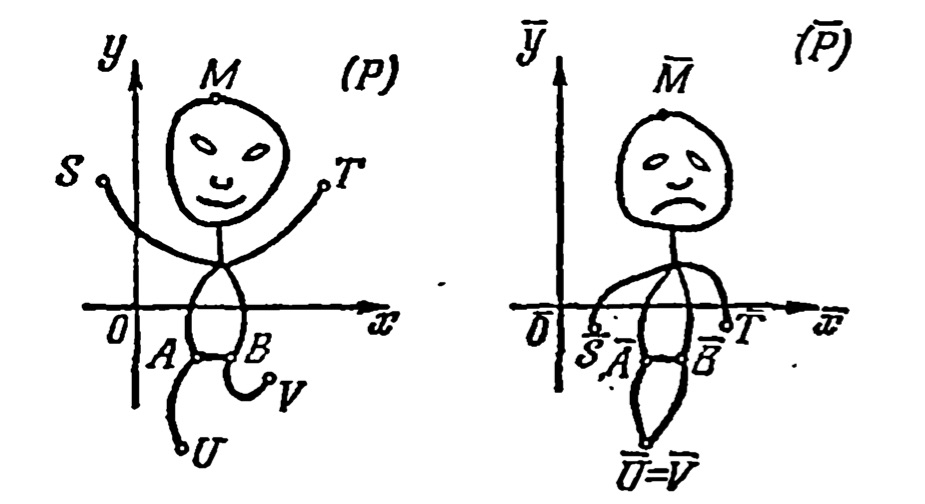
The book has interesting ways to treat affine mappings (pages 344-345) and non-linear mappings (pages 358-359).

The book was translated from the Russian by V. M. Volosov and was first published by Mir in 1972.

PDF | OCR | Bookmarked | Cover | 787 pages

The Internet Archive link and here

Note: quite a few pages are missing from the scan:

56-57 70-71  210-211  240-241  312-313  315  320-321  337-338 338-339-340  418-419  464-465  759-760  764-765

We would be grateful if anyone points to a copy with the missing pages.

Credits to the original scanner. The original scan was not clean or bookmarked. We cleaned, OCRed and bookmarked the original scan.

Update: 29 January 2019, complete file is added on the Internet Archive. Many thanks to r.axensalva for the completed files with no missing pages.

Continue reading

Posted in books, mathematics, mir books, mir publishers | Tagged , , , , , , , , , , , , , , , , , , , , , , , , , , , , , , , , , , | 9 Comments

Clocks and Watches – Dlugolensky

In this post, we will see the book Clocks and Watches by Yakov Dlugolensky.

clocks1

The book as the title suggests is about clocks and watches and time. We explore the variety of clocks and stories behind them.

The book is amazingly illustrated and will make any child’s imagination go places.

The book was published by Progress in 1982 and was translated from the Russian by Raissa Bobrova. The Amazing illustrations are by Vladimir Kulkov.

The Internet Archive  link and here

All credits to Guptaji.

Posted in books, children's stories, raduga publishers | Tagged , , , , , , , , , , , , , , | 2 Comments

A Simple Non-Euclidean Geometry And Its Physical Basis – Yaglom

In this post, we will see the book A simple non-Euclidean geometry and its physical basis: an elementary account of Galilean geometry and the Galilean principle of relativity by I. M. Yaglom.

This book is remarkable in that it relies only on precalculus 
mathematics and yet has an "idea density" exceeding that of many 
advanced texts. It is a fascinating story which flows from one 
geometry to another, from one mode) to another, from geometry to 
algebra, and from geometry to kinematics, and in so doing crosses 
artificial boundaries separating one area of mathematics from 
another and mathematics from physics. (from the Translator's preface)

About the book:

From the preface (with some added notes)

Why study non-Eucliean geometries?> The principal reason for the interest in hyperbolic geometry is the important fact of “non-uniqueness” of geometry; of the existence of many geometric systems. The non-uniqueness of geometry sheds new light on basic features of mathematics; on the role of idealization in science; on deductive knowledge (Aristotle’s “inferential knowledge”), i.e., knowledge deduced from a definite system of axioms; on the role of axiom systems in mathematics, and on the requirements that must be satisfied by such systems; and on the relation between abstract “mathematical geometry” and the “physical geometry” concerned with certain properties of physical space. The non- uniqueness of geometry already justifies the effort to dislodge from the minds of prospective high school teachers the notions that Euclidean geometry is “innate,” “unique,” “natural,” or “god-given.”

Which non-Euclidean geometries?> The book is about non-Euclidean geometries, particularly explores “Galilean geometry” as a central theme. The existence of non-Euclidean geometry was known in antiquity (for example, spherical geometry), the works of Gauss, Bolyai and Lobachevsky in early nineteenth century, systematically created the foundations of hyperbolic geometry. As in the case of the Euclidean geometry, the existence of hyperbolic geometry was not unique. Just as the fundamental discoveries of Lobachevsky (published in 1829), Bolyai (published in 1832), and Gauss destroyed the exclusive position of Euclidean geometry, so, too, the classical investigations of Riemann and Klein (almost after 30+ years) destroyed the exclusive position of hyperbolic geometry. Yaglom notes the imbalance in favour of hyperbolic geometry as the only non-Euclidean geometry

All for hyperbolic geometry> too much attention is paid in scientific and popular-scientific literature to hyperbolic geometry (for example, a number of Russian books and countless papers are concerned with as special a problem as the theory of geometric constructions in the hyperbolic plane; this in spite of the fact that the problem clearly does not merit so much attention) and too little to the remaining “non-Euclidean geometries of Klein.” The aim of this book is to help redress this imbalance by presenting a widely accessible account of one of these geometries, namely the geometry of the two-dimensional manifold of “events” (x,t) (x is the coordinate of a point on a line and t is time) whose “motions” are the Galilean transformations of classical kinematics.

Galilean Geometry and its significance> In fact, the geometry presented in this book — Galilean geometry — is the simplest of all Klein ian geometries; in many respects it is simpler than Euclidean geometry. The main distinction of this geometry is its relative simplicity, for it enables the student to study it in relative detail without losing a great deal of time and intellectual energy. Put differently, the simplicity of Galilean geometry makes its extensive development an easy matter, and extensive development of a new geometric system is a precondition for an effective comparison of it with Euclidean geometry. Also, extensive development is likely to give the student the psychological assurance of the consistency of the investigated structure. Another distinction of Galilean geometry is the fact that it exemplifies the fruitful geometric idea of duality. And last, but certainly not least, a major merit of the geometry presented in this book is that it illustrates the important connection between Klein’s Erlanger Programm and the principles of relativity, and sheds additional light on Klein^s conception as well as on the role of the principles of relativity in physics.

Whom is the book for?> The present book, with its many possibly interesting but nonessential details, is intended for high school seniors, mathematics teachers, and students and lecturers in universities and teachers’ colleges, but is not meant to be a blueprint for the reform of the curriculum of teachers’ colleges. At the moment, we are certainly not ready for such a reform. The evaluation of the questions raised above requires extensive knowledge of the geometries associated with the principles of relativity of Galileo and Einstein, whereas apparently this is the first popular scientific book to analyze in detail the geometry associated with the Galilean principle of relativity.

What is in the name?> Finally, the now popular name “Galilean geometry” is historically inaccurate: Galileo, whose works date from the beginning of the 17th century, did not in fact know this geometry, whose discovery was necessarily preceded by one of the greatest intellectual triumphs of the 19th century — the emergence of the idea that many legitimate geometric systems exist. A more accurate name would be “the geometry associated with the Galilean principle of relativity.” This name is too long for repeated use and that is why we have decided, somewhat reluctantly, to use the name “Galilean geometry.” This name is partially justified by the brilliant clarity and completeness with which Galileo formulated his principle of relativity, which leads directly to the (non -Euclidean!) geometry considered in the present book.

From a review

The main content of Yaglom’s book is the geometry of the Galilean plane with one time dimension x and one space dimension y invariant under the uniform motions

x’ = x + a
y’ = vx +y + b.

The development is primarily guided by the analogies with the concepts of Euclidean geometry, but the reader is reminded periodically of the mechanical meaning of the geometry in terms of motions on a straight line.

The Lorentz transformations of special relativity and the Minkowskian plane are developed in a separate chapter, with an illuminating section on the Galilean plane as a limiting case of the Euclidean and Minkowskian planes.

The book concludes with three appendices describing the nine geometries-here called Caley-Klein geometries-obtained by combining the three metrics, elliptic, parabolic and hyper- bolic on the (real or projective) line with the three dual metrics on the pencil of lines.

While the exposition is elementary,  a good deal of knowledge would be needed before any but the most exceptional reader can appreciate the content of these sections. This masterfully lucid book would make an excellent starting point for an undergraduate seminar in geometry.

(From the review by Straus in AMM 1982.)

The book was translated from the Russian by Abe Shenitzer
with the Editorial Assistance of Basil Gordon.

link

All credits to artmisa

Continue reading

Posted in books, mathematics, physics, soviet | Tagged , , , , , , , , , , , , , , , , , , , | 4 Comments

Plasma Physics – Kadomtsev (Ed.)

In this post, we will see the book Plasma Physics edited by B. B. Kadomtsev.


plasma-physics-kadomtsev

About the book

This collection contains articles both original and already published in the Soviet Union in 1979-80, written by well-known Soviet scientists and devoted to the most important findings and achievements of research into the fundamental problems of plasma physics and controlled thermonuclear synthesis. The book is intended for researchers and specialists in the fields of plasma physics and thermonuclear reactions, and for anyone interested in the achievements of the Soviet Union in these areas.

The book was translated from the Russian by Oleg Glebov and was first published by Mir in 1981.

PDF | OCR | Bookmarked | Cover | 10.2 MB | 194 pp. | 300 dpi (upscaled to 600 dpi)

The Internet Archive link. and here


Continue reading

Posted in books, engineering, mir books, mir publishers, physics, science, soviet, technology | Tagged , , , , , , , , , , , , , , , , , , , | Leave a comment

The Earth in the Universe – Fedynskii (Ed.)

In this post, we will see the book The Earth In The Universe edited by V. V. Fedynskii.

About the book:

The space age was initiated on 4 October 1957, when the first Soviet
artificial satellite was launched. Then, between 1961 and 1963, Gagarin,
Titov, Nikolaev, Popovich, Bykovskii, and Tereshkova made their heroic
entering into space. As a consequence, the science of the Earth is now
going into a new phase of reappraisal and vigorous development. The
Earth viewed from interplanetary space, the application of the advances in
physics and modern technology to the study of the Earth’s deep interior and
the remote fringes of the terrestrial atmosphere, the incorporation of new
disciplines into the science of our planet — all these call for a fresh approach
to many seemingly familiar phenomena.

This book presents a series of articles, covering a broad range of
subjects, by a group of Soviet scientists writing on some of the problems
of modern science, such as the structure of matter, the nature of physical
fields, the formation and evolution of the Earth and the universe, solar
activity and the Earth, and the interaction between the Earth’s biosphere
and physical fields. Some facts from the history of science which are
related to the “cosmization” of natural science (the emergence of science
into the reaches of outer space) are also presented. Many of the ideas
expressed in the articles of this collection draw upon the works of
great Russian scientists of the past, such as K. E. Tsiolkovskii and
V.I. Vernadskii, whose topical interest has been revived with the onset of
the space age.

The cheif editor of the book was V. V. Fedynskii, and the editorial board was comprised of I. Ya. Ballakh, A. L. Chizhevskii, V. V. Piotrovskii, and N. I. Taranov.


The book was translated from Russian by Israel Program for Scientific Translations in
1968. The book was published for NASA as a technical translation.

PDF | 430 pp. | 24.5 MB | OCR

The Internet Archive link. and here

All credits to Greg Williamson.

Continue reading

Posted in books, chemistry, geology, life sciences, meteorology, physics, science, soviet, technology | Tagged , , , , , , , , , , , , , , , , , | Leave a comment

Fundamentals of Physics – Ivanov

In this post, we will see the book Fundamentals of Physics by B. N. Ivanov.

00ivanov-cover

About the book:

The book being of­fered by the author differs from other existing books on the subject in its nontraditional approach to the course of phys­ics. The principle underlying the preparation of this course can be summarized as follows:  “From atom to matter”.

What prompted the author to adopt this approach? In­deed, the creation of new materials with unusual mechani­cal, thermal, electrical, magnetic, and optical properties requires a microscopic approach to the problem and a clear understanding of the practical significance of the approach “from atom to matter”. This means that the scientists and industrial workers engaged in fields like physical materials science, nuclear and semiconductor engineering, laser

This book is intended for those who wish to acquire a deeper knowledge of physical phenomena. It can be used by students of physics and mathematical schools, as well as by those who have finished school and are engaged in self- education. A good deal of the material may be useful to teachers delivering lectures on various topics of physics.

This is not a textbook, but rather a helpbook that should be used in conjunction with the standard textbooks. Nor is the book intended for a light reading; you have to use a pen and paper, think, analyze, and even compute whenever it is necessary. We shall describe physics here in the way re­ searchers understand it today.

Physics essentially deals with the fundamental laws of nature. The progress being made at present in all branches of natural science is due, as a rule, to the introduction of physical concepts and techniques in them. This is besides the fact that a knowledge of physical sciences is essential for new industrial ventures lying at the root of technical progress. Physics is fast becoming an important element in the modern civilization.

The book was published by Mir in 1989 and was translated from the Russian by R. S. Wadhwa.

PDF | OCR | Bookmarked | 15.2 MB | 459 pp. | Cover | 300 dpi (upscaled to 600 dpi)

The Internet Archive link  and here

The book is in print in India by CBS publishers.

Continue reading

Posted in books, mir books, mir publishers, physics, science, soviet | Tagged , , , , , , , , , , , , , , , , , , , , , , , , , , , , , , , , , , , , | 16 Comments

The Riddle Of The Self – Mikhailov

In this post, we will see the book The Riddle Of The Self by F. T. Mikhailov.

Mikhailov-the-riddle-of-the-self-fcAbout the book:

The question of consciousness, of its relation to being cannot in principle be reduced to a particular scientific problem of the correlation of mental and physiological processes or to a problem of the reception, processing and production of information. The essence of this problem is not what happens under my skull when I calculate the trajectory of a flight to the stars, but what in philosophy is called the question of the identity of thought and being. How is it possible that a person can mentally chart the road to the stars? How and why can he, in his thoughts, conceive of the existence of the Universe? How can the infinity of time and space be contained in the in­stant of their realisation in consciousness? This is the key question of the human ability to set goals. And unless one knows one’s way through the two thousand years history of solutions to this question, one will have little chance of even framing a correct approach to any partic­ular problem of the relation between mind and brain.
That is why I have called this book The Riddle of the Self. By suggesting that the Self, the Ego presents a rid­dle I imply that there may be many different ways of tackling it. This book is not a calm and consistent academic expo­sition of compiled knowledge. It is more like a not very good transcript of a heated debate. And it is not in itself the answer to the riddle, but a discussion of how the prob­lem should be stated. It is about the method that should be used in the search.

The book was published by Progress in 1980 and was translated from the Russian by Robert Daglish. The book was designed by Vadim Kuleshov.

PDF | OCR | Bookmarked | Cover | 265 pp. | 3.2 MB

The Internet Archive link. and here

All credits to the original uploader.

Continue reading

Posted in books, philosophy, progress publishers, psychology | Tagged , , , , , , , , , , , , , , , , , | Leave a comment