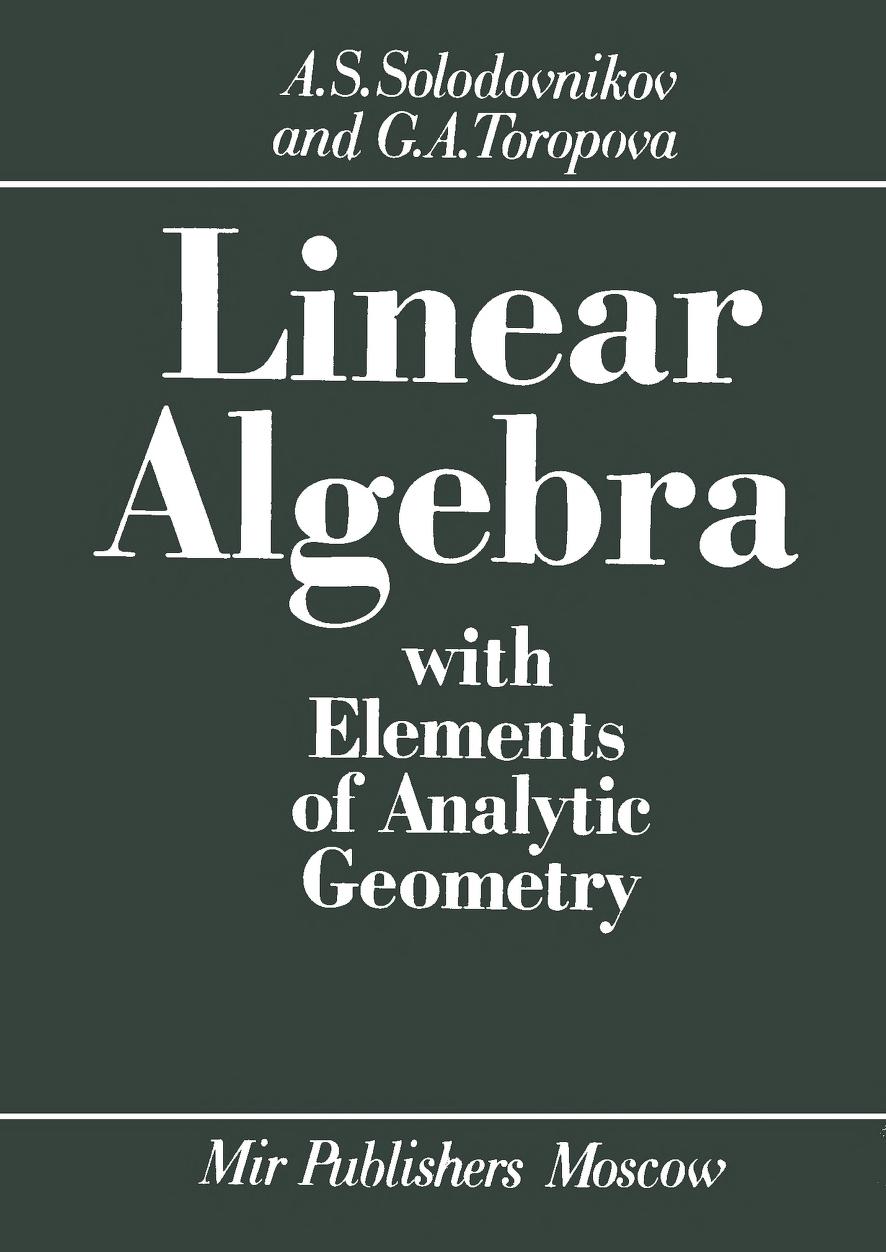
Linear Algebra with Elements of Analytic Geometry – Solodovnikov, Toropova

In this post, we will see the book Linear Algebra with Elements of Analytic Geometry by A.S. Solodovnikov, G.A. Toropova.
About the book

This study aid follows the course on linear algebra with elementary analytic geometry and is intended for technical school students specializing in applied mathe­matics. The text deals with the elements of analytic geometry, the theory of matrices and determinants, systems of linear equations, vectors, and Euclidean spaces. The material is presented in an informal manner. Many interesting examples will help the reader to grasp the material easily.

The book was translated from the Russian by Tamara Baranovskaya and was published by Mir in 1990.

Original colour scan by Folkscanomy Mathematics.

The Internet Archive Link

CONTENTS

Preface 8

Part One. ANALYTIC GEOMETRY 10

Chapter 1. VECTORS IN THE PLANE AND IN SPACE. CARTESI­ AN COORDINATE SYSTEM 10

1.1. Vectors 10
1.2. Vector Basis in the Plane and in Space 20
1.3. Cartesian Coordinate System on a Straight Line, in the Plane, and in Space 28
Exercises to Chapter 1 35

Chapter 2. RECTANGULAR CARTESIAN COORDINATES. SIM­PLE PROBLEMS IN ANALYTIC GEOMETRY 37

2.1. Projection of a Vector on an Axis 37
2.2. Rectangular Cartesian Coordinate System 40
2.3. Scalar Product of Vectors 47
2.4. Polar Coordinates 54
Exercises to Chapter 2 55

Chapter 3. DETERMINANTS 57

3.1. Second-Order Determinants. Cramer’s Rule 57
3.2. Third-Order Determinants 60
3.3. n-th-Order Determinants 62
3.4. Transposition of a Determinant 67
3.5. Expansion of a Determinant by Rows and Columns 69
3.6. Properties of nth-Order Determinants 71
3.7. Minors. Evaluation of nth-Order Determinants 77
3.8. Cramer’s Rule for an n x n System 82
3.9. A Homogeneous n x n System 86
3.10. A Condition for a Determinant to Be Zero 91
Exercises to Chapter 3 95

Chapter 4. THE EQUATION OF A LINE IN THE PLANE. A STRAIGHT LINE IN THE PLANE 100

4.1. The Equation of a Line 100
4.2. Parametric Equations of a Line 105
4.3. A Straight Line in the Plane and Its Equation 107
4.4. Relative Position of Two Straight Lines in the Plane 122
4.5. Parametric Equations of a Straight Line 124
4.6. Distance Between a Point and a Straight Line 125
4.7. Half-Planes Defined by a Straight Line 127
Exercises to Chapter 4 128

Chapter 5. CONIC SECTIONS 131

5.1. The Ellipse 131
5.2. The Hyperbola 140
5.3. The Parabola 148
Exercises to Chapter 5 153

Chapter 6. THE PLANE IN SPACE 156

6.1. The Equation of a Surface in Space. The Equation of a Plane 156
6.2. Special Forms of the Equation of a Plane 163
6.3. Distance Between a Point and a Plane. Angle Between Two Planes 168
6.4. Half-Spaces 169 Exercises to Chapter 6 171

Chapter 7. A STRAIGHT LINE IN SPACE 174

7.1. Equations of a Line in Space. Equations ofa Straight Line 174
7.2. General Equations of a Straight Line 178
7.3. Relative Position of Two Straight Lines 183
7.4. Relative Position of a Straight Line anda Plane 186
Exercises to Chapter 7 189

Chapter 8. QUADRIC SURFACES 192

8.1. The Ellipsoid 192
8.2. The Hyperboloid 195
8.3. The Paraboloid 198

Part Two. LINEAR ALGEBRA 202

Chapter 9. SYSTEMS OF LINEAR EQUATIONS 203

9.1. Elementary Transformations of a System of Linear Equations 203
9.2. Gaussian Elimination 205
Exercises to Chapter 9 216

Chapter 10. VECTOR SPACES 218

10.1. Arithmetic Vectors and Operations with Them 218
10.2. Linear Dependence of Vectors 222
10.3. Properties of Linear Dependence 227
10.4. Bases in Space R^n 230
10.5. Abstract Vector Spaces 233
Exercises to Chapter 10 239

Chapter 11. MATRICES 241

11.1. Rank of a Matrix 242
11.2. Practical Method for Finding the Rank of a Matrix 245
11.3. Theorem on the Rank of a Matrix 247
11.4. Rank of a Matrix and Systems of Linear Equations 249
11.5. Operations with Matrices 250
11.6. Properties of Matrix Multiplication 253
11.7. Inverse of a Matrix 255
11.8. Systems of Linear Equations in Matrix Form 259
Exercises to Chapter 11 263

Chapter 12. EUCLIDEAN VECTOR SPACES 266

12.1. Scalar Product. Euclidean Vector Spaces 266
12.2. Simple Metric Concepts in Euclidean Vector Spaces 269
12.3. Orthogonal System of Vectors. Orthogonal Basis 271
12.4. Orthonormal Basis 274
Exercises to Chapter 12 275

Chapter 13. AFFINE SPACES. CONVEX SETS AND POLY­HEDRONS 277

13.1. The Affine Space A^n 277
13.2. Simple Geometric Figures in A^n 279
13.3. Convex Sets of Points in A^n. Convex Polyhedrons 282
Exercises to Chapter 13 286

Index 288
Posted in books, mathematics, mir books, mir publishers | Tagged , , , , , , , , , , , | 6 Comments

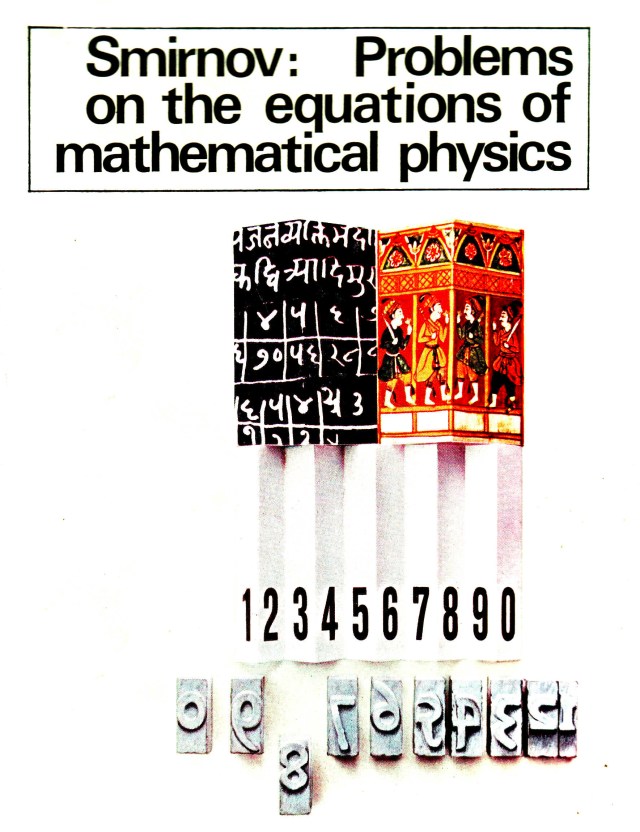
Problems On The Equations Of Mathematical Physics – Smirnov

In this post we will see the book Problems On The Equations Of Mathematical Physics by M. M. Smirnov.

smir-0001
About the book

The aim of the present collection of problems is to illustrate the theory of partial differential equations as it is given in various textbooks.
The problems of this collection are divided in three paragraphs. The first paragraph contains introductory excercizes on the reduction of partial differential equations to canonical form. The second paragraph deals mainly with problems, the general solution of which can be formed by means of the method of characteristics e.g. Cauchy’s (or also Goursat’s) and mixed problems.

In the third paragraph the most important method is presented, namely the separation of variables. This is done for mixed problems (for hyperbolic and parabolic equations) and for boundary value problems (elliptic equations).

The solutions of all excercizes are given. Most of the problems are accompanied by an explanation of the solution method used: so that this problem book can also be used for self study.

The book was published by Nordoff in 1967 and was translated from the Russian by W. I. M. Wils.

The Internet Archive Link

CONTENTS
Part I. Problems 7

1. Reduction of partial differential equations with two independent variables to canonical form 7

1. Equations of hyperbolic type 7
2. Equations of parabolic type 8
3. Equations of elliptic type 8

2. The method of characteristics 9
3. Separation of variables 23

1. Equations of hyperbolic type 26
2. Equations of parabolic type 33
3. Equations of elliptic type 38

Part.II. Solutions and hints 43

Posted in books, mathematics, physics, problem books, soviet | Tagged , , , , , , , , , , , , | 1 Comment

Folktales of the Soviet Union – The Baltic Republics

In this post. we will see the book Folktales of the Soviet Union – The Baltic Republics compiled by Robert Babloyan and Mirlena Shumskaya.

About the book

The book is a collection of folk tales from the Baltic region. The Soviet Baltic republics, Latvia, Lithuania and Lstonia, are closely bound up with the sea. And the people who live there are what you would expect sea tolk to be, tall, tough and strong. This is a land of fishermen, ship-builders and farmers. Lach republic also has a highly developed industry. The radios, transmitters, etc. made in Latvia and Estonia are known throughout the world.

Baltic folk tales have absorbed much of the world around them, of course. They seem to smell of dry wood, resin, sea and forest. Many of the characters in the old songs and legends resemble the people of today who live in these parts: the wise fishermen, the skilled craftsmen, the sturdy, brave young men and the gentle, faithful women. The forces of evil in these stories take the form of terrible monsters, catastrophies and disasters which the heroes have to combat and overcome.

The book was translated from the Russian by and was published by Raduga in 1986.

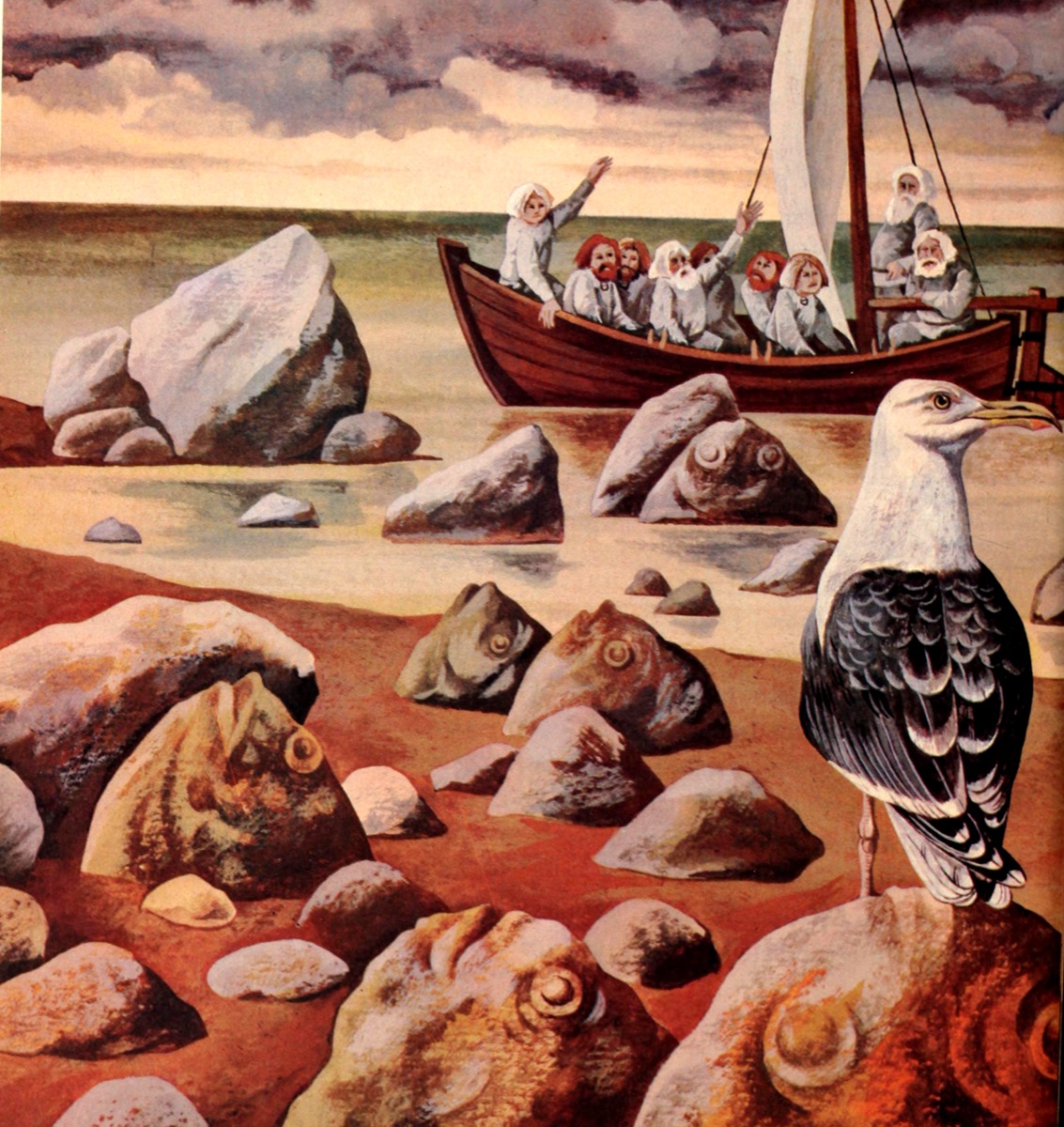
The book has some amazing full page paintings, done by three different artists one for each set of the tales: Gunars Krollis for Lativia, Jaan Tammsaar for Estonia and Vange Gedmantaitc-Galkuviene for Lithuania. The book was designed by Mikhail Anikst.


The Internet Archive Link

Contents


LATVIAN FOLK TALES

The White Deer 6

The Sea Bride 26

ESTONIAN FOLK TALES

The King of the Mushrooms 48

The Forbidden Knot 72

LITHUANIAN FOLK TALE

The Sun Princess and the Prince 96

Posted in books, children's stories, raduga publishers, soviet | Tagged , , , , , , , , | Leave a comment

Strength of Materials – Kinasoshvili

In this post, we will see the book Strength of Materials by R. Kinasoshvili.

Kinasoshvili - Strength of Materials - Mir - 1978_0000

A book covering various aspects of strength of materials. The topics covered are succinct and with basic definitions and requisite mathematics. Each chapter has a set of “Check Questions” in the end.

The development of the foundations for the design of structural members is the subject matter of a science called the strength of ma­terials.

Without knowledge of the fundamentals of strength of materials it is impossible to construct even a simple machine satisfying the technical requirements placed on each construction.

The book was translated from the Russian by M. Konyaeva and was published by Mir in 1978 (second print).

Many thanks to Akbar Azimi for the raw scans.

The Internet Archive Link

Contents

Introduction. 13

1. Science of Strength of Materials. Concepts of Deformation and of an Elastic Body 13
2. Classification of External Forces 16
3. Basic Types of Deformation 17
4. Method of Sections. Stress 19
5. Check Questions 22

Chapter II. Tension and Compression 23
6. Longitudinal Strain. Stress. Hooke’s Law 23
7. Lateral Strain in Tension and Compression 27
8. Experimental Study of Materials in Tension 29
9. Tension Test Diagram and Its Characteristic Points 31
10. Strain Hardening 38
11. Strain Energy in Tension 40
12. Compression Testing 42
13. Harness 43
14. Check Questions 45

Chapter III. Strength Design for Tension and Compression 47

15. Allowable Stress and Selection of Sections 47
16. Effect of Gravity in Tension and Compression 54
17. Stepped Rod 57
18 Statically Indeterminate Problems in Tension and Compression 60
19. Stresses Due to Temperature Changes 65
20. Design of Statically Indeterminate Systems Based on Allowable Loads, and Limit Design 68
21. Check Questions 74

Chapter IV. Combined Stresses

22. Stresses on Inclined Sections Under Axial Tension or Compression
23. Concept of Principal Stresses
24. Stresses on Inclined Sections Under Tension (Compression) in Two Mutually Perpendicular Directions 79
25. Determination of Principal Stresses 81
26. Strains Under Tension or Compression in Two Mutually Perpendi­cular Directions. Strain Energy 84
27. Strength Theories 87
28. Design of Thin-Walled Vessels 94
29. Check Questions 98

Chapter V. Shear 99
30. Concept of Shear. Stresses in Shear. Hooke’s Law in Shear 99
31. Pure Shear in a Rod Subjected to Tension and Compression in Two Mutually Perpendicular D irections 101
32. Relation Between Moduli of Elasticity E and G 102
33. Allowable Stress in Shear 104
34. Crushing 106
35. Examples of Design for Shear andCrushing. 107
36. Design of Welded Joints 111
37. Check Questions. 114

Chapter VI. Torsion 116

38. Construction of Twisting Moment Diagrams. Relation Between Torque. Power and Number of Revolutions 116
39. Determination of Stresses and Strains in a Circular Bar Subjected to Torsion 121
40. Polar Moment of Inertia and Section Modulus of a Circle and a Cir­cular Ring 126
41. Design Equations in Torsion 128
42. Elements of Design of Bars of Rectangular Section for Torsional Loads 136
43. Potential Energy in Torsion 139
44. Design of Closely Coiled Helical Springs 140
45. Design of Shafts Based on Allowable Loads 142
46. Check Questions 144

Chapter VII. Static Moments, Centroids and Moments of Inertia of Plane Figures 145

47. Static Moments of Plane Figures 145
48. Moments of Inertia of Plane Figures 148
49. Transformation Formulas for Moments of Inertia in the Case of Pa­rallel Transfer of Axes 149
50. Moments of Inertia of Some Simple Figures 151
51. Determination of Moments of Inertia of Figures Composed of Simple Figures 155
52. Transformation Formulas for Moments of Inertia in the Case of Rotation of Axes 157
53. Concept of Principal Axes of Inertia and Determination of Their Position 160
54. Determination of Principal Moments of Inertia 163
55. Check Questions 167
Chapter VIII. Bending of a Straight Rod, Bending Moment and Shearing Force 168

56. General Considerations 168
57 Supports and Reactions at Supports of Beams 171
58. Determination of Reactions at Supports of Beam 173
59 Shearing Force and Bending Moment 176
60. Relations Between Load Intensity, Shearing Force and Bending Moment 178
61. Construction of Bending Moment and Shearing Force Diagram? 179
62. Check Questions 197

Chapter IX. Stresses in Bending and Design of Beams for Strength 198

63. Determination of Normal Stresses in Bending 198
64. Section Moduli for Common Sections 198
65. Design Flexure Formulas. Examples of Designing Beams 204
66. Shearing Stresses in a Beam of Rectangular Section. Jourawski’s Formula 211
67. Shearing Stresses in an I-Beam 216
68. Verification of the Strength of a Beam on the Basis of Principal Stresses 218
69. Design of Beams Based on Allowable Loads, and Limit Design 221
70. Check Questions 224

Chapter X The Elastic Curve of a Beam 226

71. The Elastic Curve of a Beam 226
72 Derivation of the Generalized Equation of the Elastic Curve 230
73. Special Cases of Determining Displacements of Beams from the Ge­neralized Equation of the Elastic Curve 233
74. Mohr’s Method and Vereshchagin’s Rule 241
75. Beams of Uniform Resistance to Bending 246
76. Check Questions 252

Chapter XI. Statically Indeterminate Beams 253

77. Concept of Statically Indeterminate Beams 253
78. A Beam Fixed at One End and Simply Supported at the Other 253
79. A Beam with Both Ends Fixed 259
80. A Beam on Three Supports 263
81. Check Questions 268

Chapter XII Complex Resistance 269

82. Oblique Bending 269
83. Bending Combined with Tension or Compression 276
84. Eccentric Compression 278
85. The General Case of Eccentric Compression or Tension. 279
86. Concept of Core of Section. 282
87. Combined Bending and Torsion. 284
88. Combined Torsion and Tension or Compression 290
89. Check Questions 291
Chapter XIII. Buckling 292

90. Concept of Buckling. 292
91. Euler’s Formulas 294
92. Limitations of Euler’s Formulae able for Column Design 298
93. Examples of Design for Buckling Strength. 300
94. Check Questions. 306

Chapter XIV. Strength Under Dynamic and Repeated Loading 307

95. Concepts of Dynamic and Repeated Loading 307
97. The Stress and Strain in a Rod Subjected to Impact Loading 308
96. Design of a Uniformly 310
98. Impact Testing of Metals 313
99. Fatigue of Metals 314
100. Fatigue Testing of Materials 317
101. Endurance Limit for Fluctuating Stress Cycle 320
102. Effect of Overall Dimensions of Parts on Endurance Limit 321
103. Strength Design for Completely Reversed Stresses 323
104. Determination of Factor of Safety in the Case of Fluctuating Stresses 326
105. Construction of Approximate Fatigue Strength Diagram and Deter­mination of Factor of Safety from It 328
106. Determination of Factor of Safety in the Case of Combined Varying 336 Stresses 336
107. Examples of Design for Varying Stresses 336
108. Improvement of Fatigue Strength 338
109. Check Questions 341

Appendices 343
Index 356

Posted in books, engineering, mathematics, mir books, physics, soviet, technology | Tagged , , , , , , , , , , , , , , , | 1 Comment

Manual of the Theory of Elasticity – Rekach

In this post, we will see the book Manual of the Theory of Elasticity by V. G. Rekach.

Rekach - Manual of the Theory of Elasticity - Mir - 1979_0000

About the book

This book is designed to be used as an aid to solving elasticity problems in college and university courses in engineering.
The book covers all subjects of the mathematical theory of elasticity. It contains material which forms the basis for structural analysis and design. Numerous problems illustrate the text and somewhat complete it. Along with classical problems, they include cases of practical significance.
The author does not emphasize any particular procedure of solution, but instead considerable emphasis is placed on the solution of problems by the use of various methods. Most of the problems are worked out and those which are left as an exercise to the student are provided with answers or references to the original works.

About the author

Professor Vladimir Germanovich Rekach, D.Sc., is the Head of the Department of Strength of Materials at the Patrice Lumumba Peoples’ Friendship University in Moscow.

His main scientific interests are structural design, analysis of curved bars and vibration problems. The title of his doctoral thesis was “The Analysis of Spherical Shells”. He is the author of 28 articles and 3 books (3 as coauthor).

The book was translated from the Russian by M. Konyaeva and was published by Mir in 1979.

Many thanks to Akbar Azimi for the raw scans.

The Internet Archive Link

Note: There may be warping in some pages.

CONTENTS

Notation

Chapter 1 Theory of Stress 9

I. Static and Dynamic Equilibrium Equations. 9
II. Surface Conditions. 12
III. State of Stress at a Point Problems. 13
III. Cylindrical Co-ordinates. 15
IV. Spherical Co-ordinates.
Problems. 15

Chapter 2 Theory of Strain 24

I. Strain Equations in Orthogonal Co-ordinates 24
II. State of Strain at a Point 28
III. Cesaro’s Formulas 29
Problems 30

Chapter 3 Basic Equations of the Theory of Elasticity and Their Solution or Special Cases 40

I. Orthogonal Curvilinear Co-ordinates 40
II. Rectangular Co-ordinates 41
III. Cylindrical Co-ordinates 43
IV. Spherical Co-ordinates 44
Problems 46

Chapter 4 General Solutions of the Basic Equations of the Theory of Elasti­city. Solution or Three-dimensional Problems 66

I. Harmonic Equation (Laplace’s ) 66
II. Biharmonic Equation 66
III. Boundary Value Problems for the Harmonic and Biharmonic Equations 72
IV. Various Forms of the General Solutions of Lame’s Equations 79
Problems 83

Chapter 5 Plane Problem in Rectangular Co-ordinates 106

I. Plane Stress 106
II. Plane Strain 108
III. Solutions of Basic Equations 109
Problems 119

Chapter 6 Plane Problem in Polar Co-ordinates. 151

I. Plane Stress 153
II. Plane Strain 153
III. Solution of Basic Equations 153
Problems 158

Chapter 7 Torsion of Prismatic and Cylindrical Bars 184

I. Pure Torsion of Bars of Constant Section 184
II. Pure Torsion of Circular Bars (Shafts) of Variable Section 187
Problems 194

Chapter 8 Thermal Problem 210

I. Steady-state Thermal Process 210
II. Transient Thermal Process 216
Problems 217

Chapter 9 Contact Problem. 236

I. The action of punches on an Elastic Half-plane 236
II. The Action of Punches on an Elastic Half-space 239
III. Contact Between Two Elastic Bodies 240
Problems 240

Chapter 10 Dynamic Problem. 267

I. Simple Harmonic Motion 267
II. Propagation of Volume Waves in an Elastic Isotropic Medium 269
III. Wave propagation over the surface of an elastic isotropic body 272
IV. Excitation of Elastic Waves by Body Forces 275
VI. Deformation of solids Under Centrifugal Forces 276
VI. Plane Dynamic Problems 277
VII. Thermodynamic Problem 281
Problems 283

References 302
Author Index 308
Subject Index 310

Posted in books, engineering, mathematics, mir books, mir publishers, physics, science, soviet, technology | Tagged , , , , , , , , , , , , , , , | Leave a comment

Theoretical Electrochemistry – Antropov

In this post, we will see the book Theoretical Electrochemistry by L. I. Antropov.

Antropov - Theoretical Electrochemistry - Mir - 1972 copy

About the book (from the Preface)

In selecting the material and the order of presentation for this work I have been guided by the definition of electrochemistry, given by Kislyakovsky in 1912, as the science “concerned with the study of the phenomena accompanying the direct conversion of chemical energy into electrical and vice versa”. This definition was taken further by Pisarzhevsky, who was the first to formulate clearly the prerequisites for mutual conversion of chemical and electrical forms of energy and introduce the concept of electrochemical system in which this process is possible. Our presentation is based on the theory of electrochemical systems, their constituent parts and their possible states. It seems to me that these principles permit one to visualize electrochemistry as an integral whole and independent, self-contained discipline and clearly define the boundaries separatum it from closely related sciences.

Much attention is paid to disclosing the physical content of electrochemical phenomena and the essence of the related theoretical conceptions The mathematical apparatus is relatively simple, and only the general principles of electrochemical experiment are given. Experimental procedures are described in more detail only where it is necessary for the understanding of the nature of the process in question or the essence of the theoretical views concerned.

In writing this textbook I have tried to cover all the basic aspects of theoretical electrochemistry and to reflect as completely as possible the latest advances and trends in its development. I hope that this has been accomplished to some extent but though I have tried to be objective I have probably not avoided a certain preference what seemed to me more correct, and particularly more important and interesting. In this connection it would seem appropriate to recall Mendeleyev’s words in the preface to the fifth edition of his famous “Fundamentals of Chemistry”: – `in all objective expositions of science, there will always and inevitably be much that is subjective, bearing the stamp of the times and place… separate works, like a mirror, will reflect that which is near more clearly and strongly… although I have striven to make my book a true mirror—what is dear to me has involuntarily been reflected most sharply and illuminated more clearly, and presented, through the reflection, in all its pristine brightness’. The truth of these words has probably been felt by everyone who has tried to generalize the material of any science or branch of it.

The book was translated from the Russian by Artavaz Beknararov. And was published by Mir in 1972.

Many thanks to Akbar Azimi for original scans.

Some pages might have warping, but the book is readable.

The Internet Archive Link

CONTENTS

Principal Symbols

Introduction

PART ONE EQUILIBRIUM IN ELECTROLYTE SOLUTIONS

Chapter 1. Theory of Electrolytic Dissociation 33

Chapter 2. Theory of Ionic Interaction 45

Chapter 3. Solvation and Hydration of Ions 69

PART TWO NONEQUILIBRIUM PHENOMENA IN ELECTROLYTIC SOLUTIONS

Chapter 4. Electrical Conductance of Electrolytic Solutions 102

Chapter 5. Theoretical Interpretation of the Electrical Conductance of Electrolytes 123

Chapter 6. Diffusion in Electrolyte Solutions 142

PART THREE ELECTRODE EQUILIBRIUM

Chapter 7. Equilibrium Electrode Potential 155

Chapter 8. Electrochemical Systems 190

Chapter 9. The Mechanism of Buildup of Electromotive Force and the Nature of Electrode Potentials 209

PART FOUR THE ELECTRICAL DOUBLE LAYER AT THE ELECTRODE-ELECTROLYTE INTERFACE

Chapter 10. Electrokinetic and Electrocapillary Phenomena 243

Chapter 11. The Structure of the Electric Double Layer at the Electrode-Electrolyte Interface 282

PART FIVE NONEQUILIBRIUM (IRREVERSIBLE) ELECTRODE PROCESSES

Chapter 12. The Chemical Effect of Electric Current 297

Chapter 13. The Kinetics of Electrode Processes 308

Chapter 14. Concentration Polarization 317

Chapter 15. Phase Overpotential 343

Chapter 16. Electrochemical Overpotential 360

Chapter 17 Some Methods of Investigating Electrode Kinetics 388

Chapter 18 Polarography 395

PART SIX THE KINETICS OF SOME ELECTRODE PROCESSES

Chapter 19 The Hydrogen Evolution Reaction 411

Chapter 20 The Kinetics of the Oxygen Evolution Reaction 442

Chapter 21 The Kinetics of Electrochemical Reduction and Oxidation 452

Chapter 22 Electrodeposition of Metals from Solutions 477

Chapter 23 Electrochemical Dissolution and Passivity of Metals

Chapter 24 Electrochemical Corrosion of Metals 511

Chapter 25 Some Problems of Modern Electrochemistry 538

Bibliography 548

Name Index 551

Subject Index 555

Posted in books, chemistry, metals, mir books, mir publishers, science, technology | Tagged , , , , , , , , , , | Leave a comment

Mirtitles on Twitter

After some deliberation and discussion we have finally decided to be on Twitter. Some years back when this was suggested by one of the users. At that time we had decided against it. But for now, we will run this as an experiment for some time and see where it goes. So here we are:

Screenshot 2020-05-11 at 18.44.59

Updates will also be available via this channel in the future. We will use hashtag #mirtitles so keep a lookout for it.

Please do follow and spread the word.

Happy reading!

Posted in books, meta | Tagged , | Leave a comment

Nonlinear Phenomena in Plasma Physics and Hydrodynamics – Sagdeev (Ed.)

In this post, we will see the book Nonlinear Phenomena in Plasma Physics and Hydrodynamics edited by R.Z.Sagdeev. This book is part of the Advances
in Science and Technology in the USSR Physics Series

Sagdeev (Ed.) - Nonlinear Phenomena in Plasma Physics and Hydrodynamics - Mir - 1986_0000

About the book (From the Preface)

The modern theory of nonlinear phenomena is going through a period of explosive growth. Each “invention” in the field is disseminated rapidly, generating general interest and unexpected applications. This was for instance the case with solitons, strange attractors, and stochasticity. That scientists from each of the different branches of the theory of nonlinear phenomena should cooperate needs no proof, and the value of this cooperation could be seen at a conference held in Kiev on nonlinear and turbulent processes in physics.* The same approach has been adopted for this collection, which includes articles on regular nonlinear phenomena (vortices, solitons, auto-waves) and some on stochasticity and turbulence. In addition, the collection includes two mathematical articles that develop the Kolmogorov-Amold-Moser theory, the importance of which for the theory of nonlinear dynamic systems is undoubted.

The articles are to some degree grouped around the nonlinear problems of plasma physics and hydrodynamics, in their broadest sense.

Hydrodynamics and plasma physics are traditional sources of exciting problems and ideas for the physics of nonlinear phenomena. We need only recall the classical examples of the discovery of solitons in shallow water, the exact integrability of the Korteweg-de Vries equation, and the discoveries of a strange attractor in the Lorcntz system and stochasticity in Hamiltonian systems with small numbers of degrees of freedom.

These ideas and results, all stimulated by problems in hydrodynamics and plasma physics, quickly gained more general significance for physics as a whole. In turn, many new and efficient techniques are tested on such traditionally difficult subjects as turbulence. For instance, there is the recent application to turbulence of the renormalization group methods, which were successfully employed first in field theory and the physics of phase transitions.

Finally, all this culminates in general fund of knowledge in the
physics of nonlinear phenomena. I hope that the publication of
this collection will advance the progress of physics.

The book was translated from the Russian by Valerii Ilyushchenko, and was first published by Mir in 1986.

Many thanks to Akbar Azimi for providing the raw 2-in-1 scans. We cleaned and OCRed the scans.

The Internet Archive Link

This book has an essay by A. Zhabotinsky of the Belousov–Zhabotinsky reaction

Contents

Preface 7

Vortices In Plasma and Hydrodynamics by A.B. Mikhailovskii

Introduction 8
Nonlinear Equations for Rossby Waves 12
The Simplest Nonlinear Equations for Drift Waves 14
Vector Vortical Structures 16
Scalar Vortical Structures 18
Further Development of Concepts Concerning Electrostatic Vortices in Plasma 19
Electromagnetic Vortices 22
Conclusion 24
References 28

Oscillations and Bifurcations in Reversible Systems by V. I. Arnol’d and M. B. Sevryuk 31

Introduction 31
Reversible Mappings 32
Reversible Flows 33
Integrable Reversible Mappings and Vector Fields 34
Kolmogorov’s Tori 35
Weak Reversibility 37
The Local Theory 37
Weak Reversibility in a Local Situation 42
Periodic Solutions 42
Kolmogorov’s Tori for Additional “Even” Coordinates 44
The Local Theory for Additional “Even” Coordinates 45
Application to Reversible Equations 48
Kon-Autonomour Reversible Systems 49
The Lyapunov-Devaney Theorem 51
The Resonance 1:1 52
Further Resonances l:N (N > 2) 54
References 83

Regular and Chaotic Dynamics of Particles In a Magnetic Field by R. Z. Sagdeev and C. U. Zaslavskii 85

Introduction 65
Equations of Motion 67
The Resonances of Longitudinal Motion 69
The Overlapping of the Resonances of Longitudinal Motion 72
A Kinetic Description 75
Equations of Transverse Motion 78
The Resonances of High-Energy Particles 83
Resonances in a Weak Magnetic Field 84
Generalization to a Wave Packet 85
A Kinetic Description of Transverse Motion 86
Quasi-Resonance Particles 88
References 92

The Renormalization Group Method and Kolmogorov-Arnold-Moser Theory by K. M. Khanin and Ya. G. Sinai 93

Introduction 93
Rectification of the Nonlinear Rotation of a Circle 97
Construction of Invariant KAM Curves by the Renormalization
Group Method 110
References 118

Nonlinear Problems of Turbulent Dynamo by Ya B, Zel’dovich and A. A. Rukmalkin 119

Introduction 119
Nonlinear Mean Field Dynamo 121
MHD Turbulence 130
References 135

Problems of the Theory of Strong Turbulence and Topological Solitons by R. Z. Sagdeev, S. S. Molseev, A. V. Tur, and V. V. Yanovskii 137

Introduction 137
The Scaling Group and Functional Method 140
“Null-Modes” and the Self-Similar Spectrum 152
Invariant Properties of Hydrodynamic Models and Topological Solitons 163
References 180

Self-Oscillations and Auto-Waves in Chemical Systems by A. M. Zhabotinskii 183

Introduction 183
Experimental Studies 184
Theoretical Studies 195
Conclusion 207
References 208

Auto-Waves In Biologically Active Media by V. I. Krinskii 210

Introduction 210
Mathematical Description 211
Local Sources of Auto-Waves 213
Cardiac Disorders 215
Mathematical Simulation of Auto-Wave Sources 216
A Chemically Active Medium 216
New Auto-Wave Modes 217
Wave Sources in Three-Dimensional Active Media 217
The Effect of Medium Parameters on Auto-Wave Sources 218
An Anomalous Reverberator 219
Theoretical Studies of Reverberators 220

Posted in books, life sciences, mathematics, mir books, mir publishers, physics, soviet, technology | Tagged , , , , , , , , , , , , , , , , , , , , , | 2 Comments

Elements Of The Applied Theory Of Elastic Vibration – Panovko

In this post, we will see the book Elements Of The Applied Theory Of Elastic Vibration by Ya. Panovko.

Panovko - Elements of the Applied Theory of Elastic Vibration - Mir - 1971_0000

About the book

We may distinguish at least the following live sufficiently inde­pendent categories of vibratory processes differing in their nature:

free vibrations, i.e., vibrations which are performed by a mecha­nical system having no energy supply from outside if the system is disturbed from its position of equilibrium and then released;

critical states of rotating shafts and rotors which consist in a sudden increase in the deflections of their axes at definite speeds of rotation (or in definite ranges of speeds);

forced vibrations which result when the mechanical system is acted on by fluctuating external forces (driving forces);

parametric vibrations caused by periodic variations of the para­ meters of a system (for example, its stiffness);

self-excited vibrations, i.e., vibratory processes which are main­tained by constant sources of energy of a non-vibratory nature.

Each of these categories of vibratory processes is discussed in the appropriate chapter.

The book was translated from the Russian by M. Konyaeva and was published by Mir in 1971.

Many thanks to Akbar Azimi for providing the raw scan 2-in-1 page scans. We cleaned the book with OCR.

The Internet Archive Link

Contents

Notation. 7

Introduction. 9

CHAPTER I. FUNDAMENTALS. 11

1. Number of Degrees of Freedom of an Elastic System. 11
2. Classification of Forces. 15
3. Methods for Setting Up Equations of Motion in the General Case. 22

CHAPTER II. Free vibrations . 24

4. Linear Systems of One Degree of Freedom Without Inelastic Resistances. 24
5. Effect of Inelastic Resisting Forces on Free Vibrations
of Linear Systems of One Degree of Freedom. 56
6. Undamped Systems of One Degree of Freedom with Non-Linear Restoring Forces. 68
7. Linear Systems of Several Degrees of Freedom. 87
8. Vibrations of Bars of Uniform Section (Exact Solution) 118
9. Vibrations of Ban of Variable Section. 138
10. Two-Dimensional Vibrations of Disks. 147
11. Flexural Vibrations of Disks. 153
12. Flexural Vibrations of Rectangular Plates. 157

CHAPTER III. CRITICAL STATES OF ROTATING SHAFTS AND ROTORS 161

13. Shaft with One Disk. 161
14. Effect of Friction. 174
15. Automatic Balancing of Rotating Shafts. 185
16. Critical States of Helicopter Rotors. 187
17. Shalt with Several Disks. Rigid Rotor on Elastic Supports 190

CHAPTER IV. FORCED VIBRATIONS. 193

18. Linear Systems of One Degree of Freedom without Inelastic Resistances. 193
19. Linear Systems of One Degree of Freedom with Inelastic Resisting Forces. 226
20. Systems with Non-Linear Restoring Forces (Single Degree of Freedom). 241
21. Linear Systems of Several Degrees of Freedom. 249
22. Linear Systems with Distributed Parameters. 269

CHAPTER V. PARAMETRIC VIBRATIONS. 279

23. Basic Equation. 279
24. Cases of Periodic Variation of Stiffness. 283
25. Cases of Periodic Variation of Parametric Loads. 285
26. Pendulum with a Vibrating Point of Suspension. 288
27. Cases of Periodic Variation of the Inertia of a System. 289

CHAPTER VI. SELF-EXCITED FRICTIONAL VIBRATIONS. 293

28. Nature of Self-Excited Vibrations. 293
29. Self-Excited Vibrations of Quasi-Linear Systems. 298
30. Self-Excited Relaxation Vibrations. 304

Index. 314

Posted in books, engineering, mathematics, mir books, mir publishers, physics | Tagged , , , , , , , , | 2 Comments

Algunos libros de matemática en Español (Some mathematics books in Spanish)

While browsing through The Internet Archive I stumbled across a few mathematics books in Spanish. We have some of these titles in English, but not all.

All credits to The Internet Archive user @librosmir

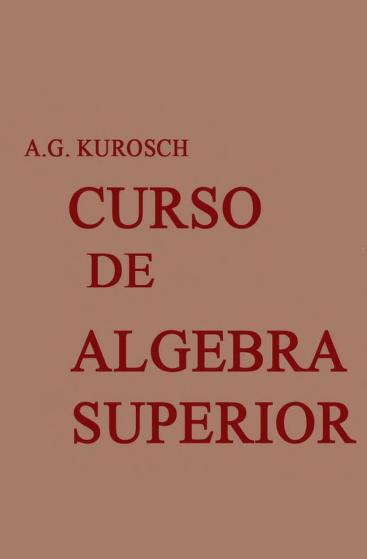
Mir_Curso_de_Algebra_Superior_A._Kurosch_0000

Curso De Algebra Superior A. Kurosch

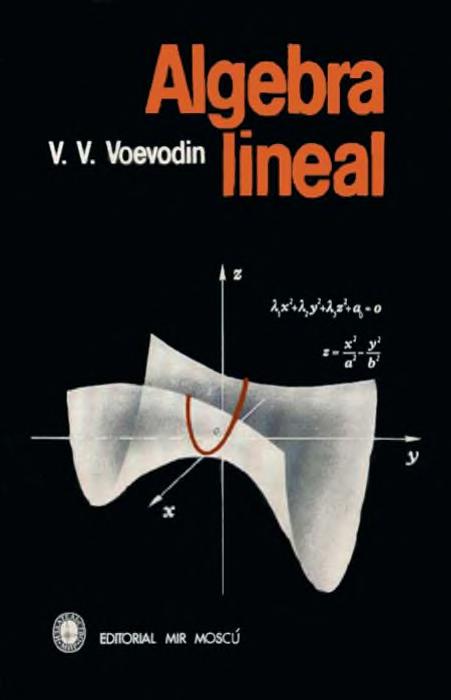
Mir_Algebra_Lineal_V._Voevodin_0000

Algebra Lineal V. Voevodin

Mir_Fundamentos_del_Análisis_Matemático_1_V._llín_&_E._Pozniak_0000

Fundamentos Del Análisis Matemático 1 V. Ilín & E. Pozniak

Mir_Fundamentos_del_Análisis_Matemático_2_V._Ilín_&_E._Pozniak_0000

Fundamentos Del Análisis Matemático 2 V. Ilín & E. Pozniak

Mir_Fundamentos_del_Análisis_Matemático_3_V._Ilín_&_E._Pozniak_0000

Fundamentos Del Análisis Matemático 3 V. Ilín & E. Pozniak

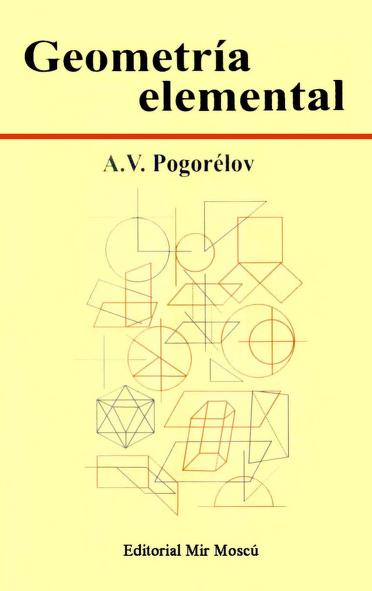
Mir_Geometría_Elemental_A._Pogorélov_0000

Geometría Elemental A. Pogorélov

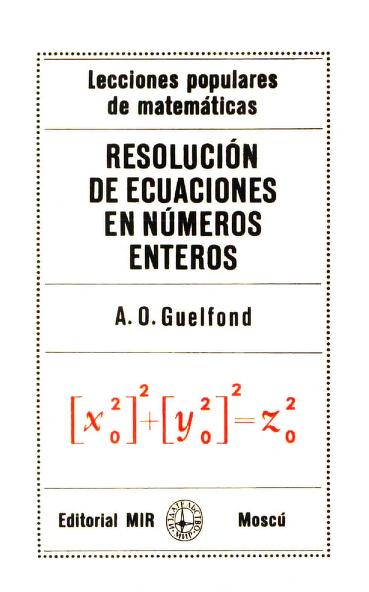
LPM_(08)_Resolución_de_ecuaciones_en_números_enteros_A._Guelfond_0000

LPM ( 08) Resolución De Ecuaciones En Números Enteros A. Guelfond

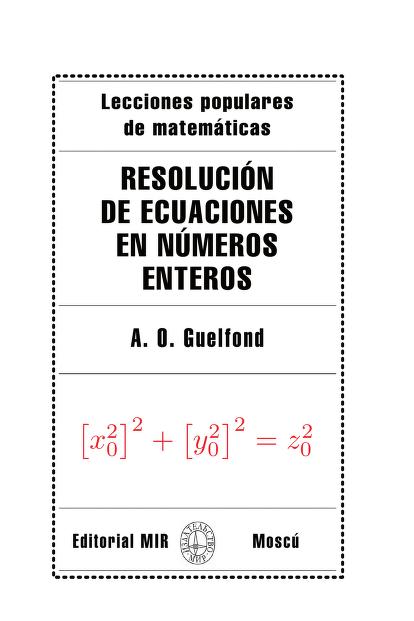
MIR_LPM_Resolución_de_ecuaciones_en_números_enteros._A. O. Guelfond_0000

LPM Resolución De Ecuaciones En Números Enteros. A. O. Guelfond

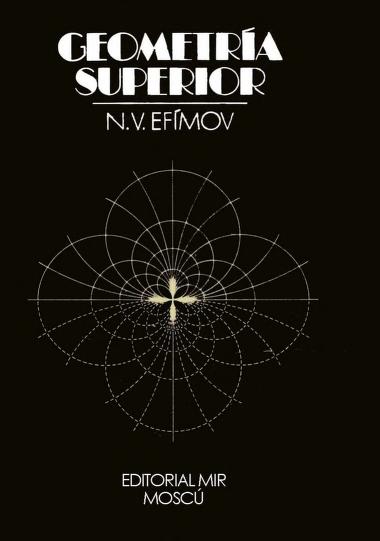
Mir_Geometría_Superior_N._Efimov_0000

Geometría Superior N. Efimov

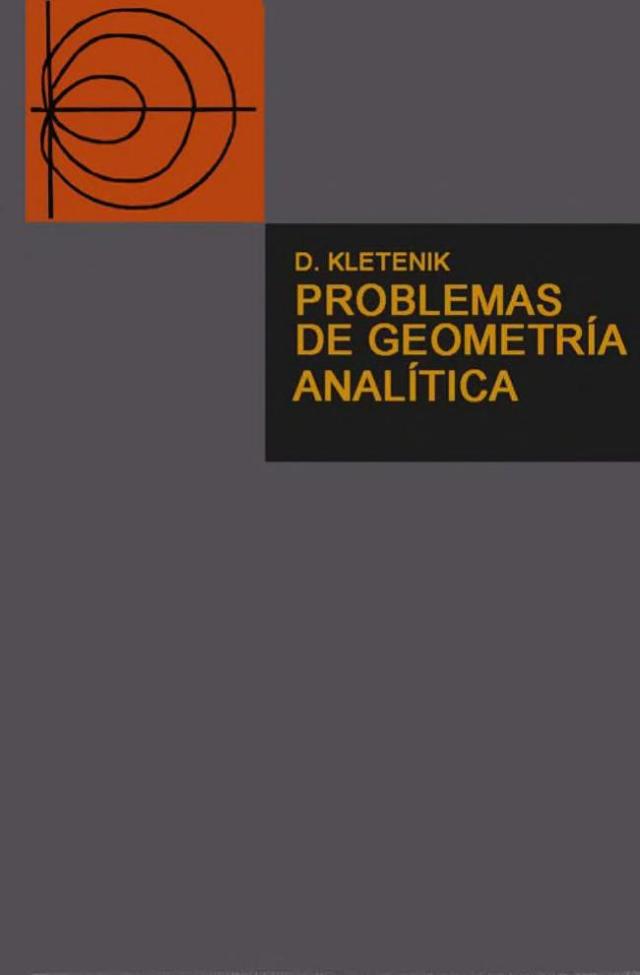
Mir_Problemas_de_Geometría_Analítica_D._Kletenik_0000

Problemas De Geometría Analítica D. Kletenik

Mir_Problemas_de_Geometría_Descriptiva_V._Gordon,_Y._Ivanov_&_T._Solntseva_0000

Problemas De Geometría Descriptiva V. Gordon, Y. Ivanov & T. Solntseva

Mir_Problemas_de_Geometría_Diferencial_A._Fedenko_0000

Problemas De Geometría Diferencial A. Fedenko

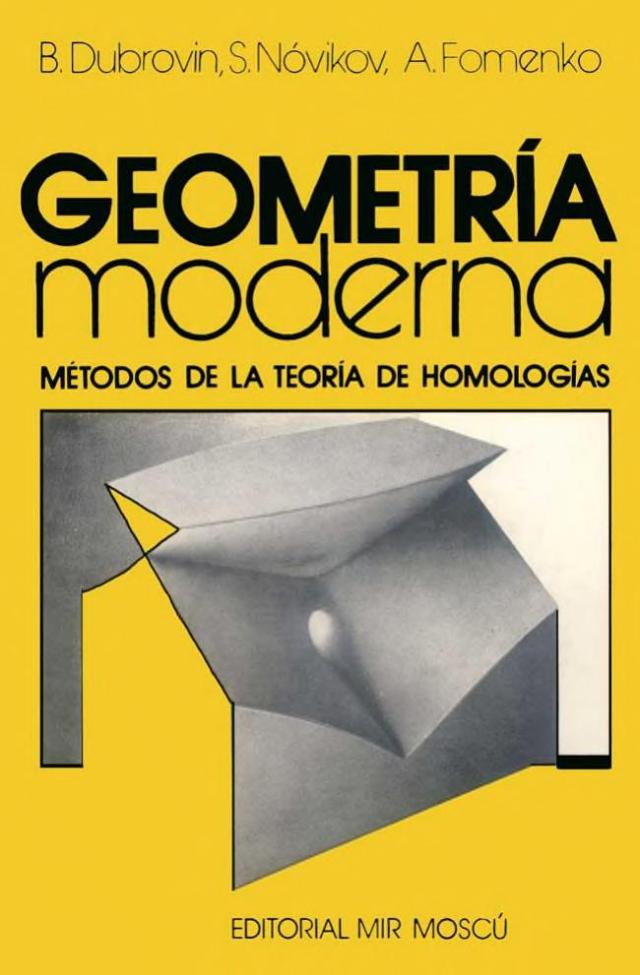
Mir_Geometría_Moderna_B._Dubrovin,_S._Nóvikov_&_A._Fomenko_0000

Geometría Moderna B. Dubrovin, S. Nóvikov & A. Fomenko

Mir_Geometría_Diferencial_A._Pogorélov_0000

Geometría Diferencial A. Pogorélov

Mir_Geometría_N._Yákovliev_0000

Geometría N. Yákovliev

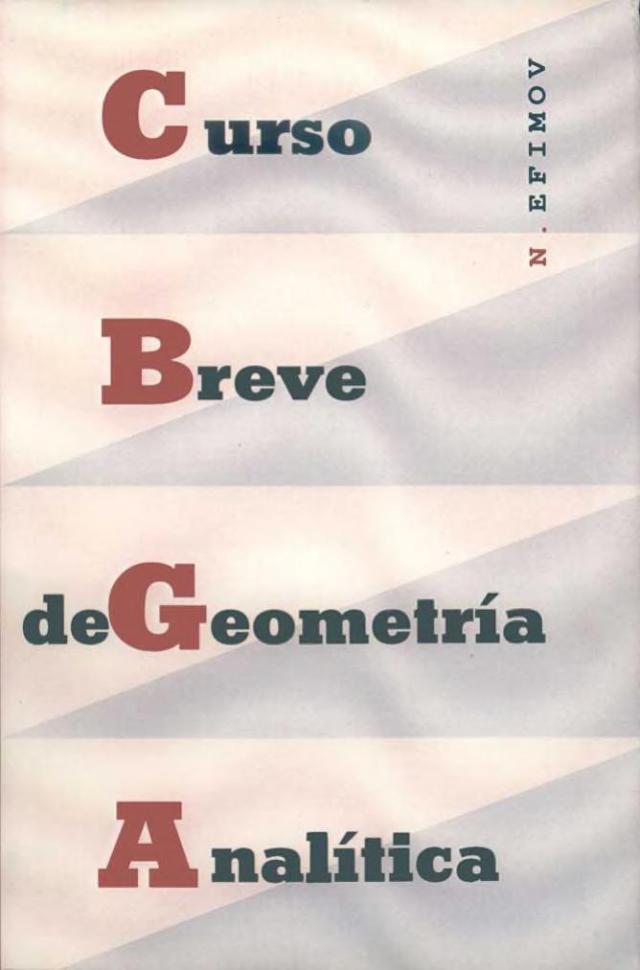
Mir_Curso_Breve_de_Geometría_Analítica_N._Efimov_0000

Curso Breve De Geometría Analítica N. Efimov


Posted in books, Editorial Mir, mathematics, mir books, mir publishers | Tagged , , , , , , , , , , , | 1 Comment