A book about bees and their habits and interaction with humans.
মৌমাছি এবং তাদের অভ্যাস এবং মানুষের সাথে মিথস্ক্রিয়া সম্পর্কে একটি বই৷
অনুবাদ: মাহবুবুল হক
All credits to sovietbooksinbengali blog.
A book about bees and their habits and interaction with humans.
মৌমাছি এবং তাদের অভ্যাস এবং মানুষের সাথে মিথস্ক্রিয়া সম্পর্কে একটি বই৷
অনুবাদ: মাহবুবুল হক
All credits to sovietbooksinbengali blog.
গণের বাসা (Nest of Gentry) উপন্যাসটি ইভান তুর্গেনেভ রচিত এবং এটি রাশিয়ার ১৯শ শতাব্দীর উচ্চবিত্ত সমাজের জীবন ও মূল্যবোধের পরিবর্তনকে চিত্রিত করে। উপন্যাসের কেন্দ্রীয় চরিত্র, লাভরেটস্কি, পশ্চিমা ইউরোপে অনেক বছর কাটানোর পর রাশিয়ায় ফিরে আসে এবং তার প্রাক্তন প্রেমিকা, লিসা, সাথে পুনরায় মিলিত হয়। লাভরেটস্কি তার পাপী জীবন এবং ব্যর্থ বিবাহ থেকে মুক্তি পেতে চায়। লিসার প্রেমে পড়ার পরেও, তার অতীতের ভুলগুলি এবং সামাজিক বাধাগুলি তাদের সম্পর্ককে জটিল করে তোলে। এই উপন্যাসটি প্রেম, হতাশা, এবং নৈতিক পুনর্জাগরণের একটি মর্মস্পর্শী কাহিনী যা তুর্গেনেভের সুনিপুণ লেখনী এবং চরিত্র বিশ্লেষণের জন্য বিখ্যাত।
দ্বিতীয় সংস্করণ অনুবাদ: কামাক্ষীপ্রসাদ চট্টোপাধ্যায় সম্পাদনা: অরুণ সোম অঙ্গসজ্জা: কনস্তান্তিন রুদাকোভ
All credits to sovietbooksinbengali blog.
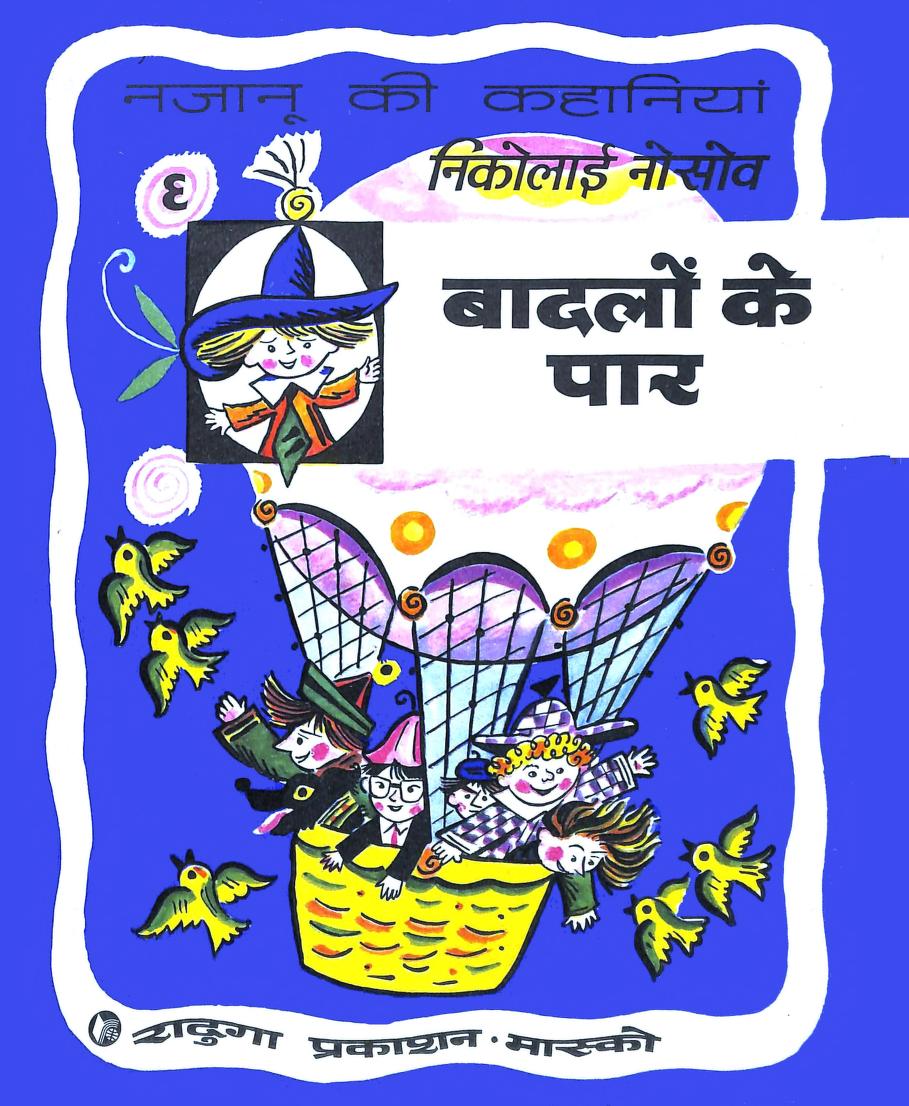
আদরের ছোটো বন্ধুরা! আমাদের দুই নায়ক – যাদুকর পটুয়া, ড্রয়িঙের মাস্টার পেনসিল আর সব কাজের কাজী, লোহার মানুষ সর্বকর্মা তাদের বৃত্তান্ত, তাদের নানা অ্যাডভেঞ্চার, তাদের যাদু, ইশকুলের খবর শোনাবার জন্যে এবার বিদেশ যাত্রা করল। বইটি পড়ার পর তোমাদের অনেকেই নিশ্চয় ধরতে পারবে যে যাদুর ইশকুলটা খাস জীবন ছাড়া আর কিছুই নয়। সে জীবন কিছু শিখিয়েছে, সবই শেখাবে। তোমরা কি চিঠি লিখে জানাবে বইটা থেকে তোমরা কী বুঝলে, কী শিক্ষা পেলে? নানান জায়গা থেকে ছেলেমেয়েদের চিঠি আমরা পাই অনেক। যাদু ইশকুলের ঠিকানাটা জানতে চায় সবাই। একটি ছেলে লিখেছে: ‘যাদু, ইশকুলের ঠিকানাটা আমায় দিন, নিজের জন্যে একটা বাইসাইকেল, টোটা সমেত বন্দুক আর দুটি দম- দেওয়া খেলনা মোটরগাড়ি আঁকতে চাই।’ আরেকজনের ইচ্ছে একটু অন্য রকম: ‘যাদু ইশকুলে ভর্তি হতে চাই, আমাদের গাঁয়ের জন্যে ঠিক অমনি একটা ইশকুল এ’কে দেব, ফলে সব ছেলেমেয়েই তাতে পড়তে পারবে। তাছাড়া বাড়ির কাছে একটা নদী আঁকতে চাই, ঠাকুমাকে তাহলে বেশি দূর হাঁটতে হবে না, বুড়ো হয়ে গেছেন তো…’ দেখেছ তো, কত রকমের ছেলে আছে, কত রকম তাদের চিঠি। আমাদের ইচ্ছে কী জানো, তোমরা ওই দ্বিতীয় ছেলেটির মতো হও। কেন, সেটা নিজেরাই ভেবে দ্যাখো।
ইউরি দুজকভ
অনুবাদ: ননী ভৌমিক ছবি এ’কেছেন নিকোলাই গ্রিশিন
All credits to sovietbooksinbengali blog
A picture story book for children.
All credits to sovietbooksinbengali blog.
লাতভিয়ার লৌকিক উপকথা ছবি এঁকেছেন নিকোলাই কচেগিন অনুবাদ: ননী ভৌমিক কথক: ল্যুদমিলা কপিলোভা
A picture story book for children.
All credits to sovietbooksinbengali blog.
রুশ থেকে অনুবাদ: হায়াৎ মামুদ ছবি এ’কেছেন লেখিকা
A picture story book for children.
All credits to sovietbooksinbengali blog.
অনুবাদ: ননী ভৌমিক অঙ্গসজ্জা: ভ্লাদিমির বিসেনগালিয়েভ

This book is intended as an introduction to mathematical analysis. It includes material covering all sections of mathematical analysis taught at the secondary school level. The book examines derivatives of polynomials, trigonometric functions, exponential and logarithmic functions. The integral is presented as an operation inverse to differentiation, as the area under a graph, and as the limit of finite sums. At the end of book, exercises are provided for each section.
The emphasis is placed not on the rigour of exposition, but on computational technique.
For senior school students and for anyone beginning to study mathematical analysis.
Translated from the Russian and Typeset by Damitr Mazanav.
Released under Creative Commons by Share Alike 4.0
You can get the book here
Preface v
1 The Derivative 1
The Derivative and the Tangent . . . . . . . . . 2
Continuity of a Function . . . . . . . . . . . . . 13
2 Computing the Derivative of a Polynomial 15
3 Maximum and Minimum 23
Positivity and Negativity of the Derivative . . 24
Maximum and Minimum . . . . . . . . . . . . 26
Rolle’s Theorem . . . . . . . . . . . . . . . . . . 28
Lagrange’s Formula of Finite Increments of a
Function . . . . . . . . . . . . . . . . . . . 30
The Second Derivative . . . . . . . . . . . . . . 33
Distinguishing Between a Maximum and a
Minimum . . . . . . . . . . . . . . . . . . 34
4 Study Of Functions 36
Inflection Point . . . . . . . . . . . . . . . . . . 42
Exercises . . . . . . . . . . . . . . . . . . . . . . 46
5 Derivatives of Trigonometric Functions 49
Derivative of a Product and a Quotient . . . . 53
The Derivative of tan x function . . . . . . . . . 55
Derivative of a Composite Function . . . . . . 56
Inverse Function . . . . . . . . . . . . . . . . . . 58
Derivative of a Rational Power of x. . . . . . . 62
6 Indefinite Integral 65
7 Definite Integral 75
Definite Integral as the Limit of a Sequence of Finite Sums . . . . . . . . . . . . . . . . . 82
8 Postulate of Convergence 85
Postulate of Convergence . . . . . . . . . . . . 88
9 Newton’s Binomial and the Sum of a Geometric Progression 92
Newton’s Binomial . . . . . . . . . . . . . . . . 92
Sum of a Geometric Progression . . . . . . . . 96
10 The Function e^x 98
Study of the Function ωn(x). . . . . . . . . . . 99
Case |x| 1 . . . . . . . . . . . . . . . . . . . . 102
Fundamental Property of the Function exp(x) 105
The Number e and the Function exp x. . . . . 108
The Derivative of the Function exp x . . . . . . . . 110
11 The Function ln x 112
12 Expansion of the Function ex into a Series 114
13 Epilogue: On the Theory of Limits 117
The Theory of Limits . . . . . . . . . . . . . . . 118
Continuous Functions . . . . . . . . . . . . . . 122
14 Exercises 124
Section 1 . . . . . . . . . . . . . . . . . . . . . . 124
Section 2 . . . . . . . . . . . . . . . . . . . . . . 128
Section 3 . . . . . . . . . . . . . . . . . . . . . . 128
Section 4 . . . . . . . . . . . . . . . . . . . . . . 130
Section 5 . . . . . . . . . . . . . . . . . . . . . . 137
Section 6 . . . . . . . . . . . . . . . . . . . . . . 145
Section 7 . . . . . . . . . . . . . . . . . . . . . . 151
Section 8 . . . . . . . . . . . . . . . . . . . . . . 154
Section 10 . . . . . . . . . . . . . . . . . . . . . 155
Section 11 . . . . . . . . . . . . . . . . . . . . . 156
Section 13 . . . . . . . . . . . . . . . . . . . . . 159
The book gives a general idea of Russia’s economy before the
revolution, and describes the landmarks in the country’s economic
development following the establishment of Soviet power.
Although it is not a monograph for specialists and does not contain
a detailed record of the economic growth of the U.S.S.R., we
hope it will give the reader a fairly comprehensive picture of the
basic problems and stages in the Soviet economic development.
Translated from the Russian by David Fidlon
Edited by G. Ivanov-Mumjiev
You can get the book here and here
Publishers’ Note 7
Chapter I. THE ECONOMY OF FEUDAL RUSSIA 9
1. The Feudal and Serf System of Economy and Its Distinctive Features in Russia 9
2. Agriculture as the Foundation of Economic Activity 13
3. Development of Crafts and Manufactories and Appearance of the Capitalist Factory 19
4. Growth of Towns and Expansion of Trade Ties 24
5. Abolition of Serfdom in Russia 28
Chapter II. RUSSIA’S ECONOMY IN THE EPOCH OF INDUSTRIAL CAPITALISM (1861-1900) 33
1. Development of Capitalist Relations 33
2. Growth of Capitalist Relations in Agriculture 38
3. Completion of the Industrial Revolution and Rise of Capitalist Industry 45
4. Growth of Commodity Circulation, Credit and the State Finance System 52
Chapter III. RUSSIA’S ECONOMY IN THE EPOCH OF IMPERIALISM 58
1. Characteristic Features of Russian Imperialism 58
2. Concentration of Production, Monopolies and Their Place in Russia’s Economy 64
3. Situation in Agriculture and Its Reconstruction Along Capitalist Lines 70
4. Rise of Finance Capital and Expansion of Domestic and Foreign Trade 76
5. Overthrow of Autocracy. The Economic Policy of the Bourgeois Provisional Government 81
Chapter IV. THE ECONOMY OF SOVIET RUSSIA AT THE TIME OF THE VICTORY AND DURING THE CONSOLIDATION OF THE SOCIALIST SYSTEM (1917-20) 86
1. World Historic Significance of the Great October Socialist Revolution 86
2. Workers’ Control and Nationalisation of Industry 93
3. Socialist Revolution in the Village. Agriculture and Food Situation 102
4. Economic Policy of the Socialist State 110
Chapter V. ECONOMIC REHABILITATION (1921-25) 116
1. Transition to Peaceful Economic Upbuilding. New Economic Policy (NEP) 116
2. Recovery in Agriculture 122
3. Rehabilitation of Industry 127
4. Trade as the Basic Link of Economic Policy 133
5. Normalisation of Money Circulation and Finances 136
Chapter VI. LAYING THE FOUNDATION OF THE SOCIALIST ECONOMY (1926-32) 140
1. Successes and Difficulties of Economic Upbuilding (1926-28) 140
2. Main Political and Economic Tasks of the First Five-Year Plan (1928-32) 148
3. Transformation of the U.S.S.R. from an Agrarian Country into an Industrial Power 150
4. Socialist Reconstruction of Agriculture 156
5. Trade, Finances and Rise of the People’s Welfare 162
Chapter VII. COMPLETION OF SOCIALIST ECONOMIC RECONSTRUCTION. VICTORY OF SOCIALISM 166
1. Principal Political and Economic Tasks of the Second Five-Year Plan (1932-37) 166
2. Growth of Socialist Industry and Completion of Its Technical Reconstruction 169
3. Consolidation of the Collective-Farm System and First Successes in Agricultural Production 175
4. Rise in Living Standards. Complete Victory of Socialism 179
5. Economic Development in the Pre-War Years of the Third Five-Year Plan Period (1938-June 1941) 182
Chapter VIII. U.S.S.R. ECONOMY IN THE PERIOD OF THE GREAT PATRIOTIC WAR OF 1941-45 189
1. Germany’s Perfidious Attack. The Character of the War, Its Outcome and Significance 189
2. Mobilisation of Industry for War Production 194
3. Situation in Agriculture and the Problem of Food Supplies 199
4. Wartime Transport 204
5. Finances During the War 207
Chapter IX. POST-WAR ECONOMIC REHABILITATION AND DEVELOPMENT IN THE PERIOD OF THE FINAL VICTORY OF SOCIALISM (1946-58) 211
1. General Situation 211
2. Economic Rehabilitation in 1946-48 215
3. Upsurge in Industry in the Fourth, Fifth and Sixth Five-Year Plan Periods 219
4. Successes and Difficulties in Agricultural Development 223
5. Development of Science and Culture and Further Improvement of Living Standards 228
Chapter X. SOVIET ECONOMY IN THE PERIOD OF FULL-SCALE COMMUNIST CONSTRUCTION 232
1. Seven-Year Plan as Part of the General Programme of Creating the Material and Technical Basis of Communism 232
2. The Results of the Seven-Year Plan in Industry and Transport 236
3. Agriculture in the Seven-Year Plan Period 242
4. Improvement in Living Standards and Progress in Science and Culture 247
5. Prospects for the Creation of the Material and Technical Basis of Communism 249
Translation of “Mnozhestvennaya generatsiya chastists”. Moscow, “Nauka” Press, 1974.
NASA TECHNICAL TRANSLATION NASA TT F – 15,757
New astrophysical discoveries have acquainted us with the world of ultra-high temperatures and pressures. Under these conditions, particles of atomic nuclei (nucleons) can be accelerated to energies which correspond to heating matter to trillions of degrees. When such particles collide, an unimaginably high energy is concentrated, leading to the simultaneous creation (generation) of a multitude of new particles: mesons, excited nucleons, and antiparticles. This book describes the experimental methods of studying multiple particle generation with the aid of cosmic rays and powerful charged particle accelerators.
You can get the book here and here
TABLE OF CONTENTS
Introduction 1
– In the World of Ultra-high Temperatures 1
– The Fundamental Forces of Nature 3
– Birth, Death, and Conservation — Three Facets of the Animate and Inanimate Worlds 7
– The Puzzle of Secondary Cosmic Radiation in Multiple Meson Generation 10
Chapter 1. Tracking the Invisible 15
– It is Not Always Necessary to See in Order to Detect and Identify Particles 15
– How are the Particles Nevertheless Photographed? 22
– Visible and Invisible Sparks Join in the Task 29
Chapter 2. Elastic Scattering and the Structure of Elementary Particles 33
– Electron “Supermicroscope” and the Structure of Nucleons 33
– Concerning the Use of Physically Meaningless Values of Quantities 39
– Resonances — New Particles or New States of Known Particles 45
Chapter 3. Diffractive and Coherent Modes of Particle Production 52
– Diffraction of Particles and Its Unexpected Consequences 52
– Is it Possible to Exchange Parts of the Vacuum? 58
– Concerning the Properties of That Which Hardly Exists 61
Chapter 4. Peripheral Processes 70
– “Memory”, Inertia, and the Structure of Particles 70
– How Can One Get an Inelastic Interaction From “One-Half” of an Elastic Interaction? 75
– Complex Regge Trajectories, Successes and Difficulties 83
Chapter 5. Statistics, Hydrodynamics, and Thermodynamics “Within” Elementary Particles 93
– Phase Space — The Cornerstone of Statistics 93
– The Laws of Motion of the Meson “Fluid” and Transverse Momenta of Particles 100
– An Examination of the Starting Points of the Hydrodynamic Theory 107
– Can One Manage with Only the Laws of Thermodynamics? 112
Chapter 6. Do Fireballs Really Exist? 119
– Does “Ball Lightning” Really Appear in Cosmic Rays? 119
– Multi-Peripheral Collisions and the Creation of Fireballs 126
– Colliding Beams Mean Serious Research 129
– Why Are Heavy Fireballs Necessary? 135
Chapter 7. What is the Nucleon Made Of 145
– A “Building Block” or a Detail of the “Architectural Design” of the Particles of Matter 145
– The Unexpected “Breaking Open” of the Nucleon With the Help of Virtual Photons 155
– Nuclear Cascades in Cosmic Rays and the Parton Model 160
Conclusion: Concerning Additional Problems and New Perspectives 168
– Paradoxes Within the Nucleons 168
– Aren’t There Too Many Models? 176
– The Route Upwards on the Ladder of Energy 186
Dear Children
Would you like to know why animals differ from each other? Why the Raven is black and not white? Why Lions don’t live in Siberia any more, and why the Bear has no thumb? Or how the Falcon lit a fire in the sky, how the Ant visited the Frog, and how the little Gnat triumphed over the Evil Spirit— Chuchunna?
This book will tell you fairy-tales and legends about various animals, birds, insects inhabiting the taiga and the tundra. Siberian boys and girls love listening to these stories and reading them, sometimes they even make up their own tales. We hope you will like these fairy-tales, too, as well as the pictures by Victor and Larisa Yegorov from Krasnoyarsk.
Happy reading!
The publishers hope that this Little book will bring together the interests of children of different countries, help them to study languages and introduce them to the favourite fairy-tale characters of young Siberians and other northern peoples. The designers have tried to reveal as vividly as possible the beauty and distinctness of each of the cultural traditions represented here. They have attired all the figures in colourful national dress and adorned the pages with original ornamental frames and special folklore symbols. Note that each group of tales has its own frame-line and symbols. They were developed from national motifs by the artist Victor Yegorov.
Compilation of text Galina Smirnova
Layout and design Yictor and Larisa Yegorov
Translation Olga Myazina and Galina Shchitnikova
Note: The book is bilingual in English and Russian.
You can get the book here and here
Contents
RUSSIAN FAIRY-TALES
7
THE CRANE AND THE HERON
9
THE BEAR AND THE DOG
11
THE GULLS AND ANGARA THE BEAUTIFUL
15
THE SOU1RREL AND THE NUTCRACKER
18
TUVINIAN FAIRY-TALES
21
IIOW THE CAMEL LOST I IIS GOOD LOOKS
23
THE LAZY OWL
25
THE WOOD-GROUSE AND THE DRAKE
28
WHY THE ELK HAS A LONG MUZZLE
29
EVENK FAIRY-TALES
31
HOW’ Tl IE FOX CHEATED THE OLD MAN
33
WHY THE CRUCIAN BECAME FLAT
35
THE PRICE OF THE NEEDLE
38
WHY THE BEAR HAS NO THUMB
39
THE SWAN AND Tl IE RAVEN
41
THE CUNNING FOX AND THE W’OODPECKER
44
SELKUP FAIRY-TALES
47
THE FALCON FIRE
49
HOW THE DOCj FOUND HIS MASTER
51
SEVEN ISLANDS ON THE YEN1SEI-R1VER
54
DOLGAN FAIRY-TALES
57
THE WAR BETWEEN THE PARTRIDGES
AND THE PIKES
59
THE ROGUISH FOX
65
THE SNOWY OWL LANGKEY
69
THE OLD MAN AND THE HARES
72
YAKUT FAIRY-TALES
75
THE LAZY MAN AND THE LINNET
77
WHY WINTER IS LONG AND SUMMER IS SHORT
79
THE LITTLE GNAT AND CHUCHUNNA
82
HOW THE PARTRIDGE SAVED THE HUNTER.
83
TOFALARIAN FAIRY-TALES
85
ULUGF.N FROM THE VALLEY OF FLOWERS
87
SIX NAMES OF THE BEAR
89
THE ANT AND THE GRASSHOPPER
94
HOW THE BEAR WAS PUNISHED
95
KET FAIRY-TALES
97
THE WOOD-GROUSE, THE DUCK AND THE GOOSE
99
WHY THE MOON IS COED IN THE SKY
102
DON’T STAY OVERN1GHI IN A BEAR’S DEN
104
THREE PRESENTS EROM THE SUN
105
BURYAT FAIRY-TALES
107
WHY EIONS NO LONGER LIVE IN SIBERIA
109
THE MOUSE AND THE CAMEL
111
THE SWALLOW AND THE GNAT
114
THE HEN AND THE CAT
115
THE SOUIRREL AND THE MOUSE
117
1WO MICE
119
THE SNOW AND THE HARE
121
THE CRANE
122
THE HEN AND THE BAT
124
THE WOLF
126
MANSI FAIRY-TALES
129
WHY THE RAVEN IS BLACK
131
THE YELLOW WAG TAIL IS A HERO
133
THE LITTLE HARE
135
NOOMY-TOROOM’S GIRDLE
138
NENETS FAIRY-TALES
139
HOW THE FOX TRIED TO BECOME RICH
141
THE LEADEN FLY
145
THE POLAR BEAR AND THE BROWN BEAR
147
THE GIRL AND THE HARRIER
149
THE FIRST CUCKOO
153
KHAKASS FAIRY-TALES
155
THE FROG AND THE CRANE
157
WHY THE SNIPE FLIES AWRY
161
THE SWAGGERING SHAMAN
162
HOW THE ANT VISITED THE FROG
164
THE MAGIC ROOSTER
165
NANAI FAIRY-TALES
167
IOGA
169
A FAIRY SALMON
173
WHY THE ANIMALS DIFFER FROM EACH OTHER
175
NGANASSAN FAIRY-TALES
177
Tl IE DOMESTIC AND THE WILD DEER
179
THE FOX’S AXE
181
MOW THE DEER RECONCILED TUJ-NJAMY
AND MOU-NJAMY
185
HOW THE DUCK GATHERED EARTH
186
SHORIAN FAIRY-TALES
187
THE FIRE-FLOWER AND THE BEE
189
THE QUICK-WITTED OTTER
190
TWO BROOKS
193
THEY SAY IN SIBERIA
197
GLOSSARY
201