Riddles In Rhymes

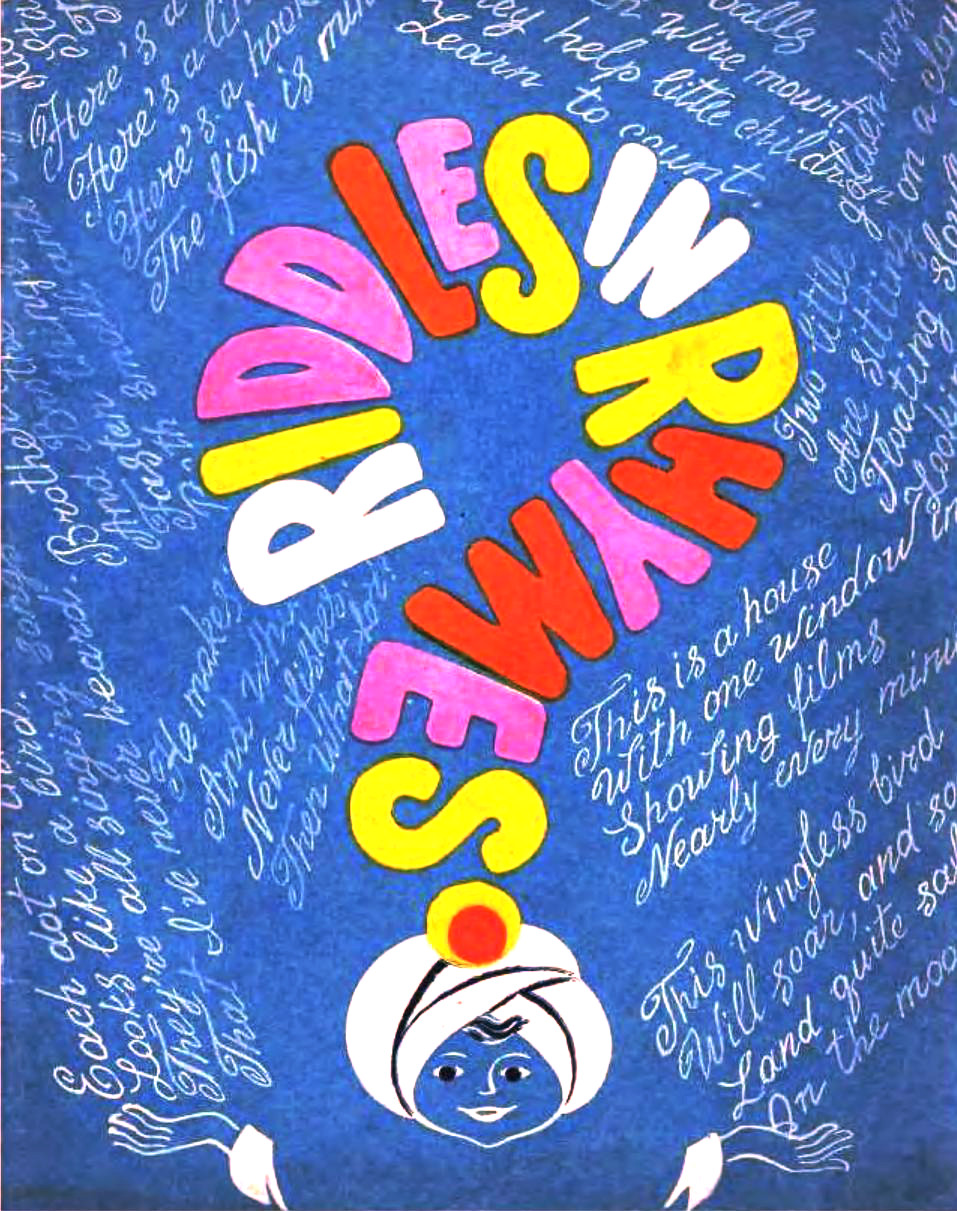
In this post, we will see the book Riddles In Rhymes by Yuli Polyakov.

About the book

Dear boys and girls!
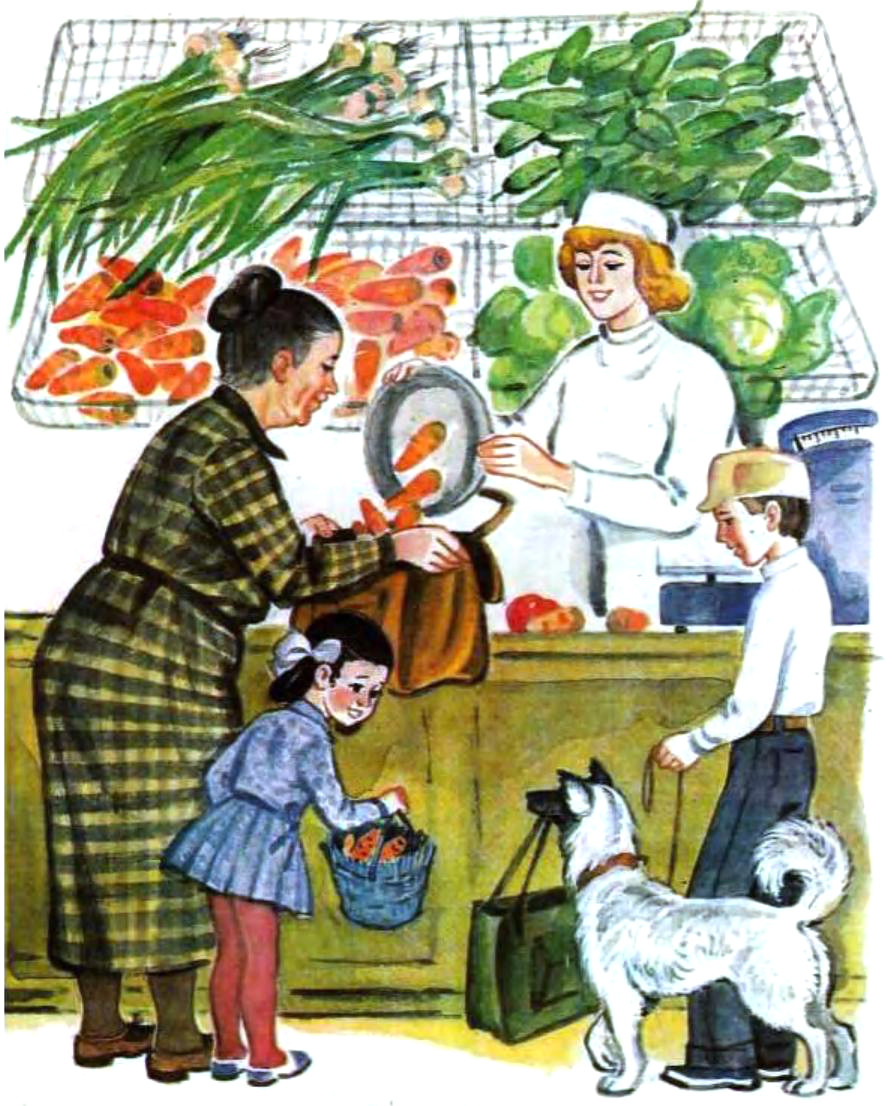
On each page of this book you will find merry riddles in rhymes and coloured pictures to these riddles. They are about things that surround you in your everyday life: at home, in school, in the street, etc. Some o f the riddles are about animals, birds and insects.

Head the rhymes, look at the pictures, and guess what’s what. This done, verify your choice with the answers at the end of the book.

And now — go ahead!

The book was translated from Russian by and funtastic illustrations are by Boris Rytman. The book was published in 1981 by Prosveshcheniye publishers.

All credits to Guptaji.

You can get the book here (cleaned version) and here. The scan is not very high resolution, but readable.

Follow us on The Internet Archive: https://archive.org/details/@mirtitles

Follow Us On Twitter: https://twitter.com/MirTitles

Write to us: mirtitles@gmail.com

Fork us at GitLab: https://gitlab.com/mirtitles/

Add new entries to the detailed book catalog here.

Posted in books, children's books, children's stories | Tagged , , , , , , | Leave a comment

Electronic Boy From The Portmanteau

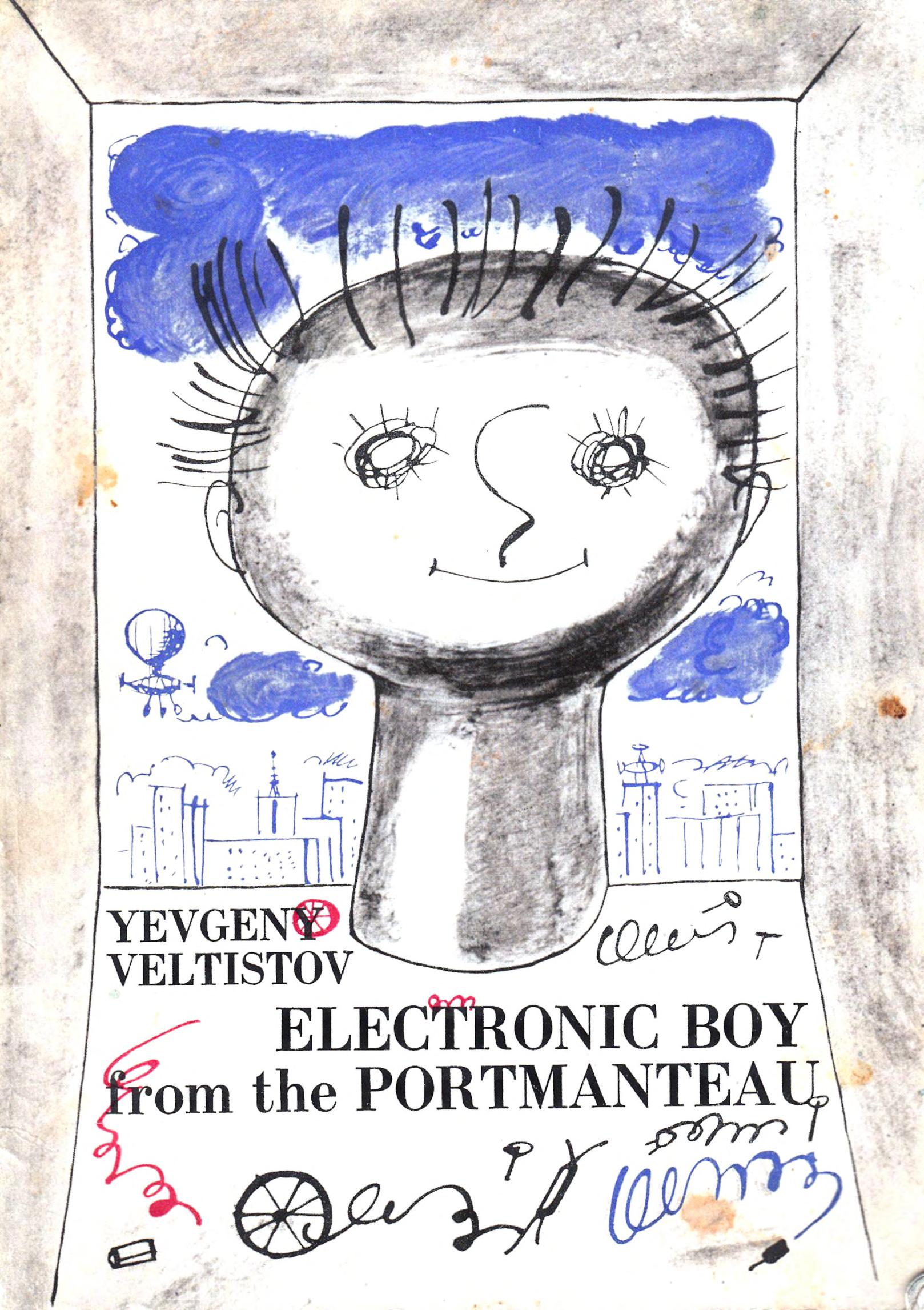
In this post, we will see the book Electronic Boy From The Portmanteau by Yevgevy Veltistov.

About the book

Boys and Girls,

You’ve probably guessed what Electronic is? Right, he’s a boy-robot! But the cream of the joke is that, by sheer chance, he turns out to be the live double of a schoolboy, Sergei Cheesekov. They meet and make friends – and immediately fantastic and funny adventures happen to them both. Sergei quickly gains fame as a World Champion runner, an animal-trainer, and an honor pupil at school – but that’s enough. Read the book yourselves, and join Sergei and Electronic at a math lesson in a Moscow school, see the circus with them, and visit the cybernetics laboratory of Professor Gromov. Finally, when the cat’s out of the bag, and their secret is discovered – join the children who teach Electronic to laugh. Wouldn’t it be fun if you had a friend like Electronic?

About the Author

Yevgeny Serafimovich Veltistov was a Soviet writer and screenwriter, who wrote a series of science fiction tales for young readers.

He was born into the family of a military engineer in 1934. In the second year of the Great Patriotic War, he came to study at school. There were few books. There are even fewer notebooks. I wanted to read very much. When asked who you will become, he replied: “A seller of children’s books. To read everything.”
Then he changed his mind. I decided to become a journalist. It was a firm decision. Graduated from the Faculty of Journalism of Moscow State University named after M.V. Lomonosov in 1956. He began to work – first in newspapers, then – as a department editor in the popular magazine “Ogonyok”. He was in charge of feuilletons and all sorts of things that were printed on the last pages.

He brought the manuscript of the first book to the Children’s Literature publishing house. Soon she saw the light. Others saw the light behind it.

from goodreads page

The book was translated from Russian by Gladys Evans and was illustrated and designed by Y. Krasny. The book was published in 1969 by Progress.

All credits to Guptaji.

You can get the book here (a cleaner version of the next link) and here.

Follow us on The Internet Archive: https://archive.org/details/@mirtitles

Follow Us On Twitter: https://twitter.com/MirTitles

Write to us: mirtitles@gmail.com

Fork us at GitLab: https://gitlab.com/mirtitles/

Add new entries to the detailed book catalog here.

Contents

THE FOUR-HANDLED PORTMANTEAU 6

AN UNEXPECTED FRIEND

White Lab-Coat, or Formulas? 17
Who’s the Champion? 29
The Magician of All Time 43

ALL ABOUT ELECTRONIC

The Cunning Y, the Dog’s Head and Other Relatives of Electronic 53
How Electronic Was Born 61
Teaching Electronic 68
X-Rays Show Nothing 74

THE SECRET

You Are Me! 81
Programmist-Optimist 85
“The Bride’s Chair” 90
Three Chancellors of the Theorem 95
Electronic’s First Failures 104
Hippopotamus Code Language 112
Conversations with a Goose and a Serpentonian 122
A Good Thing Dogs Don’t Talk 132

THE SECRET TURNS BURDEN

After All, Pm a Human Being! 137
What Does It Mean—to Think? 144
Duel with the “Trainer” 150
If Only There Were a Time Machine 154

MEN AT THE HELM

Quiz Day 169
Cheesekov — That’s Me 177
Hes Laughing! 178
What Happened After 186

Posted in books, children's books, children's stories, literature, progress publishers, science fiction, soviet | Tagged , , , , , , , , | Leave a comment

The Shortest Lines (Little Mathematics Library) – Lyusternik

In this post, we will see another book from the Little Mathematics Library titled The Shortest Lines Variational Problems by Lyusternik.

About the book

A pamphlet based on lectures read by the author to Moscow University’s schools mathematics club. Deals in an elementary way with a number of variational problems, such as finding the shortest curve uniting two points on a given surface. Suitable for readers with “O” level mathematics.

This book is an attempt to examine from the elementary
point of view a number of so-called variational problems.
These problems deal with quantities dependent on a curve,
and a curve for which this quantity is either maximum or
minimum is sought. Such are, for example, problems in
which it is required to find the shortest of all the curves connecting two points on a surface, or among all the closed curves of a given length on a plane it is necessary to find that one which bounds the maximum area, and so on.

The material of this book was basically presented by the author in his lectures at a school mathematical circle of the
Moscow State University. The contents of the first lecture
(Secs. I.1-III.3) in the main coincides with the contents of
Geodesic Lines, published by the author in 1940. Only the knowledge of elementary mathematics is required to master this course. Moreover, the first chapters are quite elementary. Others while not requiring special knowledge demand a greater aptitude for mathematical perusal and meditation.

The entire material of this book may be considered as an
elementary introduction to the calculus of variations (a
branch of mathematics dealing with problems of finding the
functional minimum or maximum). The calculus of variations does not enter into the first concentric cycle of the higher mathematics course that is studied, for example, in
technical colleges. In our opinion, however, for a student
who begins to study higher mathematics, it is not useless
to look further ahead.

The book was translated from Russian by Yuri Ermolyev and was published in 1983.

A big thank you to @4evercla6 for this and two more books from LML series. See the comment in the LML taking stock post. We will see them in the next couple of posts.

Now only The Euler Characteristic by Yu. A. Shaskin remains from the list!

You can get the book here.

Follow us on The Internet Archive: https://archive.org/details/@mirtitles

Follow Us On Twitter: https://twitter.com/MirTitles

Write to us: mirtitles@gmail.com

Fork us at GitLab: https://gitlab.com/mirtitles/

Add new entries to the detailed book catalog here.

Contents

Introduction 7

LECTURE 1

Chapter I. Shortest Lines on Simple Surfaces 9

I.1. Shortest Lines on Polyhedral Surfaces 9
I.2. Shortest Lines on a Cylindrical Surface 14
I.3. Shortest Lines on a Conical Surface 22
I.4. Shortest Lines on a Spherical Surface 30

Chapter II. Some Properties of Plane and Space Curves and Associated Problems 38

II.1. Tangent and Normals to Plane Curves and Associated Problems 38
II.2. Some Information on the Theory of Plane and Space Curves 42

Chapter III. Geodesic Lines 49

III.1. Bernoulli’s Theorem on Geodesic Lines 49
III.2. Additional Remarks Concerning Geodesic Lines 54
III.3. Geodesic Lines on Surfaces of Revolution 58

LECTURE 2

Chapter IV. Problems Associated with the Potential Energy of Stretched Threads 61

IV.1. Motion of Lines that Does Not Change Their Length 61
IV.2. Evolutes and Involutes 67
IV.3. Problems of Equilibrium of a System of Elastic Threads 68

Chapter V. The Isoperimetric Problem 73

V.1. Curvature and Geodesic Curvature 73
V.2. An Isoperimetric Problem 76

Chapter VI. Fermat’s Principle and Its Corollaries 82

VI.1. Fermat’s Principle 82
VI.2. The Refraction Curve 85
VI.3. The Problem of Brachistochrone 89
VI.4. The Catenary and the Problem of the Minimal Surface of Revolution 92
VI.5. Interrelation Between Mechanics and Optics 101

Posted in books, little mathematics library, mathematics, mir books, mir publishers, soviet | Tagged , , , , , , , , , , , , , , , , , , , , , , , , , | 6 Comments

Geometrical Constructions With Compasses Only (Little Mathematics Library) – Kostovskii

In this post, we will see the book from the series Little Mathematics Library titled Geometrical Constructions With Compasses Only by A. Kostovskii.

About the book

This booklet is intended for a wide circle of readers. It should help teachers and pupils of senior classes of secondary schools to acquaint themselves in greater detail with geometrical constructions carried out by compasses alone. It can serve as a teaching aid in school mathematical clubs. The booklet can also be used by students of physical and mathematical departments of universities and teachers’ training colleges to deepen their knowledge of elementary mathematics.

The book was translated from the Russian by Janna Suslovich and was first published by Mir Publishers in 1986. There is a Topics in Mathematics version of this book too.

A big thank you to @4evercla6 for this and two more books from LML series. See the comment in the LML taking stock post. We will see them in the next couple of posts.

Now only The Euler Characteristic by Yu. A. Shaskin remains from the list!

You can get the Little Mathematics Library version of the book here.


Topics in Mathematics version here.

Follow us on The Internet Archive: https://archive.org/details/@mirtitles

Follow Us On Twitter: https://twitter.com/MirTitles

Write to us: mirtitles@gmail.com

Fork us at GitLab: https://gitlab.com/mirtitles/

Add new entries to the detailed book catalog here.

Contents

Preface 6

Introduction 7

PART 1
CONSTRUCTIONS WITH COMPASSES ALONE
1. On the possibility of solving geometrical construction problems by means of compasses alone: the basic theorem 9
2. Solution of geometrical construction problems by means of compasses alone 19
3. Inversion and its principal properties 33
4. The application of the method of inversion to the geometry of compasses 37

PART 2
GEOMETRIC CONSTRUCTIONS BY MEANS OF COMPASSES ALONE BUT WITH RESTRICTIONS

5. Constructions by means of compasses alone with the opening of the legs restricted from above 46
6. Constructions by means of compasses alone with the angle restricted from below 63
7. Constructions using only compasses with constant opening of the legs 66
8. Constructions with compasses alone on condition that all circles pass through the same point 67

Appendices 76

Appendix 1 Symbols and Notations Used in the Book 76

Appendix 2 Proof for Problem 18 in the General Case 77

References 79

Posted in books, little mathematics library, mathematics, mir books, mir publishers, soviet | Tagged , , , , , , , | 4 Comments

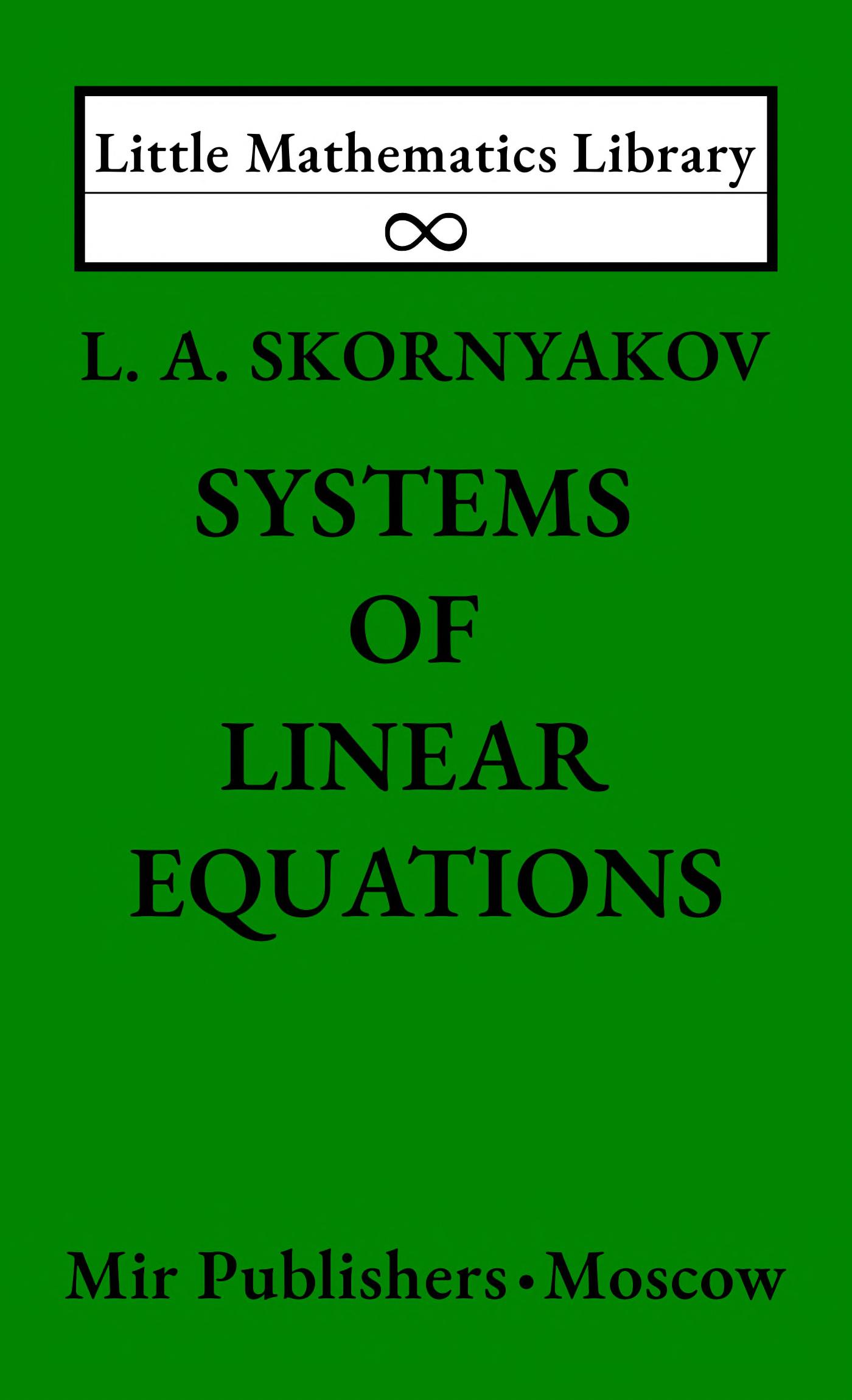
Systems of Linear Equations (Little Mathematics Library) – Skornyakov

In this post, we will see the book from the series Little Mathematics Library titled Systems of Linear Equations by L. A. Skornyakov.

About the book

The book contains a complete exposition of the theory of systems of linear equations employing only elementary operations on matrices. The method of complete mathematical induction is, formally, not used here. However, in some cases it is hidden behind the words “etc.”. Each section is followed by exercises. The main purpose of the exercises is to give the reader an opportunity to test his mastery of the material. The book is intended for a wide circle of readers, including pupils of senior classes of secondary schools, who are interested in mathematics.

The book was translated from Russian by Eugene Yankovsky and was published in 1988 by Mir.

A big thank you to @4evercla6 for this and two more books from LML series. See the comment in the LML taking stock post. We will see them in the next couple of posts.

Now only The Euler Characteristic by Yu. A. Shaskin remains from the list!

You can get the book here.

Follow us on The Internet Archive: https://archive.org/details/@mirtitles

Follow Us On Twitter: https://twitter.com/MirTitles

Write to us: mirtitles@gmail.com

Fork us at GitLab: https://gitlab.com/mirtitles/

Add new entries to the detailed book catalog here.

Contents

Preface 6

1. Systems of Linear Equations and Their Solutions 7
2. Matrices and Their Elementary Transformations 11
3. A Method for Solving Systems of Linear Equations 22
4. The Rank of a Matrix 31
5. The Theorem on Principal Unknowns 39
6. Fundamental Systems of Solutions 48

Answers 56
Solutions 60


Posted in books, little mathematics library, mathematics, mir books, mir publishers | Tagged , , , , , , , , , , , | 8 Comments

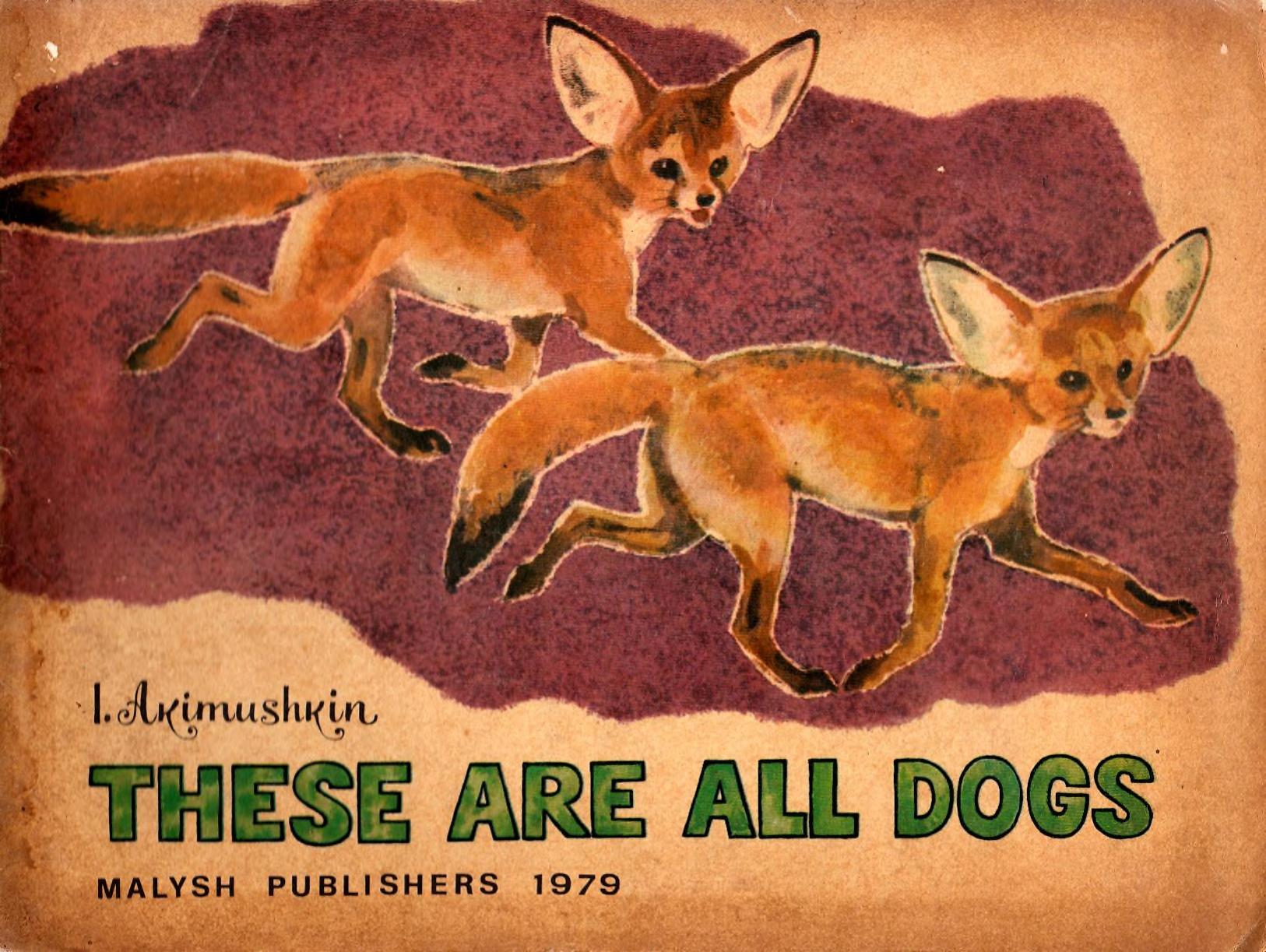
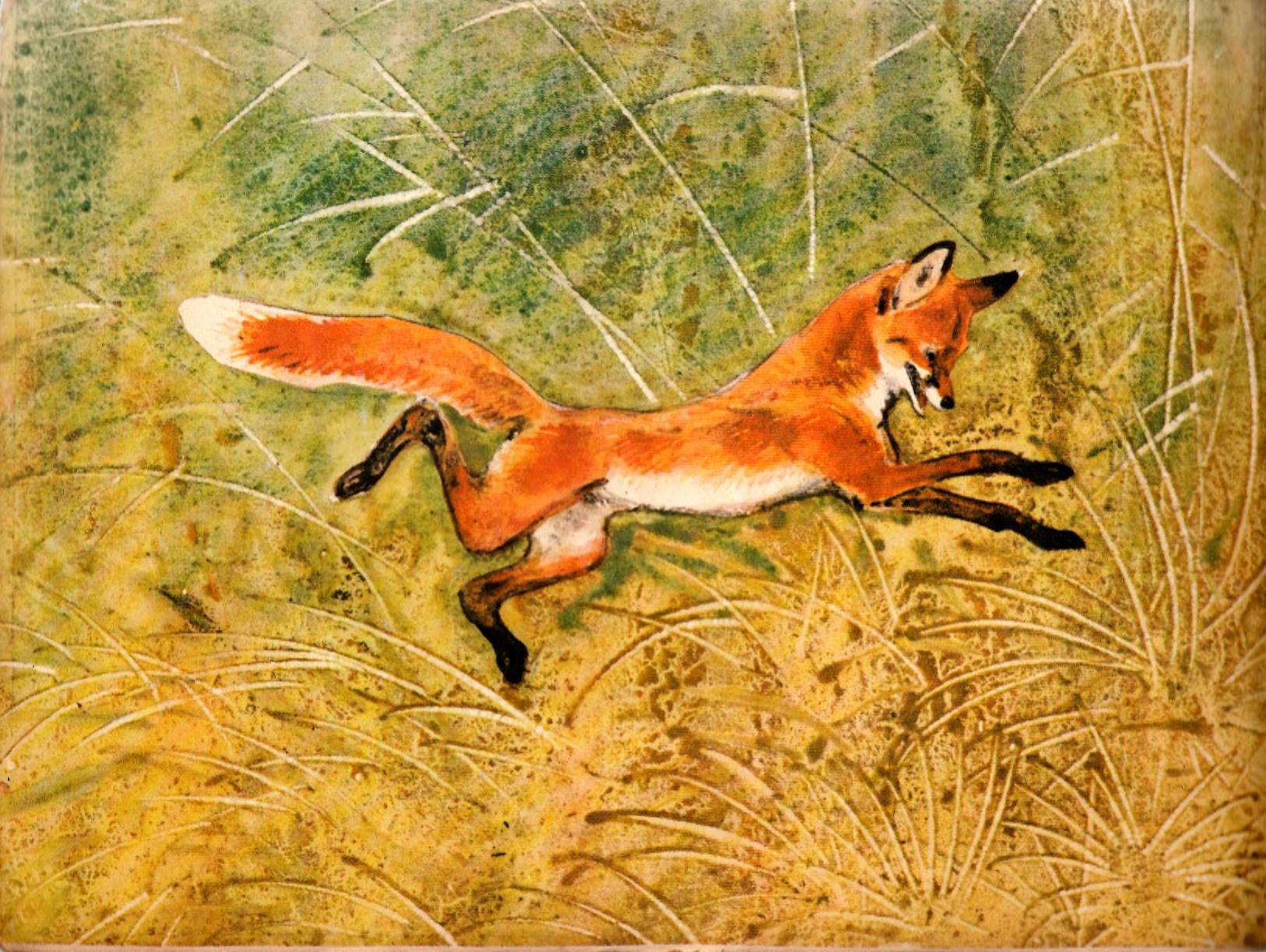
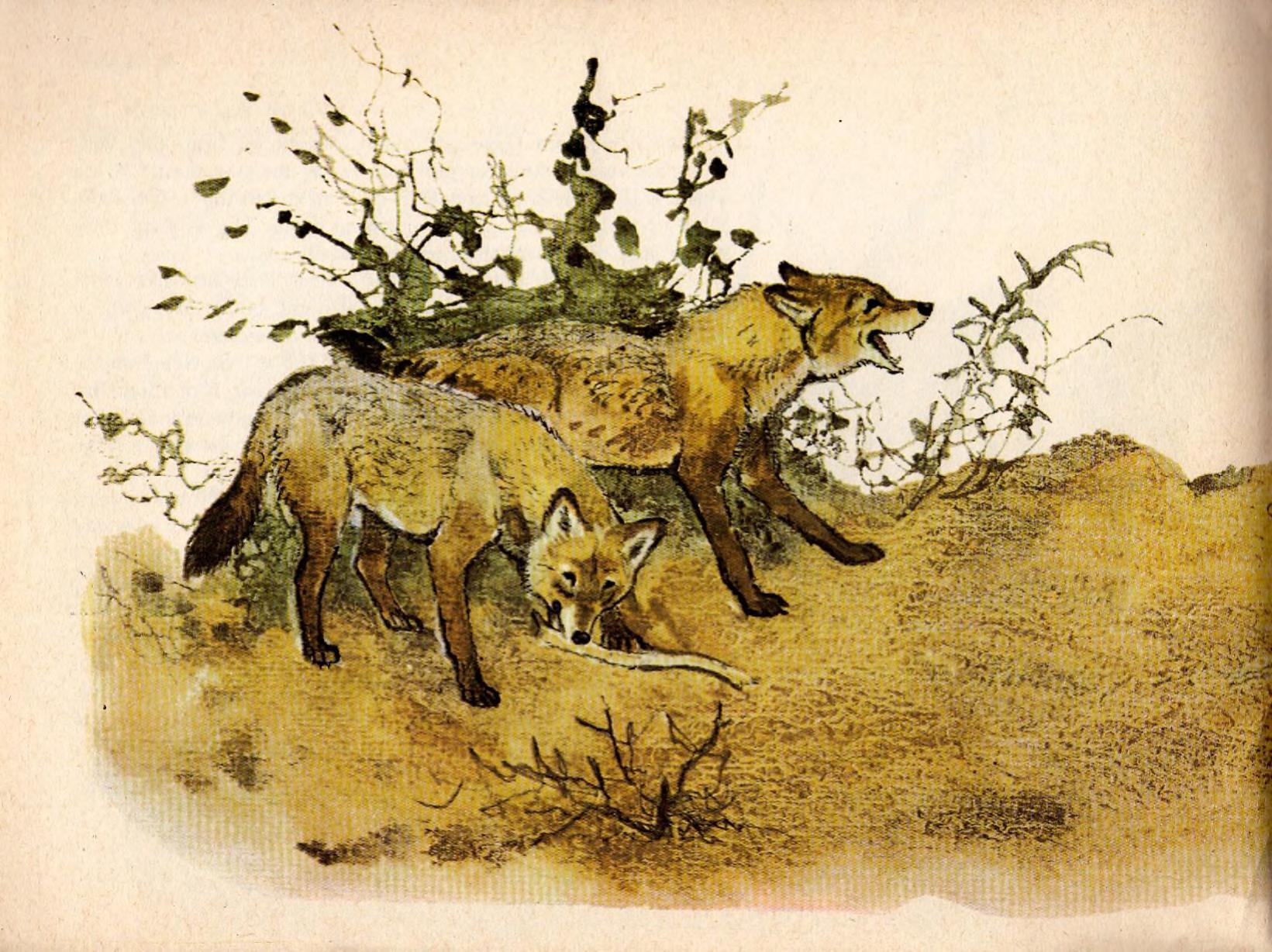
The Dog Family / These Are All Dogs / ఇవన్నీ కుక్కలే – Akimushkin

In this post, we will see the book The Dog Family aka These Are All Dogs by Igor Akimuskhin.

About the book

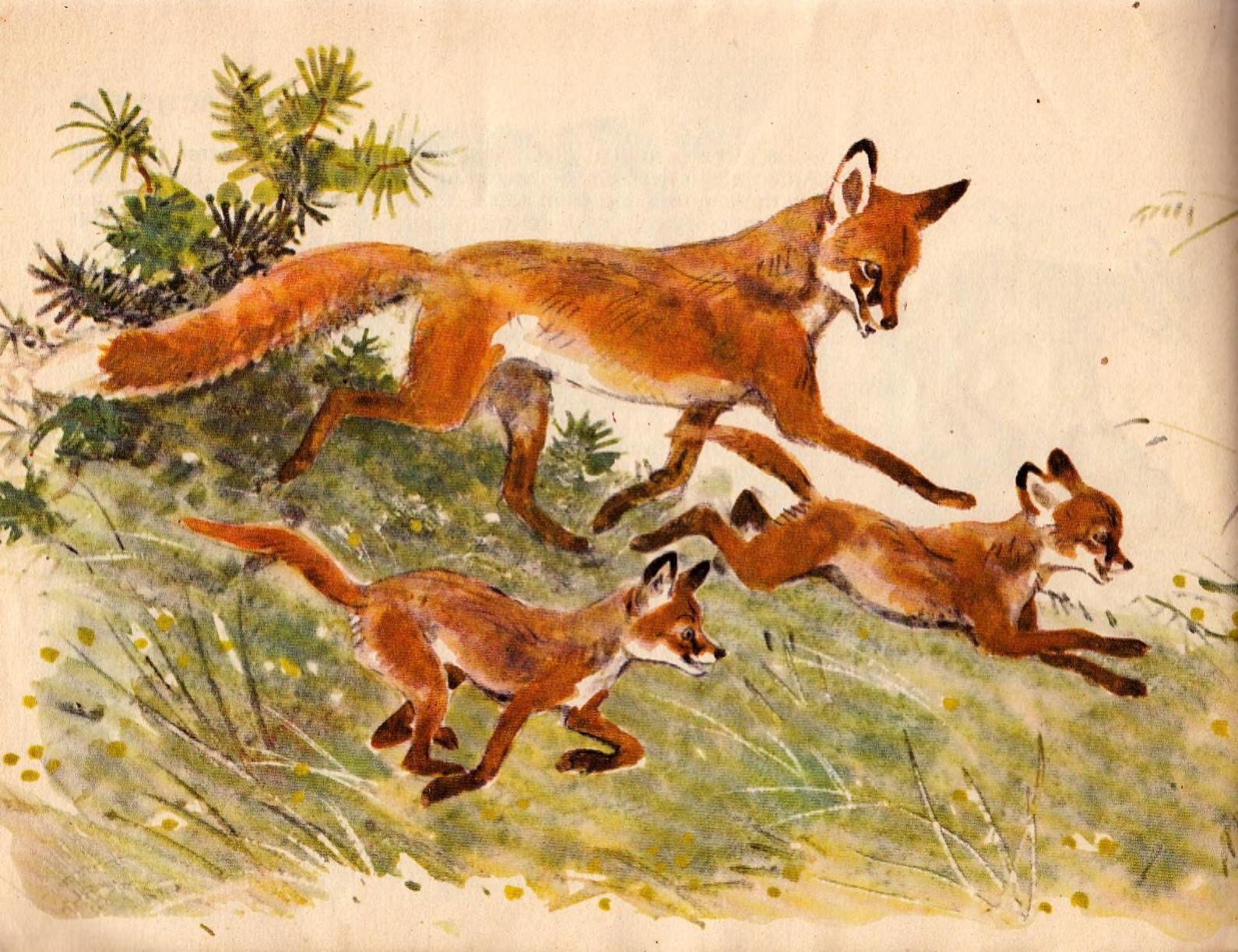
Wolves, jackals, and foxes all belong to one
family, the family of dogs. They are found on all the
continents except Antarctica. They live in the forest
and on the steppes, in the mountains and on the
plains, in the tundra and in the desert.

The legs of animals in this family are long and
well-shaped. The paws have strong, blunt claws. All
the animals run fast, some at a speed of 65
kilometers an hour!

The hair is thick and of various shades of gray or
red. Some of the animals are striped. One of the
African jackals is called the striped jackal. Some of
the animals are spotted. The African wild dog has
black, white and yellow spots. This is the only wild
animal that has hair of three colors.

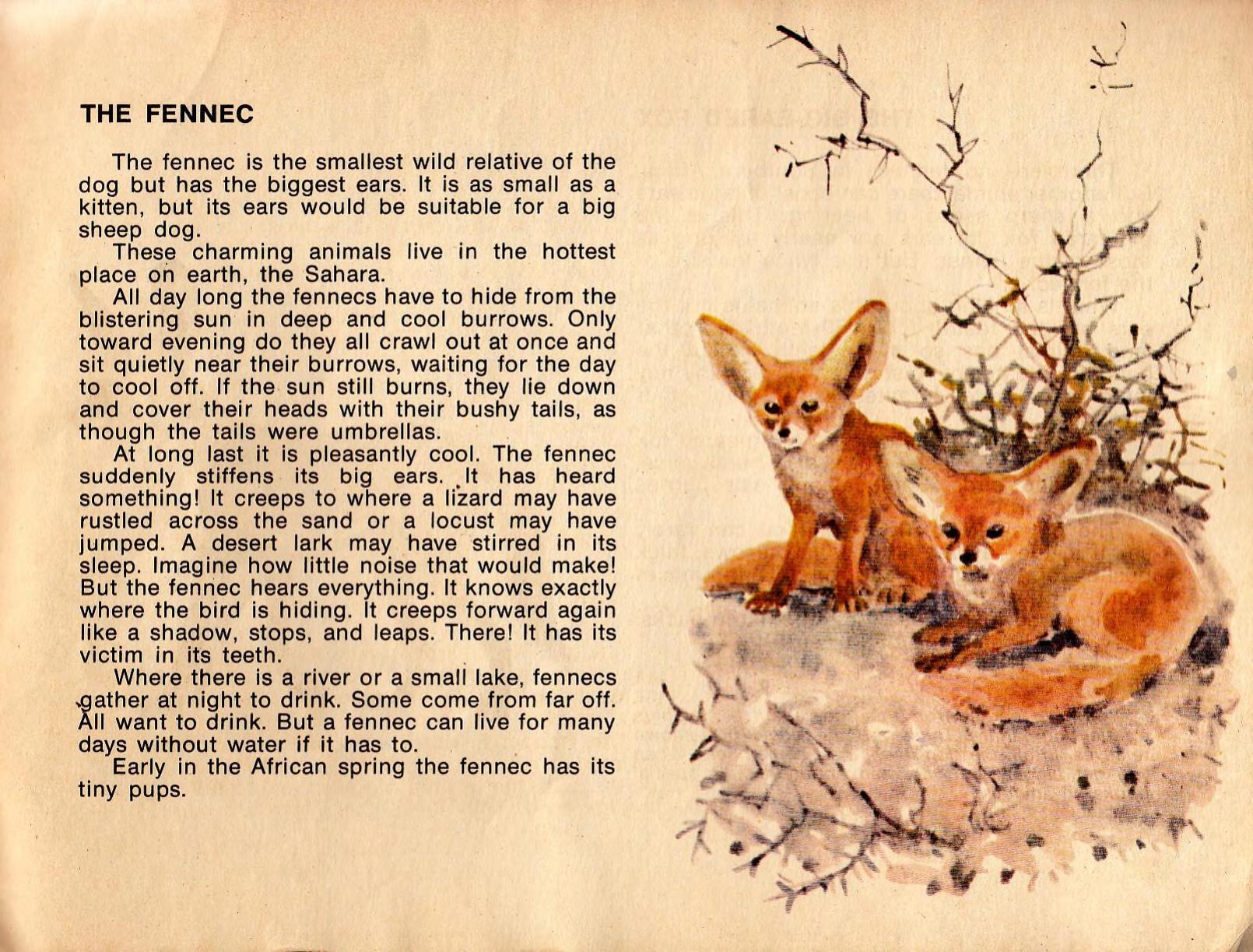
The smallest animal in the dog family is the
fennec. It is like a kitten. The largest is the wolf. Big
wolves weigh 80 kilograms. Just imagine that!

This book will tell you about animals that are
close relatives of the dog.

The book was published by Raduga in 1976 translated from the Russian by Tracy Kuehu. Another print of the book by Malysh in 1979 has translation from Russian by E. Yankowskaya. The two translations have slight differences in the tone.

The fantastic illustrations are by A. Keleinikov.

There is a Telugu version of the book also, perhaps it was translated in other Indic languages also.

All credits to Guptaji, the Raduga version was from books donated by Mrs Purva Bharadwaj and Mrs. Anupama Jha.

You can get the The Dog Family here.

You can get the These Are All Dogs here.

You can get the Telugu version ఇవన్నీ కుక్కలే here.

Follow us on The Internet Archive: https://archive.org/details/@mirtitles

Follow Us On Twitter: https://twitter.com/MirTitles

Write to us: mirtitles@gmail.com

Fork us at GitLab: https://gitlab.com/mirtitles/

Add new entries to the detailed book catalog here.

Contents

The Wolf

The Common Jackal

The Black Backed Jackal

The Coyote

The Arctic Fox

The Common Red Fox

The Racoon Dog

The Bush Dog

The Maned Wolf

The Wild Dog of Africa

The Red Wolf

The Corsac

The Fennec

The Big Eared Fox


Posted in books, children's books, children's stories, malysh publishers, raduga publishers, science | Tagged , , , , , , , , , , , , , , , , , , , , , , , , | Leave a comment

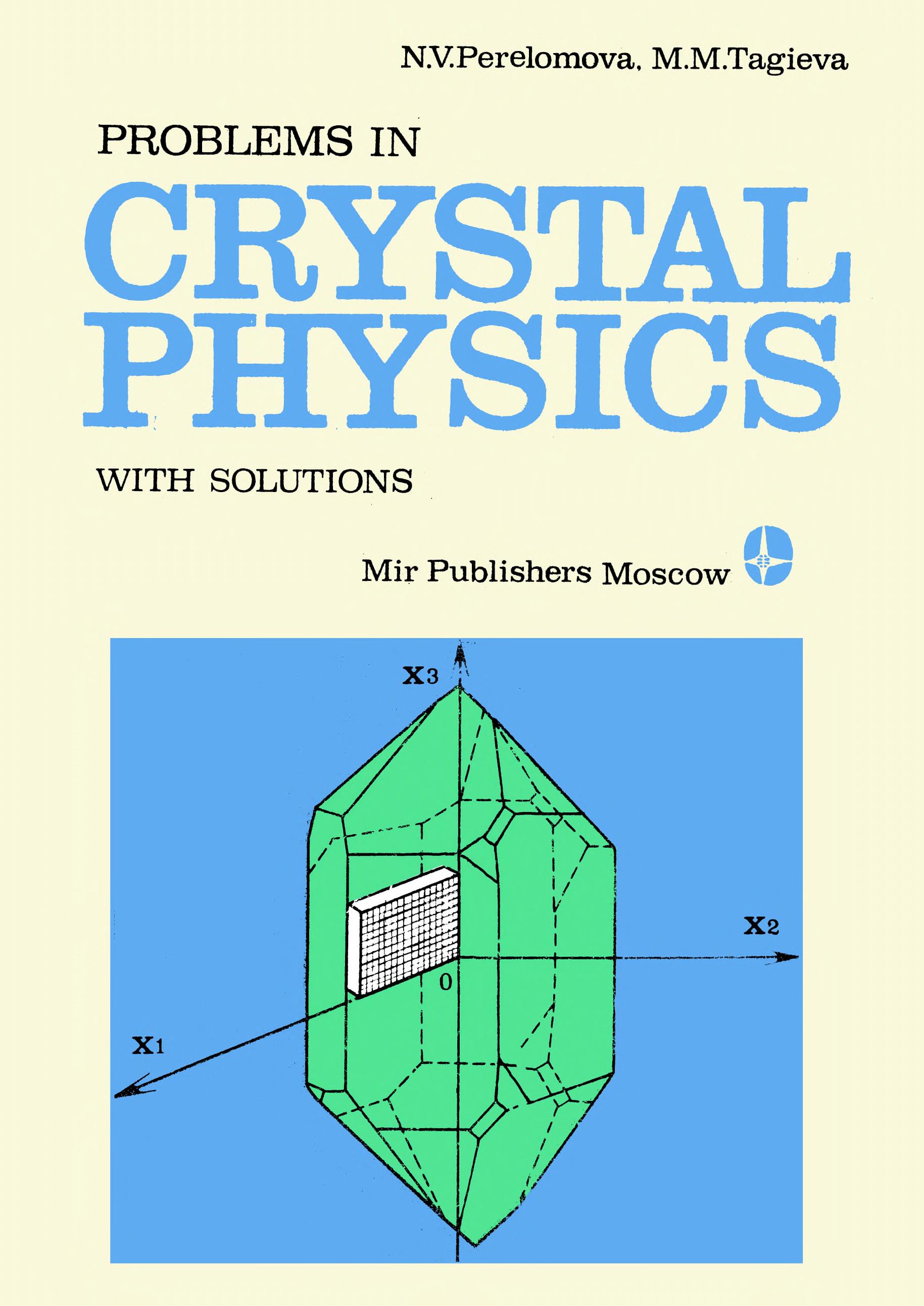
Problems In Crystal Physics With Solutions – Perelomova, Tagieva

Int this post, we will see the book Problems In Crystal Physics With Solutions by N. V. Perelomova and M. Tagieva.

About the book

This collection of problems in physical properties of crystals, first published in 1972, has survived a rigorous test of time and proved its merits for lecturers and students at the Moscow Institute of Steel and Alloys. The problems were compiled on the basis of university textbooks, special monographs, and journal articles. The book is intended for graduate and post-graduate students, as well as for engineers dealing with practical applications of crystals. It has been translated into German and French.

N. V. Perelomova, Cand.Sc. (Phys. and Math.), is a lecturer at the Chair of Crystallography of the Moscow Institute of Steel and Alloys. She is the author of the monograph “Acoustic Crystals” and of about 50 published works in crystal physics. M. M. Tagieva, Cand.Sc. (Phys. and Math.), is a senior instructor at the Chair of Crystallography of the Moscow Institute of Steel and Alloys, the author of 32 scientific papers.

The book was translated from Russian by and was published in .

Many thanks to CN for making this book available, may she RIP.

You can get the book here.

Follow us on The Internet Archive: https://archive.org/details/@mirtitles

Follow Us On Twitter: https://twitter.com/MirTitles

Write to us: mirtitles@gmail.com

Fork us at GitLab: https://gitlab.com/mirtitles/

Add new entries to the detailed book catalog here.

Contents

Preface to English Edition 5
Editor’s Foreword 6
From the Preface to the First Russian Edition 7
Preface to the Second Russian Edition 8

List of Symbols 9

1. Matrix Representation of Symmetry Operations and Symmetry Classes 13
2. Symmetry Principle in Crystal Physics. Symmetry of Physical Phenomena and Properties of Crystals 22
3. Physical Properties of Crystals Described by Tensors of Rank One 35
4. Physical Properties of Crystals Described by Tensors of Rank Two 45
5. Stress and Strain in Crystals. Analysis of Stressed State 69
6. Piezoelectric Properties of Crystals. Electrostriction 87
7. Elastic Properties of Crystals. Hook’s law 115
8. Piezoresistivity in Semiconductor Crystals 136
9. Optical Properties of Crystals 151
10. Piezooptical Properties of Crystals 170
11. Electrooptical Properties of Crystals 181
12. Generation of Optical Harmonics 208
13. Rotation of Polarization Plane (Optical Activity) 225
14. Elastic Waves in Crystals 231
15. Thermodynamics of Crystals 274

Answers to Problems 290

References 295

Appendix

Table 1. Notation of 32 Symmetry Classes 296
Table 2. Symbols of Symmetry Elements on Stereographic Projections 297
Table 3. Rules for Setting of Crystals According to Symmetry System 298
Table 4. Symmetry Elements and Rules for Choosing Axes for 32
Table 5. Crystallographic Classes 298 Rules for Choosing Crystallophysical Axes 301
Table 6. Matrices of Piezoelectric Moduli (d_{ij}) and Piezoelectric Constants (g_{ij}) 302
Table 7. Matrices of Piezoelectric Constants (h_{ij}) and (e_{ij}) for Crystals in Which These Matrices Differ from (d_{ij}) and (g_{ij}) 304
Table 8. Matrices of Piezoelectric Moduli (d_{ij}) for Piezoelectric Textures 304
Table 9. Matrices of Elastic Compliances (s_{ij}) and Elastic Stiffnesses (c_{ij}) 304
Table 10. Matrices of Piezoresistivity Constants (𝚷_{ij}) 308
Table 11. Matrices of Piezooptical Constants (𝛑_{ij}) and Elastooptical Constants (p_{kl}) 310
Table 12. Matrices of Linear Electrooptical Effect Constants (r_{ij}) 314
Table 13. Matrices of Quadratic Electrooptical Effect Constants (R_{ij}) 317
Table 13.a Tensor [g_{ij}] 319
Table 14. Reference Data Required for Solving the Problems 321
Table 15. Units of Physical Quantities and Conversion Factors for the Corresponding Units in the SI and CGSE Systems 331
Table 16. Tensor of Physical Properties of Crystals Mentioned in the Book 336


Posted in books, mir books, mir publishers, physics, problem books | Tagged , , , , , , , , , , , , , , , , , , , , , , | 1 Comment

Physics Of The 20th Century History And Outlook

In this post, we will see the book Physics Of The 20th Century History And Outlook
edited by Ye. P. Velikhov, A. S. Borovik-Romanov, I. M. Khalatnikov, S. R. Mikulinsky, A. T. Grigor’yan, V. P. Vizgin.

About the book

To describe all the most import­ant problems that motivated the physics of the 20th century would require many volumes. What the authors have sought to achieve in this book is to con­centrate on the more funda­mental issues and to trace their historical development. Whilst no aspect of modern physics is uninteresting, the topics covered here are certain to fascinate any reader, whether trained in physics or not. The achievements and promise of exciting fields — atomic physics, astrophysics, quantum theory, elementary particle physics, quantum elec­tronics, and nonlinear physics — are covered.

No attempt has been made to restrain the authors to a dry presentation of the inception of a particular theme, they have striven to enlighten the logic of the evolution of each concept and foresee what direction the future may take.

The book was translated from Russian by Alexander Repyev and was published in 1987 by Mir.

You can get the book here.

Follow us on The Internet Archive: https://archive.org/details/@mirtitles

Follow Us On Twitter: https://twitter.com/MirTitles

Write to us: mirtitles@gmail.com

Fork us at GitLab: https://gitlab.com/mirtitles/

Add new entries to the detailed book catalog here.


Contents

Quantum Theory. Origins and Growth by M.A. Elyashevich

The Origins and Development of Modern Atomistics by D.N. Trifonov

State-of-the-Art in ‘New Atom’ Research by V.I. Goldanskii and V.P. Shantarovich

Quantum Electronics by V.S. Letokhov

Nonlinear Physics. Stochasticity and Structures by A.V. Gaponov-Grekhov and M.I. Rabinovich

Physics and Astrophysics in the Late 20th Century. Development and Future Outlook by V.L. Ginzburg

Posted in books, history, mir books, mir publishers, philosophy, physics, science, soviet | Tagged , , , , , , , , , , , , , , , , , , | 1 Comment

A Handbook of Philosophy

In this post, we will see the book A Handbook Of Philosophy edited by B. l. Syusyukalov; L. A. Yakovleva.

The team of authors is

B. J. Syusyukalov, M. M. Sidorov, L. P. Nikitin, I. B. Mikhailova. V. A. Popov, V. M. Chellini, L. A. Yakovleva, N. J. Ropakov, D. P. Zerkin, L.G. Yuldashev, Z. A. Berbeshkina, V. V. Ostryakov, S. I. Popov

About the book

This handbook sets out the basic concepts and cat­egories of Marxist-Leninist philosophy (dialectical and historical materialism). It is intended for self-in­struction. The methods recommended by the authors may also be useful to teachers and students of Marx­ist-Leninist philosophy in higher and secondary edu­cational institutions.

The book was translated from Russian by Stepan Apresyan and Ludmila Lezhneva. The book was designed by Nikolai Senko and was published in 1984 by Progress.

Credits to the original uploader.

You can get the book here.

Follow us on The Internet Archive: https://archive.org/details/@mirtitles

Follow Us On Twitter: https://twitter.com/MirTitles

Write to us: mirtitles@gmail.com

Fork us at GitLab: https://gitlab.com/mirtitles/

Add new entries to the detailed book catalog here.

Contents

PART I DIALECTICAL MATERIALISM

1. Philosophy: Its Subject-Matter and Role in Society 5

2. The Struggle between Materialism and Idealism in Pre-Marxist Philosophy 13

3. The Rise of Marxism — A Revolution in Philosophy. The Leninist Stage in the Development of Marxist Philosophy 28

4. Matter and the Basic Forms of Its Existence 35

5. Consciousness: Its Origin and Essence 38

6. Dialectics as the Science of Development and Universal Connection 41

7. The Basic Laws and ‘Categories of Dialectics 44

8. The Dialectical Materialist Theory of Knowledge 56

9. Critique of the Main Trends of Contemporary Bourgeois Philosophy 65

PART II HISTORICAL MATERIALISM

10. Materialist Conception of History 65

11. Society and Nature 73

12. Material Production as the Basis of Social Development 79

13. Socio-Economic Formations as Stages of Historical Development 82

14. Social Structure. Classes and Class Relations 87

15. Historical Forms of Human Community 90

16. Political System of Society 94

17. Social Revolution 102

18. Social Consciousness and Its Structure. Forms of Social Consciousness 107

19. Science and Its Role in Social Life 118

20. Culture and the Laws of Its Development 122

21. The Role of People and Personality in History. Personality and Society. Philosophical Problems of Humanism 126

22. Critique of Contemporary Bourgeois Sociology 131

23. Marxist-Leninist Philosophy — the Philosophical and Methodological Foundation of Scientific Cognition and Revolutionary Practice 138

Posted in books, philosophy, progress publishers, sociology, soviet | Tagged , , , , , , , , , , , , | Leave a comment

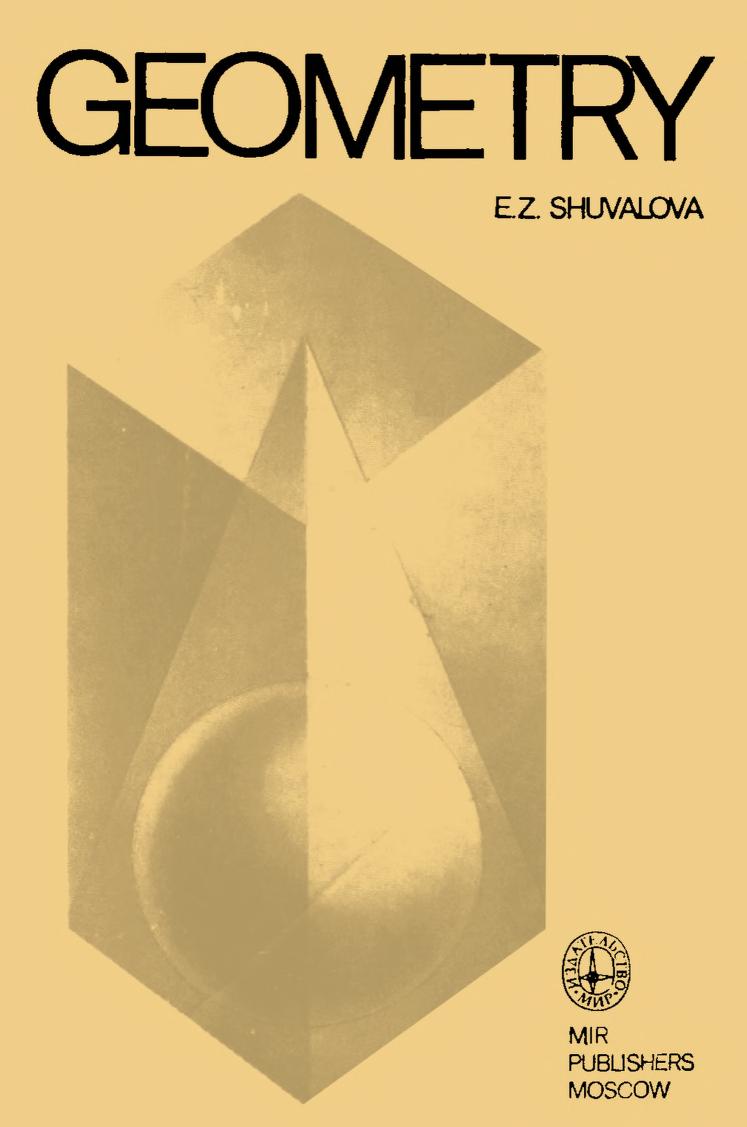
Geometry – Shuvalova

In this post, we will see the book Geometry by E. Z. Shuvalova.

About the book

The book provides a comprehensive treatment of basic geometrical concepts for high schools. The first chapter deals with properties of triangles. Chapter 2 gives a comprehensive introduction to  structure of solid geometry. The chapter on parallelism in space details the concept in various contexts. Next three chapters dal with space, vectors and planes and their properties including  dihedral and polyhedral angles. The last few chapters treat solids, polyhedrons and their properties such as areas volumes and sections by planes. There are worked problems and exercises for each chapter.

The book was translated from Russian by Leonid Levant and was published in 1980 by Mir.

Credits to the original uploader.

You can get the book here.

Follow us on The Internet Archive: https://archive.org/details/@mirtitles

Follow Us On Twitter: https://twitter.com/MirTitles

Write to us: mirtitles@gmail.com

Fork us at GitLab: https://gitlab.com/mirtitles/

Add new entries to the detailed book catalog here.

Contents

Symbols Used in the Book 9

CHAPTER 1. BASIC RELATIONS BETWEEN THE ELEMENTS OF AN ARBITRARY TRIANGLE. SOLVING OBLIQUE TRIANGLES

Sec. 1. The Law of Sines 11
Sec. 2. The Law of Cosines 13
Sec. 3. Expressing the Tangent of a Half-Angle in Terms of the Sides of a Triangle and Radius of the Inscribed Circle (or the Incircle) 16
Sec. 4. Solving Oblique Triangles 17
Sec. 5. Measuring Distances Between “Inaccessible” 20
Sec. 6. Other Problems on Solving Oblique Triangles 23
Sec. 7. Worked Problems 28
Problems to Chapter 4 32

CHAPTER 2. LOGICAL STRUCTURE OF THE COURSE OF SOLID
GEOMETRY

Sec. 8. Structure of the Course of Solid Geometry. Notation and Terminology 36
Sec. 9. Axioms of Belonging 38
Sec. 10. Axioms of Distance 40
Sec. 11. Axioms of Order 42
Sec. 12. Axiom of Plane Mobility 45
Sec. 13. Axiom of Parallelism 47
Sec. 14. Corollaries Following from the Axioms 48

CHAPTER 3. PARALLELISM IN SPACE

Sec. 15. The Relative Position of Two Straight Lines in
Space. The Relative Position of a Plane and a Straight Line in Space 50
Sec. 16. Parallelism of a Straight Line and a Plane 51
Sec. 17. Parallel Planes 52
Sec. 18. Direction in Space. The Angle Between Two Lines 55
Sec. 19. Parallel Projecting 58
Sec. 20. Representation of Figures in Solid Geometry 61
Sec. 21. Worked Problems 63
Problems to Chapter 3 66

CHAPTER 4. TRANSFORMATION OF SPACE. VECTORS

Sec. 22. Transformation of Space 68
Sec. 23. Translation in Space 69
Sec. 24. The Vector Defined 70
Sec. 25. The Sum of Vectors 72
Sec. 26. Subtraction of Vectors. Multiplication of a Vector by a Number 75
Sec. 27. A Linear Combination of Vectors. The Conditions of Collinearity and Coplanarity 78
Sec. 28. Scalar Product of Vectors 81
Sec. 29. Arithmetic Properties of a Scalar Product 83
Sec. 30. Vector Product of Vectors 85
Problems to Chapter 4

CHAPTER 5. PERPENDICULARITY IN SPACE. DIHEDRAL AND POLYHEDRAL ANGLES

Sec. 31. A Perpendicular to a Plane 91
Sec. 32. An Inclined Line and Its Projection on a Plane. The Distance from a Point toa Plane 92
Sec. 33. The Theorem on Three Perpendiculars 94
Sec. 34. The Angle Between an Inclined Line and a Plane 97
Sec. 35. Dependence Between Parallelism and Perpendicularity of Straight Lines and Planes 98
Sec. 36. The Distance Between Skew Lines 101
Sec. 37. The Triple Product of Three Vectors. The Test for Coplanarity of Three Vectors 102
Sec. 38. Dihedral Angles 104
Sec. 39. The Angle Between Planes. Perpendicular Planes 106
Sec. 40. Orthogonal Projecting 108
Sec. 41. The Length of a Projection of a Line Segment. The Area of a Projection of a Plane Polygon 110
Sec. 42. The Area of a Projection of an Arbitrary Plane 113
Sec. 43. Polyhedral Angles 114
Sec. 44. Worked Problems 118
Problems to Chapter 5 123

CHAPTER 6. THE COORDINATE METHOD

Sec. 45. Rectangular Coordinate System 127
Sec. 46. Expressing a Scalar Product of Vectors in Terms of Their Coordinates. The Equation of a Plane 132
Sec. 47. Expressing the Vector Product of Two Vectors in Terms of Their Coordinates 135
Sec. 48. Expressing the Triple Product of Three Vectors in Terms of Their Coordinates 138
Sec. 49. Worked Problems 138
Problems to Chapter 6. 145

CHAPTER 7. POLYHEDRA, CYLINDERS, CONES

Sec. 50. The Polyhedron Defined 147
Sec. 51. Regular Polyhedra 147
Sec. 52. Eulers Theorem 149
Sec. 53. The Prism. 152
Sec. 54. A Cylindrical Surface. The Cylinder 156
Sec. 55. The Pyramid 159
Sec. 56. A Conical Surface. The Cone 160
Sec. 57. Homothety in бресе 163
Sec. 58. Properties of Parallel Sections of a Cone (Pyramid). Frustums of a Cone (Pyramid) 165
Sec. 59. Sections of Polyhedra 167
Sec. 60. Worked Problems 169

Problems to Chapter 7 174

CHAPTER 8. THE BALL

Sec. 61. A Sphere and a Ball Defined. A Sphere and a Ball Cut by a Plane 181
Sec. 62. A Tangent Plane. 182
Sec. 63. The Concept of a Spherical Triangle 183
Sec. 64. Worked Problems 485
Problems to Chapter 8. 189

CHAPTER 9. MEASURING VOLUMES

Sec. 65. General Properties of Volumes 191
Sec. 66. The Volume of a Rectangular Parallelepiped 192
Sec. 67. The Volume of a Right Cylindrical Solid 194
Sec. 68. The Volume of an Oblique Cylindrical Solid 195
Sec. 69. The General Formula for Computing the Volume of a Figure Using the Areas of Cross-Sections 196
Sec. 70. The Formulas for Computing the Volume of a Cone, a Ball and Its Parts. Simpson’s Formula 199
Sec. 71. Worked Problems 204

Problems to Chapter 9 209

CHAPTER 10. THE AREA OF SURFACE

Sec. 72. The Area of the Surface of a Polyhedron 215
Sec. 73. The Area of an Arbitrary Surface 218
Sec. 74. The Area of the Surface of a Right Circular Cylinder, a Circular Cone, and a Ball 219
Sec. 75. Worked Problems 223

Problems to Chapter 10 226

ANSWERS 232
INDEX 236

Posted in books, mathematics, mir books, mir publishers | Tagged , , , , , , , , , , , , , , , , , , , , | 1 Comment