Theoretical Mechanics by M. Movnin; A. Izrayelit

In this post, we will see the book Theoretical Mechanics by M. Movnin; A. Izrayelit.

About the book

The new international system of units (SI) is used through­out the text. However, taking into account that the engi­neers’ system (mkgfs) still finds wide use, the units of this system are also given. Moreover, wherever necessary the rela­tions are indicated between the units of the international and engineers’ systems. Normative and design data are given in both systems of units.

In the presentation of the material primary emphasis is placed on the practical significance of conclusions.

To gain a better understanding of theoretical propositions, the solutions of sample problems are given. All solutions are first carried out in algebraic form and then numerical data are substituted.

Although the book is mainly intended for full-time vocatio­nal schools, the large number of detailed and specially selec­ted examples makes it handy for their evening and correspon­dence departments as well.

The book was translated from Russian by M. Konyaeva was published in 1970 by Mir Publishers.

You can get the book here.

Follow us on The Internet Archive: https://archive.org/details/@mirtitles

Follow Us On Twitter: https://twitter.com/MirTitles

Write to us: mirtitles@gmail.com

Fork us at GitLab: https://gitlab.com/mirtitles/

Add new entries to the detailed book catalog here.

Contents

From the Authors 5

Notation 12

Introduction 15

Chapter I. Basic Definitions and Axioms of Statics 17

1. Fundamentals 17

2. Axioms of Statics 22

3. Constraints and Their Reactions. Axioms of Constraints 25

Chapter II. Systems of Concurrent Forces in a Plane 28

4. Analytic Determination of the Resultant of Two Forces Applied at the Same Point 28

5. Resolution of a Force into Two Components Ap­plied at the Same Point 30

6. Point Addition of Concurrent Forces in a Plane. Force Polygon 32

7. Projection of a Force on an Axis 33

8. Projection of a Vector Sumon an Axis 36

9. Analytic Determination of the Resultant of a Sys­tem of Concurrent Forces (Method of Projections)  37

10. Conditions and Equations of Equilibrium for a Sys­tem of Concurrent Forces 39

11. Procedure for Solving Equilibrium Problems 40

12. Theorem of Concurrence of Three Mutually Balanced Non-Parallel Forces 49

Chapter III. Couple 52

13. Addition of Two Parallel Forces of the Same Sense 52

14. Addition of Two Parallel Forces of OppositeSense 53

15. Moment of a Couple 56

16. Equivalence of Couples. Translation of a Couple in Its Plane of Action 58

17. Theorem of Equivalent Couples 60

18. Addition of Couples Acting in the Same Plane 61

Chapter IV. Two-Dimensional Systems of Arbitrarily Located Forces 65

19. Moment of a Force About a Point 65

20. Equilibrium of a Lever 67

21. Reduction of a Force to a Given Point 69

22. Reduction of a Two-Dimensional Force System to a Given Point 70

23. Resultant of a Two-Dimensional Force System 72

24. Theorem of the Moment of a Resultant (Varignon’s Theorem) 73

25. A Case of the Reduction of a Two-Dimensional Force System to a Couple 79

26. Conditions and Equations of Equilibrium for a Two-Dimensional Force System 80

27. Three Forms of Equilibrium Equations 82

28. Supporting Devices of Beam Systems 85

29. Classification of Loads 88

30. Practical Solution of Equilibrium Problems for Two-Dimensional Force Systems 89

31. Equilibrium of a System of Connected Bodies 101

Chapter V. Friction 106

32. Types of Friction 106

33. The Laws of Sliding Friction 107

34. Angle and Cone of Friction 109

35. Experimental Determination of Coefficients of Friction 114

36. The Laws of Rolling Friction 116

Chapter VI. Three-Dimensional Force Systems 120

37. Force Parallelepiped 120

38. Equilibrium of a System of Concurrent Forces in Space 121

39. Moment of a Force About an Axis 123

40. Equilibrium of an Arbitrary Three-Dimensional Force System 128

Chapter VII Centroids and Centres of Gravity 134

41. Centre of Parallel Forces 134

42. Co-ordinates of the Centre of ParallelForces 135

43. Centroid of a Volume 139

44. Centroid of an Area. Static Moments of an Area 141

45. Centroid of a Line 147

46. Stability of Equilibrium 147

PART 2. KINEMATICS

Chapter VIII. Fundamentals 154

47. Subject of Kinematics 154

48. Space and Time 154

49. Basic Definitions 156

Chapter IX. Kinematics of Particles 160

50. Methods of Specifying the Motion of a Particle 160

51. Velocity of a Particle 162

52. Acceleration of a Particle 167

53. Types of Motion of a Particle as Related to Acce­leration 174

54. Uniformly Variable Motion of a Particle 176

55. Kinematic Graphs and Relationship Between Them 180

Chapter X. Simple Motions of Rigid Bodies 185

56. Translation of a Rigid Body 185

57. Rotation of a Rigid Body About a Fixed Axis 186

58. Velocities and Accelerations of Points of a Rotating Body 191

Chapter XI. Methods of Transmission of Rotary Motion 198

59. Classification of Transmission Mechanisms 198

60. Gear Ratio 198

61. Cylinder Friction Drives 200

62. Face Friction Drives 202

63. Cone Friction Drives 203

64. Belt Drives: Fundamental Concepts 205

65. Gear Drives: General Considerations 206

66. Gear Ratio of a Spur Gear Drive 207

67. Gear Trains 208

68. Worm Gearing 212

Chapter XII Complex Motion of Particles 216

69. Base, Relative and Absolute Motions 216

70. Theorems on Addition of the Velocities and Accelerations of a Particle in Complex Motion 219

Chapter XIII. Plane Motion. 225

71. Concept of Plane Motion of a Rigid Body 225

72. Determination of the Velocity of Any Point of a Body in Plane Motion 226

73. Instantaneous Centre of Zero Velocity 228

74. Determination of the Acceleration of Any Point of a Body in Plane Motion 240

75. Planetary Gearing 244

76. Differential Gearing 247


PART 3. DYNAMICS

Chapter XIV Basic Concepts and Axioms of Dynamics 251

77. Subject of Dynamics 251

78. Principle of Inertia 252

79. Fundamental Law of Dynamics of Particles 252 80. Systems of Units 254

81. Axiom of Superposition 256

82. Axiom of Interaction 258

83. Two Basic Problems of Dynamics 259

Chapter XV. Motion of Particles. Method of Kinetostatics 268

84. Ideal and Real Constraints 268

85. D ’Alembert’s Principle 269

86. Inertia Force for a Particlein Rectilinear Motion 271

87. Inertia Force for a Particle in Curvilinear Motion 271

88. Inertia Force for a Rigid Body 274

89. Solution of Problems by the Method of Kineto­statics 275

Chapter XVI Work and Power 280

90. Work of a Constant Force in Rectilinear Motion 280

91. Work of a Variable Force in Curvilinear Motion 282

92. Work of a Resultant Force 283

93. Work of a Force of Gravity 285

94. Work of an Elastic Force 286

95. Concept of Mechanical Efficiency 289

96. Efficiency of a System of Mechanisms Connected in Series 290

97. Efficiency of a System of Mechanisms Connected in Parallel 291

98. Power 296

99. Work and Efficiency for Bodies Sliding Along an Inclined Plane 298

100. Work and Power in Rotation 306

101. Work in Rolling Motion 308

Chapter XVII The Laws of Dynamics 315

102. Concept of a System of Particles 315

103. Law of Momentum for a Particle 317

104. Law of Momentum for a System of Particles 322

105. Potential and Kinetic Energy 324

106. Kinetic Energy of a Body in Various Types of Motion 325

107. Moments of Inertia of Homogeneous Bodies of Simple Shape 327

108. Law of Kinetic Energy for a Particle 330

109. Law of Kinetic Energy for a System of Particles 333

110. Fundamental Equation of Dynamics for a Rigid Body in Rotation 338

Chapter XVIII. Application of the Laws of Kinematics and Dynamics to the Analysis to Mechanisms 345

111. Principles and Definitions 345

112. Fundamentals of Kinematics of Mechanisms 350

113. Examples of Constructing Velocity Diagrams 359

114. Distribution of Accelerations in a Body in Plane Motion 363

115. Examples of Constructing Acceleration Diagrams 367

116. Cam Gears 374

117. Introduction to the Dynamics of Machinery 381

118. Fundamentals of the Dynamic Analysis of Mecha­nisms 387

119. Fundamentals of Regulation. 395

Subject Index 406

Posted in books, mir books, mir publishers, physics | Tagged , , , , , , , , , , , , , , , , , , , , , , , | 1 Comment

Analyse Mathématique: Fonctions D’une Variable – Tome 2 – 3e Partie by G. Chilov (Shilov)

Dans cet article, nous verrons le livre Analyse Mathématique: Fonctions D’une Variable – Tome 2 – 3e Partie par G. Chilov (Shilov).

À propos du livre

La troisième partie du livre • Fonctions d’une variable t es basée sur les mêmes principes que les deux premières pricédemment parues. Ils sont exprimés dans l’avant-propos du premier tome. La numérotation des chapitres du présent volume (12-16) continue celle du précédent (1-11).
Dans la troisième partie, le rôle principal appartient au chapitre 12 «Structures fondamentales de l’analyse 11 où l’on considère les espaces vectoriels, les espaces métriques (contrairement au chapitre 3 de la première partie, ici ce sont des espaces fonctionnels, et non pas des ensembles de points dans un espace de dimension finie, qui en servent de modèles), les espaces normés, les algèbres
normées et, enfin, les espaces hilbertiens. Les algèbres normées sont appliquées à la théorie des opérateurs linéaires dans un espace normé; en particulier, le «calcul opérationnel t des fonctions analytiques dans une algèbre normée, appliqué à l’algèbre des opérateurs linéaires, conduit à des théorèmes du genre de l’alternative de Fredholm. L’étude de l’espace vectoriel normé des suites bornées et celle des fonctionnelles sur cet espace sont liées aux notions do limite généralisée et de sommation généralisée des séries.
Dans le chapitre 13 t Equations différentielles ~. on établit les théorèmes principaux sur les solutions des équations différentielles ordinaires pour les fonctions à valeurs dans un espace normé. La solution d’une équation linéaire à coefficient opératoriel constant s’exprime par l’exponentielle l’un opérateur; en l’explicitant nous obtenons les formules pour les solutions d’une équation linéaire à coefficients constants, d’un système d’équations de ce type et d’une équation d’ordre supérieur. Pour une équation linéaire à coefficient opératoriel variable, on construit la méthode de variation de la constante.
C’est essentiellement les séries de Fourier que l’on élodie dans le chapitre 14 « Développements orthogonaux ~ ; on considère de divers types de convergence et de sommabilité de ces séries.
Le chapitre 15 t Transformation de Fourier t, parallèlement à la théorie réelle ordinaire, traite des problèmes liés au domaine complexe, en particulier à la transformation de Laplace.
Dans le chapitre 16 « Courbes gauches t , nous expœons la théorie de la courbure dans un espace à plusieurs dimensions.
Comme dans les deux premières parties, l’exposé est accompagné d’exercices. On trouve les réponses et les indications correspondantes à la fin du livre.

Le livre a été traduit du russe par Vitali Kharine.

L’édition française a été publiée en 1978 par les éditions Mir.

Crédits à l’uploader d’origine.

Vous pouvez obtenir le livre ici.

(J’ai utilisé la traduction automatique, toutes mes excuses pour les erreurs.)

Suivez-nous sur Internet Archive: https://archive.org/details/@mirtitles

Suivez-Nous Sur Twitter: https://twitter.com/MirTitles

Écrivez-nous: mirtitles@gmail.com

Rejoignez-nous sur GitLab: https://gitlab.com/mirtitles/

Ajoutez de nouvelles entrées au catalogue de livres détaillé ici.

Contenu


Posted in books, french, mathematics | Tagged , , , , , , | Leave a comment

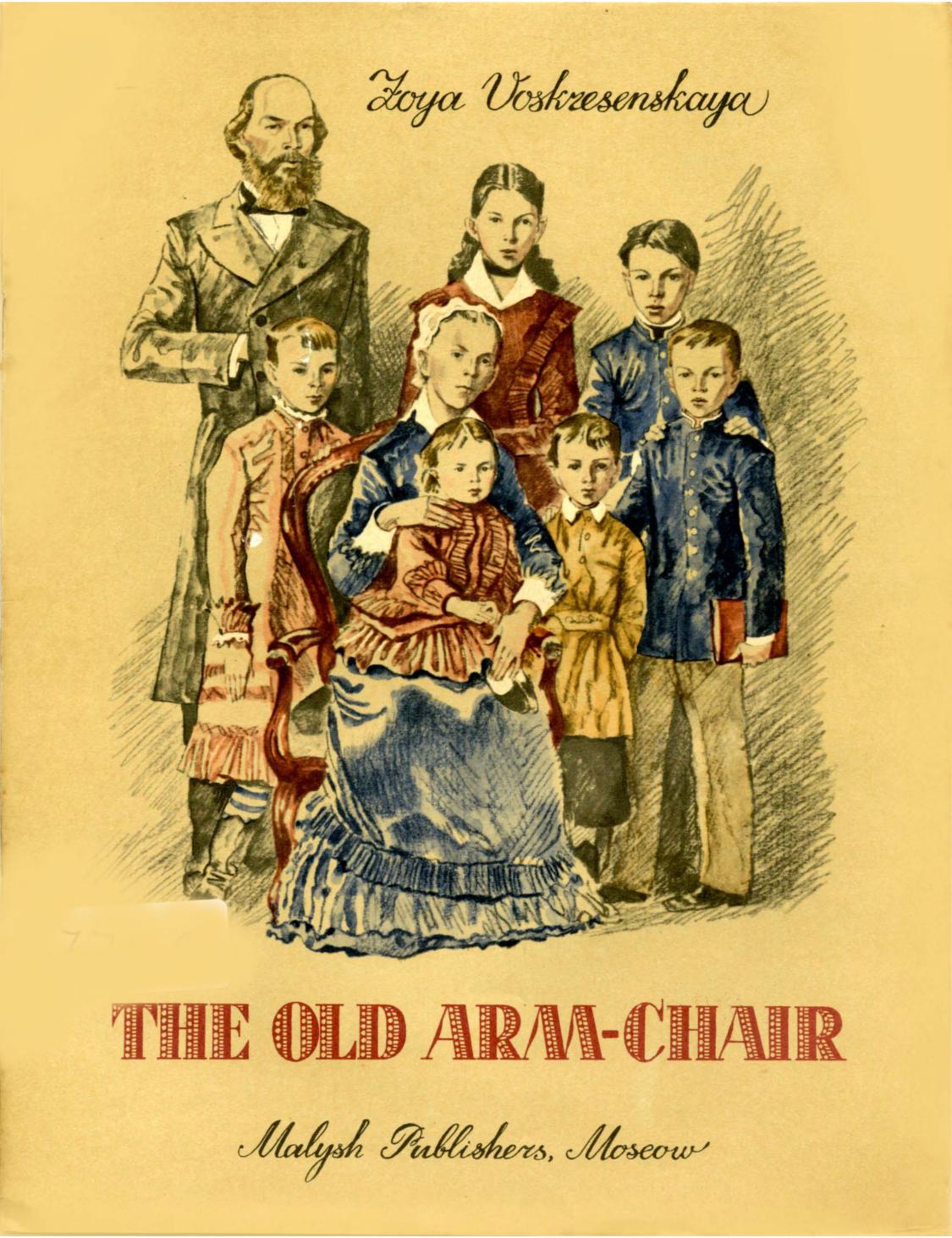
The Old Arm Chair by Zoya Voskresenskaya

In this post, we will see the book The Old Arm Chair by Zoya Voskresenskaya.

About the book

Dear reader!
The book you are now holding in your hands will let you learn several episodes of Volodya Ulyanov’s (Vladimir Ifyich Lenin’s) green years and some childhood experiences of his brothers and sisters.
Illustrated by
Translated by

The book was translated from Russian by Galinna Glagoleva and was illustrated by V. Galdyayev. The book was published in 1985 by Malysh Publishers.

All credits to Guptaji.

You can get the book here and here.

Follow us on The Internet Archive: https://archive.org/details/@mirtitles

Follow Us On Twitter: https://twitter.com/MirTitles

Write to us: mirtitles@gmail.com

Fork us at GitLab: https://gitlab.com/mirtitles/

Add new entries to the detailed book catalog here.


Posted in books, children's books, children's stories, malysh publishers | Tagged , , , , , , | Leave a comment

The Needle And The Hammer by Ion Creanga (Creangă)

In this post, we will see the book The Needle And The Hammer by Ion Creanga (Creangă).

About the book

A picture story book with Moldovian folk tale for children .

The book was translated by D. Melenchuk and was illustrated by Filimon Hămuraru. The book was published in 1984 by Literatura Artistica.

All credits to Guptaji.

You can get the book here and here.

Follow us on The Internet Archive: https://archive.org/details/@mirtitles

Follow Us On Twitter: https://twitter.com/MirTitles

Write to us: mirtitles@gmail.com

Fork us at GitLab: https://gitlab.com/mirtitles/

Add new entries to the detailed book catalog here.

Posted in books, children's books, children's stories, Kishinev Literatura Artistica | Tagged , , , , | Leave a comment

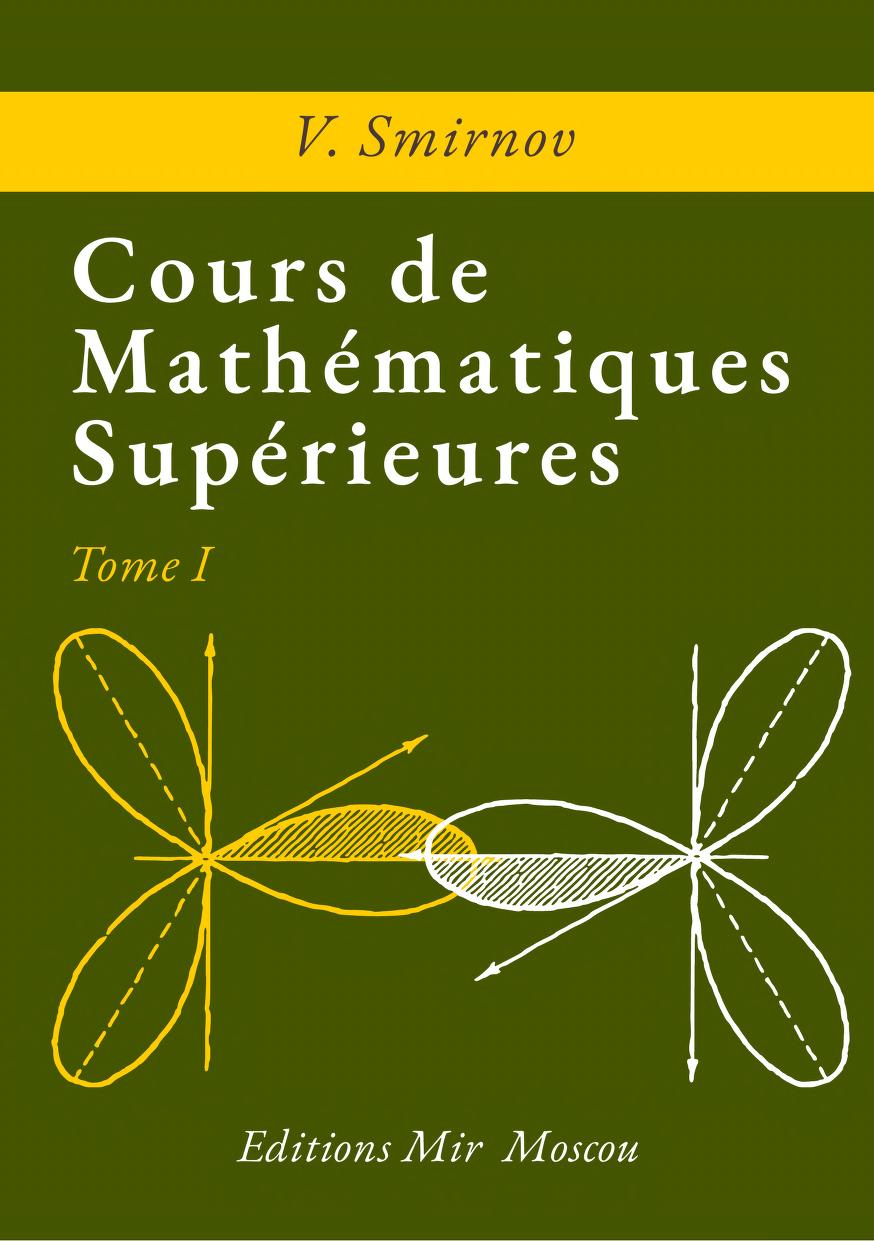
Cours De Mathématiques Supérieures – Tome I by V. Smirnov

Dans cet article, nous verrons le livre Cours De Mathématiques Supérieures – Tome I par V. Smirnov.

À propos du livre

Dans le tome 1 du Cours de mathématiques supérieures en cinq volumes que nous avons entièrement re révision exposés les bases de l’analyse mathématiques. Nous avons jugé utile, vu quo dans les tomes suivants nous rencontrerons souvent des questions d’analyse moderne suffisamment complexes, d’insérer à la fin du § 2 (chapitre 1.), après la théorie des limites. l’exposé de la théorie des nombres irrationnels et son application à la démonstration des critères d’existence de la limite et des propriétés des fonctions continues. Nous y donnons aussi la définition rigoureuse et l’étude des fonctions élémentaires . Au chapitre V, consacré aux fonctions de plusieurs variables, nous donnons la démonstration de l’existence des fonctions implicites.
L’exposé est conduit de telle manière que la partie en gros caractères peut être lue indépendamment. Nous avons rapporté en  petits caractères les exemples, certaines questions complémentaires tout le développement théorique que nous avons mentionné plus haut, ainsi que les derniers paragraphes du chapitre IV dont le contenu est d’un niveau théorique nettement supérieur.
Ce manuel est destiné aux élèves des Facultés de physique et de mathématiques, ainsi qu’à ceux des écoles techniques supérieures.

Le livre a été traduit du russe par ??.

L’édition française a été publiée en 1975 par les éditions Mir.

Crédits à l’uploader d’origine.

Vous pouvez obtenir le livre ici.

(J’ai utilisé la traduction automatique, toutes mes excuses pour les erreurs.)

Suivez-nous sur Internet Archive: https://archive.org/details/@mirtitles

Suivez-Nous Sur Twitter: https://twitter.com/MirTitles

Écrivez-nous: mirtitles@gmail.com

Rejoignez-nous sur GitLab: https://gitlab.com/mirtitles/

Ajoutez de nouvelles entrées au catalogue de livres détaillé ici.

Contenu


Posted in books, french, mathematics, mir publishers | Tagged , , , , , , , , , , , , , | Leave a comment

Cours De Mathématiques Supérieures – Tome IV – Partie 1 et 2 – Smirnov

Dans cet article, nous verrons le livre Cours De Mathématiques Supérieures – Tome IV – Partie 1 et 2 par V. Smirnov.


À propos du livre

La sixième édition russe du tome IV se distingue notablement, de la cinquième. En effet, l’introduction de la théorie de l’intégrale de Lebesgue et de la classe de fonctions L2 de carré intégrable au sens de Lebesgue dans le tome II a entraîné certaines modifications dans la théorie des équations intégrales qui constitue le premier

chapitre de ce livre. D’autre part on a ajouté un troisième chapitre où sont exposés des points de vue nouveaux sur certaines notions fondamentales de l’analyse mathématique. Le chapitre II qui fait l’objet du calcul des variations a été élargi. Le minimum d’une fonctionnelle quadratique est abordé sous un nouvel angle dans le chapitre III.

L’ancien tome contenait plus de 800 pages. Le nouveau a été scindé en deux parties dont nous vous présentons la première. En conclusion je voudrais exprimer ma profonde reconnaissance à mes collègues M. Birman, O. Ladyjenskaïa, M. Solomiak et N. Oural- tseva pour leur dévouement à la composition de ce livre.

Tome 2

Dans l’avant-propos à la deuxième édition du tome V (1959)Vladimir Smirnov écrivait qu’il <<envisageait la publication d’ulh sixième tome consacré à quelques problèmes de la théorie moderne des opérateurs différentiels à une et plusieurs variables indépendantes>>. Il me proposa d’être co-auteur de ce nouveau tome. Mais diverses circonstances compromettent cette entreprise et la décision, fut prise d’élargir simplement le tome IV. La théorie de l’intégrale de Lebesgue et de l’espace L2 fut incluse dans le tome Il, quant auto IV, il fut divisé en deux parties (livres). La première traite· de la théorie des équations intégrales dans l’espace des fonctions continues et dans l’espace L2, du calcul des variations, de la théorie des dérivées distributionnelles, des propriétés fondamentales des espaces w et w: et du minimum d’une fonctionnelle quadratique· en termes de distributions. Cette partie a été publiée en 1974 *).

La deuxième partie fut revue et complétée au moment où Vladimir Smirnov était miné par une grave maladie. Néanmoins il trouva le courage de relire attentivement et de rédiger les ajouts et changements que j’avais écrits et avança quelques suggestions quant à la forme définitive de cet ouvrage. Smirnov avait l’intention de supprimer une partie de la précédente édition, qui lui semblait dépassée. Mais nous décidâmes d’un commun accord de la conserver et d’y apporter seulement quelques correctifs pour faire la jonction entre· l’ancien et le nouveau texte.

Les références sont données entre crochets. Celles qui ne com- portent pas le numéro du tome concernent le tome IV 2.

Le livre a été traduit du russe par Djilali Embarak.

L’édition française a été publiée en 1975 (tome 1) and 1984 (tome 2) par les éditions Mir.

Crédits à l’uploader d’origine.

Vous pouvez obtenir le livre

Tome 1 ici

Tome 2 ici.

(J’ai utilisé la traduction automatique, toutes mes excuses pour les erreurs.)

Suivez-nous sur Internet Archive: https://archive.org/details/@mirtitles

Suivez-Nous Sur Twitter: https://twitter.com/MirTitles

Écrivez-nous: mirtitles@gmail.com

Rejoignez-nous sur GitLab: https://gitlab.com/mirtitles/

Ajoutez de nouvelles entrées au catalogue de livres détaillé ici.

Contenu

Posted in books, french, mathematics, mir books, mir publishers | Tagged , , , , , , , , , , , , , , , , , , | Leave a comment

The Rider up Ahead by Nikolai Bogdanov

In this post, we will see the book The Rider up Ahead by Nikolai Bogdanov.

About the book

A picture story book for children set during the revolution.

The book was translated from Russian by Galina Glagoleva and was illustrated by V. Trubkovich. The book was published in 1978 by Malysh Publishers.

All credits to Guptaji.

You can get the book here and here.

Follow us on The Internet Archive: https://archive.org/details/@mirtitles

Follow Us On Twitter: https://twitter.com/MirTitles

Write to us: mirtitles@gmail.com

Fork us at GitLab: https://gitlab.com/mirtitles/

Add new entries to the detailed book catalog here.

Posted in books, children's books, children's stories, malysh publishers | Tagged , , , , , | Leave a comment

The Little Hen or The Underground People – A fairy Story for Children by Antony Pogorelsky

In this post, we will see the book The Little Hen or The Underground People – A fairy Story for Children by Antony Pogorelsky.

About the book

Antoni Pogorelsky, a contemporary of the great Russian poet Alexander Pushkin, wrote several fairy tales for children. “The Little Black Hen”, one of his best, was composed for his ten-year-old nephew Alyosha.

The book’s main character is a young boy also called Alyosha. In return for his kindness and help the fairy folk reveal their innermost secrets to him. But he must keep these secrets faithfully, or his magic gift will disappear… In this story fantasy alternates with an authentic account of life in the St. Petersburg boarding school where Alyosha Lives and studies and where everything is strictly and harshly regulated. This is reality. And it is contrasted with make-believe. For the miraculous is close at hand-you need only tip-toe quietly through some dark, mysterious chambers to enter the radiant,
colourful realm of fantasy …

The book was translated from Russian by K. M. Cook-Horujy and was illustrated by lithographs of Georgi Yudin’s drawings by Victor Beskrovny. The book was published in  1987 by Raduga Publishers.

All credits to Guptaji.

You can get the book here and here.

Follow us on The Internet Archive: https://archive.org/details/@mirtitles

Follow Us On Twitter: https://twitter.com/MirTitles

Write to us: mirtitles@gmail.com

Fork us at GitLab: https://gitlab.com/mirtitles/

Add new entries to the detailed book catalog here.

Posted in books, children's books, children's stories, raduga publishers | Tagged , , , , , | Leave a comment

El Fracaso De Las Paradojas (Ciencia Popular) por Radunskaya

En este post, veremos el libro El Fracaso De Las Paradojas (Ciencia Popular) por I. Radunskaya.

Sobre el libro

Hace ya más de diez años que tenemos conocimiento de los vocablos “máser” y “láser”. En la actualidad, no sólo les son conocidos a los científicos y periodistas, sino también a los escolares.
Igualmente gozan de gran fama los nombres de Nikolái Básov y Alexandr Prójorov, los primeros sabios que escuchan la radio transmisión del mundo de los átomos y las moléculas. Ellos fueron coronados, y bien merecido, con gloria, títulos y honores, han sido laureados con los premios Lenin y N6bel. Son académicos ‘y H6roes del Trabajo Socialista, dirigentes de sus laboratorios, y al mismo tiempo, del Instituto de Física P. N. I..ébedev de la Academia de Ciencias de la URSS, mundialmente famoso. Después de publicar mis primeros libros sobre la historia dramática de los máseres y láseres – “Ideas “locas” y ..Lo transformación del hiperboloide del ingOJlicro Garin” -,yo, lamentán- dolo mucho, cre(a que ya era hora de pasar a otro tema, pensando que había acabado una de las páginas más impresionantes do la historia de la ciencia.
Consideraba también que Básov y Prójorov ya no tenían nada que hacer en la radio física cuántica. Como ciencia, ésta parec[a haber con- cluido y, gracias precisamente a sus trabajos, se había transformado de un brazado de paradojas, curiosidades y enigmas en un móvil do la  técnica y la industria, perdiendo su cariz misterioso…
Me preocupaba la suerte de mis protagonistas y al cabo do varios años volví a visitar los laboratorios que ya conocía. ¿Qué fue lo que vi alH?
Muchachos jóvenes que vinieron directamente de la escuela a trabajar eon Básov y Prójorov; muchachos a quienes unos años atr6.s se les llamaba por los diminutivos Kolia, Natasha o Vitia, y que llegaron a ser candidatos a doctor o doctores en ciencias. Tampoco a Básov y a Pr6jorov se les vela ya ajetreo alrededor de un aparato en una pequeña habitación: actualmente dirigen grandes colectividades independientes. Mientras tanto, los máseres y los leves, adem!s de convertirse en un arma de la técnica, eran el escalpelo de la ciencia: ayudaron a descubrir tantos fenómenos inesperados, que a los científicos lo único que les queda es reunir todos sus conocimientos y fuerza para asaltar las propiedades más recónditas de la materia, acerca de las cuales hubiera sido imposible sospechar an- tes de la aparición del máser y el láser.
Resultaba que lo más interesante estaba por comenzar…

Traducido del ruso por

El libro fue traducido del ruso por Julia Gutiérez Fernández.

La edición española fue publicada en 1975 por Ediciones Mir.

Créditos al cargador original.

Puedes conseguir el libro aquí.

(Utilicé la traducción automática, disculpas por los errores.)

Síguenos en el Archivo de Internet: https://archive.org/details/@mirtitles
Síguenos En Twitter: https://twitter.com/MirTitles
Escríbanos a: mirtitles@gmail.com
Únete a nosotros en GitLab: https://gitlab.com/mirtitles/
Agregue nuevas entradas al catálogo detallado de libros aquí.


Contenido

Posted in books, Editorial Mir, physics, popular science, science, science for everyone, soviet | Tagged , , , , , , , , , , | Leave a comment

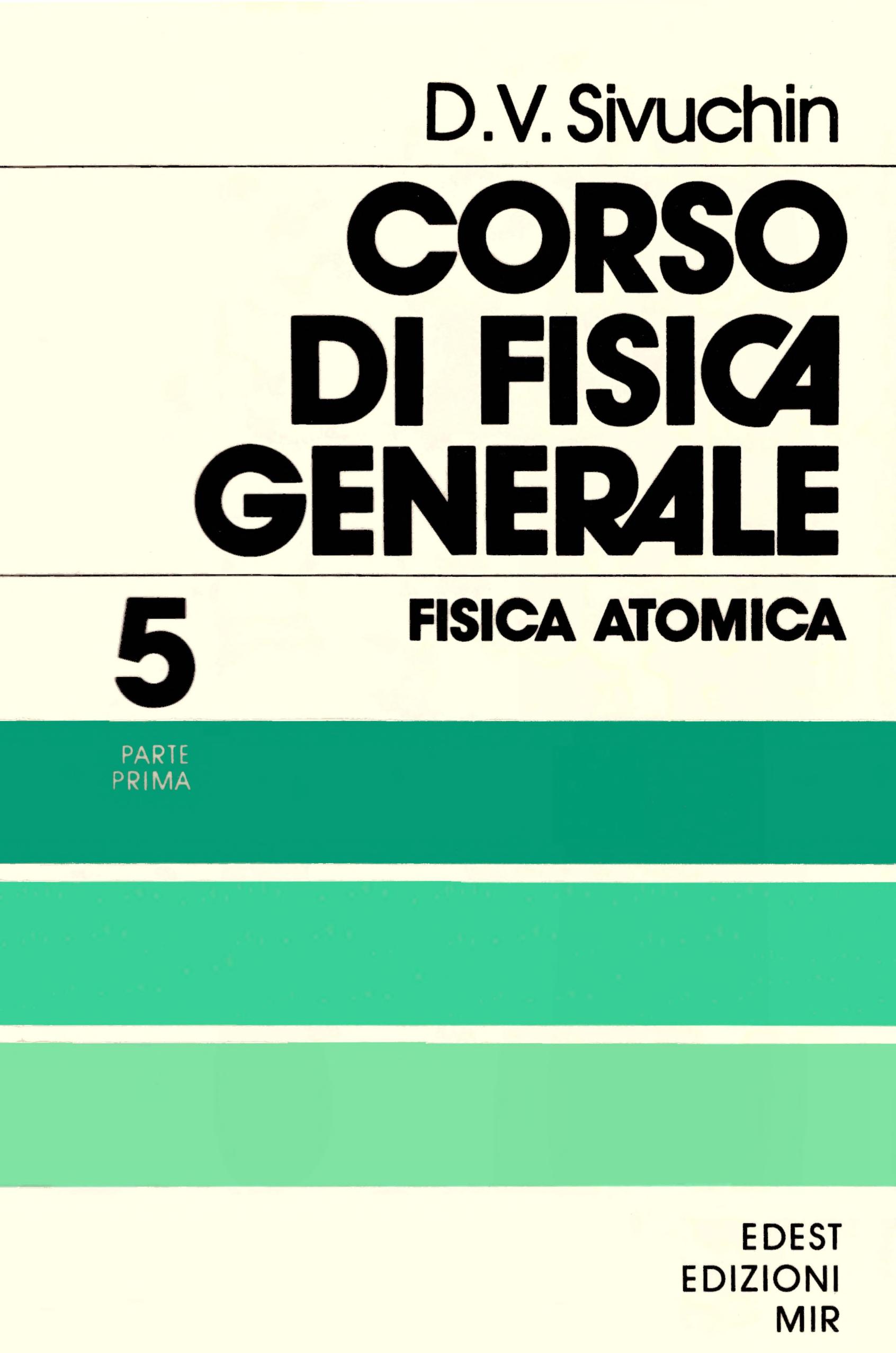
Fisica Atomica – Corso Di Fisica Generale – Volume V Parte Prima – Sivuchin

In questo post, vedremo il libro Fisica Atomica – Corso Di Fisica Generale – Volume V Parte Prima da D. V. Sivuchin.

A proposito del libro

Se vogliamo spiegare i fenomeni della fisica atomica e, più in generale, le leggi del microcosmo, i concetti della Meccanica Quantistica diventano indispensabili. Per questa ragione l’autore ha ritenuto opportuno, anzi necessario, introdurre i concetti fondamentali della meccanica quantistica, per quanto ciò è possibile nel quadro di un corso di Fisica generale.
L’esposizione si basa soprattutto sui fatti sperimentali, poiché solo in questo modo viene chiaramente dimostrato come sia inevitabile adottare le concezioni quantistiche. Questo metodo presenta anche il vantaggio di aiutare lo studente ad impossessarsi dello schema logico e ad avvicinarsi all’apparato matematico formale della meccanica quantistica, di cui troverà lo sviluppo sistematico nei corsi di Fisica teorica.

È quindi chiaro che verranno affrontati quantitativamente solo problemi semplici, mentre in generale la maggioranza delle questioni verrà trattata solo qualitativamente, sulla base di principi generali.
In questo volume non ci limiteremo ai fenomeni che avvengono negli strati elettronici degli atomi e delle molecole. Seguendo il percorso indicato dall’evoluzione storica, verrà dapprima introdotto il concetto di fotone e saranno quindi esaminati i fenomeni ottici legati a questo concetto. Si proseguirà entrando nel vivo della fisica atomica propriamente detta studiando i fenomeni determinati dai gusci elettronici degli atomi. Verranno infine esaminati alcuni fenomeni quantici che presentano notevoli conseguenze a livello macroscopico: la superfluidità, la superconduttività, ecc., ecc.
Come i precedenti volumi, anche questo è una versione completata delle lezioni tenute per molti anni dall’autore agli studenti dell’Istituto di Fisica Tecnica di Mosca.
La seconda parte di questo volume avrebbe dovuto contenere una parte dedicata alla Fisica nucleare, tuttavia poiché il lavoro di stesura è ancora in corso, si è ritenuto più opportuno dedicare alla Fisica nucleare un volume a parte. Anche in questo quinta parte viene utilizzata la forma gaussiana del sistema di unità CGS, tuttavia viene introdotta un ‘unità di energia fuori sistema, ma ormai universalmente usata: elettronvolt (eV) ed i suoi multipli (keV, MeV, GeV, TeV). Non utilizzeremo il sistema internazionale SI, in quanto l’introduzione artificiosa ed inutile di costanti elettriche e magnetiche del vuoto rende questo sistema poco utilizzabile in Fisica.

Traduzione dal russo di Alexandr Machov Revisione del testo italiano: Dott. L. Fenzi.

Il libro è stato pubblicato nel 1985 da Edizioni Mir e Edizioni Estere.

Crediti per l’uploader originale.

Puoi prendere il libro qui.

(Si prega di scusare eventuali errori, hanno usato la traduzione automatica.)

Seguici su Internet Archive: https://archive.org/details/@mirtitles
Seguici su Twitter: https://twitter.com/MirTitles
Scrivici a: mirtitles@gmail.com
Unisciti a noi a GitLab: https://gitlab.com/mirtitles/
Aggiungi nuove voci al catalogo dettagliato dei libri qui.

Contenuto

Posted in books, Italiano, mir books, physics | Tagged , , , , , , , , , , , , , , , | Leave a comment