Philosophical Problems of Elementary Particle Physics – Kuznetsov, Omel’Yanovskii (Eds.)

In this post, we will see a volume Philosophical problems of elementary particle physics – edited by I. V. Kuznetsov and M. E. Omel’Yanovskii.

Kuznetsov, Omerl'Yanovskii - Philosophical Problems of Elementary Particle Physics -fc copy

About the book

The study of microprocesses has brought to light previously unknown features of physical experimentation which are of considerable philosophical significance. The revision of ideas resulting from the penetration into the world of elementary particles has also raised the problem of the role of visualization and models in the cognition of deep levels of reality. Refinement of the methods of theoretical physics in the course of research into microprocesses has led to the discovery of an unexpected correlation between the theory of elementary particles and information theory.The discovery of a connecting link between these two theories makes it possible to draw important gnoseological conclusions concerning the role of abstract mathematical concepts in the cognition of deep levels of structure of matter. Such are the problems discussed in the present book, which is the fruit of joint efforts of philosophers and physicists. Use is made of the material of the Theoretical Conference on Philosophical Problems of Elementary
Particle Physics held by the Scientific Council on Philosophical Problems of Natural Science in April 1962.

The authors and editors are keenly aware of the controversial nature of some of the views expressed in this book. This is indeed understandable: the development of the fundamental problems of elementary particle physics is very far from complete, and therefore many of the statements are inevitably of a highly tentative nature. But it is precisely in order to help this branch of science make further progress that a wide exchange of views on the philosophical problems of elementary particle physics is necessary.

The papers collected in this book differ to some extent in type of exposition, reflecting the stylistic peculiarities of each author. The editors thought it unnecessary to eradicate these peculiarities. The fact that this book is the first of its kind in the literature explains, to some extent, its inherent defects.

Although the book treats very difficult problems, the authors and editors have taken pains to ensure that its content be accessible to a wide circle of readers. They hope that this effort has not been unsuccessful and that the book will attract the attention of all those who are interested in the progress of modern science and in the philosophical problems with which it is faced.

The book was translated from the Russian by A. Sen and R. N. Sen. and was published by Israel Programme for Scientific Translations in 1965.

The Internet Archive Link and here

Contents

FOREWORD

PART 1 GENERAL PROBLEMS

THE CORRELATION BETWEEN PHYSICAL THEORIES AND THE DEVELOPMENT OF CONTEMPORARY ELEMENTARY PARTICLE PHYSICS I. V. Kuznetsov

CERTAIN ASPECTS OF THE CONTEMPORARY DEVELOPMENT OF ELEMENTARY PARTICLE THEORY V. B. Berestetskii

CERTAIN FEATURES SPECIFIC TO THE QUANTUM THEORY OF ELEMENTARY PARTICLES V. Ya. Fainberg

THE PROBLEMS OF MODERN ASTRONOMY AND PHYSICS OF THE MICRO WORLD V. A. Ambartsumyan

PART 2 STRUCTURE

PROBLEMS OF THE STRUCTURE OF ELEMENTARY PARTICLES D. I. Blokhintsev

THE PROBLEM OF THE ELEMENTARITY OF PARTICLES IN QUANTUM PHYSICS M. E. Omel’yanovskii

CONSERVATION PRINCIPLES AND THE PROBLEM OF THE STRUCTURE OF MATTER N. F. Ovchinnikov

THE PROBLEM OF THE SPATIAL STRUCTURE OF ELEMENTARY PARTICLES Ya. P. Terletskii

A CRITERION OF RELATIVE ELEMENTARITY B. Ya. Pakhomov

PART 3 SPACE AND TIME

A PHILOSOPHICAL EVALUATION OF MODERN IDEAS CONCERNING THE PROPERTIES OF SPACE AND TIME IN THE MICROWORLD S. T. Melyukhin

SPACE-TIME QUANTIZATION IN ELEMENTARY PARTICLES THEORY I. S. Shapiro

THE PROBLEM OF SPACE AND TIME IN ELEMENTARY PARTICLE PHYSICS R. A. Aronov

PART 4 CAUSALITY AND REGULARITY

QUANTUM PHYSICS AND THE TRANSMUTABILITY OF ELEMENTARY PARTICLES M. E. Omel’yanovskii

THE DEVELOPMENT OF THE STUDY OF ELEMENTARY PARTICLES AS COGNITION OF INCREASINGLY PROFOUND REGULARITIES OF THE MICROWORLD A. A. Sokolov

AN EVALUATION OF THE SIGNIFICANCE OF STATISTICAL REGULARITIES IN ELEMENTARY PARTICLE PHYSICS Yu. V. Sachkov

CAUSALITY AND DETERMINISM IN QUANTUM THEORY G. A. Svechnikov

THE POSSIBILITY OF FURTHER DEVELOPMENT OF A JOINT COORDINATE-MOMENTUM REPRESENTATION OF QUANTUM MECHANICS A.A. Tyapkin

PART 5 SOME METHODOLOGICAL PROBLEMS

THEORY AND EXPERIMENT IN MICROWORLD PHYSICS G.B. Zhdanov

VISUALIZABILITY AND MODELS IN THE THEORY OF ELEMENTARY PARTICLES I.B. Novik

THE THEORY OF ELEMENTARY PARTICLES AND INFORMATION THEORY I. A. Akchurin

APPENDIX

THEORETICAL CONFERENCE ON THE PHILOSOPHICAL PROBLEMS OF ELEMENTARY PARTICLE PHYSICS V.I. Skurlatov

EXPLANATORY LIST OF ABBREVIATIONS OF U.S.S.R. INSTITUTIONS AND ORGANIZATIONS APPEARING IN THIS TEXT

The book was translated from the Russian by A. Sen and R. N. Sen. and was published by Israel Programme for Scientific Translations in 1965.

The Internet Archive link

Contents

FOREWORD

PART 1 GENERAL PROBLEMS

THE CORRELATION BETWEEN PHYSICAL THEORIES AND THE DEVELOPMENT OF CONTEMPORARY ELEMENTARY PARTICLE PHYSICS I. V. Kuznetsov

CERTAIN ASPECTS OF THE CONTEMPORARY DEVELOPMENT OF ELEMENTARY PARTICLE THEORY V. B. Berestetskii

CERTAIN FEATURES SPECIFIC TO THE QUANTUM THEORY OF ELEMENTARY PARTICLES V. Ya. Fainberg

THE PROBLEMS OF MODERN ASTRONOMY AND PHYSICS OF THE MICRO WORLD V. A. Ambartsumyan

PART 2 STRUCTURE

PROBLEMS OF THE STRUCTURE OF ELEMENTARY PARTICLES D. I. Blokhintsev

THE PROBLEM OF THE ELEMENTARITY OF PARTICLES IN QUANTUM PHYSICS M. E. Omel’yanovskii

CONSERVATION PRINCIPLES AND THE PROBLEM OF THE STRUCTURE OF MATTER N. F. Ovchinnikov

THE PROBLEM OF THE SPATIAL STRUCTURE OF ELEMENTARY PARTICLES Ya. P. Terletskii

A CRITERION OF RELATIVE ELEMENTARITY B. Ya. Pakhomov

PART 3 SPACE AND TIME

A PHILOSOPHICAL EVALUATION OF MODERN IDEAS CONCERNING THE PROPERTIES OF SPACE AND TIME IN THE MICROWORLD S. T. Melyukhin

SPACE-TIME QUANTIZATION IN ELEMENTARY PARTICLES THEORY I. S. Shapiro

THE PROBLEM OF SPACE AND TIME IN ELEMENTARY PARTICLE PHYSICS R. A. Aronov

PART 4 CAUSALITY AND REGULARITY

QUANTUM PHYSICS AND THE TRANSMUTABILITY OF ELEMENTARY PARTICLES M. E. Omel’yanovskii

THE DEVELOPMENT OF THE STUDY OF ELEMENTARY PARTICLES AS COGNITION OF INCREASINGLY PROFOUND REGULARITIES OF THE MICROWORLD A. A. Sokolov

AN EVALUATION OF THE SIGNIFICANCE OF STATISTICAL REGULARITIES IN ELEMENTARY PARTICLE PHYSICS Yu. V. Sachkov

CAUSALITY AND DETERMINISM IN QUANTUM THEORY G. A. Svechnikov

THE POSSIBILITY OF FURTHER DEVELOPMENT OF A JOINT COORDINATE-MOMENTUM REPRESENTATION OF QUANTUM MECHANICS A.A. Tyapkin

PART 5 SOME METHODOLOGICAL PROBLEMS

THEORY AND EXPERIMENT INMICROWORLD PHYSICS G.B. Zhdanov

VISUALIZABILITY AND MODELS IN THE THEORY OF ELEMENTARY PARTICLES I.B. Novik

THE THEORY OF ELEMENTARY PARTICLES AND INFORMATION THEORY I. A. Akchurin

APPENDIX

THEORETICAL CONFERENCE ON THE PHILOSOPHICAL PROBLEMS OF ELEMENTARY PARTICLE PHYSICS V.I. Skurlatov

EXPLANATORY LIST OF ABBREVIATIONS OF U.S.S.R. INSTITUTIONS AND ORGANIZATIONS APPEARING IN THIS TEXT


Posted in books, philosophy, physics, soviet | Tagged , , , , , , , , , , , , , , | Leave a comment

Little Mathematics Library – Remarkable Curves (Persian)

In the Little Mathematics Library series we will see a Persian version of the book Remarkable Curves, by A. I. Markushevich.

Markushevich-Remarkable-Curves-LML-Perisan copy 2

This book has been written mainly for high school students, but it will also be helpful to anyone studying on their own whose mathematical education is confined to high school mathematics. The book is based on a lecture I gave to Moscow schoolchildren of grades 7 and 8 (13 and 14 years old).

In preparing the lecture for publication I expanded the material,while at the same time trying not to make the treatment any less accessible. The most substantial addition is Section 13 on the ellipse, hyperbola and parabola viewed as conic sections.

For the sake of brevity most of the results on curves are given with-
out proof, although in many cases their proofs could have been given
in a form that readers could understand.

The book was translated to Persian by S. Valeri and was first published by Mir in 1983.

The Internet Archive Link

and here

Credits to @farsibooks | Bagher Ketabdar, we may get some more Farsi books in the future.

You can check their Persian uploads on the Internet Archive at https://archive.org/details/@bagher_ketabdar

Continue reading →

Posted in little mathematics library, mathematics, mir books, mir publishers | Tagged , , , , , , , , , , , , , , , , , | 1 Comment

A Bookful of Beasts – Mayakovsky

In this post, we will see the book A Bookful of Beasts by Vladimir Mayakovsky.

new-compressed (2)_0000pustakam_ninda_janthuvule - A BOOK OF BEASTS - V. MAYAKOVSKY_0000

About the book

The book is a picture book that describes various animals like elephants, llamas, giraffes, penguins, monkeys, camels, crocodiles, zebras, pelicans, bison, ostriches, elks. The simple but fabulous illustrations are something that will make anyone like them.


English version: The book was translated from the Russian by Avril Pyman and illustrations are by N. Charushin, published by Progress in 1978.  Note: the English version has highly saturated colours with a bluish tinge over all the images.

Telugu version: Titled పుస్తకం నిండా జంతువులే! (Pustakam Ninda Janthuvule!), translated by ?? published by Progress in 1982.

Do let us know if there are any other languages in which this book is available.

The Internet Archive English Link Telugu Link

Cleaned versions here and here (English)

here and here (Telugu)

(All credits to Guptaji)


PS: Please help with the name of the Telugu translator.

pustakam_ninda_janthuvule - A BOOK OF BEASTS - V. MAYAKOVSKY_0001

Posted in books, children's stories, progress publishers, soviet | Tagged , , , , , , , , , , , , , , , , | 3 Comments

What The Bat Told Us – Zubkov

In this post, we will see the book What the Bat Told Us by Boris Zubkov.

Boris-Zubkov-What-The-Bat-Told-Us_0000

About the book

The book describes physiology and adaptations in animals which have inspired human inventions. There is a term for these innovations called as Biomimetics. The book introduces these themes in a manner which makes it interesting. Technologies and tools such as the battering ram, bridges, parachutes, axes, wings, radars, thermal imaging, etc. are discussed with their natural counterparts.

Boris-Zubkov-What-The-Bat-Told-Us_0023

The book was translated from the Russian by Eleanor Yankowskaya and the illustrations are by B. Kyshtymov. The book was published by Malysh in 1981.

New, cleaner scan here and here

Old  Link 1 Link 2

(All credits to Guptaji)

Posted in books, children's stories, engineering, life sciences, malysh publishers, science, soviet, technology | Tagged , , , , , , , , , , , | Leave a comment

Whose is the Sun? – Averenkov

In this post, we will see the book Whose is the Sun? by Yuri Averenkov.

Yuri-Averenkov-Whose-Is-The-Sun_0000

About the book

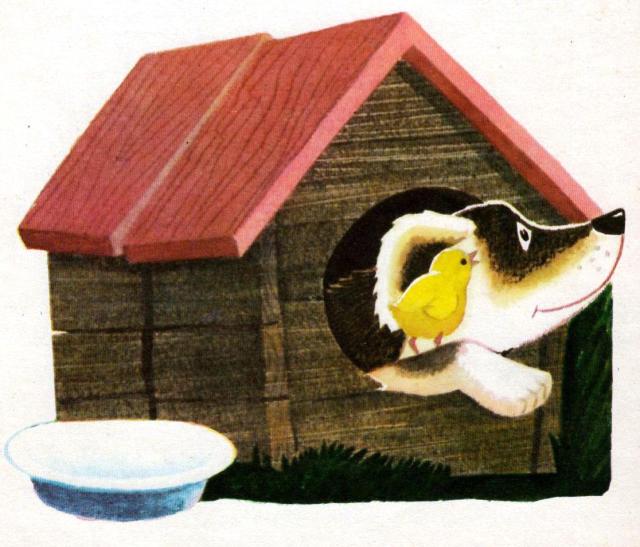
The book narrates the story of a pup and a chick who start to play and end up as friends. As in many of the children’s books, there are very beautiful paintings illustrating the story.

Yuri-Averenkov-Whose-Is-The-Sun_0001Yuri-Averenkov-Whose-Is-The-Sun_0008


Yuri-Averenkov-Whose-Is-The-Sun_0017Yuri-Averenkov-Whose-Is-The-Sun_0009Yuri-Averenkov-Whose-Is-The-Sun_0019

The book was translated from the Russian by Irina Zheleznova and drawings are by Valentin Andrievich. Translated from the Russian by. The book was first published in 1973 and republished in 1980 by Progress and in 1985 by Progress.

The Internet Archive link 1 link 2

Cleaned version  here and here

(All credits to Guptaji)

Posted in books, children's stories, progress publishers, raduga publishers, soviet | Tagged , , , , , , , , , | 1 Comment

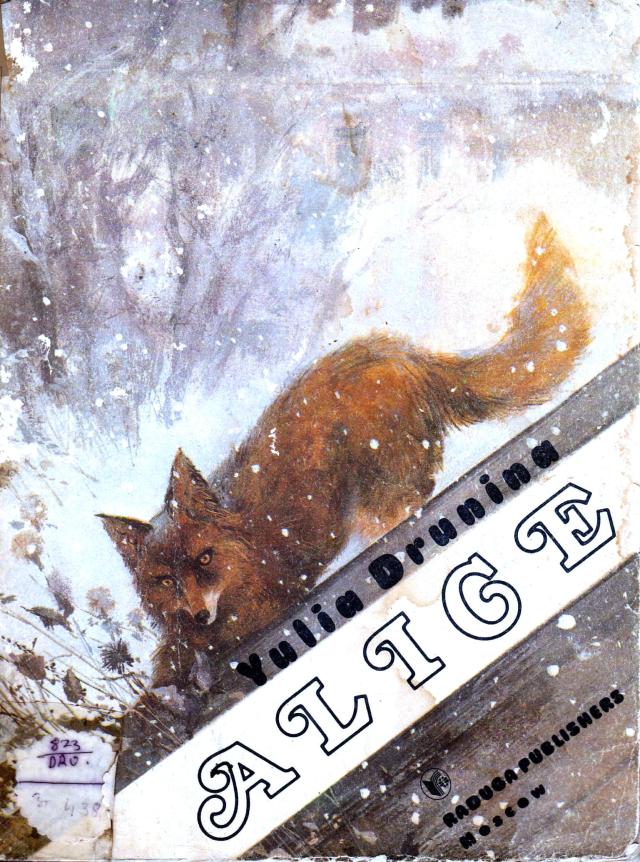
Alice – Drunina

In this post, we will see the book Alice by Yulina Drunina.

Yulia-Drunina-Alice_0000

About the book

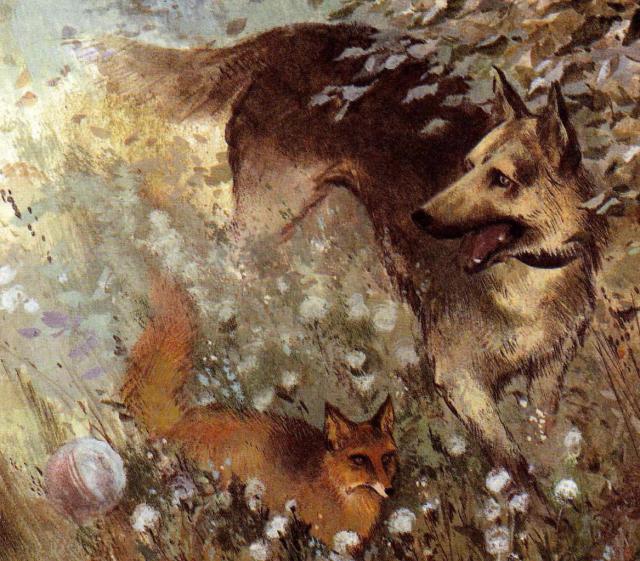
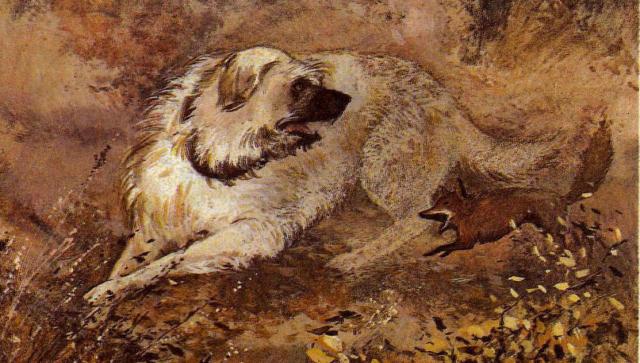
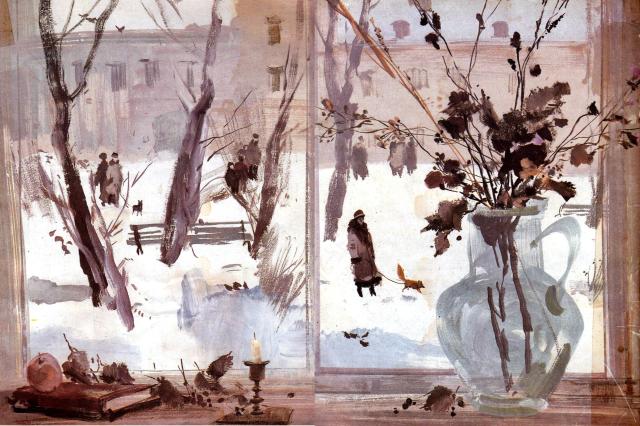
The book is a story about how a steppe-fox, a corsak, finds its way to the author’s home from a pet market along with a famished Altsasian her daughter has kept an eye for from a few weeks. They name the fox Alice and the dog Dossy. The story is an emotional roller-coster about life with Alice who is adjusting to home (making it her territory) and humans in it, along with the dog Dossy.

Generally there was much of the monkey in Alice’s character. She just could not resist the urge to wreak havoc-tear up, break, gnaw things. 

Yulia-Drunina-Alice_0011

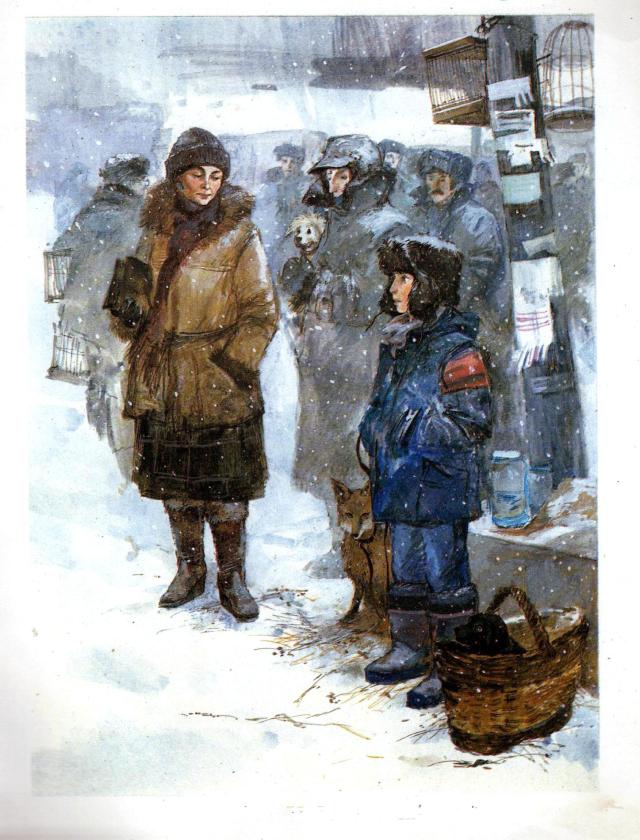
Fox in a dog market!

When she is sick she is given prescription with the name Alice Drunina, a vixen.

Yulia-Drunina-Alice_0017

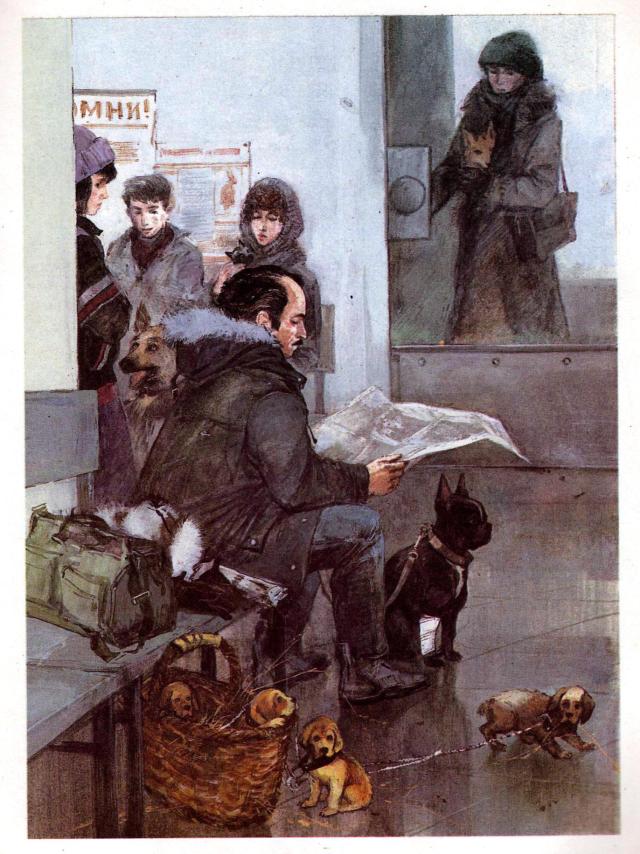
Taking Alice Drunina, a vixen to a vet.

The bigger problem arises when she has to be fed pills (as an owner of a stubborn dog I know how difficult this can be!). Anyways, she recovers with a series of injections, which her husband volunteers to give. The firm sign of recovery is that she starts to make a mess again.

It took Alice a very short time to become transformed from a miserable little beast shivering from fear and cold at the Bird Market into the idol of our household, worshipped by our entire family.

(If you are a pet owner, you will surely relate to this…)

Yulia-Drunina-Alice_0020

Alice was not friendly to everyone, Alyona defending herself with a broom.

The family in the summer rents a country home and moves with pets in there. Here Dossy and Alice play nicely with each other.

Yulia-Drunina-Alice_0028b

Alice and Dossy, best friends.

But Dossy becomes infrequent visitor and when he comes back Alice does not welcome him.  Once while going on a walk with Alice they are attacked by a Russian shepherd dog. Alice distracts him so that the author can get away safely.

Yulia-Drunina-Alice_0033.jpg

The author has doubts if she will see Alice again after this, but she is found silently resting on her pen when she arrives back at home.

 “What are you on about? I merely acted as any self-respecting fox would. In our steppes and deserts we don’t abandon our friends in trouble.”

Yulia-Drunina-Alice_0036a

I will stop here, read the rest of the story, will you?

Yulia-Drunina-Alice_0001

The book was translated from the Russian by Raissa Borbova and the fantastic drawings are by Veniamin Kostitsyn and was published by Raduga in 1986.

The Internet Archive link 1 link 2 and here

(All credits to Guptaji)

Posted in books, children's stories, raduga publishers, soviet | Tagged , , , , , , , , , , , , , | 5 Comments

The Green Island – Datskevich

In this post, we will see the book The Green Island by Victor Datskevich.

About the book

In the book, a father and son (Vadik) explore botanical gardens of Moscow. The book is a nice introduction to nature watch for children which answers many inquisitive questions they may have. The book is full of colour photographs of flora and fauna that they discover.

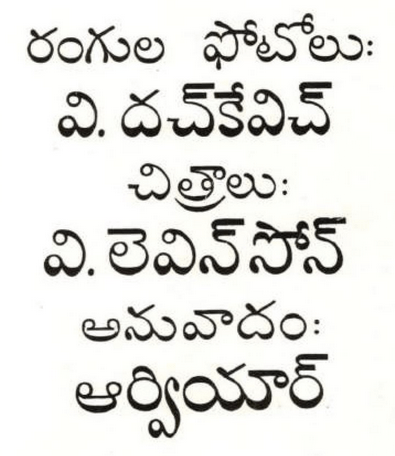
The book was translated from the Russian to English by Jan Butler, the photographs in the book are by the author and was published by Progress in 1980. Drawings are by V. levin sohn(or son) Telugu translation is by R. V. R (thanks to @var for translation, see the comment below). We also have a link for the Telugu version of the book published by Raduga/Visalandhra Publishers, who republished many of the titles in Telugu.

Do let us know if there are any other translations of this book.

English version link

ఆకుపచ్చ ద్వీపం (Aakupachha Dweepam, Telugu version link )

(All credits to Guptaji)

PS: Can someone translate this Telugu text below? It should the Telugu translator’s name.

green island telugu

PPS: Thanks to @var for the translation.

Posted in books, children's stories, life sciences, progress publishers, raduga publishers, soviet | Tagged , , , , , , , , , , , , | 2 Comments

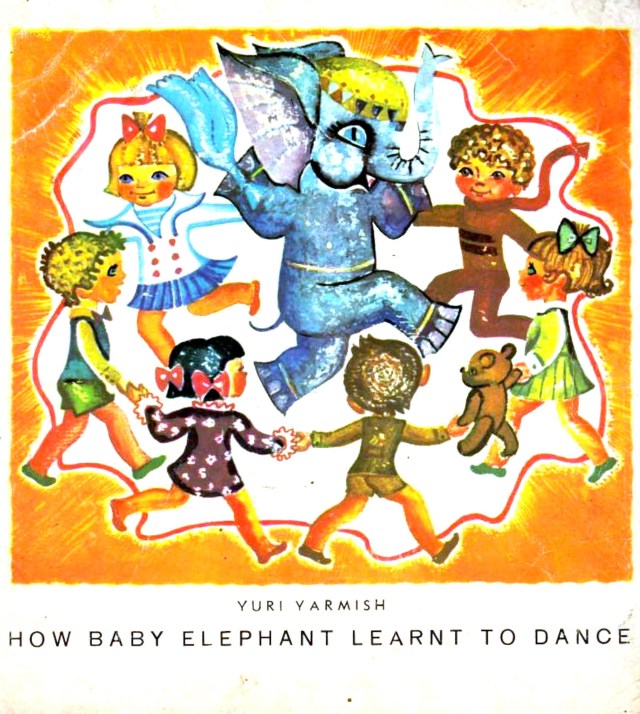
How Baby Elephant Learnt to Dance – Yarmish

In this post, we will see the book How Baby Elephant Learnt to Dance by Yuri Yarmish.

baby-ele00.jpg

About the book

This is a children’s book that tells the tale of a baby elephant who wants to dance after listening to nice music from a ballet school. He tries to copy other animals but is not successful. Afterwards, he is taken to a circus and gets his own show and is loved and appreciated by everyone!


The gorgeous illustrations are by Irina Mishyna. The book was translated from the Ukranian by Lilia Titar and was published by Dnipro Publishers in 1976.

Cleaned optimised scan here and here

The Internet Archive Link

(All credits to Guptaji)

Follow us on The Internet Archive: https://archive.org/details/mir-titles

Join us on gitlab: https://gitlab.com/mirtitles

Write to us: mirtitles@gmail.com

Posted in books, children's stories, dnipro, soviet | Tagged , , , , , , , , | 1 Comment

Geology in Pictures – Chlenov

In this post, we will see the book Geology in Pictures by Anatoli Chlenov.

rus-geology-pix_0000

About the book

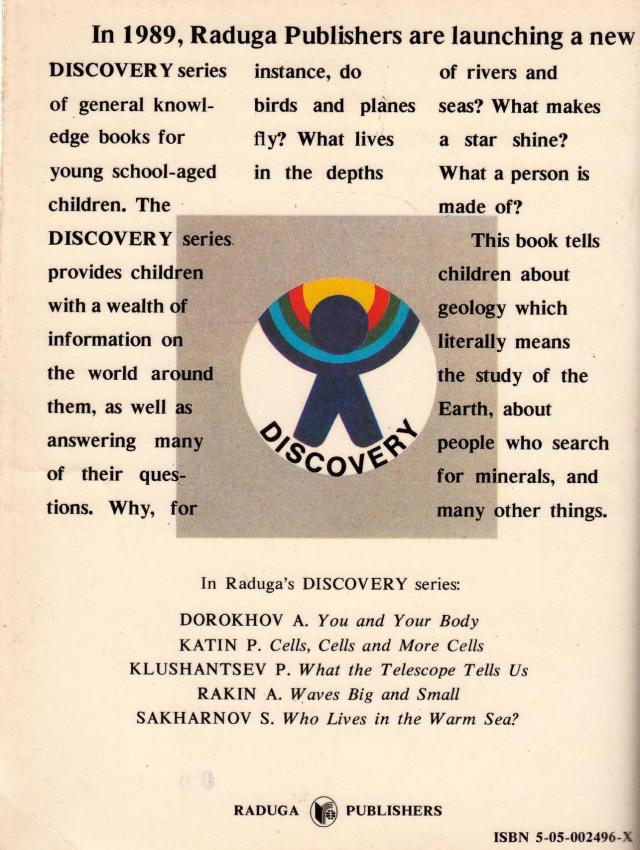
This book tells children about geology which literally means the study of the Earth, about people who search for minerals, and many other things.

The book follows question and answer format about various aspects of geology: its scope,  contents, methods and its mysteries. Questions are answered in a way that will make the readers want to know more. There are lavish two-page colour illustrations for every section.


But I am in love with crayon monochrome drawings (which are also part of the colour spreads):


I wish I was able to draw something like this!

The book is a part of Discovery series of books meant for young children.

rus-geology-pix_0065.jpg

We might see other books in this series in the future.

The book was translated from the Russian by Graham Whittaker and gorgeous illustrations are by Andrei Platonov. The book was published in 1990 by Raduga, perhaps one of the last ones to get published, also has an ISBN number: 505002496X.

Cleaned, optimised version here and here

Old Link

(all credits to Guptaji)

Contents

1. Who are geologists? What is geology?

People in the mountains 7
Geology? What is it? 7
Look around… 10

2. The Earth’s storehouses

What are mineral deposits? 14
What colour is coal? 14
Let me tell you about cement 18
Black gold 18
Water, water, everywhere 22
The sun-stone 26

3. The science of the Earth

The secrets of our planet 30
How was our planet formed? 34
Where do mountains, seas and plains come from? 38
The Earth’s great masters 42
How they work 42
Underground cities 46

4. How geologists work

Mysterious traces 50
How oil was found 50
Where did you find these flowers? 54
Attention! Detonate! 54
Journey into the depths of the Earth 55
The scout in the sky 58

Follow us on The Internet Archive: https://archive.org/details/mir-titles

Join us on gitlab: https://gitlab.com/mirtitles

Write to us: mirtitles@gmail.com

Posted in books, discovery, geology, raduga publishers, science, soviet | Tagged , , , , , , , , , , , , , , , , | Leave a comment

A picture book of astronomy – Levin, Radlova

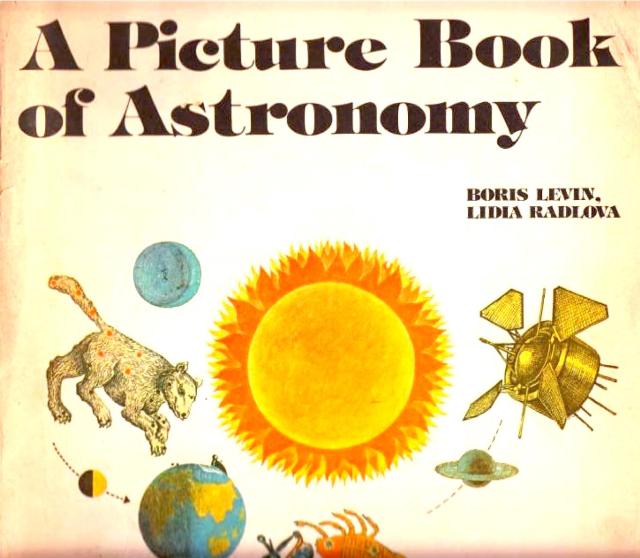
In this post, we will see A picture book of astronomy by Boris Levin and Lidia Radlova.

Levin-Radlova-A-Picture-Book-ofAstronomy_0000

About the book

The book has several topics in basic astronomy in the form of questions and answers (total 16). Each question is answered at a level that can be understood by children and illustrated gorgeously.


The book was translated from the Russian by Tracy Kuehn, and the wonderful drawings are by Elizaveta Radlova and was published by Raduga in 1988.

Translation of: Astronomii︠a︡ v kartinkakh.

Link

The Internet Archive

(All credits to Guptaji)

Contents

How Many Stars Are in the Sky?

What Is a Constellation?

Why Are the Dippers in the Sky Called Bears?

How to Find the North Star

How Do We Know the Earth Is Round?

Why Is There Night and Day?

Why Is There Summer and Winter?

Which Heavenly Bodies Are Called Planets?

What Are Our Neighbors Venus and Mars Like?

Which Is Bigger, the Sun or the Moon?

How Far Is It to the Moon?

How Far to the Sun?

Why Does the Moon Change Shape?

Why Can We See a Face on the Moon?

What Did the Astronauts Who Landed on the Moon See?

Why Is the Sun Brighter Than the Stars?

What Is a Falling Star?

What Paths Do Man-Made Satellites and Space Rockets Take?

What Does the Earth and Sky Look to Astronauts?

Follow us on The Internet Archive: https://archive.org/details/mir-titles

Join us on gitlab: https://gitlab.com/mirtitles

Write to us: mirtitles@gmail.com

Posted in astronomy, books, raduga publishers, science, soviet | Tagged , , , , , , , , , , , | 4 Comments