The Atomic Nucleus – Korsunsky

In this post we will see the book, The Atomic Nuclues by M. Korsunsky.

IMG_20180920_0001.jpg
About the book:
(from the Dover print of the book)
The study of atomic structure is among the most important topics in modern physics, and in this age of nuclear fission and fusion the atomic nucleus has top priority as an object of intensive investigation and experimental research. This modern survey, originally published in 1958, presents all the available important facts about the nuclei of atoms in an unusually readable text.
After a clear summary of early theory and experiment in radioactivity, the author devotes chapters to the nuclear model of the atom (Rutherford’s equation, Mendeleyev’s periodic table and nuclear charge, X-ray measurements, Bohr’s theory of excitation, etc.), mass of nuclei (measuring techniques, work of Thomson and Aston, isotopes, nuclear binding energy, methods for separating isotopes, etc.), disintegration of nuclei (Rutherford’s disintegration of nitrogen, Blackett’s work, the neutron, Curie-Joliot experiments, nuclear transformations, etc.), the positron (cosmic rays, Bothe’s experiments, work of Skobeltsyn, birth and death of positrons and electrons, etc.), artificial transformation of nuclei (Cockcroft and Walton, Van de Graaff generators, acceleration of ions, cyclotrons, betatrons, synchrotons, cosmotrons, etc.), artificial radioactivity (Curie, Joliot, Fermi, low-energy neutrons, isomerism, new elements, etc.), mesons (Bethe, radiative loss, showers, Yukawa, types of meson, etc.), the neutrino (Pauli’s theory, K capture, Allen’s experiments, etc.), structure of nuclei, forces acting between nuclear particles, fission, transuranium elements, nuclear chain reactions, reactors, atomic energy and thermonuclear reactions.
This is an extremely accurate, up-to-date, very thorough coverage of these important topics on a verbal level, completely free of nationalistic bias. It does not limit itself to the familiar material in most books on the atom, but presents much material that is not generally known except to specialists in the field. Yet because of its clear non-mathematical treatment, it can be read with full understanding as an introduction or survey for the beginning student and layman; it is also a first-rate summary for the specialist, indicating chains of development that might not have been clear to him, and formulating many difficult concepts in clear language.
The book was translated from the Russian by G. Yankovsky and was first published by Foreign Languages Publishing House Moscow in 1958.
PDF | OCR | 300 dpi | Bookmarked | Cover
I dedicate this post to one of my teachers who told me about this book. He read this book in the 60s, got inspired and eventually did research in nuclear physics.
The Internet Archive Link
and here
Table of Contents
Chapter 1 Radioactivity……………………………………………………….. 7
Becquerel’s Discovery……………………………………………………….. 7
The Properties of Radioactive Radiation ……………………………11
The Energy Radiated by Radium………………………………………..12
Alpha, Beta and Gamma Rays ……………………………………………15
The Properties of Alpha, Beta and Gamma Rays ……………..17
What Is an Alpha Particle?………………………………………………….20
Radium Emanation (Radon)………………………………………………….24
The Hypothesis of Radioactive Decay………………………………….29
The Spinthariscope……………………………………………………………….32
The Geiger Counter………………………………………………………………33
The Cloud Chamber……………………………………………………………… 37
The Photographic Method of Registering Alpha Particles . 40
The Charge of an Alpha Particle ‘ ……………………………………….. 41
The Decay Time of Radium and Uranium……………………………42
Once More About the Energy Contained in Atoms of Radium 49
Radioactive Series………………………………………………………………49
Isotopes . . ……………………………………………………………………….. 51
Brief Summary…………………………………………………………………….57
Chapter II. The Nuclear Model of the A to m ……………………………60
Scattering of Alpha Particles………………………………………………60
The Experiments of Geiger and Marsden……………………………61
The Static Model of the Atom ……………………………………………62
The Nuclear Model of the Atom …………………………………… . . 64
The Relation Between the Place of an Element in Mende­leyev’s. Periodic System and the Charge of Its Nucleus 69
Measuring the Charge of the Nucleus with X-Rays 73
Chapter III. The Mass of Atomic Nuclei…………………………….. 84
Measuring the Mass of an Atom ……………………………………….. 84
Separating the Isotopes ofNeon……………………………………………86 3
 Isotopes of Stable Elements………………………………………………….92
Prout’s Hypothesis………………………………………………………………94
The Binding Energy of Nuclei ……………………………………………97
Methods of Separating Isotopes………………………………………….103
Separating the Isotopes of Hydrogen…………………………………105
Chapter IV. The Disintegration of Atomic Nuclei……………………109
Anomalous Scattering of Alpha Particles …………………………. 110
The Disintegration of Nitrogen Nuclei …………………………….. 111
The Disintegration of Other Elements ……………………………..114
Blackett’s Experiments……………………………………………………… 116
Nitrogen Converted into Oxygen ……………………………………….118
Why Don’t All Elements Disintegrate Under the Action of
Alpha Particles? ……………………………………………………………..123
The Discovery of the Neutron……………………………………………..125
Ways of Observing Neutrons……………………………………………..132
Nuclear Transformations That Produce Neutrons…………………134
Nuclear Transformations Produced by Neutrons…………………136
Chapter V. The Discovery of the Positron ……………………………..140
What Is a Positron?…………………………………. 140
Cosmic Rays ……………………………………………………. 141
Skobeltsyn’s Experiments……………………………………………………149
How Lhe Positron Was Discovered……………………………………… 153
The “Birth and Death” of Electrons……………………………………156
Chapter VI. The Artificial Transformation of Atomic Nuclei 161
The First Apparatus for the Artificial Disintegration ol’ Atomic Nuclei………………………………………………………………..162
The Disintegration of Lithium ………………………………………….167
An Experimental Verification of Einstein’s Equation 170
The Van de Graaff Generator……………………………………………..172
Acceleration by an Alternating Electric Field……………………178
The Cyclotron ……………………………………………………………………182
The Betatron………………………………………………………………………186
Now Types of Charged-Particle Accelerators ……………………..199
Chapter VII. Artificial Radioactivity…………………………………………205
The Discovery of Artificial Radioactivity………………………….205
Artificial Radioactivity Induced by Neutrons…………………….. 211
Thermal Neutrons………………………………………………………………..215
Neutron Capture That Does Not Load to Radioactivity 218
Isomerism of Atomic Nuclei………………………………………………..221
New Chemical Elements………………………………………………………223
Chapter VIII. Mesons……………………………………………………………..225
Ionization and Radiative Losses ………………………………………226
Showers ……………………………………………………………………………. 232
The Discovery of the Meson………………………………………………..235
The Lifetime of a Meson……………………………………………………238
The Mass of Mesons……………………………………………………………..241
Nuclear Transformations Produced by Pi-Mesons and The
Transformation of Pi- and Mu-Mesons ………………………….247
Heavy Mesons ……………………………………………………………………250 Hyperons……………………………………………………………………………..251
Again About Cosmic Rays ………………………………………………..254
Chapter IX. The Neutrino………………………………………………………261
Beta-Ray Spectra………………………………………………………………..261
The Pauli Hypothesis………………………………………………………….266
K-Capture …………………………………………………………………………. 269
Allen’s Experiments ………………………………………………………….275
Chapter X. The Structure of Atomic Nuclei and the Forces Acting Between Nuclear Particles ………………………277
Are There Electrons in Atomic Nuclei?……………………………..277
What Are Atomic Nuclei Made o f ? ……………………………………280
The Radioactivity of the Neutron………………………………………284
Nuclear Forces……………………………………………………………………287
A Model of the Nucleus………………………………………………………291
Nuclear Transformations Accompanied by the Ejection of Several Particles……………………………………………………………..296
Chapter XI. Nuclear Fission ……………………………………………….. 300
Neutron Capture by Uranium…………………………………………….300
An Investigation of the Nature of the Transuranium Elements 302
The Discovery of Rare-Earth Elements Among the Decay
Products of Uranium………………………………………………………304
The Fission of Uranium……………………………………………………….306
Chemical Elements with Atomic: Numbers Above 92 308
Nuclear Fragments and Their Energy………………………………..315
Secondary Neutrons……………………………………………………………..320
Thermal Neutrons and the Fission of Uranium ……………….. 324
 The Spontaneous Fission of Uranium-235 Nuclei………………..326
Chapter XII. Nuclear Chain Reactions……………………………………329
The Chain Reaction……………………………………………………………..329
The Nuclear Reactor………………………………………………………….336
The First Soviet Uranium Reactor ……………………………………339
The Atomic Bomb ……………………………………………………………..341
Chapter XIII . The Peaceful Uses of Atomic Energy ……………..347
Atomic Power Stations……………………………………………………….347
Atomic Power Plants………………………………………………………….353
Tracer Atoms and Their Use in the National Economy . . 355
Chapter XIV. Thermonuclear Reactions 369
The Binding Energy per Nuclear Particle 369
The Energy Liberated in Nuclear Fusion 371
Thermonuclear Reactions 373
The Hydrogen Bomb …………………………………………………………. 378
Controlled Thermonuclear Reactions……………………………………380
Appendix ………………………………………………………………………. 383
Posted in books, foreign languages publishing, physics, soviet | Tagged , , , , , , , , , , , , , , | 6 Comments

Problems in Theoretical Physics – Grechko, Sugakov, Tomasevich, Fedorchenko

In this post, we will see the much awaited and somewhat rare book Problems in Theoretical Physics by L. G. Grechko, V. I. Sugakov, O. F. Tomasevich A. M. Fedorchenko.

grechko-front-cover

About the book:

From the Front Jacket

This book is a collection of problems covering mechanics, electrodynamics, nonrelativistic quantum mechanics, !statistical physics and thermodynamics. Each Section opens with a brief outline of the main laws and relationships used to solve the problems. Also information about the needed mathematical apparatus is included. Along with answers there are guides to solving the more complicated problems. SI units are used throughout the book. Problems in Theoretical Physics is intended for physics majors at universities and other institutions of higher learning. Some of the problems are specifically for students majoring in theoretical physics. Certain ones can be used in the physics and mathematics departments of teachers colleges.

From the Preface

The text draws largely on the Course of Theoretical Physics by L. D. Landau and E. M. Lifshitz, but also makes use of other textbooks and handbooks recommended for the university course in theoretical physics. Some of the problems have been taken from published problem books listed at the end of this book, but many are original. The student will be able to solve the problems if he has a good knowledge of the fundamentals of theoretical physics, which are briefly outlined in each section of this book.

The book was translated from the Russian by Eugene Yankovsky and was published by Mir in 1977.

PDF | OCR | Bookmarked | Cover | 600dpi

The Internet Archive Link

and here

Contents

PREFACE 5

Section I. Classical Mechanics 9

Problems 25

Answers 141

Section II. Electrodynamics 50

Problems 61

Answers 160

Section III. Quantum Mechanics 78

Problems 92

Answers 230

Section IV. Statistical Physics and Thermodynamics 110

Problems 119

Answers 356

APPENDICES 424

1. Basic formulas of vector analysis 424

2. Curvilinear coordinates 425

3. Differential operators in curvilinear coordinates 429

4. Mathematical supplement 434

5. Legendre polynomials 441

6. Hermite polynomials 444

7. The confluent hypergeometric junction 446

BOOKS ON THE SUB1ECT 448

Posted in books, mir books, mir publishers, physics, problem books | Tagged , , , , , , , , , , , | 4 Comments

Calculus: Basic Concepts for High Schools – Tarasov

In this post, we will see the book Calculus: Basic Concepts for High Schools by Lev Tarasov. Now, many of you must be wondering why a re-post of a book? The answer is that this is not a scan of the original book. But instead, it is a completely electronic version of the book created using LaTeX!

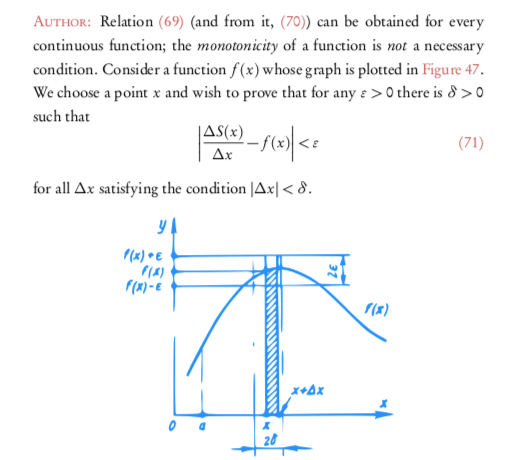
tarasov-calculus-fc.png

We have used XeLaTeX for typesetting the book, and friends it was fun indeed to do it. With LaTeX the equations are typeset really beautifully. And the final result is a beautifully typeset book which is of the best out there for the given subject. The result was immensely satisfying to see and is aesthetically pleasing as well.

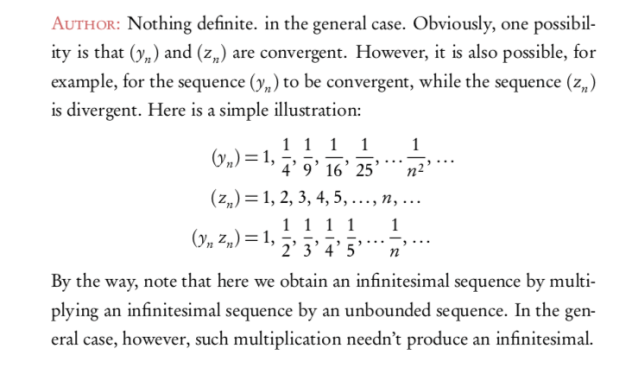
Below are a few sample pages from the book:

Screen Shot 2018-09-04 at 1.04.49 PM

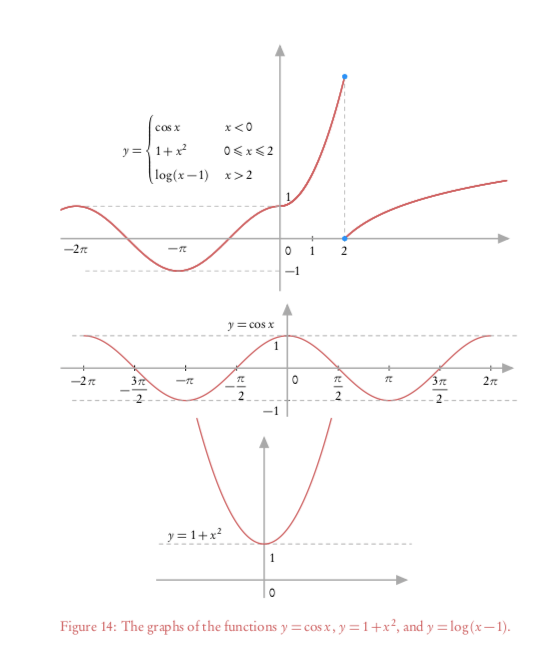
Some of the diagrams I have drawn using TiKz.

Screen Shot 2018-09-04 at 1.06.46 PMScreen Shot 2018-09-04 at 1.07.12 PM

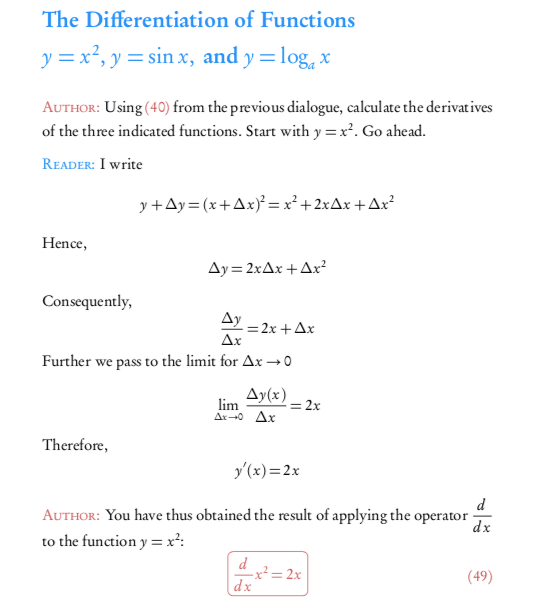
At other places, I have used the existing diagrams.

Screen Shot 2018-09-04 at 1.07.25 PM

For now, I have used the some of the old figures from the scan, but it would be fun to redraw them using TiKz. I have redrawn some of them like the ones above, but I would need some help with doing all of them. let me know if you are ready for volunteering for that. There might be a few typos here and there or the mathematical mistakes. Please point them and I will correct them. What better way to proofread than using 1000s of eyes?  We plan to digitise all the important books with LaTeX in the near future, let me know if you want to pitch in.

About the book

The whole book is presented as a relatively free-flowing
dialogue between the AUTHOR and the READER. From one discussion
to another the AUTHOR will lead the inquisitive and receptive
READER to different notions, ideas, and theorems of calculus,
emphasizing especially complicated or delicate aspects, stressing the
inner logic of proofs, and attracting the reader’s attention to special
points. I hope that this form of presentation will help a reader of the
book in learning new definitions such as those of derivative, antiderivative, definite. integral, differential equation, etc. I also expect that
it will lead the reader to better understanding of such concepts as
numerical sequence, limit of sequence, and function. Briefly, these
discussions are intended to assist pupils entering a novel world of
calculus. And if in the long run the reader of the book gets a feeling
of the intrinsic beauty and integrity of higher mathematics or even
is appealed to it, the author will consider his mission as successfully
completed.

Thanks to Anish.dot for the original scan.

The Internet Archive link. and here

Link to the old scan.

Update: Link to the Gitrepo with source files

Contents

Preface v

1 INFINITE NUMERICAL SEQUENCE 1

2 LIMIT OF SEQUENCE 17

3 CONVERGENT SEQUENCE 29

4 FUNCTION 45

5 MORE ON FUNCTION 61

6 LIMIT OF FUNCTION 85

7 MORE ON THE LIMIT OF FUNCTION 103

8 VELOCITY 115

9 DERIVATIVE 129

10 DIFFERENTIATION 147

11 ANTIDERIVATIVE 169

12 INTEGRAL 185

13 DIFFERENTIAL EQUATIONS 199

14 MORE ON DIFFERENTIAL EQUATIONS 215

PROBLEMS 227


Posted in books, mathematics, mir books, mir publishers | Tagged , , , , , , | 24 Comments

Applied Methods in the Theory of Nonlinear Oscillations – Starzhinskii

In this post, we will see the book Applied Methods in the Theory of Nonlinear Oscillations by V. M. Starzhinskii.

starzhinskii

About the book:

The book is aimed at engineers with a strong mathematical background, scientists working in mechanics and applied mathematics, and undergraduate and postgraduate students of Applied Physics and Physics and Mathematics departments. The book is based on a course of lectures presented by the author to engineering students at the Mechanics and Mathematics Department of Moscow University in 1956-1976.

The book has two parts

Part One of the book is devoted to the combination of the Lyapunov, Poincare, and averaging methods as applied to the analysis of oscillations in Lyapunov and nearly Lyapunov systems.

The second part of the book is also based on the results achieved in one of the classical methods developed in the years spanning the late 19th and early 20th centuries, the theory of normal forms (Poincare, Lyapunov, Dulac, Siegel, Moser, Arnold, Pliss, and others).

The book requires considerable mathematical background and is not an easy read for those who are not thorough with quite advanced and topical stuff regarding solving equations.

The book was translated from the Russian by V. I.  Kisin and was first published by Mir Publishers in 1980.

Original upload was in djvu form (with OCR and Bookmarked), we converted to PDF, added bookmarks and cover.

The Internet Archive link.

and here

Contents

PART ONE

OSCILLATIONS IN LYAPUNOV SYSTEMS

Chapter I. Introduction (13)

§ 1. Transformation of Lyapunov Systems (13)

1.1. General case (13).

1.2. Systems of second-order equations (16).

§ 2. On the Poincare Method of Finding Periodic Solutions of Non-autonomous

Quasilinear Systems (19)

2.1. Differential equations of the generating solution and first corrections (19).

2.2. Non-resonant case (20).

2.3. Resonant case (22).

2.4. Variational equations for periodic unperturbed motion (24).

2.5. Case of distinct multipliers of unperturbed system of variational equations (25).

2.6. Case of multiple multipliers (27).

2.7. Examples (28).

§ 3. Forced Vibrations of Centrifuges Used for Spinning (33)

3.1. Statement of the problem and equations of motion (33).

3.2. Determination of a periodic solution (35).

3.3. Stability analysis (37)

Chapter II. Oscillatory Chains (40)

§ 1. Completely Elastic Free Oscillatory Chains (40)

1.1. Definition of an oscillatory chain (40).

1.2. Determination of equilibrium positions (43).

1.3. Asymptotic stability in the large of the lower equilibrium position for distinct resistance forces (46).

1.4. Variational equations for Vertical oscillations of the system (47).

1.5. Conservative case (49).

1.6. Stability of vertical vibrations of a spring-loaded pendulum (50).

§ 2. Partly Elastic Free Oscillatory Chains (55)

2.1. Statement of the problem (55).

2.2. Kinetic and potential energies (57).

2.3. Example (59).

2.4. Pendulum subject to elastic free suspension (62).

2.5. Pendulum subject to elastic guided suspension (65).

Chapter III. Application of the Methods of Small Parameter to Oscillations in

Lyapunov Systems (67)

§ 1. Loss of Stability of Vertical Vibrations of a Spring-Loaded Pendulum (67)

1.1. Step 1 (68).

1.2. Step 2 (69).

1.3. Step 3 (72).

§ 2. On Coupling of Radial and Vertical Oscillations of Particles in Cyclic

Accelerators (75)

2.1. Step 1 (75).

2.2. Step 2 (77).

2.3. Step 3 (78).

§ 3.  Loss of Stability of Vertical Oscillations of a Pendulum Subject to Elastic Guided suspension (79)

3.1. Determination of nontrivial periodic modes (Step 2) (79).

3.2. Transient process (Step 3) (80).

§ 4. Periodic Modes of a Pendulum Subject to Elastic Free Suspension (82)

4.1. Transformation of equations of motion (82).

4.2. Periodic solution (83).

Chapter IV. Oscillations in Modified Lyapunov Systems (84)

§ 1. Lyapunov Systems with Damping (84)

1.1. Transformation of Equations of motion (84).

1.2. Complete system of variational Equations in the Poincare parameter and its solution (86).

1.3. Vibration in mechanical systems with one degree of freedom and different types of nonlinearity (89).

1.4. The Duffing equation with linear damping (92).

1.5. Spring-loaded pendulum with linear damping (95).

§ 2. On Lyapunov Type Systems (!)8)

2.1. Statement of the problem (98).

2.2. Transformation of Lyapunov systems (100).

PART TWO

APPLICATION OF THE THEOHY OF NORMAL FORMS TO OSCILLATION PROBLEMS

Chapter V. Elements of the Theory of Normal Forms of Real Autonomous Systems of Ordinary Differential Equations (103)

§ 1. Introductory Information (103)

1.1. Statement of the problem (103).

1.2. The fundamental Brjuno theorem (144).

1.3. The Poincare theorem (106).

§ 2. Additional Information (107)

2.1. Some properties of normalizing transformations (107).

2.2. Classification of normal forms; integrable normal forms (107).

2.3. Concept of power transformations (109).

2.4. The Brjuno theorem on convergence and divergence of normalizing transformations ( 111).

§ 3. Practical Calculation of Coefficients of Normalizing Transformation and Normal Form. ( 112)

3.1. Fundamental identities (112).

3.2. Computational alternative (114).

3.3. Fundamental identities in general form and their transformation (116).

3.4. Computational alternative in general case (120).

3.5. Remark: on the transition from symmetrized coefficients to ordinary <Jill’S (122).

3.6. Formulas for coefficients of fourth-power Variables (123).

3.7. Case of composite elementary divisors of the matrix of the linear part (123).

Chapter VI. Normal Forms of Arbitrary-Order Systems in the Cast of Asymptotic Stability in Linear Approximation ( 128)

§ 1. Damped Oscillatory Systems (128)

1.1. Reduction to diagonal form (128).

1.2. Calculation of coefficients of normalising transformation (129).

1.3. General solution of the initial system (general solution of the Cauchy problem) (130).

§ 2. Examples (132)

2.1. A system with one degree of freedom (132).

2.2. Oscillations of a spring suspended mass with linear damping (133).

Chapter VII. Normal Forms of Third-Order Systems (136)

§ 1. Case of Two Pure Imaginary Eigenvalues of the Matrix of the Linear Part (136)

1.1. Reduction to normal form (136).

1.2. Calculation of coefficients of normalizing transformation and normal form ( 138).

1.3. Application of power transformation (140).

1.4. Free oscillations of an electric servodrive (142).

§ 2. Case of Neutral Linear Approximation (146)

2.1. Normal form (146).

2.2. Calculation of coefficients of normalizing transformation and normal form (148).

2.3. Remark on convergence (150).

2.4. Conclusions on stability (15U).

2.5. Integration of normal form in Quadratic approximation (152).

2.6. Example (155).

§ 3. Case of a Zero Eigenvalue of the Matrix of the Linear Part (156)

3.1. Normal form and normalizing transformation (156).

3.2. Integration of normal form (158).

3.3. Remark on convergence (159).

3.4. Free oscillations in a tracking system with a TV sensor (159).

Chapter VIII. Normal Forms of Fourth- and Six-Order Systems in Neutral Linear Approximation ( 165)

§ 1. Fourth-Order Systems (165)

1.1. Remark on coefficients of systems of diagonal form (16:i).

1.2. Reduction to normal form (166).

1.3. Calculation of coefficients of normalizing transformation and normal forms (168).

1.4. The Molchanov criterion of oscillation stability (170).

1.5. The Bibikov-Pliss criterion (173).

§ 2. The Ishlinskii Problem (173)

2.1. Reduction of equations of mot ion to tho Lyapunov form (173).

2.2. Transformation of systems similar to Lyapunov (176).

2.3. Determination of periodic solutions (178).

2.4. Reduction of equations of motion to diagonal form and transformation to normal form (180).

2.5. General solution of the Cauchy problem (182).

2.6. Preliminary conclusions on stability (184).

2.7. Construction of tho Lyapunov function (185).

§ 3. The Trajectory Described by the Centre of a Shaft’s Cross Section in One Revolution (186)

3.1. Statement of tho problem and equations of motion (186).

3.2. Reduction to diagonal form (190).

3.3. Reduction to normal form (193).

3.4. General solution of the Cauchy problem (194).

§ 4. Sixth-Order Systems (196)

4.1. Solutions of the resonant equation (197).

4.2. Normal forms (200).

4.3. Calculation of coefficients of normalizing transformation and normal forms (201).

4.4. Stability in the third approximation. The Molchanov criterion (205).

Chapter IX. Oscillations of a Heavy Solid Body with a Fixed Point About the Lower Equilibrium Position (208)

§ 1. Case of Centroid Located in a Principal Plane of the Ellipsoid of Inertia with respect to a Fixed Point (208)

1.1. Reduction to diagonal form (208).

1.2. Reduction to the Lyapunov form (211).

1.3. Resonances (212).

1.4. Simplest motions (213).

1.5. Transformation of equations of diagonal form (214).

1.6. Possible generalizations (215).

1.7. Situation similar to the Kovalevskaya case (216).

1.8. Application of the method of successive approximations (218).

1.9. Remarks on the determination of tho position of a solid body with a fixed point (219).

§ 2. The General Case (219)

2.1. Base reference frame (220).

2.2. Special reference frame (222).

2.3. Equations of motion of a heavy solid body in the special reference frame (223).

2.4. Reduction to the Lyapunov form (226).

2.5. Resonances (228).

2.6. Application of the method of successive approximations (229).

Brief Bibliographical Notes (232)

References (236)

Subject Index (262)

Posted in books, engineering, mathematics, mir books, mir publishers, physics, science | Tagged , , , , , , , , , , , , , , , , , , , , , , , , , | 9 Comments

Problems in Elementary Mathematics for Home Study – Antonov, Vygodsky, Nikitin, Sankin

In this post, we will see another mathematics problem-solution book titled Problems in Elementary Mathematics for Home Study by N. Antonov, M. Vygodsky, V. Nikitin, A. Sankin.

About the book

A collection of 928 problems in arithmetic, algebra, geometry and trigonometry (with answers) prepared for home study by correspondence students and others studying or brushing supplementary mathematics without a teacher. Problems with similar solutions are grouped together with a detailed example of the solution of the first problem in the group. Will be found a useful resource of questions for revision, tests, and examination papers. Has had 17 large editions in Russian.

The book was translated from the Russian by Leonid Levant and was published by Mir Publishers in 1982.

Scan by original uploader in DJVU format. We bookmarked, added covers and converted to PDF.

The Internet Archive link

and here

Contents

Formulas for Reference

PART ONE ARITHMETIC AND ALGEBRA Problems | Answers

Chapter I. Arithmetic Calculations 11 | 89

Chapter II. Algebraic Transformations 14 | 90

Chapter Ill. Algebraic Equations 22 | 112

Chapter IV. Logarithmic and Exponential Equations 29 | 142

Chapter V. Progression 32 | 159

Chapter VI. Combinatorics and Newton’s Binomial Theorem 36 | 169

Chapter VII. Algebraic and Arithmetic Problems 39 | 177

PART TWO GEOMETRY AND TRIGONOMETRY Problems | Answers

Chapter VIII. Plane Geometry 55 | 208

Chapter IX. Polyhedrons 62 | 246

Chapter X. Solids of Revolution 76 | 327

Chapter X I. Trigonometric Transfonnation 81 | 363

Chapter X II. Trigonometric Equations 84 | 372

Chapter X Ill. Inverse Trigonometric Functions 87 | 395

Posted in books, mathematics, mir books, mir publishers, problem books | 4 Comments

The Origin of Man – Nesturkh

In this post, we will see the book The Origin of Man by M. F. Nesturkh.

About the book

The primary purpose of this book is to provide readers with concrete
facts, drawn from present-day biology, to serve as proofs in the
materialist theory of anthropogenesis. These include the most important
information on the living anthropoid apes necessary to make a correct
study of the fossil remains of their extinct ancestors, to find among
them the immediate precursors of man and to discover the main features
of their palaeobiology.

The second task which the author has set himself is to outline the
more significant stages in the development of fossil man.

The third task is to explain the anthropological viewpoint of the
way in which fossil man developed, using for this purpose the labour
theory of anthropogenesis, and also to criticize the idealist concepts
of the formation of man and the races of mankind.

The book was translated from the Russian by George H. Hanna and was first published by Foreign Languages Publishing House in 1959.

PDF | Cover | Bookmarked | OCR

The Internet Archive Link

and here

Contents
Preface 5

PART ONE

THE DARWIN AND OTHER HYPOTHESES CONCERNING
ANTHROPOGENESIS

Chapter One. DARWIN ON THE ORIGIN OF MAN

1. Anthropogenesis Before Darwin
2. Darwin on the Evolution of the Animal Kingdom
3. Darwin’s Genealogy of Man

Chapter Two. THE ANTHROPOID APES AND THEIR ORIGIN

1. Living Anthropoids
2. Extinct Anthropoids

Chapter Three. CRITICISM OF THE LATER HYPOTHESES CONCERNING THE ORIGIN OF MAN

1. Religious Explanations of Anthropogenesis
2. The Tarsier Hypothesis
3. Some Simian Hypotheses
4. Osborne’s Hypothesis
5. Weidenreich’s Hypothesis of Anthropogenesis

PART TWO
PHYSICAL PECULIARITIES OF THE HUMAN BODY AND THE
EMERGENCE OF MAN

Chapter One. THE ROLE OF WORK AND ERECT LOCOMOTION IN ANTHROPOGENESIS

1. The Role of Work
2. Methods of Locomotion of the Great Apes
3. The Weight of the Body and the Centre of Gravity in Man and the Apes
4. The Inferior Extremities
5. The Pelvis, Spine and Thorax
6. The Superior Extremities
7. The Proportions of the Body and Asymmetry
8. The Skull

Chapter Two. THE BRAIN AND HIGHER NERVOUS ACTIVITY IN MAN AND THE APES

1. The Brain and Analysers of Man and the Apes
2. Development of the Peripheral Regions of the Analysers
3. Higher Nervous Activity in Monkeys
4. The Second Signalling System-the Distinguishing Feature or Human
Thought

Chapter Three. THE HERD INSTINCf IN MONKEYS AND RUDIMENTARY FORMS OF LABOUR

1. The Herd Instinct in Monkeys
2. Inceptual Forms of Labour

PART THREE
PALAEANTHROPOLOGICAL DATA ON THE MAKING OF MAN

Chapter One. THE FIRST STAGE: THE EARLIEST MEN (PITHECANTHROPI)

1. The Java Pithecanthropus
2. The Sinanthropus
3. The Heidelberg Man

Chapter Two. THE SECOND STAGE: EARLY MEN (PALAEANTHROPI)

1. The Ice Age
2. Neanderthalers and Their Physical Type
3. Neanderthalers on U.S.S.R. Territory
4. The Palestine Neanderthalers
5. Primitive Man’s Way of Life
6. The Development of Fossil Man’s Brain

Chapter Three. MODERN MAN (NEANTHROPUS)
1. Upper Palaeolithic Man
2. False Hypotheses Concerning the Origin of Modem Man and Their
Criticism
3. The Races of Mankind
4. Science Against Racism

Bibliography

Posted in books, foreign languages publishing, geology, history, life sciences, science, soviet | Tagged , , , , , , , , , , , , , , , , , , , | Leave a comment

Ernesto Che Guevara – Lavretsky

In this post, we will see the biography of Ernesto “Che” Guevara by I. R. Lavretsky.  Che perhaps is the most iconic face of a revolutionary, and indeed in deed he was a revolutionary at heart till his untimely and gruesome death.


About the book:

This book by I. R. Lavretsky, Dr. Sc. (Hist.), Is concerned with the life and activities of the outstanding revolutionary and fighter for the national liberation of the Latin American peoples Ernesto Che Guevara. The author makes use of numerous documents, press Items, notes from personal conversations with friends, relatives and comrades-in-arms of Che Guevara, as well as a wealth of photographs.

The book was translated from the Russian by A. B. Eklof and was designed by V. An. The book was first published by Progress Publishers in 1976.

Original scan by IA user Thomas Mrett. We cleaned, OCRed, bookmarked the scan.

The Internet Archive link. and here


Contents

THE ROAD TO THE “GRANMA”

First Steps

Character Formation

A Lost Battle

The “Granma”

SIERRA MAESTRA

Fighting in the Mountains

The Daily Life of a Guerrilla

Through Santa Clara to Havana

“PATRIA 0 MUERTE”

In the Whirlwind of Revolution

The World of Socialism

A Shock Worker for Communism

“Cuba Si, Yanqui No!”

“BOLIVIAN DIARY”

A Mysterious Disappearance

The Camp on the Nancahuasu River

And Again the Thunder of Battle

On the Other Side of the Barricades

The Immortal Cause of Revolution

LANDMARKS IN THE LIFE OF ERNESTO CHE GUEVARA

Posted in history, philosophy, progress publishers, soviet | Tagged , , , , , , , , , , , , , , , | Leave a comment

The Principles of Philosophy – Rakitov

In this post, we will see the book The Principles of Philosophy by Anatoly Rakitov.

bitmap

About the book:

The structure of this book permits the student to read and master its matter in varying order according to the aims and purposes he or she is pursuing. The introduction “What Is Philosophy?” provides basic information about philosophy, its subject-matter and methods, the main points that distinguish it from other disciplines, and its place in the system of Marxism-Leninism. This chapter also contains information on the origin and various stages in the evolution of philosophy, and singles out the main matters that will subsequently be discussed. These problems will be treated in more detail in the following chapters, the material being arranged in order of increasing difficulty. Each of the successive chapters depends on the preceding ones. For the reader’s better assimilation of the proofs and arguments by which the superiority of materialism over idealism, of dialectics over metaphysics, and of Marxist-Leninist philosophy over other philosophical schools and currents is demonstrated, the text includes dialogues and talks between imaginary persons who express different points of view. These dialogues should be read and studied as attentively as the basic text.

The book was translated from the Russian by H. Campbell Creighton and was first published in English by Progress Publishers in 1989. This book is a part of the series Student’s Library in which many books were published especially pertaining to philosophy and sociology within the framework of dialectical-materialism.

Original scan by IA user Thomas Mrett. We cleaned, OCRed, bookmarked the scan.

The Internet Archive link. and here


Contents

How to Use This Book 7

Introduction 9

What Is Philosophy 9

Who Needs Philosophy? And Why? 9

001 Man in the Modern World 9

002 “The Intellectual Quintessence of Its Time” 10

003 Philosophy and World Outlook 12

004 Philosophy and the General Methodology of Activity and Cognition 13

005 Philosophy and Ideology 16

006 The Main Task of Marxist-Leninist Philosophy 20

The Basic Question. The Subject Matter and Method of Philosophy 22

007 The Basic Question of Philosophy 22

008 The ‘ First Aspect of the Basic Question of Philosophy. Idealism and Materialism 24.

009 A Dialogue of a Materialist and an Idealist 26

010 The Second Aspect of the Basic Question of Philosophy 30

011 A Dialogue about the Knowability of the World 31

012 The Method of Philosophy; the Preliminary Concept of Dialectics and Metaphysics 34.

013 The Subject Matter of Marxist-Leninist Philosophy 36

014 The Principle of Partisanship in Philosophy 37

The Origin and Development of Philosophy 39

015 The Philosophy of Antiquity 39
016 The Philosophy of the Orient 41
017 The Philosophy of the Middle Ages 42
018 The Philosophy and Culture of the Renaissance 43
019 The Philosophy of Bourgeois Society 44
020 The Philosophical, Social, and Scientific Prerequisites of Marxian Philosophy 46

021 The Rise of Dialectical Materialism: a Radical Turn in the Development of Philosophy 49
022 A New Stage in the Development of Marxist Philosophy 51


Chapter I
Matter and Consciousness

Matter and the Picture of the World 56

101 Notion and Category 56
102 What Is Matter? 57
103 How Views of Matter Developed 59
104 The Contemporary Scientific Picture of the World 62
105 The Material Unity of the World 65
106 System, Structure, Element 65
107 Necessity and Chance 68
108 Laws of the Objective World 70.

Motion, Time and Space 74

109 Matter and Motion 74
110 Dialogue on Motion and Rest 76
111 Form and Content 77
112 The Forms of the Motion of Matter 79
113 Time and Space 81
114 The Irreconcilability of the Idealist and Materialist Conceptions of Time and Space 82
115 Modern Scientific Notions of Time and Space 84
116 Cause and Effect 85

Reflection as a General Property of Matter 88

117 The Basic Question of Philosophy in the “Computer Age” 88
118 What Is Reflection? 89
119 Reflection in the Inorganic World 90
120 The Complication of Reflection during the Transition to Animate Nature 92
121 The Evolution of Life and Origin of the Nervous System 93
122 Active and Passive Reflection of Reality 95
123 The Psychic and the Physical, the Ideal and the Material 97

Human Consciousness 101

124 The Brain as the Material Organ of Mental Activity 10l
125 Work as the Basis of Consciousness 102
126 Language and Thought 104
127 On the Relative Character of the Opposition of Matter and Consciousness 106
128 Can Computers Think? 108
129 Some Conclusions. The Synthesising Function of Philosophy 111

Chapter II

Social Being and Social Consciousness 114

The Materialist Conception of Society and Its History 114

201 A Talk about the Idealist and Materialist Conceptions of Society 114
202 Man and Activity. Preconditions for the Materialist Conception of History 116
203 The Development of Society &s a NaturalHistorical Process 118
204 The Mode of Production as the Basis of the Development and Functioning of Society 120
205 Basis and Superstructure 125
206 Classes and Class Struggle 127
207 The State in the System of the Superstructure 130
208 Political Parties in the System of the Superstructure 134
209 Social Organisations in the System of the Superstructure 137
210 Social Being and Social Consciousness 139
211 The Basic Principle of Historical Materialism 142

The Theory of SocioEconomic Formation 144

212 The Individual, Particular, and Universal 144
213 What Is a SocioEconomic Formation? 146
214 Social Revolution 148
215 The Structure of a Social Revolution 149
216 The Forming of Human Society 151
217 The Primitive Communal Formation 152
218 The SlaveOwning Formation 154
219 The Feudal Formation 156
220 The Capitalist Formation 158
221 The Communist Formation 161
222 The Category “SocioEconomic Formation” and Historical Reality 164

The Functions and Forms of Social Consciousness 166

223 Social Consciousness and the Development of Society 166
224 Ideology in the System of Social Consciousness 168
225 Social Psychology and Everyday Consciousness 170
226 Political Consciousness and Politics 172
227 Legal Consciousness and Law 174
228 Morality as a Form of Social Consciousness 176
229 Economic Consciousness 179
230 Religion as a Form of Social Consciousness 181
231 Artistic Consciousness and Art 183
232 Individual and Social Consciousness 187
233 On the Relative Independence of Social Consciousness 189
234 Growth of the Role of the Subjective Factor under Socialism 192

Chapter III

Nature and Society 196

On the Relationship of Nature and Society 196

301 Nature and Society 196
302 Dialogue about Nature and Society 198
303 PreMarxian Views on Nature and Society 201
304 Dialectical Materialism on the Relation of Nature and Society 203.

The Environment. The Biological and Social in Social Development 205

305 The Structure of the Environment 205
306 Mankind and the Natural Environment 206
307 The Biological and Social in Man 209
308 Races and Nations 211
309 The Role of Population in the Development of Society 216
310 The Artificial Habitat 220

Nature and Society in the Age of Scientific and Technological Progress 222

311 What Is Scientific and Technological Progress or the Scientific and Technical Revolution? 222
312 Scientific and Technical Progress and Its Consequences under Capitalism and Socialism 226
313 Ecological Consciousness and Ideological Struggle 230

Chapter IV

The Main Laws of Dialectics 234

The Sources of Development 234

401 The Idea of Development 234
402 What Is the Source of Development? 237
403 The Categories of “Opposition” and “Contradiction” 239
404 The Unity and Mutual Conversion of Opposites 241
405 The Struggle of Opposites and Resolution of Contradictions: the Source of Development 244
406 Forms of Contradictions 247
407 The Resolution of Contradictions in Socialist Society 252
408 The Law of the Unity and Struggle of Opposites: the Essence and Core of Dialectics 255

Forms of Development 257

409 On the Form of Development 257
410 A Dialogue about the Continuous and Intermittent, the Gradual and Sudden in the Process of Development 257
411 Quantity, Quality, Measure, and Leap 260
412 Evolution and Revolution 263
413 The Dialectic Connection between Quantitative and Qualitative Changes 266
414 The Law of the Transition of Quantitative Changes into Qualitative, and Vice Versa 270
415 Quantitative and Qualitative Changes in the Structure of the Socialist Revolution 271
416 The Dialectic of Quantity and Quality in the Present Stage of the Development of Socialism 274

The Direction of Development 417

A Dialogue on the Direction of Development 277
418 The Spiral Like Character of Development 278
419 Dialectical Negation and Continuity 279
420 Possibility and Actuality 283
421 The Dialectic of the Possible and the Real in a Revolutionary Situation 285
422 What Is Social Progress? 286
423 The Dialectical Law of the Negation of Negation 289

Chapter V

The Theory of Knowledge 291

The Dialectics of Knowing 291

501 What Does It Mean to Know? 291. 502 Cognition as Reflection 293. 503 A TalJ… about the Sources of Knowledge · 294. 504 The Role of Sensation in Knowing 298. 505 The Role of Abstraction in Knowing. The Method of the Ascent from the Abstract to the Concrete 300. 506 The Epistemological Roots of Idealism 304. 507 What Is Truth? 305. 508 The Role of Practice in Knowing 309. 509 Appearance and Essence. The Dialectics of Knowing 311.

The Forms and Methods of Scientific Cognition.

510 Theory and Hypothesis 314
511 Experiment and Observation in Scientific Cognition 318
512 Certain General Scientific Methods of Cognition 320
513 Models and Modelling in Scientific Cognition 326
514 The Application of Mathematics and Modern Science 327
515 Science and Society 329.

Chapter VI

Man and Society

601 A Chat on the Essence of Man and the Sense of Life 333
602 Freedom and Necessity 338
603 The Role of the Individual and of the Masses in the Development and Life of Society 342
604 The Individual and the Masses in Socialist Society 346
605 Socialist Democracy and Communist Education 348
606 Acceleration of Socio-Economic Progress. Reorganisation (Perestroika) and the Human Factor 351
607 The Road to a New Civilisation 353
608 The Struggle for Peace and the Destiny of Humankind 356
609 Predicting the Future 359

A Last Chat with the Reader 363

Posted in books, philosophy, progress publishers, soviet | Tagged , , , , , , , , , , , , , , , , , , , , , , , , , , , , , | Leave a comment

Vector Aanalysis – Krasnov, Kiselev, Makarenko

In this post, we will see the book Vector Analysis by  M.L. Krasnov, A.I. Kiselev,   G.I. Makarenko.

vector-analysis


About the book:

The present collection of problems in vector analysis contains the required minimum of problems and exercises for the course of vector analysis of engineering colleges.

Each section starts with a brief review of theory and detailed solutions of a sufficient number of typical problems. The text contains 100 worked problems and there are 314 problems left to the student. There are also a certain number of problems of an applied nature that have been chosen so that their analysis does not require supplementary information in specialized fields. The material of the sixth chapter is devoted to curvilinear coordinates and the basic operations of vector analysis in curvilinear coordinates. Its purpose is to give the reader at least a few problems to develop the necessary skills.

The exposition in this text follows closely the lines currently employed at the chair of higher mathematics of the Moscow Power Institute.

The present text may be regarded as a short course in vector analysis in which the basic facts are given without proof but with illustrative examples of a practical nature. Hence this problem book may be used in a recapitulation of the essentials of vector analysis or as a text for readers who wish merely to master the techniques of vector analysis, while dispensing with the proofs of propositions and theorems.

This collection of problems is designed for students of day and evening departments at engineering colleges and also for correspondence students with a background of vector algebra and calculus as given in the first two years of college study.

The book was translated from the Russian by George Yankovsky and was first published by Mir in 1983.

All credits to the original uploader.

The Internet Archive link. and here

Contents

Preface 7

CHAPTER I. THE VECTOR FUNCTION OF A SCALAR ARGUMENT
Sec. 1. The hodograph of a vector function 9
Sec. 2. The limit and continuity of a vector function of a scalar argument 11
Sec. 3. The derivative of a vector function with respect to a scalar argument 14
Sec. 4, Integrating a vector function of a scalar argument 18
Sec. 5. The first and second derivatives of a vector with
respect to the arc length of a curve. The curvature of a curve. The principal normal. 27
Sec. 6. Osculating plane. Binormal. Torsion. The Frenet formulas. 31

CHAPTER II. SCALAR FIELDS
Sec. 7. Examples of scalar fields. Level surfaces and level linea 35
Sec. 8. Directional derivative 39
Sec. 9. The gradient of a scalar field 44

CHAPTER III. VECTOR FIELDS
Sec. 10. Vector linea. Differential equations of vector linea 52
Sec. 11. The flux of a vector field. Methods of calculating flux 58
Sec. 12. The flux of a vector through a closed surface. The Gauss-Ostrogradsky Theorem. 89
Sec. 13. The divergence of a vector field. Solenoidal fields. 89
See. 14. A line integral in a vector field. The circulation of a vector field 96
Sec. 15. The curl (rotation) of a vector field 108
Sec. 16. Stokes’ theorem 111
Sec. 17. The independence of a line integral of the path
of integration. Green’s formula 115

CHAPTER IV. POTENTIAL FIELDS
See. 18. The criterion for the potentiality of a vector field t2t
See. 19. Computing a line integral in a potential field 124

CHAPTER V. THE HAMILTONIAN OPERATOR. SECOND-ORDER DIFFERENTIAL OPER~
ATIONS. THE LAPLACE OPERATOR
See. 20. The Hamiltonian operator del 130
See. 21. Second-order differential operations. The Laplace operator 135
See. 22. Vector potential 146

CHAPTER VI. CURVILINEAR COORDINATES. BASIC OPERATIONS OF VECTOR ANALYSIS IN CURVILINEAR COORDINATES
See. 23. Curvilinear coordinates 152
See. 24. Basic operations of vector analysis in curvilinear coordinates 156
See. 25. The Laplace operator in orthogonal coordinates 174

ANSWERS 177
APPENDIX I 184
APPENDIX II 186
BIBLIOGRAPHY 187
INDEX 188

Posted in books, mathematics, mir books, mir publishers, problem books | Tagged , , , , , , , , , , , | 5 Comments

The Forces of Nature – Grigoryev, Myakishev

In this post we, will see the  book The Forces of Nature by V. Grigoryev and G. Myakishev.

forces

About the book:

This book is a popular description of the unity of the forces of nature for the general reader.
At present, all interactions between bodies in nature are thought to be ultimately due to the interaction of elementary particles and involve only four types of forces: universal gravitation, or gravitational forces, electromagnetic forces, nuclear forces and the so- called weak interactions.
This book describes the principal properties of these four types of force and their “sphere of action”, that is, the part they play in diverse natural processes that range from galaxies to the atomic nucleus and the mutual transformations of elementary particles. It includes the latest achievements of physics and gives a picture of the unresolved problems that confront science today.

About the authors:

The authors of this book are Candidates of Physico-mathematical sciences Vladimir Grigoryev and Gennady Myakishev. In 1948 they graduated from the Physics Department of Moscow University and completed their graduate studies in 1951. At present both are Associate Professors of the Moscow University Physics Department.
V. Grigoryev has published over twenty papers on problems of quantum field theory and has been particularly interested in particle formation via high- energy collisions. G. Myakishev has written a number of works on electronics and problems of the methodology of science, several elementary numerous textbooks on physics and articles for popular-science magazines.

There are some amazing line drawings to illustrate the topics.


The book was translated from the Russian by George Yankovsky and was first published by Mir in 1967.

PDF | OCR | Bookmarked | Cover | 358 pp. | 300 dpi (upscaled to 600 dpi)

The Internet Archive link and here

Contents

Chapter One IN LIEU OF AN INTRODUCTION

1. A Word About the Word “Force” 9

2. Forces in Mechanics 10

3. Is It Always Possible to Describe an Interaction by Forces? 15

4. The Unity of the Forces of Nature 22

Chapter Two GRAVITATIONAL FORCES

1. From Anaxagoras to Newton 27

2. The Law of Universal Gravitation 31

3. Gravitation in Action 41

4. Geometry and Gravitation 53

Chapter Three ELECTROMAGNETIC FORCES

I. What Forces Are Called Electromagnetic? 89

2. What Is an Electric Charge? 93

3. The Interaction of Stationary Electric Charges 99

4. The Interaction of Moving Electric Charges 107

5. Close-range Action or Action at a Distance? 116

6. What Is an Electric Field and a Magnetic Field? 123

7. Relationships Between Electric and Magnetic Fields 131

8. Electromagnetic Waves  143

Chapter with No Number ELECTROMAGNETIC FORCES IN ACTION

1. How Do Electromagnetic Forces Manifest Themselves? 153

2. Forces, the Structure of Matter, the Equations of Motion 158

3. Electromagnetic Forces in Electrically Neutral Bodies 163

4. FreeChargesandCurrentsinNature 191

5. Electromagnetic Waves in Nature 213

6. Why Electromagnetic Interactions Take Up Most of This Book? 226

7. An Insertion with All the Rights of a Real Chapter .228

Chapter Four NUCLEAR FORCES

1. The Nucleus and Elementary Particles 249
2. Nuclear Interactions and How They Occur 258

3. The Transformation of Atomic Nuclei 268

Chapter Five WEAK INTERACTIONS

1. The Disintegration of Elementary Particles and the Neutrino 285

2. The Charge and the Transformations of Elementary Particles 300

3. The Neutrino and the Evolution of the Universe 308

4. An Early Summary of What We Have Learned 314

Chapter Six IN LIEU OF AN APPENDIX

1. What Are the Resonance Particles? .319

2. Systematics of the Elementary Particles 328

Posted in books, history, mir books, mir publishers, physics, science | Tagged , , , , , , , , , , , | 4 Comments