The Teaching of Mathematics – Essays by A. Ya. Khinchin

In this post, we will see the book The Teaching of Mathematics by A. Ya. Khinchin.

About the book

Khinchin was a teacher-genius before his time and a mathematician of outstanding calibre. The main contents of this book are four articles written by A. Ya. Khinchin for Russian mathematics teachers. 101 pages are devoted to four articles written between 1938 and 1949 by Khinchin (who died in 1959), the remainder of the book to biographical notes and an appendix on mathematics teaching in the Soviet school.
One of the best sections is the one on the concept of limit. The author traces the historical development of the limit concept to determine which approach is best suited for the schools.
In his first article on basic concepts, Professor Khinchin stresses the basic importance of teaching so as not to conflict with later learning. He favors simplification, but never falsification. He advocates precise language
The second article on Mathematical Definitions is excellent and should be read by high school teachers. The discussion of the difference between a definition and a description and when it is desirable to present each is particularly good. It is refreshing that a mathematician of Khinchin’s standing had such understanding of teaching problems.

Some absolute gems of advice and insight to consider if you are in education. Though written 80 years back the ideas of Khinchin are very relevant now.

The book was edited by B. V. Gnedenko and was translated from Russian by W. Cochrane and D. Vere-Jones. The book was published in 1968.

Credits to original uploader.

You can get the book here.

Follow us on The Internet Archive: https://archive.org/details/@mirtitles

Follow Us On Twitter: https://twitter.com/MirTitles

Write to us: mirtitles@gmail.com

Fork us at GitLab: https://gitlab.com/mirtitles/

Add new entries to the detailed book catalog here.

Contents

Introduction by Ian N. Sneddon vii
Translators’ Foreword ix

B. V. Gnedenko

Introduction to the Russian edition xiii
Note for the English edition xx

A. Ya. Khinchin

Basic Concepts of Mathematics in the Secondary Schools 1
Section 1 The Concept of Number 1
Section 2 The Concept of Limit 20
Section 3 The Concept of Functional Dependence 31
Mathematical Definitions in the Secondary Schools 44
On Formalism in School Mathematics Teaching 60
On the Educative Effect of Mathematics Lessons 77

Appendix 1

B. V. Gnedenko and A. I. Markushevich 102
A. Ya. Khinchin: A Biographical Sketch 113
Bibliography of Publications 115

Appendix 2

D. Vere-Jones
Mathematics Teaching and the Soviet School 117

List of General References 165

Popular Lectures in Mathematics: Edited by I. N. Sneddon 166

Topics in Mathematics: Edited by A. L. Putnam and I. Wirszup 167

Posted in books, mathematics, soviet | Tagged , , , , , , , , , , , | 1 Comment

A Collection Of Problems On Mathematical Physics – Budak, Samarskii, Tikhonov

In this post, we will see the book A Collection Of Problems On Mathematical Physics by B. M. Budak; A. A. Samarskii; A. N. Tikhonov.

About the book

THE PRESENT book is based on the practical work with equations of mathematical physics done in the Physics Faculty and the external section of Moscow State University. The problems set forth were used in the course “Equations of Mathematical Physics” by A. N. Tikhonov and A. A. Samarskii, and in “A Collection of Problems on Mathematical Physics” by B. M. Budak.

However, in compiling the present work the range of problems examined has been considerably enlarged and the number of problems sev­eral times increased. Much attention has been given to problems on the derivation of equations and boundary conditions. A con­siderable number of problems are given with detailed instructions and solutions. Other problems of similar character are given only with the answers. The chapters are divided into paragraphs accord­ing to the method of solution. This has been done in order to give students the opportunity, by means of independent work, of gain­ing elementary technical skill in solving problems in the principal classes of the equations of mathematical physics.

Therefore this book of problems does not claim to include all methods used in mathematical physics. For example, the opera­tional method, variational and differential methods and the appli­cation of integral equations are not considered.

It is hoped, however, that this book will be useful not only to students but also to engineers and workers in research institutions.

The book was translated from Russian by A.R.M. Robson and translation was edited by D.M. Brink. The book was published in  1964.

Credits to original uploader.

Note: You might notice the page numbering in pdf is weird and not matching the original page numbers. In the original design of the book there is a section on problems first which is followed by the solutions part which deals with chapters as they are in the first part. In this copy, the problem chapters are immediately followed by solutions chapter. For example, Chapter 1 problems are originally with page numbers 1-3 and solutions of this chapter are in pages numbered 163-170. In this version pages 1-3 are followed by 163-170 for continuity in reading. Similarly for other chapters. The book is complete though. We will post a more coherent version later.

You can get the book here.

Follow us on The Internet Archive: https://archive.org/details/@mirtitles

Follow Us On Twitter: https://twitter.com/MirTitles

Write to us: mirtitles@gmail.com

Fork us at GitLab: https://gitlab.com/mirtitles/

Add new entries to the detailed book catalog here.


Contents

Chapter I Classification and Reduction to Canonical Form of Second Order Partial Differential Equations

Chapter II Equations of Hyperbolic Type

Chapter III Equations of Parabolic Type

Chapter IV Equations of Elliptic Type

Supplement

I. Different Orthogonal System of Coordinates 741

II. Some Formulae of Vector Analysis 748

III. Special Functions 749

IV. Tables 755

Posted in books, mathematics, physics, soviet | Tagged , , , , , , , , , , , , , , , , , , , , , , , , , | 1 Comment

Fundamentals of Engineering Mechanics – Levinson

In this post, we will see the book Fundamentals of Engineering Mechanics by L. Levinson.

About the book

The book provides an overview of various aspects of engineering mechanics. The first part  (chapters 1 to 14) covers theoretical aspects of statics, kinematics and dynamics required for the later sections. The second part covers theory of machines including transmission mechanisms and connections. It also covers fundamental concepts of strain including strength of materials.

The book was translated from Russian by S. Klein was published in 1962 by Foreign Languages Publishing House. (Note: the date in the book is 1922, we know for sure it is not the case and FLPH version is from 1962. Is this a case of scanners/printers randomly changing digits in the scanned/printed documents?)

Credits to original uploader the Digital Library of India. Note: the original scan is by Digital Library of India project. The project though large in scale (millions of books digitised) it is like any other typical government project in execution. There is no quality control on the scans. In some cases the scans are barely legible while in others pages or text is missing. No colour scans. And even with black and white pdfs files size is in few hundred megs in some cases. This scan is not of good quality, there are pages which are barely readable. We will try to update this with a better scan in the future.

You can get the book here.

Follow us on The Internet Archive: https://archive.org/details/@mirtitles

Follow Us On Twitter: https://twitter.com/MirTitles

Write to us: mirtitles@gmail.com

Fork us at GitLab: https://gitlab.com/mirtitles/

Add new entries to the detailed book catalog here.

Contents

PART ONE Theoretical Mechanics

Introduction 13
STATICS

Chapter I. Fundamentals of Force, and an Introduction to Statics

Chapter II. Coplanar System of Concurrent Forces

Chapter III. Coplanar Parallel Forces, and the Moment of a Force

Chapter IV. Centre of Gravity, and Stability of Bodies

Chapter V. Friction

KINEMATICS

Chapter VI. The Trajectory of a Particle. Displacement and Time

Chapter VII . Rectilinear Motion of a Particle

Chapter VIII. The Composition of Simple Motions of a Particle

Chapter IX. Curvilinear Motions of a Parliele Uniform and Non-Uniforin Curvilinear Motion of a Particle

Chapter X. Simple Motions of a Hard Body

DYNAMICS

Chapter XI. Fundamentals of Dynamics

Chapter XII. Introduction to Dynamics of a Material Point

Chapter XIII. Work and Power

Chapter XIV. Mechanical Energy

PART TWO
THE THEORY OF MACHINES AND FUNDAMENTAL CONCEPTS OF STRAIN

THE THEORY OF MACHINES

Chapter XV. The Inclined Plane, the Pulley, and the Windlass

Chapter XVI. Transmission of Power Between Parallel Shafts

Chapter XVII. Transmission Between Non-Parallel Spalls

Chapter XVIII. Conversion of Rotation into Linear Translation and Vice Versa

Chapter XIX. Auxiliary Ports Employed in Transmitting Rotation

STRENGTH OF MATERIALS

Chapter XXI. Basic Principles

Chapter XXII. Tension and Compression

Chapter XXIII. Shear and Torsion

Chapter XXIV. Bending

Chapter XXV. General Principles of Combined Strain

Supplements 331

Answers To Exercises 333

Posted in books, engineering, foreign languages publishing, mathematics, physics, soviet, technology | Tagged , , , , , , , , , , , , , , , , , | 3 Comments

Chestnut Grey – Bulatov

In this post, we will see the book Chestnut Grey by M. Bulatov.

About the book

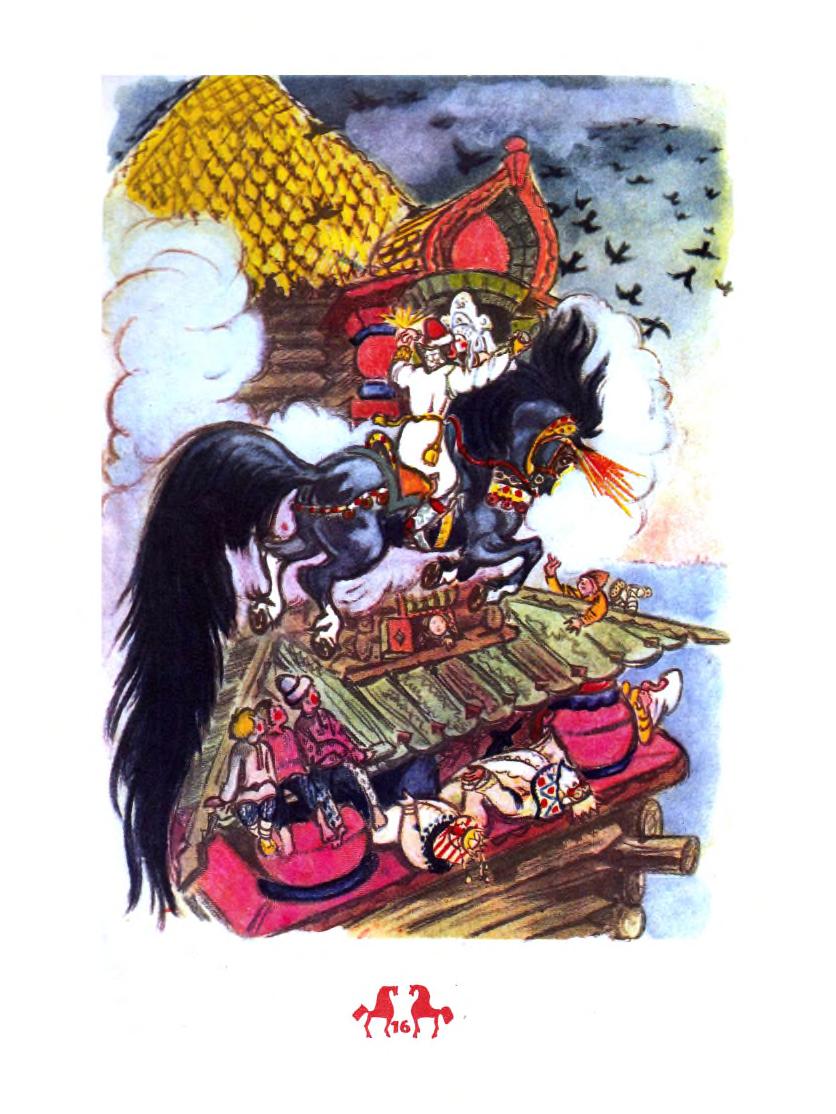
Ivan, youngest of three brothers is considered a fool by his elders. While on watchful duty to guard the wheat fields at night, Ivan earns the services of Chestnut-Grey — a magical stallion with a mane of silver and gold. How does Chestnut-Grey help Ivan to win the princess? Read the book to find out!

The book was translated from Russian and was illustrated by T. Mavrina. The book was published by Progress Publishers in 1977.

All credits to Guptaji.

You can get the book here (cleaned) and here.

Follow us on The Internet Archive: https://archive.org/details/@mirtitles

Follow Us On Twitter: https://twitter.com/MirTitles

Write to us: mirtitles@gmail.com

Fork us at GitLab: https://gitlab.com/mirtitles/

Add new entries to the detailed book catalog here.


Posted in books, children's books, children's stories, folk tales, progress publishers, soviet | Tagged , , , , , , , , , , | Leave a comment

The Haughty Egg by Eno Raud

In this post, we will see the book The Haughty Egg by Eno Raud.

About the book

One day Mother hen decides to lay an egg, but the egg disobeys and leaves the nest, rolling away. What happens to the egg? How will it survive on its own? Read this fun filled adventure of a mouse, a frog and a hedgehog to save the egg!

The book was translated from Estonian by Evi Mannermaa and was illustrated by Edgar Valter. The book was published in 1982 by Tallinn Perioodika.

All credits to Guptaji.

You can get the book here (cleaned) and here.

Follow us on The Internet Archive: https://archive.org/details/@mirtitles

Follow Us On Twitter: https://twitter.com/MirTitles

Write to us: mirtitles@gmail.com

Fork us at GitLab: https://gitlab.com/mirtitles/

Add new entries to the detailed book catalog here.


Posted in books, children's books, children's stories, literature, soviet | Tagged , , , , , , , , , , , , , | Leave a comment

The Little House In The Snow by Emilian Stanev

In this post, we will see the book The Little House In The Snow by Emilian Stanev.

About the book

This little book tells us the story of a rabbit looking for a warm, snug home for the freezing winter.

The book was edited by Zdravka Tasheva, and proof-read by Illiana Simeonova. The book was illustrated by Borislav Stoev and art edited by Vesselin Tsakov while Snezhana Pipeva was the technical editor. The book was published in  by Sofia Press in Bulgaria in 1974.

All credits to Guptaji.

You can get the book here (cleaned) and here.

Follow us on The Internet Archive: https://archive.org/details/@mirtitles

Follow Us On Twitter: https://twitter.com/MirTitles

Write to us: mirtitles@gmail.com

Fork us at GitLab: https://gitlab.com/mirtitles/

Add new entries to the detailed book catalog here.


Posted in books, children's books, children's stories | Tagged , , , , , , , | Leave a comment

The Golden Fish: An Uzbeg Fairy Tale by Fainna Solasko

In this post, we will see the book The Golden Fish: An Uzbeg Fairy Tale by Fainna Solasko.

About the book

A young fisherman saves a magical fish and releases it back to freedom. How did this magical golden fish repay the young fisherman in his adventures? Read the book to find out!

The book was translated by Fainna Solasko and was illustrated by R. Volsky. The book was published in 1983 by Malysh Publishers.

All credits to Guptaji.

You can get the book here (cleaned) and here.

Follow us on The Internet Archive: https://archive.org/details/@mirtitles

Follow Us On Twitter: https://twitter.com/MirTitles

Write to us: mirtitles@gmail.com

Fork us at GitLab: https://gitlab.com/mirtitles/

Add new entries to the detailed book catalog here.

Posted in books, children's books, children's stories, folk tales, malysh publishers, soviet | Tagged , , , , , , , , , , | Leave a comment

What The Bat Told Us – Boris Zubkov

In this post, we will see the book What The Bat Told Us by Boris Zubkov.

About the book

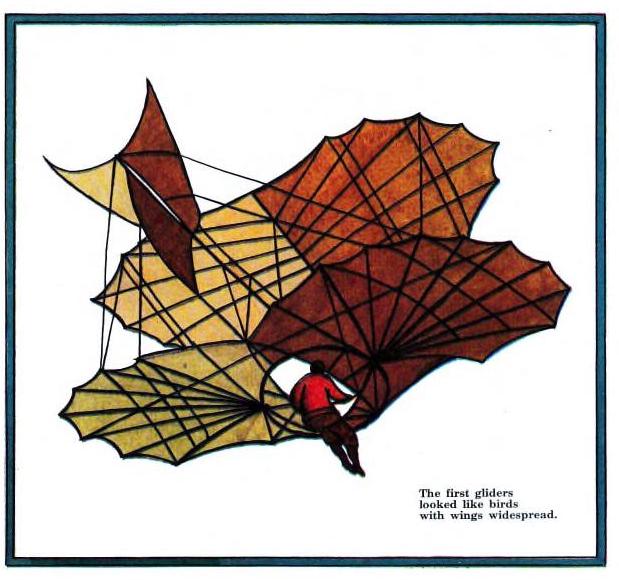
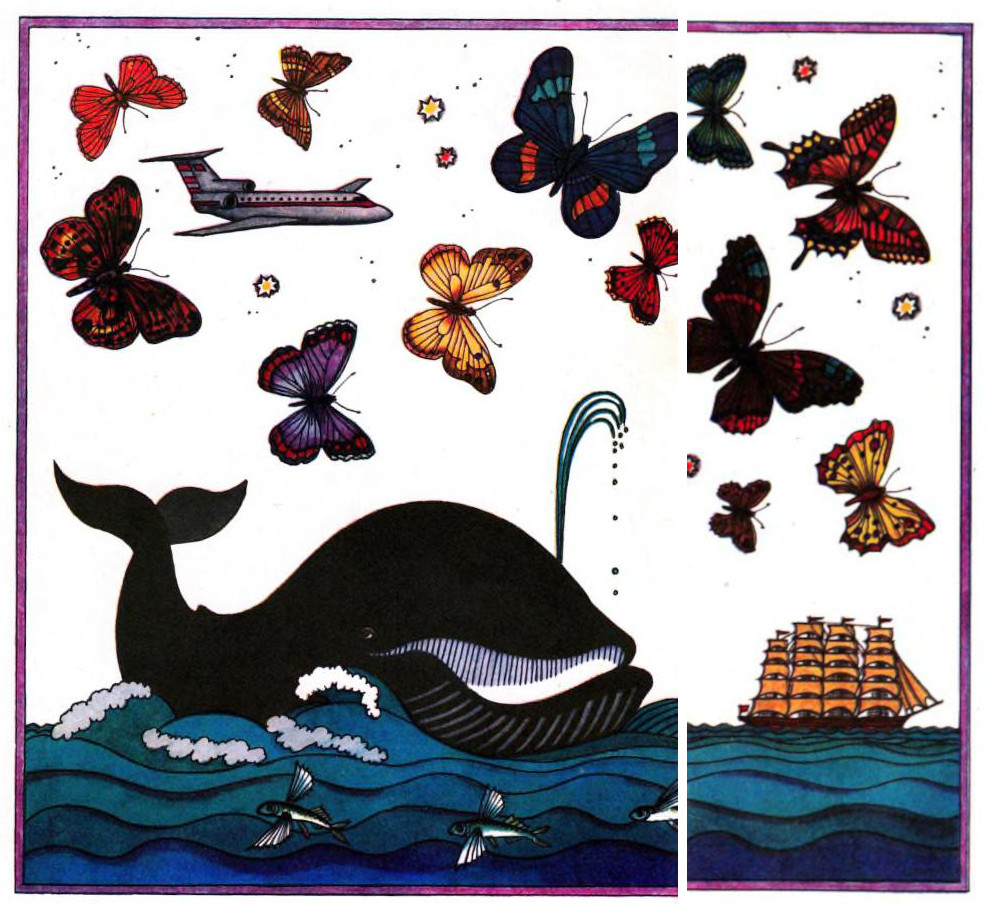
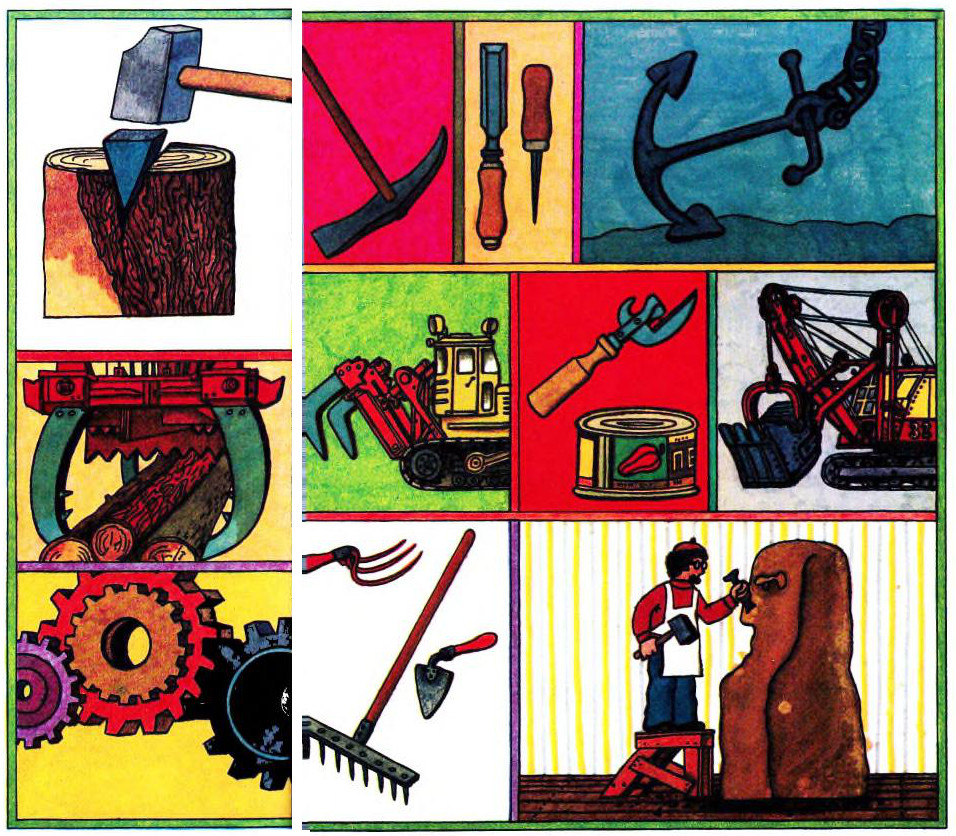
Tools such as battering rams, saws, spears, knives and hammers, bridges, parachutes, aeroplanes, radar and the ant, the gecko, the rattlesnake, the cat, the cactus, the bat, the whale, the jellyfish, the elephant, the rhino, the corals, the cock, the dandelion, the spider’s web, the alligator — what do these two lists have in common? How are these technological tools inspired from animals and plants? This  little book will tell you about various technologies, from the very primitive to advanced, and how they were designed following the form and structure of  animals and plants. So don’t forget to look carefully at the nature around you, you might get the next bright idea!

The book was translated from Russian by Eleanor Yankowskays and was illustrated by B. Kyshtymov. The book was published in 1981 by Malysh Publishers.

All credits to Guptaji.

You can get the book here (cleaned) and here.

Follow us on The Internet Archive: https://archive.org/details/@mirtitles

Follow Us On Twitter: https://twitter.com/MirTitles

Write to us: mirtitles@gmail.com

Fork us at GitLab: https://gitlab.com/mirtitles/

Add new entries to the detailed book catalog here.

Posted in books, children's books, children's science, malysh publishers, technology | Tagged , , , , , , , , , , , | Leave a comment

The Inverse Problem of Scattering Theory – Agranovich, Marchenko

In this post, we will see the book The Inverse Problem of Scattering Theory by Z. S. Agranovich and V. A. Marchenko.

About the book

In spectral theory, the inverse problem is the usual name for any problem in which it is required to ascertain the spectral data that will determine a differential operator uniquely and a method of con­structing this operator from the data. A problem of this kind was first formulated and investigated by V. A. Ambartsumian in 1929. Since 1946, various forms of the inverse problem have been considered by numerous foreign authors, and there now exists an extensive literature on the question.
No attempt is made in this monograph to review the work done on the inverse problem. Instead, merely one of its variants will be treated and solved, namely, the problem arising in connection with the quan­tum theory of scattering and which is apparently the most interesting from the standpoint of application. The mathematical techniques developed in the solution of the problem may also be applied to related questions.

The basic question treated in this book, a translation of the mono­graph entitled Obratnaya zadacha teorii rasseyaniya, is encountered in many fields. Besides the quantum theoretical problem, there is, for example, the electromagnetic inverse scattering problem, i. e., the problem of determining information about a medium from which an electromagnetic wave is reflected, given a knowledge of the ref­lection coefficient. The authors Agranovich and Marchenko have presented a comprehensive lucid solution of another such problem arising in the theory of the deuteron. It is based mainly on the consi­derable amount of work they have done in this and related areas. Moreover, the functional analytic and algebraic methods used should also be of great interest to pure and applied mathematicians.

The book was translated from Russian by B. D. Seckler and was published in 1963.

Credits to the original uploader.

You can get the book here.

Follow us on The Internet Archive: https://archive.org/details/@mirtitles

Follow Us On Twitter: https://twitter.com/MirTitles

Write to us: mirtitles@gmail.com

Fork us at GitLab: https://gitlab.com/mirtitles/

Add new entries to the detailed book catalog here.

Contents

Introduction 1

PART ONE
THE BOUNDARY-VALUE PROBLEM WITHOUT SINGULARITIES

I Particular solutions of the system without singularities 13

§ 1. Preliminary Remarks and Notation 13
§ 2. A Fundamental System of Solutions With a Prescribed Behavior in the Vicinity of Zero 14
§ 3. The Special Solution and Transformation Operator 20
§ 4. A Fundamental System of Solutions With a Prescribed Behavior at Infinity for the Case 𝜆 ≠ 0 27
§ 5. A Fundamental System of Solutions With a prescribed Behavior at Infinity for 𝜆=0 34

II The spectrum and scattering matrix for the boundary-value problem without singularities 37

§ 1. The Point Spectrum 37
§ 2. Properties of the Matrix E^{-1}(𝜆) 42
8 3. The Scattering Matrix 46
§ 4. Behavior of the Matrix E^{-1}(𝜆) in the Neighborhood of 𝜆 = 0 51

III The fundamental Equation 57

§ 1. Derivation of the Fundamental Equation 57
§ 2. Properties of the Kernel 62
§ 3. Lemmas on Integral Equations With Kernels Dependent on a Sum 70
§ 4. Existence of Solutions 76
§ 5. Investigation of Homogeneous Equations Constructed from the Scattering Data 84

IV Parseval’s Equality 89

§ 1. Preliminaries 89
§ 2. Derivation of Parseval’s Equality from the Fundamental Equation 94
§ 3. Derivation of the Fundamental Equation from Parsevals Equality 99

V The inverse problem 105

§ 1. Statement of the Problem 105
§ 2. Estimates for the Matrix K(x,y) 107
§ 3. Existence of the Derivatives of K(x,y) 110
§ 4. Derivation of the Differential Equation 117
§ 5. Fulfillment of the Boundary Condition 123
§6 . Characteristic Properties of the Scattering Data and Scattering Matrix 129
§ 7. Examples 138

PART TWO
THE BOUNDARY-VALUE PROBLEM WITH SINGULARITIES

VI Special transformation Operators 147

§ 1. Method of Investigation 147
§ 2. Transformation Operators for Matrix Equations 153
§ 3. Transformation of Parseval’s Equality 157

VII Spectral analysis of the boundary-value problem with singularities 163

§ 1. Statement of the Problem. Notation 163
§ 2. Particular Solutions 164
§ 3. The First Transformation 169
§ 4. The Second Transformation 177
§ 5. The Third Transformation 188
§ 6. Properties of the Scattering Data (the Case a_{22} =0, a_{12} ≠ 0
§ 7. Behavior of the Scattering Matrix When 𝜆 ⟶ 0. Summary of Results 217

VIII Reconstruction of the singular boundary-value problem from its scattering data 223

§ 1. Case (a) 223
§ 2. Case (b) 226
§ 3. Case (c) 234
§ 4. Algorithm for Determining the Potential Matrix. Examples 254

Appendix I On the characteristic properties of the scattering data of the boundary-value problem without singularities 265

§ 1. Factorization of a Unitary Matrix . 265
§ 2. Indices of S(𝜆) 270
§ 3. A New Characterization of the Scattering Data 280

Appendix II Refinement of certain inequalities 283

Bibliography 289

Posted in books, mathematics, physics | Tagged , , , , , , , , , , , , , , | 1 Comment

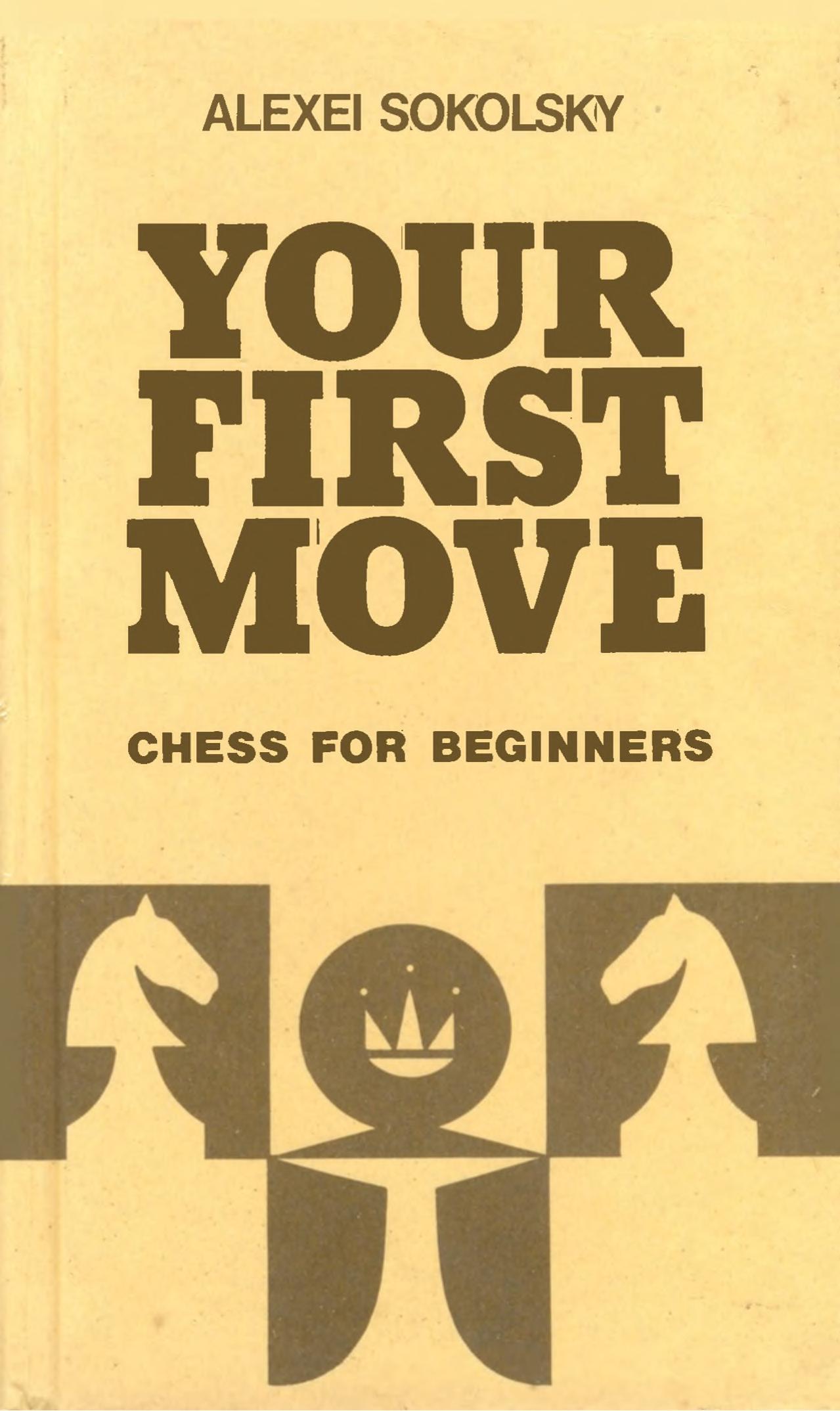
Your First Move – Sokolsky

In this post, we will see the book Your First Move by Alexei Sokolsky.

About the book

A book that introduces chess to beginners and is deep enough to offer a lot to the experienced players as well. The book starts with the rules of the game and basic setup of the board and the three stages of chess play — opening game, middle game and end game. The next chapters covers the strategies for these three stages. The book also explains general strategies and discusses various scenarios with different pieces on board. Several chess problems are included for the readers to solve.

The book was translated from Russian by Arthur Krivovyaz, with assistance from  Yuri Shteinsapir, and the book was edited by Paul Kotsubinsky. The book was designed by Vladimir Noskov. The book was published in 1987 by Raduga Publishers, and by Progress in 1981.

All credits to gnv64 for the book.

You can get the book here and here.

Follow us on The Internet Archive: https://archive.org/details/@mirtitles

Follow Us On Twitter: https://twitter.com/MirTitles

Write to us: mirtitles@gmail.com

Fork us at GitLab: https://gitlab.com/mirtitles/

Add new entries to the detailed book catalog here.

Contents


I. RULES OF THE GAME. 7

The Board and Notation. 7
Initial Position. 9
Moves. 11
Capture. 16
Pawns. 17
Notation. 21
The King’s Special Features. Check. 24
Checkmate . 28
Castling. 29
Stalemate. 31
Other Kinds of Draws. Perpetual Check. 33
The Method of Notation . 35
Comparative Value of the Pieces. 38
Additional Rules. 40

II. THE SIMPLEST ENDINGS. 42

Three Stages in Chess Play . 42
Mating a Lone King. 43
Queen Mates. 43
Mate by Two Rooks. 45
Mate by Rook . 46
Mate by Two Bishops. 48
Mate by Bishop and Knight. 50
Mate by Two Knights. 51
King and Bishop (or Knight) Versus King. 52
King and Pawn Versus King. 52
Conclusions. 58
A Remote Passed Pawn. 59
Positional Advantage. 60

III. SOME BASIC CONCEPTS 62

The Pin. 62
Discovered Attack. 65
Discovered Check . 67
Double Check. 68
Variation. Combination. 70

IV. HOW TO START A GAME. 73

The Centre. 73
Fast Development of Pieces. 76
Setting Up a Good Pawn Structure. 82
Mistakes in the Opening. 83

V. SHORT GAMES AND TRAPS. 88

The Perfidious Pin. 88
Attention: Square f7!. 89
An Ill-Starred Queen. 90
A Sudden Encirclement. 91
A Mistaken Raid. 91
The Exultant Knight. 93
Opening Finesse. 93
A Poisoned Pawn. 95
A Knight Better Than a Queen. 96
“Modernised Legal Mate ”. 97
Pseudosacrifice. 98
The Queen as a Spectator. 99
Roaming King. 101
Unpleasant Surprise. 102

VI. MIDDLE GAME.105

Typical Combinations. 105
Mate on the First Two and Last Two Ranks. 106
Smothered Mate.110
The “Wheel”. 111
Trapping Combinations. 112
Diversion. 114
Blocking Combinations. 116
Obstruction. 118
Combinations to Destroy Defence Forces. 119
Square Clearance Combinations. 121
Line Clearance Combinations. 122
Pawn Promotion Combinations. 123
Combinations for a Draw. 125
Several Ideas Combined. 129
Attacking the King in the Centre. 130
Attacks Against the Castling Side. 134
Mate by a Major Piece Supported by a Pawn or Piece. 134
Combinations for Destruction. 138
Sacrifice on h7 (h2). 138
Sacrifice of Two Bishops. 143
The Attack After Castling on Opposite Sides. 145
Elements of Positional Play. 146
The Battle for an Open File and the Seventh Rank. 147
Pressure Along a Semi-Open File. 149
Distribution of Pawns. 150
Weak Square. 153
“Good” and “Bad” Bishops. 156
How to Exploit Material Advantage. 158

VII. ENDGAME. 160

King and Pawn Versus King and Pawn. 160
Endings with Several Pawns. 163
King and Queen Versus King and Pawn. 167
Queen and Pawn Versus Queen. 171
Queen Endings with Many Pawns. 173
Rook and Pawn Versus Rook. 175
Rook and Two Pawns Versus Rook. 179
Rook Endings with Many Pawns. 180
Queen Versus Rook. 183
Rook Versus Minor Piece. 184
Bishop and Pawn Versus Bishop. 186
Endings with Bishops and Several Pawns. 187
Endings with White and Black Bishops. 189
King, Bishop and R-Pawn Versus King. 190
Knight Endings. 191
Intricate Endings. 193

VIII. CHESS COMPOSITION. 195

Problems .196
Endgame Studies. 200

IX. THE OPENING. 206

Open Openings. 207
Philidor’s Defence. 207
Petroff’s Defence. 208
Scotch Game. 209
Giuoco Piano. 211
The Greco Analysis. 212
Two Knights’ Defence 216
Ruy Lopez. 219
King’s Gambit. 232
Semi-Open Openings. 237
French Defence. 237
Sicilian Defence. 241
Caro-Kann Defence. 248
Alekhine Defence. 252
Ufimtsev Defence. 255
Closed Openings. 256
Queen’s Gambit. 256
Veresov Opening. 261
Group of Indian Defences. 262
Dutch Defence. 269
English Opening. 269
Reti Opening. 272
Sokolsky Opening.272

X. CHESS: PAST AND PRESENT. 276

XI. SOLUTIONS TO EXERCISES. 293


Posted in books, problem books, progress publishers, raduga publishers, soviet | Tagged , , , , , , , , , , , , , , , , | Leave a comment