In this post, we will see the book Whose is the Sun? by Yuri Averenkov.
About the book
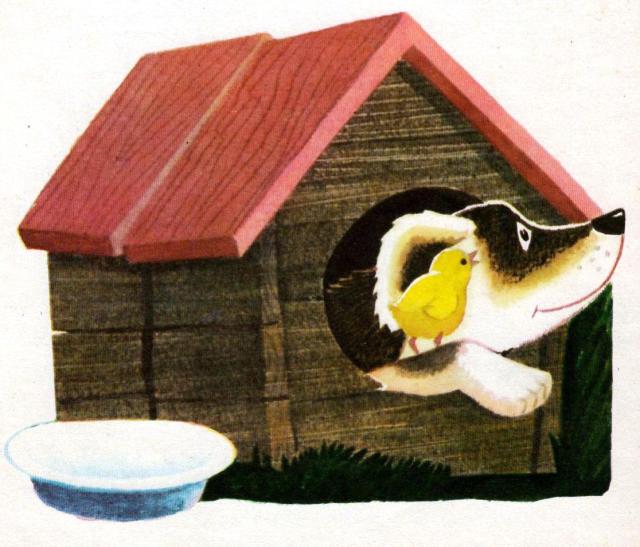
The book narrates the story of a pup and a chick who start to play and end up as friends. As in many of the children’s books, there are very beautiful paintings illustrating the story.
The book was translated from the Russian by Irina Zheleznova and drawings are by Valentin Andrievich. Translated from the Russian by. The book was first published in 1973 and republished in 1980 by Progress and in 1985 by Progress.
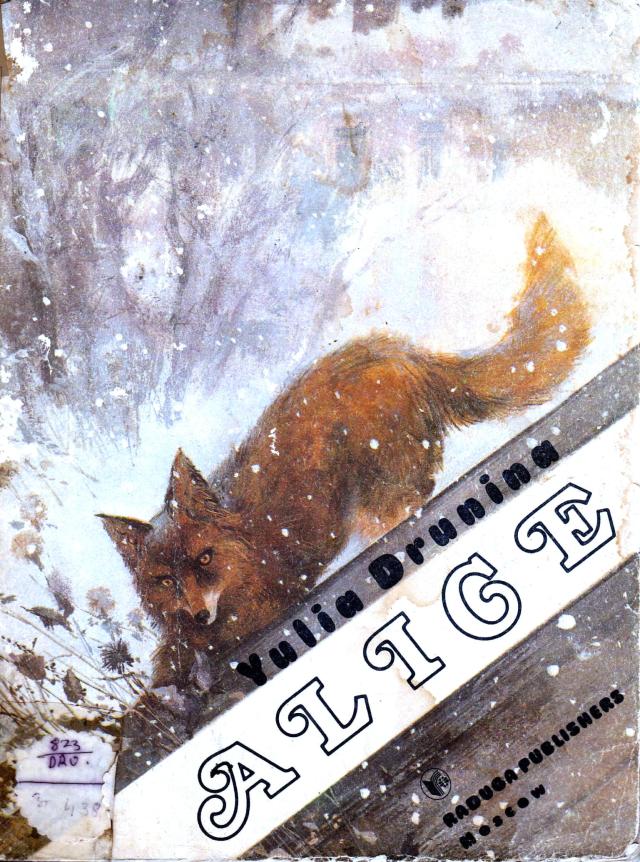
In this post, we will see the book Alice by Yulina Drunina.
About the book
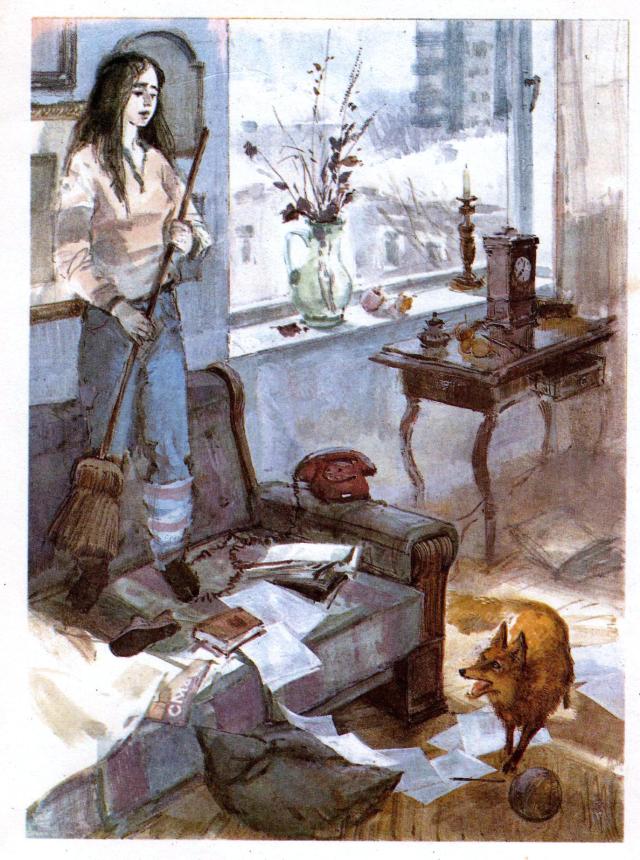
The book is a story about how a steppe-fox, a corsak, finds its way to the author’s home from a pet market along with a famished Altsasian her daughter has kept an eye for from a few weeks. They name the fox Alice and the dog Dossy. The story is an emotional roller-coster about life with Alice who is adjusting to home (making it her territory) and humans in it, along with the dog Dossy.
Generally there was much of the monkey in Alice’s character. She just could not resist the urge to wreak havoc-tear up, break, gnaw things.
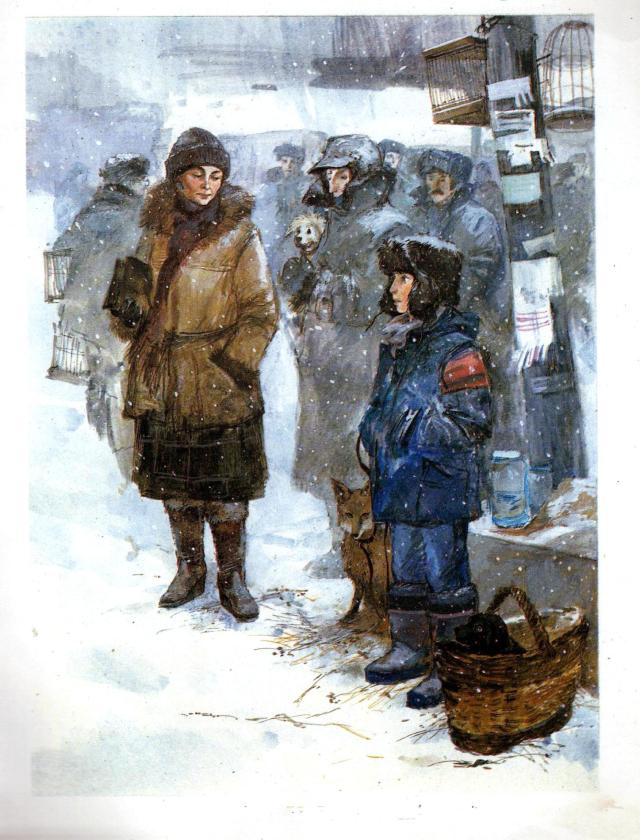
Fox in a dog market!
When she is sick she is given prescription with the name Alice Drunina, a vixen.
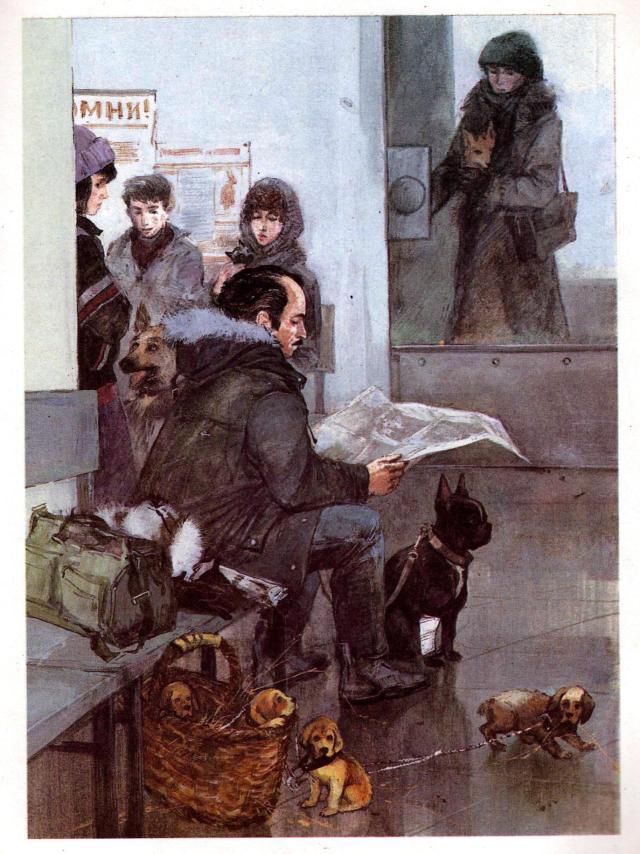
Taking Alice Drunina, a vixen to a vet.
The bigger problem arises when she has to be fed pills (as an owner of a stubborn dog I know how difficult this can be!). Anyways, she recovers with a series of injections, which her husband volunteers to give. The firm sign of recovery is that she starts to make a mess again.
It took Alice a very short time to become transformed from a miserable little beast shivering from fear and cold at the Bird Market into the idol of our household, worshipped by our entire family.
(If you are a pet owner, you will surely relate to this…)
Alice was not friendly to everyone, Alyona defending herself with a broom.
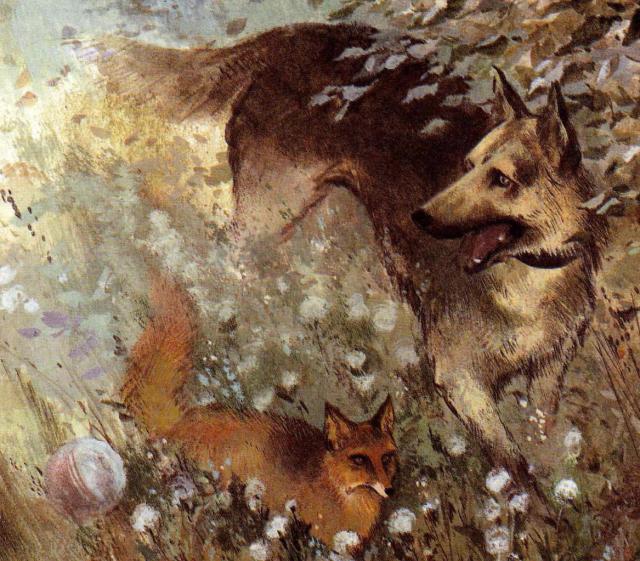
The family in the summer rents a country home and moves with pets in there. Here Dossy and Alice play nicely with each other.
Alice and Dossy, best friends.
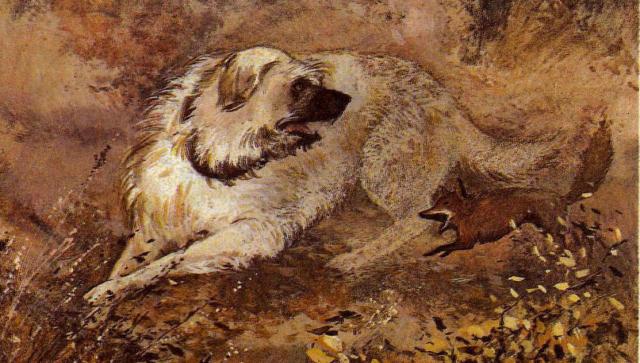
But Dossy becomes infrequent visitor and when he comes back Alice does not welcome him. Once while going on a walk with Alice they are attacked by a Russian shepherd dog. Alice distracts him so that the author can get away safely.
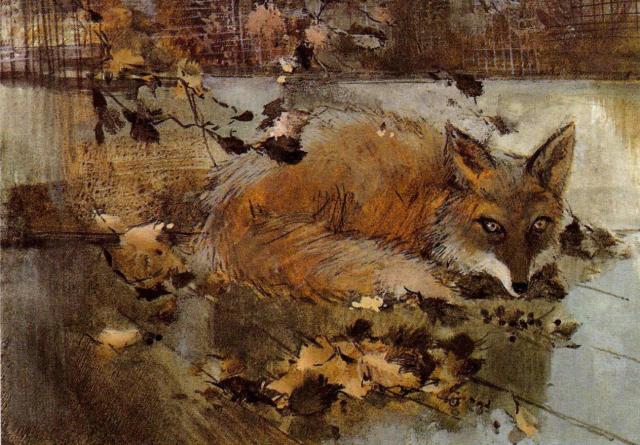
The author has doubts if she will see Alice again after this, but she is found silently resting on her pen when she arrives back at home.
“What are you on about? I merely acted as any self-respecting fox would. In our steppes and deserts we don’t abandon our friends in trouble.”
I will stop here, read the rest of the story, will you?
The book was translated from the Russian by Raissa Borbova and the fantastic drawings are by Veniamin Kostitsyn and was published by Raduga in 1986.
In this post, we will see the book The Green Island by Victor Datskevich.
About the book
In the book, a father and son (Vadik) explore botanical gardens of Moscow. The book is a nice introduction to nature watch for children which answers many inquisitive questions they may have. The book is full of colour photographs of flora and fauna that they discover.
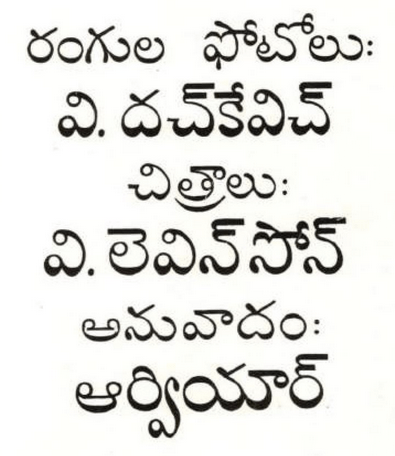
The book was translated from the Russian to English by Jan Butler, the photographs in the book are by the author and was published by Progress in 1980. Drawings are by V. levin sohn(or son) Telugu translation is by R. V. R (thanks to @var for translation, see the comment below). We also have a link for the Telugu version of the book published by Raduga/Visalandhra Publishers, who republished many of the titles in Telugu.
Do let us know if there are any other translations of this book.
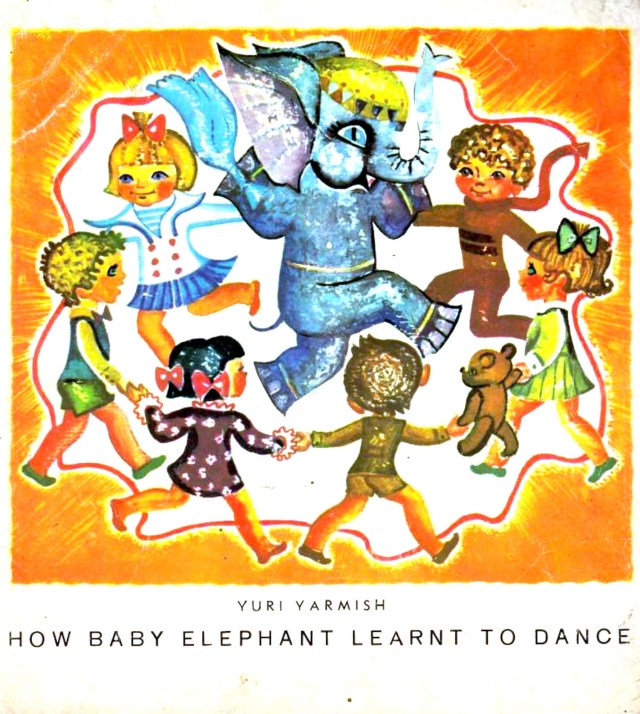
In this post, we will see the book How Baby Elephant Learnt to Danceby Yuri Yarmish.
About the book
This is a children’s book that tells the tale of a baby elephant who wants to dance after listening to nice music from a ballet school. He tries to copy other animals but is not successful. Afterwards, he is taken to a circus and gets his own show and is loved and appreciated by everyone!
The gorgeous illustrations are by Irina Mishyna. The book was translated from the Ukranian by Lilia Titar and was published by Dnipro Publishers in 1976.
In this post, we will see the book Geology in Pictures by Anatoli Chlenov.
About the book
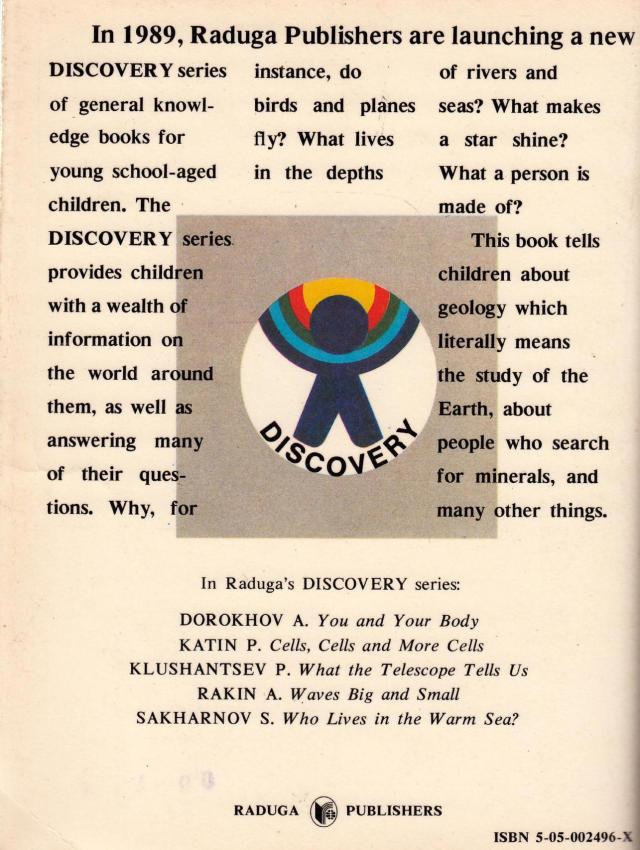
This book tells children about geology which literally means the study of the Earth, about people who search for minerals, and many other things.
The book follows question and answer format about various aspects of geology: its scope, contents, methods and its mysteries. Questions are answered in a way that will make the readers want to know more. There are lavish two-page colour illustrations for every section.
But I am in love with crayon monochrome drawings (which are also part of the colour spreads):
I wish I was able to draw something like this!
The book is a part of Discovery series of books meant for young children.
We might see other books in this series in the future.
The book was translated from the Russian by Graham Whittaker and gorgeous illustrations are by Andrei Platonov. The book was published in 1990 by Raduga, perhaps one of the last ones to get published, also has an ISBN number: 505002496X.
People in the mountains 7
Geology? What is it? 7
Look around… 10
2. The Earth’s storehouses
What are mineral deposits? 14
What colour is coal? 14
Let me tell you about cement 18
Black gold 18
Water, water, everywhere 22
The sun-stone 26
3. The science of the Earth
The secrets of our planet 30
How was our planet formed? 34
Where do mountains, seas and plains come from? 38
The Earth’s great masters 42
How they work 42
Underground cities 46
4. How geologists work
Mysterious traces 50
How oil was found 50
Where did you find these flowers? 54
Attention! Detonate! 54
Journey into the depths of the Earth 55
The scout in the sky 58
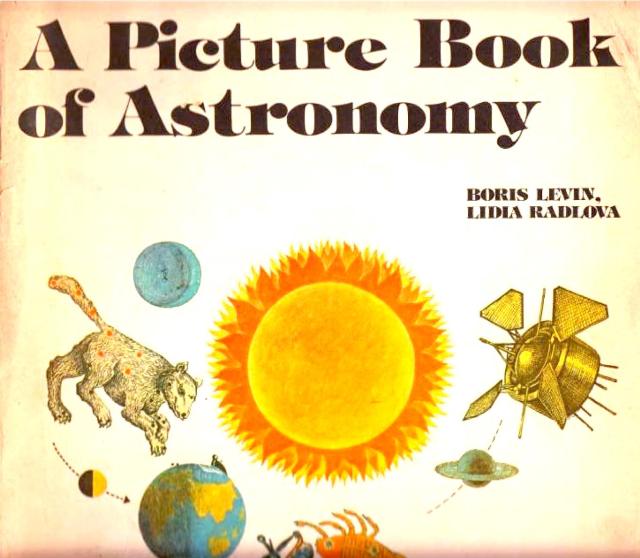
In this post, we will see A picture book of astronomy by Boris Levin and Lidia Radlova.
About the book
The book has several topics in basic astronomy in the form of questions and answers (total 16). Each question is answered at a level that can be understood by children and illustrated gorgeously.
The book was translated from the Russian by Tracy Kuehn, and the wonderful drawings are by Elizaveta Radlova and was published by Raduga in 1988.
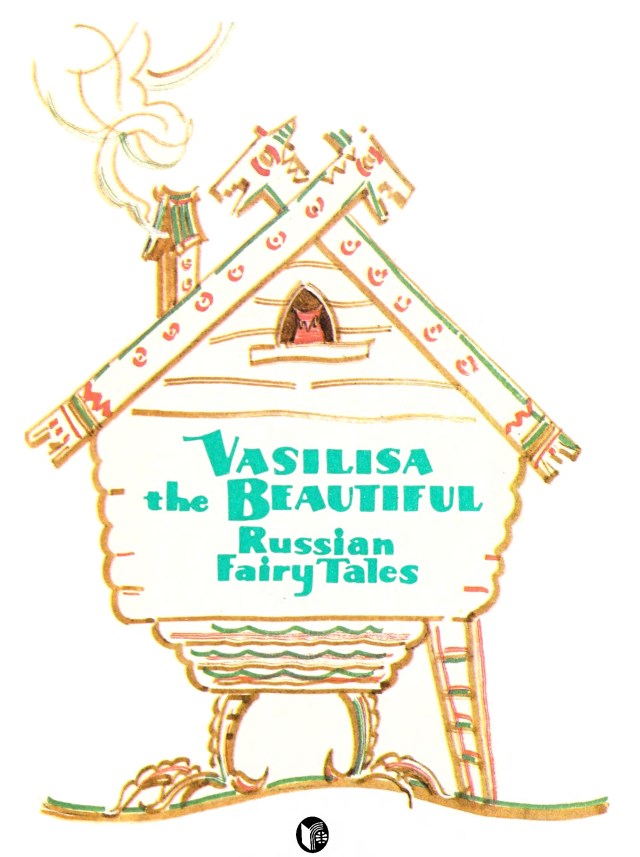
In this post, we will see the book Beautiful Vasilisa: Russian Fairy Tales. Vasilisa the Beautiful is a well known Russian folktale.
About the book
The book is a collection of sixteen fairy tales from Russia. They include stories of Tsars, Princesses, witches, boys, girls, various animals, and magical creatures. There are several fabulous illustrations to go with the stories. Along with the story of Vasilisa, there are 15 other tales in the book.
Baba Yaga is here (not the John Wick one though;)!
The book was edited by Irina Zheleznova and was designed by Vladimir Minayev. The book was published by RAduga first in 1966, with four reprints in the subsequent years: 1974, 1981 and 1984. Different stories were translated by various translators as given in the contents.
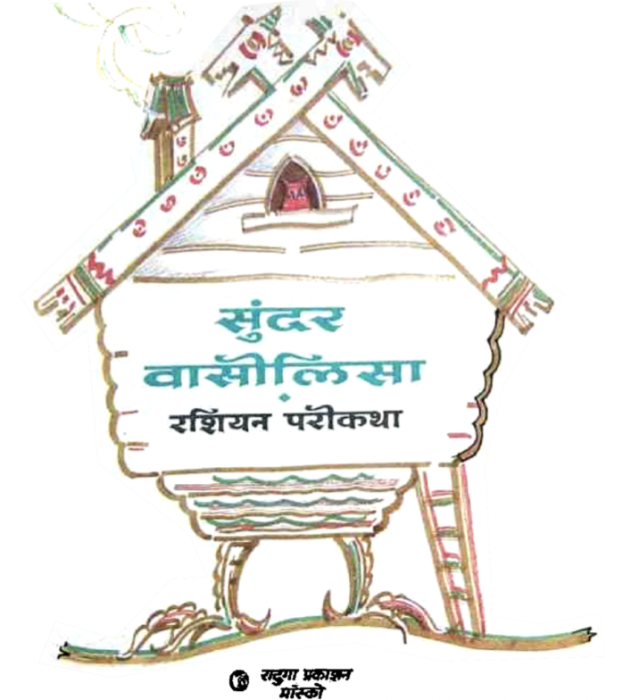
The book was translated in Hindi and Marathi, at least what I know of. Since it was a popular title it might have been translated into more Indian languages. Please do let us know if you know/have translations in any other languages.
Note: There is a bad scan of the Hindi version on the archive, which we have cleaned and added back (the link above), with a lot of effort and time. It took much longer to clean it than anticipated, yet the results are not that good or satisfactory. I thought of abandoning the cleaning midway several times, but since no other scan was available, it was indeed cleaned.
It is an appeal to people who scan books, to take some time and effort to scan them, (preferably using flatbed scanners) otherwise, it doesn’t do anyone any good. If you are taking photos with a camera make sure that noticeable warp is not there. Perhaps when one gets the physical copy of the book we will update this one, or if you have the book please scan and post the link.
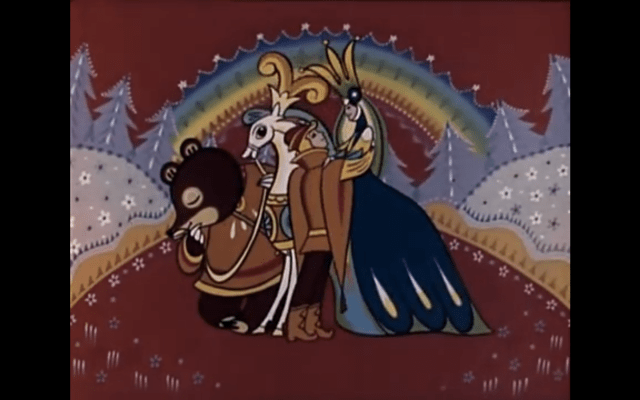
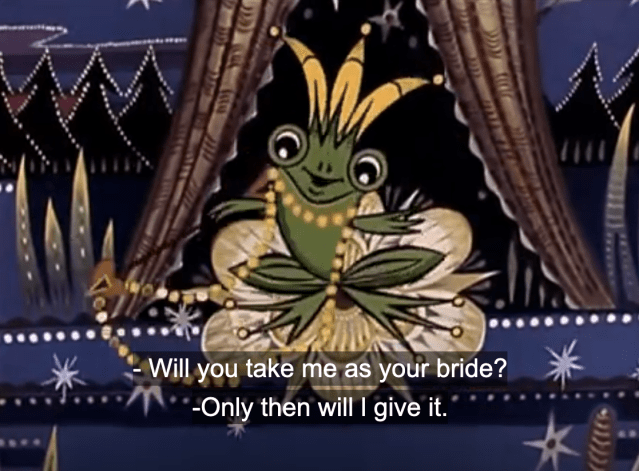
There is also a Soviet-era cartoon film (in Russian, 1977) with the title Vasilisa Prekrasnaya (Vasilia the Beautiful) though this corresponds to story The Frog Tsarvena (Tsarevna Lyagushka) in the book. The visuals are amazing…
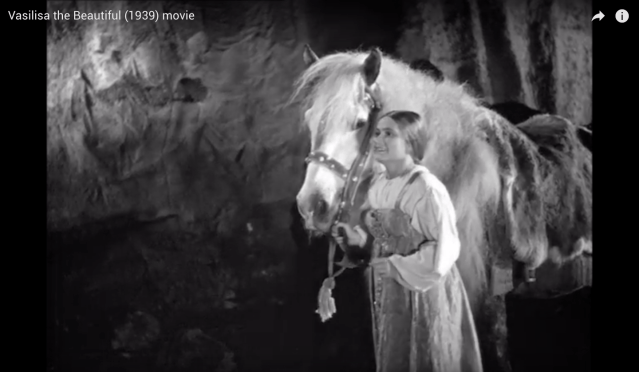
Another Soviet era (1939) BW film I found with the title Vasilisa Prekrasnaya (Vasilia the Beautiful) again this corresponds to story The Frog Tsarvena (Tsarevna Lyagushka) in the book.
Contents
VASILISA THE BEAUTIFUL. Translated by Irina Zheleznova 5
TSAREVICH IVAN AND GREY WOLF. Translated by Bernard Isaacs 20
THE TWO IVANS. Translated by Irina Zheleznova 33
FENIST THE FALCON. Translated by Dorian Rottenberg 43
SISTER ALYONUSHKA AND BROTHER IVANUSHKA. Translated by Bernard Isaacs 57 CHESTNUT-GREY. Translated by Irina Zheleznova 63
FATHER FROST Translated by Irina Zheleznova 74
GO I KNOW NOT WHERE, FETCH I KNOW NOT WHAT. Translated by Bernard Isaacs 79 LITTLE GIRL AND THE SWAN-GEESE. Translated by Bernard Isaacs 109
THE SILVER SAUCER AND THE ROSY-CHEEKED APPLE. Translated by Irina Zheleznova 115
BY THE WILL OF THE PIKE. Translated by Irina Zheleznova 124
THE FROG TSAREVNA. Translated by Irina Zheleznova 135
WEE LITTLE HAVROSHECHKA. Translated by Irina Zheleznova 147
MARYA MOREVNA THE LOVELY TSAREVNA. Translated by Irina Zheleznova 152
IVAN-YOUNG OF YEARS, OLD OF WISDOM. Translated by Dorian Rottenberg 169
THE SEVEN SIMEONS-SEVEN BRAVE WORKINGMEN. Translated by Irina Zheleznova 201
In this post, we will see the book Fundamentals of Geology by V. Obruchev.
About the book (from the Preface)
Hence, we are entitled to say that every person should be acquainted with its (geology’s) basic principles. And the purpose of this book is to impart him this knowledge. Geology, therefore, can-not be a collection of stories about interesting things, mysterious events, or instructive comparisons taken at random from the vast realm of science, it must be expounded systematically. The reader will become acquainted with the activity of nature’s forces which he can personally observe in the neighbourhood of his town or village, in the highlands or on the plains, with the work of running, still and ground waters, with the activity of the wind and ice and with its results, visible both in the rock formations which make up the land forms and in the destruction and transformation of the latter.
When the reader has become acquainted with the work of these forces, which we call external, he will be told of other forces hidden in the bowels of the Earth which give vent to their energy in mountain-building, eruption of volcanoes and earthquakes. Then, he will be given a brief outline of the Earth’s history, of the origin and development of life and he will be told about the catastrophic events that have taken place during this time. He will learn of the formation of useful minerals and the regularity of their occurrence, especially in the U.S.S.R. The concluding chapter deals with geological documents and the
methods used in studying traces of past events which throw light on the Earth’s history.
This book, naturally, cannot embrace the entire realm of geology; it is confined to physical or dynamic geology, a branch dealing with the activity of the external and internal forces which shape and change the Earth’s crust. Very little is said of historical geology, which covers a wide field of the history of the Earth, and only scanty attention is paid to the science of useful deposits — the third branch of geology which examines the results of the activity of the natural forces.
Of the fourth branch — petrography or petrology — the science of rock formations that make up the earth’s crust, we give only the essentials. Physical geology is an introduction to these more specialized branches of geology and the book serves this purpose.
It is a popular book, designed for young readers who are acquainted with the rudiments of physics and chemistry.
The book was translated from the Russian by David Myshne and Persy Ludwick and was published by Foreign Languages Publishing House in 1959 (from worldcat entry). This book was digitised in the Digital Library of India project, as it has Osmania University stamp. And has three different links as given under (same book in all the links).
IX. Why the Earth Shakes Now Here and Now There 242
X. Brief History of Our Earth 258
XI. Catastrophes in the History of the Earth 292
XII. What Riches the Earth Contains 329
XIII. The Young Pathfinder 351
Russian Bibliography 372
PS: If you can consider supporting/donating to The Internet Archive:
Dear Internet Archive Supporter,
I ask only once a year: please help the Internet Archive today. Right now, we have a 2-to-1 Matching Gift Campaign, so you can triple your impact! Most can’t afford to give, but we hope you can. The average donation is $45. If everyone reading this chips in just $5, we can end this fundraiser today. All we need is the price of a paperback book to sustain a non-profit website the whole world depends on. We have only 150 staff but run one of the world’s top websites. We’re dedicated to reader privacy so we never track you. We never accept ads. But we still need to pay for servers and staff. I know we could charge money, but then we couldn’t achieve our mission: a free online library for everyone. This is our day. Today. To bring the best, most trustworthy information to every internet reader. I believe all of this is doable, if we pull together to create the internet as it was meant to be. The Great Library for all. The Internet Archive is a bargain, but we need your help. If you find our site useful, please chip in. Thank you.
—Brewster Kahle, Founder, Internet Archive
Some of you might be wondering what is the difference between the two?
A user channel will list only the titles added by that user, while a collection can encompass additions from other users also. In this collection, we will try to add other titles added by other users so that we have all of them under one comprehensive resource.
Both the links are working, this is just for your information. By default, the collection lists the titles by their Views (most views at the top), while the user channel lists the latest uploads first. These views can be changed from the sorting options on the page.
Next on the agenda is to revive all the non-working links and fixing some minor issues reported on many books (missing pages etc.).
We might see some Kannada language books soon.
Also, many thanks to @mukundhp11 who has been contributing books recently.
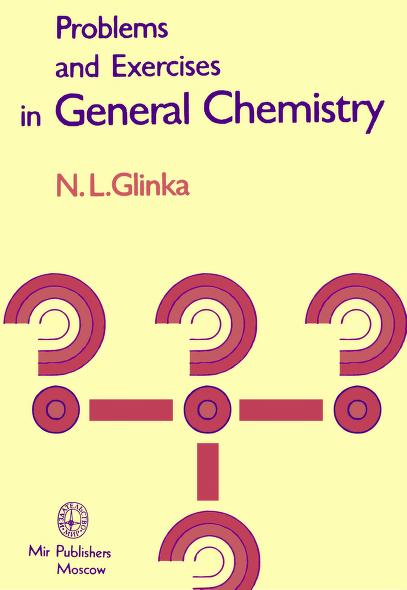
Professor N. Glinka’s book Problems and Exercises in General Chemistry closely corresponds to the well- known textbook General Chemistry by the same author.
Mir Publishers have prepared an English translation of the latest, 21st Russian edition of the textbook, which has been divided into two volumes to facilitate work with the book.
Many generations of students used N. Glinka’s General Chemistry in studying the subject; secondary school graduates used it in preparing for their entrance examinations to higher educational establishments, and specialists of non-chemical professions often find answers to their questions in it.
(from the preface)
In addition to problems and exercises of a traditional form, many sections of the present book contain review questions that will permit the student to see how well he or she has mastered the relevant material. Each question is followed by a set of answers, from among which one or more correct ones must be chosen; sometimes it is also necessary to substantiate the answer by selecting the correct explanation from among a number of choices following the question. Should the chosen answer fail to coincide completely or partly with those given at the end of the book, this will indicate that the student must again study the introductory text to the given section, or the relevant material in the textbook.
The book was edited by V. A. Rabinovich and Kh. M. Rubina and was translated from the Russian by G. Leib. First published by Mir in 1981, second publishing in 1986.
With this we have completed the General Chemistry Series by N.L. Glinka. Having read all the three books anyone will be completely prepared for 10+2 Physical and Inorganic Chemistry. I would once again heartily thank Amit for his big help and support. Highly appreciated!
The Mole. Avogadro’s Law. Molar Volume of a Gas 21
Determining the Molecular Masses of Gaseous Substances 26
Derivation of Chemical Formulas. Calculations Involving Chemical Formulas and Equations 29
Chapter 2. Basic Classes of Inorganic Compounds 35
Chapter 3. Structure of the Atom. Radioactivity 45
Electronic Structure of Atoms. Dependence of Element Properties on the Structure of Their Atoms 45
Structure of Atomic Nuclei. Radioactivity. Nuclear Reactions 53
Chapter 4. The Chemical Bond 59
Kinds of Chemical Bond. Ways of Forming a Covalent Bond 59
Molecular Polarities. Geometrical Structure of Molecules 68
Ionic Bond. Polarization of Ions 74
Hydrogen Bond. Intermolecular Interaction 77
Chapter 5. Fundamental Laws of Chemical Reactions 80
Energy Conversions in Reactions. Thermochemical Calculations 80
Rate of a Chemical Reaction. Chemical Equilibrium 95
Chapter 6. Solutions 114
Concentration of Solutions. Solubility 114
Energy Effects in the Formation of Solutions 123
Physicochemical Properties of Dilute Solutions of Non-Electrolytes 125
Chapter 7. Solutions of Electrolytes 132
Weak Electrolytes. Dissociation Constant and Degree of Dissociation 132
Strong Electrolytes. Activity of Ions 141
Ion Product of Water. pH 143
Solubility Product 148
Exchange Reactions in Electrolyte Solutions. Hydrolysis of Salts 154
Chapter 8. Oxidation-Reduction Reactions. Fundamentals of Electrochemistry 165
Oxidation Number. Oxidation and Reduction 165
Oxidizing and Reducing Agents 169
Balancing Oxidation-Reduction Equations 175
Chemical Sources of Electrical Energy. Electrode Potentials 182
Direction of Oxidatiop-Reduction Reactions 191
Electrolysis 195
Chapter 9. Complex Compounds 203
Determining the Composition of a Complex Ion 203
Nomenclature of Complex Compounds 205
Equilibria in Solutions of Complex Compounds 207
Chapter 10. General Properties of Metals. Alloys 212
Chapter 11. The Periodic System of Elements. Properties of Elements and Their Compounds 219
General 219
Hydrogen 220
The Halogens 222
Oxygen Subgroup Elements 225
Nitrogen Subgroup Elements 229
Carbon and Silicon 236
Group I Metals 238
Group II Metals. Water Hardness 241
Group III Elements 245
Metals of Groups IVi V, VI, andVII 247
The Noble Gases. Group VIIIMetals 251
Appendix
Table 1. Selected SI Units 255
Table 2. Conversion of Selected Non-System Units to SI Units 256
Table 3. Values of Selected Fundamental Physical Constants 256
Table 4. Names of Most Important Acids and Their Salts 256
Table 5. Standard Enthalpies of Formation 258
Table 6. Dissociation Constants of Selected Weak Electrolytes in Aqueous Solutions at 25 °C 260 Table 7. Activity Coefficients of Ions at Different Ionic Strengths of Solution 262
Table 8. Solubility Product Agp of Selected Sparingly Soluble Electrolytes at 25 °C 263
Table 9. Standard Electrode Potentials q>° in Aqueous Solutions a t 25 °C 264
Table 10. Instability Constants of Selected Complex Ions in Aqueous Solutions at 25 °C 266
Table 11.Atomic Masses to Four Significant Figures 266
There are trackers on the site apart from Wordpress Stats. If you don't know what trackers are, or wish not to be tracked go here http://donttrack.us to get tools which allow you to do so.














 Mir Books