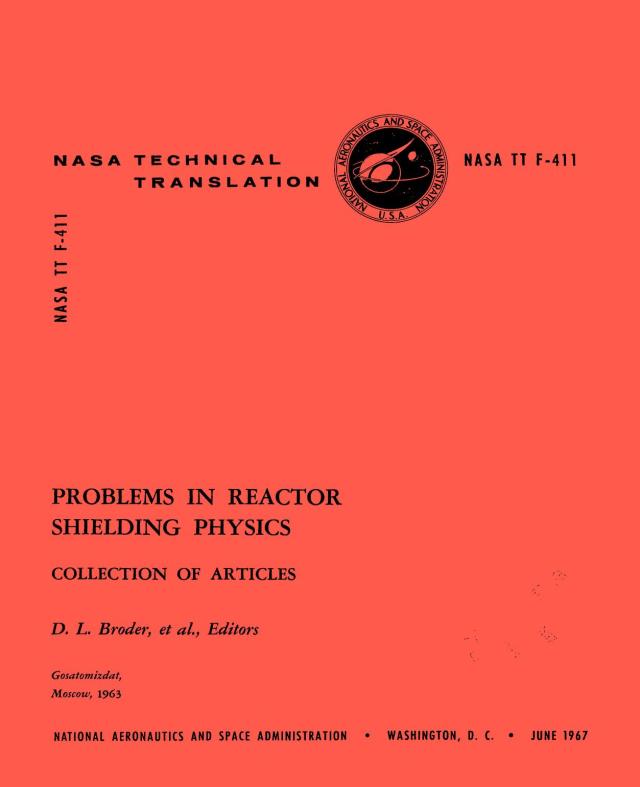
Probability And Information – Yaglom, Yaglom

In this post, we will see the book Probability And Information by A. M. Yaglom; I. M. Yaglom.

About the book

The present book, designed for a wide circle of readers (familiarity with mathematics up to high school level suffices for comprehension of all of its contents), makes, of course, no claim to serve even as an elementary introduction to the scientific information theory. We can give here only a preliminary idea of important practical applications of this theory. Similarly, it shall not be possible to deal here with the deeper purely mathematical problems connected with the in­ formation theory. The main aim of the authors is much simpler : it consists of acquainting the reader with certain, though not complex but highly important, new mathematical ideas, and leading him through these ideas to an understanding of one of the possible means of employing mathematical methods of modern engineering.

The book was translated from Russian by V. K. Jain and was published in 1983.

Credits to original uploader.

You can get the book here.

Follow us on The Internet Archive: https://archive.org/details/@mirtitles

Follow Us On Twitter: https://twitter.com/MirTitles

Write to us: mirtitles@gmail.com

Fork us at GitLab: https://gitlab.com/mirtitles/

Add new entries to the detailed book catalog here.

Contents

CHAPTER 1 Probability

1.1 Definition of Probability. Random Events and Random
Variables 1
1.2 Properties of Probability. Addition and Multiplication of
Events. Incompatible and Independent Events 7
1.3 Conditional Probability 20
1.4 The Variance of a Random Variable. Chebyshev’s Inequality and the Law of Large Numbers 26
1.5 Algebra of Events and General Definition of Probability 36

CHAPTER 2 Entropy and Information

2.1 Entropy as a Measure of the Amount of Uncertainty 44
2.2 The Entropy of Compound Events. Conditional Entropy 59
2.3 The Concept of Information 73
2.4 Entropy (revisited). The Determination of Entropy from its Properties 93

CHAPTER 3 The Solution of Certain Logical Problems by Calculating
Information

3.1 Simple Examples 101
3.2 The Counterfeit Coin Problem 108
3.3 Discussion 121

CHAPTER 4 Application of Information Theory to the Problem of the
Information Transmission Through Communication Channels

4.1 Basic Concepts. Efficiency of a Code 137
4.2 Shannon-Fano and Huffman Codes. Fundamental Coding Theorem 147
4.3 Entropy and Information of Various Messages Encountered in Practice 177
4.4 Transmission of Information over Noisy Channels 258
4.5 Error-Detecting and Error-Correcting Codes 304

Appendix 1. Properties of Convex Functions 347
Appendix 2. Some Algebraic Concepts 364
Appendix 3. Table of Values of — p log p 392
Appendix 4. Short Table of the Function h(p) = —p log p — (1 — p) log (1 — p) 395

References 397
Name Index 409
Subject Index 413

Posted in books, mathematics | Tagged , , , , , , , , , | Leave a comment

Physics Of The Solar System – Vyazanitsyn et al

In this post, we will see the book Physics Of The Solar System (Vol 3 of A Course in Astrophysics and Stellar Astronomy) by V.P. Vyazanitsyn, M.N. Gnevyshev, O.V. Dobrovol’skii, V.A. Krat, A.V. Markov, A.P. Molchanov, V.M. Sobolev, V.V. Sharonov and edited by  A.A. Mikhailov.

About the book

This third volume of “A Course in Astrophysics and Stellar Astronomy” deals with observational results and their interpretation. It is not the aim of this book either to present all existing astrophysical theories and hypotheses or to discuss systematically general problems in the modern theories of cosmogony and cosmology. Such subjects have been treated in special textbooks and monographs. However, in all the astronomical literature so far there has been no book which gives a systematic presentation of observational results together with methods for their interpretation. This fact has determined the nature and the scope of this text. It mainly presents facts, and the principal theoretical studies related to an interpretation of the observational data are given only briefly (they are often just mentioned in the references). As far as possible, we have tried to avoid controversial theoretical questions for which no definite answers have yet been found, since this book does not represent a survey of astrophysics and stellar astronomy in the sense of the volumes edited by Kuiper on the sun and the solar system. Rather, it constitutes a textbook for young astronomers,
both graduates and undergraduates. For this reason, it was impossible to include a systematic discussion of general and complex problems related to cosmology and cosmogony, the proper place for which is in more specialized monographs.
For the teaching of astrophysics in a university, this book should be used in parallel with a course in theoretical astrophysics. Consequently, in our presentation it is assumed that the reader is already familiar with the rudiments of theory.
This volume, Volume III, is divided into two parts: 1) The Sun, and 2) The Planetary System (planets, comets, and meteors).
Part I mainly stresses so-called solar activity, that is, the processes occurring on the surface of the sun. These processes are inevitably interrelated, since they represent different stages in the development of large-scale motions on the solar surface. These motions produce so-called active regions, which in a certain sense may be compared with terrestrial cyclones and anticyclones.

The book was translated from Russian by the Israel Program for Scientific Translations
and was published in 1966 by NASA.

Credits to original uploader.

You can get the book here.

Follow us on The Internet Archive: https://archive.org/details/@mirtitles

Follow Us On Twitter: https://twitter.com/MirTitles

Write to us: mirtitles@gmail.com

Fork us at GitLab: https://gitlab.com/mirtitles/

Add new entries to the detailed book catalog here.

Contents

Part One
THE SUN

CHAPTER I. INTRODUCTION
(V.P. Vyazanitsyn.) 3

§ 1. General data 3
§ 2. The total solar radiation 5
§ 3. Fluctuations in solar radiation 6
§ 4. The energy distribution in the solar spectrum 9
§ 5. Limb darkening 13
§ 6. Solar rotation 16

CHAPTER II. THE SOLAR LINE SPECTRUM
(V.P. Vyazanitsyn.) 19

§ 7. The Normal solar spectrum. Spectrum atlases and line catalogs 19
§ 8. The identification of Fraunhofer lines 22
§ 9. Equivalent Fraunhofer-line widths. Growth curves 25
§ 10. The quantitative composition of the solar atmosphere 32

CHAPTER III. THE STRUCTURE OF THE PHOTOSPHERE: GRANULATION, SUNSPOTS AND FACULAE
(V.A. Krat) 37

§ 11. The general appearance of the solar surface, Granulation 37
§ 12. Sunspots 43
§ 13. Solar rotation, as determined from spots and faculae 46
§ 14. Special features of the line spectra of spots and faculae 49
§ 15. Magnetic fields of spots. The general magnetic field of the sun 53
§ 16. Gas motion in sunspots. The Evershed effect 57
§ 17. The nature of sunspots 59
§ 18. The cyclic variation of photospheric phenomena 61
§ 19. The cyclic nature of sunspot formation 66

Chapter IV. THE CHROMOSPHERE
(V. P. Vyazanitsyn and V.M. Sobolev.) 68

§ 20. The flash spectrum, General properties of the chromosphere 68
§ 21. Spectrophotometric measurements and ee profiles 72
§ 22. The chemical composition of the chromosphere 77
§ 23. The density distribution with height in the chromosphere 79
§ 24. Self-absorption in the chromosphere 84
§ 25. The temperature and the electron concentration. Chromospheric models 89
§ 26. Chromospheric spicules 98
§ 27. The ultraviolet radiation of the chromosphere 101
§ 28. The theory of chromospheric heating 103
§ 29. Bright flocculi 107

Chapter V. PROMINENCES
(V.P. Vyazanitsyn and V.M.Sobolev.) 111

§ 30. Historical remarks 111
§ 31. Statistical data 112
§ 32. Filaments 114
§ 33. The classification of prominences 116
§ 34. The dynamics of prominences 123
§ 35. Prominence spectra. Spectrophotometric measurements 125
§ 36. Excitation and ionization 130

Chapter VI. CHROMOSPHERIC FLARES
(V.A. Krat.) 134

§ 37. Classification. Frequency of flares 134
§ 38. The formation of surges 136
§ 39. The spectra of chromospheric flares and their interpretation 137
§ 40. Emission cores 141
§ 41. Geoactivity and the nature of lane 144

Chapter VII. THE SOLAR CORONA
(V.A. Krat) 148

§ 42. The continuous spectrum of the corona 148
§ 43. The line spectrum of the corona 151
§ 44. The brightness and polarization of the corona 153
§ 45. Structural features of the corona in “white” light 155
§ 46. The ionization and excitation of atoms in the corona 156
§ 47. Profiles of coronal lines. The structure of the corona in monochromatic emission of spectral lines 158
§ 48. Coronal motions. The development of coronal condensations 162
§ 49. The corona and the chromosphere 163

Chapter VII. THE SOLAR SURVEY
(M.N. Gnevyshev.) 169

§ 50. A definition of the term “Solar Survey” 169
§ 51. Photospheric solar-activity indexes 171
§ 52. Chromospheric solar-activity indexes 175
§ 53. Coronal solar-activity indexes 178
§ 54. Solar radio-emission indexes 179

Chapter IX. SOLAR RADIO EMISSION
(A.P. Molchanov.) 182

§ 55. Methods of observation 182
§ 56. A general description of solar radio emission 185
§ 57. The undisturbed component of the solar radio emission 186
§ 58. The slowly varying disturbed component of the solar radio emission 208
§ 59. The rapidly varying disturbed component (radio bursts) 228

PART TWO
THE PLANETARY SYSTEM

Chapter X. THE MOON
(A.V.Markov.) 238

§ 60. The moon as a celestial body 238
§ 61. Photometric and polarization properties of the lunar surface 241
§ 62. Studies of the temperature of the lunar crust using heat receivers and radio methods 246
§ 63. Endogenous and exogenous hypotheses of lunar-relief formation 255
§ 64. Maps of the other side of the moon 259

Chapter XII. PHYSICS OF THE PLANETS
(V.V.Sharonov.) 264

§ 65. Introduction 264
§ 66. The planetary disk 265
§ 67. Methods of observing planetary features 266
§ 68. Methods of disk measurement 267
§ 69. Phases 269
§ 70. Planetographic coordinates of surface points 270
§ 71. The rotation elements and their observational determination 272
§ 72. Spectroscopic studies of rotation 274
§ 73. The disk of a considerably flattened planet 277
§ 74. Planetary characteristics related to the mass 279
§ 75. The brightness, magnitude, and color of a planet 281
§ 76. Reflectivity 283
§ 77. Albedo 285
§ 78. The application of surface photometry to disks of planets and satellites 288
§ 79. Structures of planetary atmospheres 289
§ 80. Optical phenomena in planetary atmospheres 292
§ 81. Temperature conditions 294
§ 82. Planetary radio astronomy 296


Chapter XII. A DESCRIPTION OF INDIVIDUAL PLANETS
(V.V.Sharonov.) 299

§ 83. Mercury 299
§ 84. Venus 300
§ 85. The earth 306
§ 86. Mars 308
§ 87. Jupiter 314
§ 88. Saturn and its rings 318
§ 89. Uranus, Neptune, and Pluto 321
§ 90. Planetary satellites 324


Chapter XIII. PHYSICAL PROPERTIES OF THE MINOR PLANETS
(A.V. Markov.) 328

§ 91. Orbits of the minor planets we 328
§ 92. Physical properties of the minor planets 329
§ 93. The origin of the minor planets 333

Chapter XIV. COMETS, METEORS, AND THE ZODIACAL LIGHT
(O.V. Dobrovol’skii.) 336

§ 94. General data on comets 336
§ 95. Cometary nuclei 342
§ 96. Cometary spectra 347
§ 97. The apparent brightness a a comet. Masses and densities of cometary atmospheres 358
§ 98. Differentiation of matter in a cometary atmosphere under the influence of solar heat 361
§ 99. Type-1 tails 363
§ 100. The origin of comets 369
§ 101. Some unsolved problems in the physics of comets 369
§ 102. General data on meteors 370
§ 103. Elements of the physical theory of meteors 373
§ 104. The results of photographic observations of meteors 375
§ 105. Spectra of meteors 379
§ 106. Radar observations of meteors 381
§ 107. The latest research techniques 386
§ 108. General data on the zodiacal 387
§ 109. The nature of the zodiacal light 389

INDEX 393


Posted in astronomy, books, NASA Technical Translations, physics, soviet | Tagged , , , , , , , , , , , , | 1 Comment

Mathematical Analysis – Functions, Limits, Series, Continued Fractions – Lyusternik, Yanpol’skii (Eds.)

In this post, we will see the book Mathematical Analysis – Functions, Limits, Series, Continued Fractions edited by L. A. Lyusternik; A. R. Yanpol’skii.

About the book

The present book, together with its companion volume devoted to the differential and integral calculus, contains the fundamental part of the material dealt with in the larger courses of mathematical analysis. Included in this volume are general problems of the theory of continuous functions of one and several variables (with the geometrical basis of this theory), the theory of limiting values for sequences of numbers and vectors, and also the theory of numerical series and series of functions and other analogous infinite processes, in particular, infinite continued fractions.

The book was translated from Russian by D. E. Brown and edited by E. Spence. The book was published in 1965.

Credits to original uploader.

You can get the book here.

Follow us on The Internet Archive: https://archive.org/details/@mirtitles

Follow Us On Twitter: https://twitter.com/MirTitles

Write to us: mirtitles@gmail.com

Fork us at GitLab: https://gitlab.com/mirtitles/

Add new entries to the detailed book catalog here.

Contents

CHAPTER I THE ARITHMETICAL LINEAR CONTINUUM AND FUNCTIONS DEFINED THERE 1
(L. A. Lyusternik and Ye. K. Isakova)

§ 1. Real numbers and their representation 1
§ 2. Functions. Sequences 10
§ 3. Passages of the limit 19

CHAPTER II N-DIMENSIONAL SPACES AND FUNCTIONS DEFINED THERE
(L. A. Lyusternik)

Introduction 38
§ 1. n-Dimensional spaces 39
§ 2. Passage to the limit, continuous function and operators 53
§ 3. Convex bodies in n-dimensional space 72


Chapter III SERIES 85
(G. S. Salekhov and V. L. Danilov)

Introduction 85
§ 1. Numerical Series 90
§ 2. Series of functions 117
§ 3. Methods of calculating the sum of a series 146

Chapter IV ORTHOGONAL SERIES AND ORTHOGONAL SYSTEMS
(A. N. Ivanova and L. A. Lyusternik),

Introduction 170
§ 1. Orthogonal Systems 172
§ 2. General properties of orthogonal and biorthogonal systems 176
§ 3. Orthogonal Systems of polynomials 197
§ 4. Classical systems of orthogonal polynomials 210


Chapter V CONTINUED FRACTIONS
(author A. N. Khovanskii)

Introduction 241
§ 1. Continued fractions and their fundamental properties 242
§ 2. Fundamental tests for convergence of continued fractions 261
§ 3. The expansion of certain functions as continued fractions 269
§ 4. Matrix Methods 287

Chapter VI SOME SPECIAL CONSTANTS AND FUNCTIONS
(L. A. Lyusternik, L. Ya. Tslaf and A. R. Yanpol’skii)

§ 1. Various constants and expressions 305
§ 2. Bernoulli and Euler numbers and polynomials 322
§ 3. Elementary piecewise linear functions and delta-shaped functions 337

NOMENCLATURE 386
REFERENCES 390
INDEX 397

Posted in books, mathematics | Tagged , , , , , , , , , , , , , , | Leave a comment

Ordinary Differential Equations – Pontryagin

In this post, we will see the book Ordinary Differential Equations by L. S. Pontryagin.

About the book

This book has been written on the basis of lectures which I delivered at the department of mathematics and mechanics of Moscow State Uni­versity. In drawing up the program for my lectures, I proceeded on the belief that the selection of material must not be random nor must it rest exclusively on established tradition. The most important and interesting applications of ordinary differential equations to engineering are found in the theory of oscillations and in the theory of automatic control. These applications were chosen to serve as guides in the selection of material. Since oscillation theory and automatic control theory without doubt also play a very important role in the development of our contemporary technical culture, my approach to the selection of material for the lecture course is, if not the only possible one, in any case a reasonable one. In attempting to give the students not only a purely mathematical tool suitable for engineering applications, but also to demonstrate the appli­cations themselves, I included certain engineering problems in the lectures. In the book they are presented in §13, 27, and 29. I consider that these problems constitute an integral organic part of the lecture course and, accordingly, of this book.

The book was translated from Russian by Leonas Kacinskas and Walter B. Counts and was published in  1962.

Credits to original uploader.

You can get the book here.

Follow us on The Internet Archive: https://archive.org/details/@mirtitles

Follow Us On Twitter: https://twitter.com/MirTitles

Write to us: mirtitles@gmail.com

Fork us at GitLab: https://gitlab.com/mirtitles/

Add new entries to the detailed book catalog here.

Contents

CHAPTER 1. INTRODUCTION. 1

1. First-order differential equations 1
2. Some elementary integration methods 6
3. Formulation of the existence and uniqueness theorem 18
4. Reduction of a general system of differential equations to a normal system 25
5. Complex differential equations 33
6. Some properties of linear differential equations 39

CHAPTER 2. LINEAR EQUATIONS WITH CONSTANT COEFFICIENTS 41

7. Linear homogeneous equation with constant coefficients. The case of simple roots 42
8. The linear homogeneous equation with constant coefficients: Case of multiple roots 50
9. Stable polynomials 57
10. The linear nonhomogeneous equation with constant coefficients 62
11. Method of elimination 67
12. The method of complex amplitudes 76
13. Electrical circuits 80
14. The normal linear homogeneous system with constant coefficients 94
15. Autonomous systems of differential equations and their phase spaces 103
16. The phase plane of a linear homogeneous system with constant coefficients 115

CHAPTER 3. LINEAR EQUATIONS WITH VARIABLE COEFFICIENTS 127

17. The normal system of linear equations 127
18. The linear equation of nth order 137
19. The normal linear homogeneous system with periodic coefficients 144

CHAPTER 4. EXISTENCE THEOREMS 150

20. Proof of the existence and uniqueness theorem for one equation 150
21. Proof of the existence and uniqueness theorem for a normal system of equations 159
22. Local theorems of continuity and differentiability of solutions 170
23. First integrals 181
24. Behavior of the trajectories on large time intervals 189
25. Global theorems of continuity and differentiability 192

CHAPTER 5. STABILITY 200

26. Lyapunov’s theorem 201
27. The centrifugal governor and the analysis of Vyshnegradskiy 213
28. Limit cycles 220
29. The vacuum-tube oscillator 236
30. The states of equilibrium of a second-order 244
31. Stability of periodic solutions 261

CHAPTER 6. LINEAR ALGEBRA 277

32. The minimal annihilating polynomial 277
33. Matrix functions 284
34. The Jordan form of a atone 291

INDEX 296

Posted in books, mathematics, physics, soviet | Tagged , , , , , , , , , , | Leave a comment

Similarity And Dimensional Methods In Mechanics – Sedov

In this post, we will see the book Similarity And Dimensional Methods In Mechanics by L.I. Sedov.

About the book

This book contains a complete development of the fundamental concepts of Dimensional Analysis and Similarity Methods, illustrated by applications to a wide variety of problems in mechanics, and particu­larly in fluid dynamics. The subject is developed from first principles and can be understood with the aid of an elementary knowledge of mathematical analysis and fluid dynamics. More advanced physical concepts are explained in the book itself. The first three chapters describe the basic ideas of the subject with illustrations from familiar problems in mechanics. The last two chapters show the power of Dimensional and Similarity Methods in solving new problems in the theory of explosions and astrophysics.

The book should be of interest to students who wish to learn dimen­sional analysis and similarity methods for the first time and to students of fluid dynamics who should gain further insight into the subject by following the presentation given here. The book as a whole and particularly the application to recent problems should appeal to all those connected with the many present-day aspects of gas dynamics including astrophysics, space technology and atomic energy.

The basic ideas behind Similarity and Dimensional Methods are given in the first chapter, which is general and descriptive in character. The second chapter consists of a series of examples of application of the methods, to familiar problems such as the motion of a simple pendulum, modelling in ship design, and the many scaling effects which arise in wind tunnel or water tank testing. Chapter III shows the use of Similarity and Dimensional Analysis in developing fundamental contributions to viscous fluid theory, such as the Blasius flat plate solution, and the various theories of isotropic turbulence.

The book was translated from Russian by Morris Friedman and edited by Maurice Holt and was published in 1959.

Credits to original uploader.

You can get the book here.

Follow us on The Internet Archive: https://archive.org/details/@mirtitles

Follow Us On Twitter: https://twitter.com/MirTitles

Write to us: mirtitles@gmail.com

Fork us at GitLab: https://gitlab.com/mirtitles/

Add new entries to the detailed book catalog here.

Contents

I. General Dimensional Theory 1

1. Introduction 1
2. Dimensional and Nondimensional Quantities 2
3. Fundamental and Derived Units of Measurement 3
4. Dimensional Formulas 8
5. On Newton’s Second Law 10
6. Nature of the Functional Relations between Physical Quantities 16
7. Parameters defining a Class of Phenomena 20

II. Similarity, Modelling and Examples of the Application of Dimensional Analysis 24

1. Motion of a Simple Pendulum 24
2. Flow of a Heavy Liquid through a Spillway 27
3. Fluid Motion in Pipes 28
4. Motion of a Body in a Fluid 33
5. Heat Transfer from a Body in a Fluid Flow Field 40
6. Dynamic Similarity and Modelling of Phenomena 43
7. Steady Motion of a Solid Body in a Compressible Fluid 52
8. Unsteady Motion of a Fluid 56
9. Ship Motion 61
10. Planing over the Water Surface 69
11. Impact on Water 75
12. Entry of a Cone and Wedge at Constant Speed into a Fluid 83
13. Shallow Waves on the Surface of an Incompressible Fluid 85
14. Three-dimensional Self-Similar Motions of Compressible
Median 93

III. Application to the Theory of Motion of a Viscous Fluid and to the Theory of Turbulence 97

1. Diffusion of Vorticity in a Viscous Fluid 97
2. Exact Solutions of the Equations of Motion of a Viscous Incompressible Fluid 99
3. Boundary Layer in the Flow of a Viscous Fluid past a Flat
Plate 106
4. Isotropic Turbulent Motion of an Incompressible Fluid 110
5. Steady Turbulent Motion 133

IV. One-Dimensional Unsteady Motion of a Gas 146

1. Self-similar Motion of Spherical, Cylindrical and Plane Waves in a Gas 146
2. Ordinary Differential Equations and the Shock Conditions for Self-similar Motions 155
3. Algebraic Integrals for Self-similar Motions 166
4. Motions which are Self-similar in the Limit 174
5. Investigation of the Family of Integral Curves in the z, V Plane 177
6. The Piston Problem 187
7. Problem of Implosion and Explosion at a Point 191
8. Spherical Detonation 193
9. Flame Propagation 200
10. Collapse of an Arbitrary Discontinuity in a Combustible Mixture 206
11. The Problem of an Intense Explosion 210
12. Point Explosion taking Counter Pressure into Account 238
13. On Simulation and on Formulas for the Peak Pressure and Impulse in Explosions
14. Problem of an Intense Explosion in a Medium with Variable 260
15. Unsteady Motion of a Gas, when the Velocity is Proportional to Distance from the Centre of Symmetry 271
16. On the General Theory of One-dimensional Motion of a Gas 281
17. Asymptotic Laws of Shock Wave Decay 295

V. Application to Astrophysical Problems 305

1. Certain Observational Results 305
2. On the Equations of Equilibrium and Motion of a Gaseous Mass Simulating a Star 315
3. Theoretical Formulas relating Luminosity with Mass and Radius with Mass 321
4. Certain Simple Solutions of the System of Equations of Stellar Equilibrium 325
5. On the Relation between the Period of Variation of the Brightness and the Average Density for Cepheids 331
6. On the Theory of the Flare-Ups of Novae and Supernovae 334

REFERENCES 355
AUTHOR INDEX 359
SUBJECT: INDEX 361

Posted in books | Tagged , , , , , , , , , , , , , | 2 Comments

Steel Foundry Practice – Bidulya

In this post, we will see the book Steel Foundry Practice by P.N. Bidulya.

About the book

A book describing various aspects of steel foundries.

The book was translated from Russian was published in 1960 by Peace Publishers.

Credits to original uploader.

You can get the book here.

Follow us on The Internet Archive: https://archive.org/details/@mirtitles

Follow Us On Twitter: https://twitter.com/MirTitles

Write to us: mirtitles@gmail.com

Fork us at GitLab: https://gitlab.com/mirtitles/

Add new entries to the detailed book catalog here.

Contents

Chapter I. Properties of Steel Castings 7

1. Products of Steel Foundry 7
2. Classes of Steel Castings 8
3. Casting Methods 10
4. Steel Casting Process 11
5. Carbon Steel Castings 13
6. Castings of Alloy Structural Steel 15

Chapter II. Casting and Other Engineering Properties of Steel 23

7. Fluidity of Steel and Mould Filling Ability 23
8. Saturation of Steel with Gases. Gas Cavities and Flakes in Castings 33
9. Casting Defects Related to Moulding Sands 40
10. The Effect of Nonmetallic Inclusions on Cast Steel 48
11. Solidification of Steel in a Foundry Mould 56
12. Shrinkage, After effects and Prevention 70
13. Directional Solidification 91
14. Hot Cracking, Causes and Prevention 100
15. Residual Stresses, Warping and Annealing Cracks 115

Chapter III. Manufacture of Steel Castings 126

16. Process Designing 128
17. Moulding and Core Sands for Steel Castings 135
18. Gating Systems for Steel Castings 141
19. Risers. Design, Shape and Size. Calculation Methods 167
20. Heating the Risers 180
21. Pressure in the Risers 184
22. Moulding and Mould Assembly 186
23. External and Internal Chills. Application and Calculation 193
24. Necked-down Risers 208
25. Drying the Moulds and Cores Used for Steel Castings 210
26. Steel Pouring Theory and Practice 212
27. Cooling of Castings. Cooling Rates. Calculation 218
28. Cleaning. Removal of Gates and Risers. 225
29. Heat Treatment of Castings 226
30. Finishing and Inspection 231

Chapter IV. Operating mers. of Cast Steel 233

31. Carbon Steel Bae 233
32. Manganese Steel 235
33. Copper Steel 237
34. Silico-manganese Steel 238
35. Multicomponent Alloy Steels 238
36. High-alloy Steels with Special Properties 245
37. Austenitic Manganese Steel 246
38. Stainless Steel 249
39. Iron-base and Other Heat-Resistant Alloys 259
40. Tools Cast from High-speed Steel 266
41. The Properties of Magnetic and Nonmagnetic Alloys 267

Chapter V. Smelting Steel for Shaped Castings 269

42. Side-blown Converter Process 269
43. Open-hearth Process 284
44. Electric Arc Process 294
45. Combined Processes 308
46. Vacuum Treatment of Steel 311

Index 317

Posted in books | Tagged , , , , , , , , , , | 1 Comment

A Course Of Mineralogy – Betekhtin

In this post, we will see the book A Course Of Mineralogy by A. Betekhtin.

About the book

Mineralogy is one of the geological sciences concerned with the study of the earth’s crust. The term literally means the science of minerals and embraces all aspects of minerals including their genesis. The word mineral comes from “minera”, which once meant an ore specimen, which shows that it dates back to the beginnings of mining.

This book introduces the reader to various types of minerals and their classification, their composition, their physical and chemical properties.

The book was translated from Russian by Translated from the Russian by
V. Agol and edited by A. Gurevich. The book was published in 1966 by Peace Publishers.

Credits to original uploader.

You can get the book here.

Follow us on The Internet Archive: https://archive.org/details/@mirtitles

Follow Us On Twitter: https://twitter.com/MirTitles

Write to us: mirtitles@gmail.com

Fork us at GitLab: https://gitlab.com/mirtitles/

Add new entries to the detailed book catalog here.

Contents

PART ONE
Introduction 11

CHAPTER I. The Earth’s Crust. Structure and Composition 29
CHAPTER II. Properties of Minerals 37
CHAPTER III. Methods for Detailed Study of Minerals 88
CHAPTER IV. Formation of Minerals in Nature 100

PART TWO
Classification of Minerals 135

SECTION I. Native Elements and Intermetallic Compounds 140
SECTION II. Sulphides, Sulphosalts, and Similar Compounds 169
SECTION III. Halides 236
SECTION. IV, Oxides 252
SECTION V. Oxygen Salts (Oxysalts)

Anhydrous Phosphates, Arsenates, and Vanadates 402
Hydrous Phosphates, Arsenates, and Vanadates 412

Class 8, Silicates 425

PART THREE

CHAPTER I. Minerals of the Earth’s Crust 585

CHAPTER II. Mineral Associations in Rocks and Ore Deposits 590
1. List of the Most Important Minerals Grouped According to Principal Metals (Elements) 622
Index 633

Posted in books, chemistry, geology, soviet | Tagged , , , , , , , | Leave a comment

A Theory Of Earth’s Origin – Schmidt

In this post, we will see the book A Theory Of Earth’s Origin by Otto Schmidt.

About the book

During the six years that followed the publication of the Second Edition of this book, Otto J. Schmidt, despite his serious illness. continued to develop .his cosmogonic theory, taking advantage of every brief respite the sickness allowed him. In those years he published articles on the origin of asteroids and on the role of solid particles in planet cosmogony; he also prepared some chapters of a capital work on his theory. His untimely death prevented him from completing his work. He left behind him material for his book and many other manuscripts on various problems as well as
working notes and calculations, the majority of which were written between 1951 and 1955.

In a draft foreword for his fundamental work on tHe theory, Schmidt wrote: “The theory haS continually developed and grown richer. In the course of that development, preliminary tentative ideas have gradually been replaced by precise and concrete tenets, gaps have been filled in and the number of phenomena that can be explained by the theory has increased. This development was due to three factors: the Appearance of new facts and more profound generalizations in many branches of science, criticism and numerous discussions and, finally, its internal growth, i.e., the further exten”Sion of work on the theory. Some erroneous details have now been dropped but, on the whole, the theory proved capable of development and its ‘basic tenets have been proved sound. There can and must be further development and greater precision.”

Owing to the considerable development of the theory since the Second Edition of the Four Lectures it was not thought advisable to reprint them in their previous form. By making use of articles published by Otto J. Schmidt between 1951 and 1955 and unpublished work, we have been able to follow the author’s plan for the revision of the hook; the present Third Edition, therefore, reflects the present state of the theory. The addition of new material l.ed to a certain disproportion in the lectures and in the space allotted to the problems they cover.

The book was translated from Russian by George H. Hanna and was published in 1958 by Foreign Languages Publishing House.

Credits to original uploader.

You can get the book here.

Follow us on The Internet Archive: https://archive.org/details/@mirtitles

Follow Us On Twitter: https://twitter.com/MirTitles

Write to us: mirtitles@gmail.com

Fork us at GitLab: https://gitlab.com/mirtitles/

Add new entries to the detailed book catalog here.

Contents

Preface to the Third Edition 5
Author’s Preface to the Second Edition 7

Lecture 1. Present State of the Problem — Formulation of the Problem – Fundamental Ideas and Facts 9

Lecture 2 Fundamental Regularities of the Planetary System—the Result of Gas-Dust Cloud Evolution 37

Lecture 3. The Problem of the Origin of the Gas-Dust Cloud 79

Lecture 4. The Planet Earth 101

Appendix I. 125
Appendix II 128
Appendix III. 129
Bibliography of Papers on the Schmidt Theory 131

Posted in books, foreign languages publishing, geology, history, popular science, science | Tagged , , , , , | Leave a comment

Applications of Functional Analysis in Mathematical Physics – Sobolev

In this post, we will see the book Applications of Functional Analysis in Mathematical Physics – S. L. Sobolev.

About the book

The present book arose as a result of revising a course of lectures given by the writer at the Leningrad State University. The notes for the lectures were taken and revised by H. L. Smolicki and I. A. Jakovlev, who contributed to them a series of valuable remarks and additions. Several additions, arising naturally during the lectures, were also made by the author himself.
In this fashion there came into being this monograph, a unifying treatment from a single point of view of a number of problems in the theory of partial differential equations. There are considered in it variational methods with applications to the Laplace equation and the polyharmonic equations as well as the Cauchy problem for linear and quasi-linear hyperbolic equations. The presentation of the problems of mathematical physics demands a suitable consideration of some new results and methods in functional analysis, which constitute in themselves the basis of all the later material. The first part is concerned with this basis. The material indicated above, the particular problems posed, and the methods for their investigation are not to be found in the ordinary course in mathematical physics and in particular, they are not in my book Equations of mathemati­cal physics. The present book is of value for graduate students and re­search workers.

The book was translated from Russian by F. E. Browder was published in 1963.

Credits to original uploader.

You can get the book here.

Follow us on The Internet Archive: https://archive.org/details/@mirtitles

Follow Us On Twitter: https://twitter.com/MirTitles

Write to us: mirtitles@gmail.com

Fork us at GitLab: https://gitlab.com/mirtitles/

Add new entries to the detailed book catalog here.

Contents

CHAPTER 1. SPECIAL PROBLEMS OF FUNCTIONAL ANALYSIS 1

§1. INTRODUCTION 1

1. Summable functions (1).
2. The Hélder and Minkowski inequalities (3).
3. The reverse of the Holder and Minkowski inequalities (7).

§2. BASIC PROPERTIES OF THE SPACES L_{p} 9

1. Norms. Definitions (9).
2. The Riesz-Fischer Theorem (11).
3. Continuity in the large of functions in L_{p} (11).
4. Countable dense nets (13).

§3. LINEAR FUNCTIONALS ON L_{p}

1. Definitions. Boundedness of linear functionals (16).
2. Clarkson’s inequalities (17).
3. Theorem on the general form of linear functionals (22).
4. Convergence of functionals (25).

$4. COMPACTNESS OF SPACES 28

1. Definition of compactness (28).
2. A theorem on weak compactness (29).
3. A theorem on strong compactness (30).
4. Proof of the theorem on strong compactness (31).

§5. GENERALIZED DERIVATIVES 33

1. Basic definitions (33).
2. Derivatives of averaged functions (35).
3. Rules for differentiation (37).
4. Independence of the domain (39).

§6. PROPERTIES OF INTEGRALS OF POTENTIAL TYPE 42

1. Integrals of potential type. Continuity (42).
2. Membership in L_{q} (43).

§7. THE SPACES L^{l}_{p} AND W^{l}_{p} 45

1. Definitions (45).
2. The norms in te (46).
3. Decompositions of wi and its norming (48).
4. Special decompositions of wi (50).

§8. IMBEDDING THEOREMS 56

1. The imbedding of W^{l}_{p} in C (56).
2. Imbedding of W^{l}_{p} in L_q (57).
3. Examples (58).

§9. GENERAL METHODS OF NORMING w? AND COROLLARIES OF THE IMBEDDING
THEOREM 60

1. A theorem on equivalent norms (60).
2. The general form of norms
equivalent to a given one (62).
3. Norms equivalent to the special norm (64).
4. Spherical projection operators (64).
5. Nonstar-like domains (66).
6. Examples (67).

§10. SOME CONSEQUENCES OF THE IMBEDDING THEOREM 68

1. Completeness of the space W,. (68).
2. The imbedding of We in Why (69).
3. Invariant norming of W¢) (72).

§11. THE COMPLETE CONTINUITY OF THE IMBEDDING OPERATOR (KONDRASEV’S
THEOREM) 74

1. Formulation of the problem (74). 2. A lemma on the compactness of the special integrals in C (75).
3. A lemma on the compactness of integrals in L_{q} (77).
4. Complete continuity of the imbedding operator in C (82).
5. Complete continuity of the operator of imbedding in L_{q} (84).

CHAPTER II. VARIATIONAL METHODS IN MATHEMATICAL PHYSICS

§12. THE DIRICHLET PROBLEM 87

1. Introduction (87).
2. Solution of the variational problem (88). 3. Solution of the Dirichlet problem (91).
4. Uniqueness of the solution of the Dirichlet problem (94).
5. Hadamard’s example (97).

§13. THE NEUMANN PROBLEM 99
1. Formulation of the problem (99).
2. Solution of the variational problem (100).
3. Solution of the Neumann problem (101).

§14. POLYHARMONIC EQUATIONS 103

1. The behaviour of functions from W3$” on boundary manifolds of various dimensions (103).
2. Formulation of the basic boundary value problem (105).
3. Solution of the variational problem (106).
4. Solution of the basic boundary value problem (108).

§15. UNIQUENESS OF THE SOLUTION OF THE BASIC BOUNDARY VALUE PROBLEM
FOR THE POLYHARMONIC EQUATION 112

1. Formulation of the problem (112).
2. Lemma (112). 3. The structure of the domains 𝛺_{h} 𝛺_{3h} (115).
4. Proof of the lemma for k<|s/2| (116).
5. Proof of the lemma for k= [s/2]+1 (118).
6. Proof of the lemma for [s 2] + 2 ≤ k ≤ m (120).
7. Remarks on the formulation of the boundary conditions (122).

§16. THE EIGENVALUE PROBLEM 123

1. Introduction (123).
2. Auxiliary inequalities (124).
3. Minimal sequences and the equation of variations (126).
4. Existence of the first eigenfunction (128).
5. Existence of the later eigenfunctions (131).
6. The infinite sequence of eigenvalues (134).
7. Closedness of the set of eigenfunctions (136).


CHAPTER III. THE THEORY OF HYPERBOLIC PARTIAL
DIFFERENTIAL EQUATIONS

§17. SOLUTION OF THE WAVE EQUATION WITH SMOOTH INITIAL CONDITIONS 139

1. Derivation of the basic inequality (139).
2. Estimates for the growth of the solution and its derivatives (142).
3. Solutions for special initial data (144).
4. Proof of the basic theorem (146).

§18. THE GENERALIZED CAUCHY PROBLEM FOR THE WAVE EQUATION 148

1. Twice differentiable solutions (148).
2. Example (150).
3. Generalized solutions (152).
4. Existence of initial data (153). 5. Solutions of the generalized Cauchy problem (155).

§19. LINEAR EQUATIONS OF NORMAL HYPERBOLIC TYPE WITH VARIABLE COEF-
FICIENTS (BASIC PROPERTIES) 157

1. Characteristics and bicharacteristics (157).
2. The characteristic conoid (164).
3. Equations in canonical coordinates (166).
4. The basic operators M^{(0)} and L^{(0)} in polar coordinates (168).
5. The system of basic relations on the cone (178).

§20. THE CAUCHY PROBLEM FOR LINEAR EQUATIONS WITH SMOOTH COEFFICIENTS 175

1. The operators adjoint to the operators of the basic system (175). 2. The construction of the functions 𝜎 (177).
3. Investigation of the properties of the functions 𝜎 (179). 4. Derivation of the basic integral identity Bu=SF (181).
5. The inverse integral operator B^{-1} and the method of successive
approximations (183).
6. The adjoint integral operator B* (187).
7. The adjoint integral operator S* (191).
8. Solution of the Cauchy problem for an even number of variables (192).
9. The Cauchy problem for an odd number of variables (195).

§21. INVESTIGATION OF LINEAR HYPERBOLIC EQUATIONS WITH VARIABLE COEFFICIENTS 196

1. Simplification of the equation (196).
2. Formulation of the Cauchy problem for generalized solutions (198).
3. Basic inequalities (200).
4. A lemma on estimates for approximating solutions (204).
5. Solution of the generalized problem (209).
6. Formulation of the classical Cauchy problem (210).
7. A lemma on estimates for derivatives (213).
8. Solution of the classical Cauchy problem (215).

§22. QUASILINEAR EQUATIONS 217

1. Formulation of functions of functions (217).
2. Basic inequalities (221).
3. Petrovsky’s functional equation (224).
4. The Cauchy problem with homogeneous initial conditions (229).
5. Properties of averaged functions (231).
6. Transformation of initial conditions (235).
7. The general case for the Cauchy problem for quasilinear equations (237).

Posted in books, mathematics, physics | Tagged , , , , , , , | 2 Comments

Partial Differential Equations of Mathematical Physics – Sobolev

In this post, we will see the book Partial Differential Equations of Mathematical Physics – S. L. Sobolev.

About the book

The classical partial differential equations of mathematical physics, for­mulated and intensively studied by the great mathematicians of the nineteenth century, remain the foundation of investigations into waves, heat conduction, hydrodynamics, and other physical problems. These equations, in the early twentieth century, prompted further mathematical researches, and in turn themselves benefited by the application of new methods in pure mathematics. The theories of sets and of Lebesgue integration enable us to state conditions and to characterize solutions in a much more precise fashion; a differential equation with the boundary conditions to be imposed on its solution can be absorbed into a single formulation as an integral equation; Green’s function permits a formal explicit solution; eigenvalues and eigenfunctions generalize Fourier’s analysis to a wide variety of problems.
All these matters are dealt with in Sobolev’s book, without assumption of previous acquaintance. The reader has only to be familiar with element­ary analysis; from there he is introduced to these more advanced concepts, which are developed in detail and with great precision as far as they are re­quired for the main purposes of the book. Care has been taken to render the exposition suitable for a novice in this field: theorems are often approach­ed through the study of special simpler cases, before being proved in their full generality, and are applied to many particular physical problems.

The book was translated from Russian by E. R. Dawson was published in 1964.

Credits to original uploader.

You can get the book here.

Follow us on The Internet Archive: https://archive.org/details/@mirtitles

Follow Us On Twitter: https://twitter.com/MirTitles

Write to us: mirtitles@gmail.com

Fork us at GitLab: https://gitlab.com/mirtitles/

Add new entries to the detailed book catalog here.

Contents

TRANSLATION EDITOR’S PREFACE ix
AUTHOR’S PREFACES TO THE FIRST AND THIRD EDITIONS x

LECTURE 1. DERIVATION OF THE FUNDAMENTAL EQUATIONS 1

§ 1. Ostrogradski’s Formula 1
§ 2. Equation for Vibrations of a String 3
§ 3. Equation for Vibrations of a Membrane 6
§ 4. Equation of Continuity for Motion of a Fluid. Laplace’s Equation 8
§ 5. Equation of Heat Conduction 13
§ 6. Sound Waves 17

LECTURE 2. THE FORMULATION OF PROBLEMS OF MATHEMATICAL PHYSICS.
HADAMARD’S EXAMPLE 22

§ 1. Initial Conditions and Boundary Conditions 22
§ 2. The Dependence of the Solution on the Boundary Conditions. Hadamard’s Example 26

LECTURE 3. THE CLASSIFICATION OF LINEAR EQUATIONS OF THE SECOND ORDER 33

§ 1. Linear Equations and Quadratic Forms. Canonical Form of an Equation 33
§ 2. Canonical Form of Equations in Two Independent Variables 38
§ 3. Second Canonical Form of Hyperbolic Equations in Two Independent Variables 42
§ 4. Characteristics 43

LECTURE 4. THE EQUATION FOR A VIBRATING STRING AND ITS SOLUTION BY D’ALEMBERT’S METHOD 46

§ 1. D’Alembert’s Formula. Infinite String 46
§ 2. String with Two Fixed Ends 49
§ 3. Solution of the Problem for a Non-Homogeneous Equation and for More General Boundary Conditions 51

LECTURE 5. RIEMANN’S METHOD 58

§ 1. The Boundary-Value Problem of the First Kind for Hyperbolic Equations 58
§ 2. Adjoint Differential Operators 62
§ 3. Riemann’s Method 65
§ 4. Riemann’s Function for the Adjoint Equation 68
§ 5. Some Qualitative Consequences of Riemann’s Formula 71


LECTURE 6. MULTIPLE INTEGRALS: LEBESGUE INTEGRATION 72

§ 1. Closed and Open Sets of Points 73
§ 2. Integrals of Continuous Functions on Open Sets 79
§ 3. Integrals of Continuous Functions on Bounded Closed Sets 85
§ 4. Summable Functions 92
§ 5. The Indefinite Integral of a Function of One Variable. Examples 99
§ 6. Measurable Sets. Egorov’s Theorem 103
§ 7. Convergence in the Mean of Summable Functions 111
§ 8. The Lebesgue—Fubini Theorem 121

LECTURE 7. INTEGRALS DEPENDENT ON A PARAMETER 126

§ 1. Integrals which are Uniformly Convergent for a Given Value of Parameter 126
§ 2. The Derivative of an Improper Integral with respect to a Parameter 129

LECTURE 8. THE EQUATION OF HEAT CONDUCTION 133

§ 1. Principal Solution 133
§ 2. The Solution of Cauchy’s Problem 139

LECTURE 9. LAPLACE’S EQUATION AND POISSON’s EQUATION 146

§ 1. The Theorem of the Maximum 146
§ 2. The Principal Solution. Green’s Formula 148
§ 3. The Potential due to a Volume, to a Single Layer, and to a Double Layer 150


LECTURE 10. SOME GENERAL CONSEQUENCES OF GREEN’S FORMULA 155

§ 1. The Mean-Value Theorem for a Harmonic Function 155
§ 2. Behaviour of a Harmonic Function near a Singular Point 158
§ 3. Behaviour of a Harmonic Function at Infinity. Inverse Points 162

LECTURE 11. POISSON’S EQUATION IN AN UNBOUNDED MEDIUM. NEWTONIAN
POTENTIAL 166

LECTURE 12. THE SOLUTION OF THE DIRICHLET PROBLEM FOR A SPHERE 171

LECTURE 13. THE DIRICHLET PROBLEM AND THE NEUMANN PROBLEM FOR A
HALF-SPACE 180

LECTURE 14. THE WAVE EQUATION AND THE RETARDED POTENTIAL 188

§ 1. The Characteristics of the Wave Equation 188
§ 2. Kirchhoff’s Method of Solution of Cauchy’s Problem 189

LECTURE 15. PROPERTIES OF THE POTENTIALS OF SINGLE AND DOUBLE LAYERS 202

§ 1. General Remarks 202
§ 2. Properties of the Potential of a Double Layer 203
§ 3. Properties of the Potential of a Single Layer 210
§ 4. Regular Normal Derivative 217

§ 5. Normal Derivative of the Potential of a Double Layer 218
§ 6. Behaviour of the Potentials at Infinity 220

LECTURE 16. REDUCTION OF THE DIRICHLET PROBLEM AND THE NEUMANN
PROBLEM TO INTEGRAL EQUATIONS 222

§ 1. Formulation of the Problems and the Uniqueness of their Solutions 222
§ 2. The Integral Equations for the Formulated Problems 225


LECTURE 17. LAPLACE’S EQUATION AND POISSON’S EQUATION IN A PLANE 228

§ 1. The Principal Solution 228
§ 2. The Basic Problems 230
§ 3. The Logarithmic Potential 234

LECTURE 18. THE THEORY OF INTEGRAL EQUATIONS 237

§ 1. General Remarks 237
§ 2. The Method of Successive Approximations 238
§ 3. Volterra Equations 242
§ 4. Equations with Degenerate Kernel 243
§ 5. A Kernel of Special Type. Fredholm’s Theorems 248
§ 6. Generalization of the Results 253
§ 7. Equations with Unbounded Kernels of a Special Form 256


LECTURE 19. APPLICATION OF THE THEORY OF FREDHOLM EQUATIONS TO THE
SOLUTION OF THE DIRICHLET AND NEUMANN PROBLEMS 258

§ 1. Derivation of the Properties of Integral Equations 258
§ 2. Investigation of the Equations 260

LECTURE 20. GREEN’S FUNCTION 265

§ 1. The Differential Operator with One Independent Variable 265
§ 2. Adjoint Operators and Adjoint Families 268
§ 3. The Fundamental Lemma on the Integrals of Adjoint Equations 271
§ 4. The Influence Function 275
§ 5. Definition and Construction of Green’s Function 278
§ 6. The Generalized Green’s Function for a Linear Second-Order Equation 281
§ 7. Examples 286


LECTURE 21. GREEN’S FUNCTION FOR THE LAPLACE OPERATOR 291

§ 1. Green’s Function for the Dirichlet Problem 291
§ 2. The Concept of Green’s Function for the Neumann Problem 296

LECTURE 22. CORRECTNESS OF FORMULATION OF THE BOUNDARY-VALUE
PROBLEMS OF MATHEMATICAL PHYSICS 301

§ 1. The Equation of Heat Conduction 301
§ 2. The Concept of the Generalized Solution 304
§ 3. The Wave Equation 307
§ 4. The Generalized Solution of the Wave Equation 311
§ 5. A Property of Generalized Solutions of Homogeneous Equations 317
§ 6. Bunyakovski’s Inequality and Minkovski’s Inequality 322
§ 7. The Riesz—Fischer Theorem 324

LECTURE 23. FOURIER’S METHOD 327

§ 1. Separation of the Variables 327
§ 2. The Analogy between the Problems of Vibrations of a Continuous Medium and Vibrations of Mechanical Systems with a Finite Number of Degrees of Freedom 334
§ 3. The Inhomogeneous Equation 336
§ 4. Longitudinal Vibrations of a Bar 339

LECTURE 24. INTEGRAL EQUATIONS WITH REAL, SYMMETRIC KERNELS 342

§ 1. Elementary Properties. Completely Continuous Operators 342
§ 2. Proof of the Existence of an Eigenvalue 354

LECTURE 25. THE BILINEAR FORMULA AND THE HILBERT—SCHMIDT THEOREM 357

§ 1. The Bilinear Formula 357
§ 2. The Hilbert-Schmidt Theorem 364
§ 3. Proof of the Fourier Method for the Solution of the Boundary-Value Problems of Mathematical Physics 367
§ 4. An Application of the Theory of Integral Equations with Symmetric Kernel 375

LECTURE 26. THE INHOMOGENEOUS INTEGRAL EQUATION WITH A SYMMETRIC
KERNEL 376

§ 1. Expansion of the Resolvent 376
§ 2. Representation of the Solution by means of Analytical Functions 378

LECTURE 27. VIBRATIONS OF A RECTANGULAR PARALLELEPIPED 382

LECTURE 28. LAPLACE’S EQUATION IN CURVILINEAR COORDINATES. EXAMPLES OF THE USE OF FOURIER’S METHOD 388

§ 1. Laplace’s Equation in Curvilinear Coordinates 388
§ 2. Bessel Functions 394
§ 3. Complete Separation of the Variables in the Equation V? u = 0 in Polar Coordinates 397

LECTURE 29. HARMONIC POLYNOMIALS AND SPHERICAL FUNCTIONS 401

§ 1. Definition of Spherical Functions 401
§ 2. Approximation by means of Spherical Harmonics 404
§ 3. The Dirichlet Problem for a Sphere 407
§ 4. The Differential Equations for Spherical Functions 408

LECTURE 30. SOME ELEMENTARY PROPERTIES OF SPHERICAL FUNCTIONS 414

§ 1. Legendre Polynomials 414
§ 2. The Generating Function 415
§ 3. Laplace’s Formula 418

INDEX 421

Posted in books, mathematics, physics | Tagged , , , , , , , , , , , , , , , , , , , , , | 1 Comment