Origin of Earth and Planets – Levin

In this post, we will see the book Origin Of The Earth And Planets by B. Y. Levin.

About the book

Elucidation from a single point of departure of the basic structural features of the solar system, of the structure and evolution of the Earth and the other celestial bodies, is the goal of the scientists engaged in planetary cosmogony. Soviet science is successfully advancing towards this objective. In recent years, thanks to the efforts of Otto Schmidt, member of the U.S.S.R. Academy of Sciences, and his group of scientists, the foundations have been laid of a theory concerning the origin of the Earth and the planets. This theory, together with the closely related problems of the Earth’s internal structure and evolution, is the subject of the present book.


The book was translated from Russian by A. Shkarovsky and edited by J. Gibbons. The book was published by Foreign Languages Publishing House.

Original scan by DLI.

You can get the book here.

Follow us on The Internet Archive: https://archive.org/details/@mirtitles

Follow Us On Twitter: https://twitter.com/MirTitles

Write to us: mirtitles@gmail.com

Fork us at GitLab: https://gitlab.com/mirtitles/

Add new entries to the detailed book catalog here.

Contents

Introduction 5

1. The Structure of the Solar System 7
2. The Development of Planetary Cosmogony 16
3. Academician Schmidt’s Theory of Planetary Formation 28
4. The Origin of the Circum-Solar Gas-Dust Cloud 42
5. The Composition of the Planets 47
6. Asteroids, Meteorites and Comets 58
7. The Internal Structure of the Earth 67
8. The Age of the Earth 77

Conclusion 83

Posted in astronomy, books, foreign languages publishing, geology, science, soviet | Tagged , , , , , , , , , , , , , , , | Leave a comment

The Universe – Oparin, Fesenko

In this post, we will see the book The Universe by A. Oparin and V. Fesenko.

About the book

Does life exist throughout the Universe and, in particular, on the planets of our solar system? In this book the authors make an attempt to answer this question on the basis of the latest information in natural science. The contents of the book were thoroughly discussed by both authors. The introduction and the concluding chapter were written by the two authors jointly. The first chapter belongs to the pen of A. Oparin, the rest to V. Fesenkov.

The book was translated from the Russian by A. Mishne and published by Foreign Languages Publishing House in 1957.

Original scan by DLI.

You can get the book here.

Content

Foreword 5

Introduction 7

Chapter I. Life and Its Origin 19
Chapter II. Position of the Sun in the Universe 57
Chapter III. Main Features of the Structure and Origin of the Solar System 93
Chapter IV. General Considerations of the Structure and Evolution of the Atmospheres of the Earth and Planets 93
Chapter V. Physical Conditions and Possibilities of Life on the Moon 137
Chapter VI. The Major Planets 159
Chapter VII. Our Closest Neighbours—Mars and Venus 174
Chapter VIII. Life in the Universe 226

Posted in astronomy, books, foreign languages publishing, life sciences, popular science, science, soviet | Tagged , , , , , , , , , , , | Leave a comment

Antennas – Markov

In this post, we will see the book Antennas by G. T. Markov.

About the book

A book detailing theory and design of various types of antennas. The book is composed of three parts. The first part deals with general theory of radio wave propagation, radiation and reception. Using classical electrodynamics different antenna types are described with their parameters. Second part describes theory of transmission lines of radio waves. Different configurations of transmission lines and their effects are derived. The third part of the book describes different types of antenna devices for different frequency ranges.

The book was translated from Russian by I. Sokolov and was published in 1958 by Progress. There is a Spanish version too.

Original scan by DLI.

You can get the book here.

Follow us on The Internet Archive: https://archive.org/details/@mirtitles

Follow Us On Twitter: https://twitter.com/MirTitles

Write to us: mirtitles@gmail.com

Fork us at GitLab: https://gitlab.com/mirtitles/

Add new entries to the detailed book catalog here.

Contents

Part One GENERAL THEORY OF RADIO WAVE RADIATION AND RECEPTION

Chapter One. Radiation from Elementary Sources 15

1-1. Radiation of an Electric Dipole 15
1-2. Radiation of a Magnetic Dipole 18
1-3. Radiation of an Elementary Electric Loop 19
1-4. Radiation of an Elementary Magnetic Loop 22
1-5. Effects of a Perfectly Conducting Infinite Plane on the Radiation from Elementary Sources 23
1-6. Unidirectional Radiation 27
1-7. Radiation of a Rotating Field 29

Chapter Two. Radiation of Dipoles of Finite Length 31

2-1. The Electric Dipole 31
2-2. The Integral Equation Method 32
2-3. Current Distribution in a Symmetrical Dipole in the First Approximation 34
2-4. Field Intensity of the Dipole in the Radiation Zone 38
2-5. Calculating Power Radiated by an Antenna by the Poynting Vector Method 41
2-6. Field Intensity in the Vicinity of the Antenna 44
2-7. Calculating the Power Radiated by an Antenna by the Induced EMF Method. Input Resistance of a Symmetrical Antenna 48
2-8. Calculating the Input Resistance of antenna by Reducing It to a Homogeneous Long Line with Losses 53
2-9. Radiation of a Symmetrical Magnetic Antenna. Symmetrical Slot in Screen 57
2-10. Additional Remarks Concerning the Current Distribution in an Antenna 62
2-11. The Eigenfunctions Method 68

Chapter Three. Radiation of Two Coupled Antennas 77

3-1. Directional Diagrams of Antennas 77
3-2. Mutual and Total Impedances of Antennas 83
3-3. Active Reflector 86
3-4. Passive Antenna 87
3-5. Calculating Mutual Resistance of Antennas 89

Chapter Four. Radiator Systems and Antenna Parameters 93

4-1. General 93
4-2. Radiation of a Linear Co-Phased Dipole Array 93
4-3. Radiation of a Linear Dipole Array with a Variable Phase 99
4-4. Radiation Resistance of a Dipole System 102
4-5. Radiation of Continuous acaba saad with a Travelling Wave 103
4-6. Application of the Equivalent Surface Currents Theoren to the Calculation of the Radiation Characteristics of Antennas 108
4-7. Radiation of an Ideal Plane Antenna 112
4-8. Effect of Changes of Field Amplitude and Phase in a Plane Antenna on the Directional Diagram 122
4-9. Antenna Parameters 130
4-10. Definition of the Current Distribution in an Antenna in Accordance with a Prescribed Directional Diagram 130

Chapter Five. The Influence of the Earth and Metal Bodies on Antenna Radiation 157

5-1. Radiation of a Symmetrical Dipole Located over Plane Earth 157
5-2. Radiation of an Asymmetrical Dipole’ Disposed on the Surface of Plane Earth 162
5-3. The Influence of the Earth on the Radiation Multiple Antennas 164
5-4. The Influence of an Infinite Circular Cylinder on the Radiation of an Electric Dipole 166
5-5. The Influence of an Infinite Circular Cylinder on the Radiation of a Longitudinal Slot 171

Chapter Six. Receiving Antenna Theory 177

6-1. A Symmetrical Dipole in the Field of a Plane Electromagnetic Wave 177
6-2. Power Dissipated in the Load of a Receiving Symmetrical Dipole 180
6-3. Current Distribution in a Receiving Dipole 182
6-4. Application of the Principle of- Reciprocity to the Study of the Properties of Receiving Antennas 183
6-5. Effective Area of an Antenna 187
6-6. Mutual Resistance of Receiving and Transmitting Antennas 188

Part Two TRANSMISSION LINES OF RADIO WAVES

Chapter Seven. Transmission Line Theory 190

7-1. General 190
7-2. Rectangular Waveguide Theory 192
7-3. Circular Waveguide Theory 207
7-4. Brief Information Regarding Coaxial Lines 219
7-5. Single-Wire Line Theory 221
7-6. Other Transmission Lines 228

Chapter Eight. Methods for Matching the Line to the Load 234

8-1. Twin-Wire Line Equivalent to a Waveguide 234
8-2. Transmission Lines of Finite Length 235
8-3. Narrow-Band Matching of the Line to the Load ee
8-4. Broad-Band Matching of the Line to the Load 244
8-5. Matching the Line to the Load in a Broad Frequency Range 250

Chapter Nine. Parameters and Elements of Transmission Lines 254

9-1. Two-Wire and Four-Wire Lines 254
9-2. Coaxial Lines 260
9-3. Waveguide Lines 264
9-4. Switching Devices and Duplexers 280
9-5. Devices Employing Ferrites 288

Part Three TYPES OF ANTENNA DEVICES

Chapter Ten. Ultrashort-Wave Antennas 306

10-1. Antenna Types 306
10-2. Simple Antennas of the Wire Type O06
10-3. Simple Antennas of the Slot Type 313
10-4. Construction of Simple Wideband Antennas 320
10-5. Multi-Unit Antennas 334
10-6. Slot Waveguide Antennas 340
10-7. Director Antennas 349
10-8. Helical Antennas 355
10-9. Dielectric Rod Antennas 361
10-10. Horn Antennas 368
10-11. Slow Phase Velocity Impedance Antennas 377
10-12. Lens Antennas 384
10-13. Parabolic Antennas 402
10-14. Other Reflector Antennas 416

Chapter Eleven. Short-Wave Antennas 422

11-1. Classification of Antennas 422
11-2. Simple Dipoles of the Tuned Type 423
11-3. Simple Dipoles of the Multiple-Tuned Type 424
11-4. Corner Antenna 426
11-5. Multiple Short-Wave Antennas of the Tuned Type 427
11-6. Multiple Short-Wave Antennas of the Multiple-Tuned Type 431
11-7. Rhombic Antenna 433
11-8. Travelling-Wave Antenna 44]
11-9. Diversity Radio Reception 450

Chapter Twelve. Medium- and Long-Wave Antennas 45l

12-1. Classification of Antennas 45l
12-2. T- and L-Antennas 451
12-3. U-Antennas and Antennas with Multiple Downleads 462
12-4. Mast Antennas 464
12-5. Slot Antennas on Low Supports 472
12-6. Wave Antennas 474
12-7. Frame Antennas 478
12-8. Radiogoniomctcrs 481
Appendixes 484
Bibliography 509

Posted in books, electronics, engineering, physics, science, soviet, technology | Tagged , , , , , , , , , , , , , , , , , | Leave a comment

Manual For The Systematic Study Of The Regime Of Underground Waters – Altovskij, Konopljantsev

In this post, we will see the book Manual For The Systematic Study Of The Regime Of Underground Waters edited by M. Altovskij; A. Konopljantsev.

About the book

The manual, is divided into four chapters. The first chapter-general theoretical problems-treats underground water and its behaviour as a natural historical process reflecting certain peculiarities attendant upon its development. This is of primary importance for basic regional hydrogeological stations in ensuring proper scientific organization of stationary (permanent) observations.
The information contained herein is the result of conclusions drawn from scientific analyses of work conducted for a prolonged period at hydrogeological stations of the Ministry of Geology and Conservation of Mineral Resources of the U.S.S.R. We will add that some of the statements and conclusions are being published bore for the first time and are intended for broad discussion among interested hydrogeologists. Among other things included is a classification of factors determining the regime of ground waters and their genetic types (types of origin).
The present work does not embrace underground water problems as pertaining to the design of various engineering structures, although quite a few of its recommendations may be of value for the purpose.

The book was translated from Russian by was published in 1959 by Foreign Languages Publishing House.

Original scan by DLI.

You can get the book here.

Follow us on The Internet Archive: https://archive.org/details/@mirtitles

Follow Us On Twitter: https://twitter.com/MirTitles

Write to us: mirtitles@gmail.com

Fork us at GitLab: https://gitlab.com/mirtitles/

Add new entries to the detailed book catalog here.

Contents

Preface 5

Chapter I GENERAL PRINCIPLES

1. Brief Review of the Study of Underground Water Regimes (by M.E. Altovsky)
2. Concept of the Term “Regime of Underground Water” (by M.E. Altovsky) 14
3. Influence of Natural and Artificial Factors on the Regime of Ground Waters (by M. E. Altovsky) 16
4. Genetic Types of Underground Water Regimes (by M. E. Altovsky) 44

Chapter II PRINCIPAL TASKS IN THE STUDY OF THE REGIME OF UNDERGROUND WATER

1. The Study of the Regime of Free Ground Water (by V.N. Popov) 52
2. The Study of the Regime of Artesian “Waters” (by M. E. Altorsky) 72
3. The Study of the Regime of Underground Waters in Permafrost Areas (by late V. P. Sedov) 80
4. The Study of the Regime of Free Ground ‘Waters ji in Irrigated Areas (by V. A. Geints and N. V. Rogovskaya) 85
5. The Study of Ground Water Regimes in Regions Undergoing Drainage Operations (by A. A. Makkaveev) 100
6. The Study of the Regime of Free Ground Waters in Relation to Crop Shelter-Belt. Afforestation (by N. D. Dobrocolskaya) 107
7. The Study of the Regime of Underground Waters in Connection with Hydrotechnical Construction (by WN. N. Bindeman) 115
8. The Study of the Regime of Mine Waters (by S. P. Prokhorov) 128

Chapter III METHODS OF FIELD WORK IN THE STUDY OF UNDERGROUND WATER REGIMES

1. The Compound Nature of the Study (by A.A. Konoplyantsev) 153
2. Equipment of Observation Points (by V. G. Sibirtseva and A. A. Konoplyantsev) 154
3. Equipment and Instruments on the Study of the Regime of Underground Waters (by E. V. Simonov and V. G. Sibirtseva) 157
4. Schedule of Observations of the Level and Discharge of Underground Water (by V. N. Popov and V. G. Sibirtseva) 168
5. Methods of Study of ease ais Water Temperature (by A. A. Konoplyantsev) 169
6. Study Methods of Changes in Chemical Composition of Underground Waters (by A. A. Brodsky and A. A. Konoplyantsev) 173
7. Methods of Underground Water Inventory and the Study of the Zone of Aeration (by A. V. Lebedev) 185

Chapter IV PROCESSING OF DATA ON THE REGIME OF UNDERGROUND WATERS

1. Collection of Data (by A. A. Konoplyantsev) 216
2. Methods of Processing Data on Underground Water Regimes (by A. A. Konoplyantsev) 219
3. Preparation of Annual and Summary Reports on the Operation of Hydrogeological Stations (by A. A. Konoplyantsev)222
4. Methods of Digesting the Results of Chemical Analyses of Underground Waters (by A. A. Brodsky and V. N. Popov) 227
5. The Periodogram as a Method for Processing Long-Term Observations of the Level of Underground Waters (by M.E. Altovsky) 249
6. Approximate Methods of Forecasting Underground Water Regimes (by A. A. Konoplyantsev) 255
7. The Correlation Method (by M. E. Altovsky) 263

Posted in books, foreign languages publishing, geology, science, soviet, technology | Tagged , , , , , , , , | 1 Comment

I. V. Michurin The Great Remaker Of Nature – Bakharev

In this post, we will see the book I. V. Michurin The Great Remaker Of Nature by A. N. Bakharev.

About the book

Ivan Vladimirovich Michurin will be known to history as the founder of a new, revolutionary teaching of the transformation of living nature. His theory helps to create high-yielding-, qualitatively superior forms of agricultural plants and productive breeds of domestic animals.
From his youth Michurin was dominated by the lofty idea of producing high-yielding and high-quality varieties of agricultural plants to replace the old, low-yielding, poor varieties and thus to raise the standard of living of the working people.

The book was translated from Russian (translator’s name not given) and was designed by A.A. Medvedev was published in  by Publishers.

Credits to original uploader.

You can get the book here.

Follow us on The Internet Archive: https://archive.org/details/@mirtitles

Follow Us On Twitter: https://twitter.com/MirTitles

Write to us: mirtitles@gmail.com

Fork us at GitLab: https://gitlab.com/mirtitles/

Add new entries to the detailed book catalog here.

Contents

INTRODUCTION 5

1. THE LIFE AND WORK OF I. V. MICHURIN 12

CHILDHOOD AND YOUTH 12
IN THE FETTERS OF TSARISM 15
THE SOVIET PERIOD 25
A NEW TYPE OF SCIENTIST 32
STYLE OF WORK 57
A FIGHTER FOR THE FLORESCENCE OF SOVIET GARDENING 65
THE LAST DAYS r75

2. ESSENTIAL FEATURES OF THE GENERAL BIOLOGICAL TEACHING OF I. V. MICHURIN 77

MICHURIN’S VIEWS ON EVOLUTION 77
THE TEACHING ON UNITY BETWEEN TIE ORGANISM AND ITS ENVIRONMENT 82
TUE TEACHING ON HYBRIDIZATION 90
METHOD OF SELECTING PARENTAL FORMS FOR CROSSING 94
INTRASPECIFIC HYBRIDIZATION 99
DISTANT (INTERSPECIFIC AND INTERGENERIC) HYBRIDIZATION 101
THE “POSREDNIK” (INTERMEDIARY) METHOD 108
THE METHOD OF “PRELIMINARY VEGETATIVE APPROXIMATION” 104
THE USE OF MIXED POLLEN 107
DIRECTED ALTERATION OF THE NATURE OF VECETABLE ORGANISMS 109
MICHURIN RULES OF CHOICE (SELECTION) 117
VEGETATIVE HYBRIDIZATION (THE MENTOR DOCTRINE) 123

3. MICHURIN BIOLOGICAL SCIENCE AT THE SERVICE OF COMMUNISM 137


Posted in foreign languages publishing, life sciences, soviet, technology | Tagged , , , , , , , | Leave a comment

I. P. Pavlov His Life And Work – Asratyan

In this post, we will see the book I. P. Pavlov His Life And Work by E. A. Asratyan.

About the book

The book was translated from Russian (name of translator is not given) was published in 1953 by Foreign Languages Publishing House.

Original scan by DLI.

You can get the book here.

Follow us on The Internet Archive: https://archive.org/details/@mirtitles

Follow Us On Twitter: https://twitter.com/MirTitles

Write to us: mirtitles@gmail.com

Fork us at GitLab: https://gitlab.com/mirtitles/

Add new entries to the detailed book catalog here.

Contents

1. FOREWORD 5
2. A SHORT BIOGRAPHY 8
3. PAVLOV AS MAN AND CITIZEN 24
4. PAVLOV AS SCIENTIST AND TEACHER 32
5. PAVLOV’S SCIENTIFIC WORK 46
6. PAVLOV’S WORLD OUTLOOK AND THE SIGNIFICANCE OF HIS THEORY FOR DIALECTICAL MATERIALISM 135

Posted in books, foreign languages publishing, psychology, soviet | Tagged , , , , , , | Leave a comment

Theory Of Energy And Mass Transfer – Mikhailov, Luikov

In this post, we will see the book Theory Of Energy And Mass Transfer by A.V. Mikhailov and Yu.A Luikov.

About the book

The present monograph is devoted to working out the analytical theory of the transfer of heat, electricity and mass, i.e. to the creation of one of the most important branches of the analytical theory of the thermodynamics of irreversible processes.

The book was translated from Russian by L. A. Fenn and was published in 1965.

Credits to original uploader. Note: Scan quality is not consistent and is poor on odd pages and slightly better on the even pages. Though it is mostly readable. I am not sure under what scanning/processing conditions we can have two different types of scan qualities in a single documents.

You can get the book here.

Continue reading

Posted in books | Tagged , , , , , , , , | 1 Comment

Collected Papers Of L. D. Landau – ter Haar (ed.)

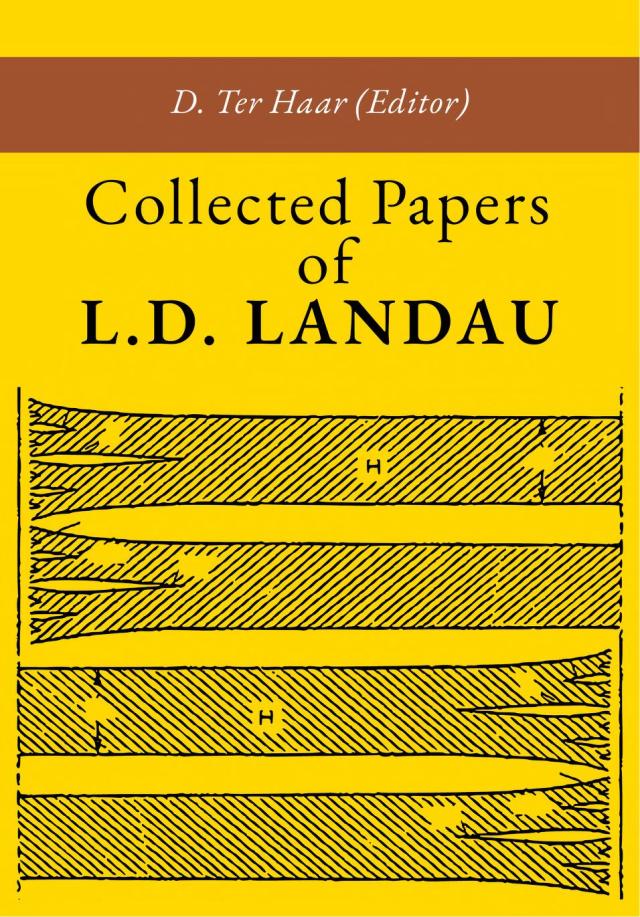
In this post, we will see the book Collected Papers Of L. D. Landau edited by D. ter Haar.
About the book

A collection of 77 papers by Soviet Physicist Lev Landau in different fields of physics. The book has nine sections each of them dealing with different topics in which Landau has published work.

The book was translated from Russian and was edited by D. Ter Haar was published in 1965.

Credits to original uploader. Note: Some pages are missing.

You can get the book here.

Follow us on The Internet Archive: https://archive.org/details/@mirtitles

Follow Us On Twitter: https://twitter.com/MirTitles

Write to us: mirtitles@gmail.com

Fork us at GitLab: https://gitlab.com/mirtitles/

Add new entries to the detailed book catalog here.

Contents

JETP = Journal of Experimental and Theoretical Physics of the USSR.

Preface

Introduction

1. On the theory of the spectra of diatomic molecules (Z. Phys., 40, 621, 1926) 1

2. The damping problem in wave mechanics (Z. Phys. 45, 430, 1927) 8

3. Quantum electrodynamics in configuration space (Z. Phys., 62, 188, 1930; with R. Peierls) 19

4. Diamagnetism of metals (Z. Phys., 64, 629, 1930) 31

5. Note on the scattering of hard gamma-rays (Naturwiss., 18, 1112, 1930) 39

6. Extension of the uncertainty principle to relativistic quantum theory (Z. Phys., 69, 1931; with R. Peierls) 40

7. A theory of energy transfer on collisions (Phys. 2. Sowjet., 1, 88, 1932) 52

8. On the theory of stars (Phys. Z. Sowjet., 1, 285, 1932) 60

9. A theory of energy transfer II (Phys. 2. Sowjet., 2, 46, 1932) 63

10. Electron motion in crystal lattices (Phys. Z. Sowjet., 3, 664, 1933) 67

11. On the second law of thermodynamics and the universe (Phys. Z. Sowjet., 4, 114, 1933; with M. Bronstein) 69

12. A possible explanation of the field dependence of the susceptibility at low temperatures (Phys. Z. Sowjet., 4, 675, 1933) 73

13. Internal temperature of stars (Nature, 182, 567, 1933; with G: Gamow) 77

14. Structure of the undisplaced scattering line (Phys. Z. Sowjet., 5, 172, 1934; with
G. Placzek) 79

15. On the theory of the slowing down of fast electrons by radiation, (JETP, 5, 265, 1935; Phys. Z. Sowjet., 6, 761, 1934) 80

16. On the production of electrons and positrons by a collision of two particles (Phys. 4. Sowjet., 6, 244, 1934; with W. Lifshitz) 84

17. On the theory of specific heat anomalies (Phys. Z, Sowjet., 8, 113, 1935) 96

18. On the theory of the dispersion of magnetic permeability in ferromagnetic bodies (Phys. Z. Sowjet., 8, 153, 1935; with E. Lifshitz) 101

19. On the relativistic correction of the Schrédinger equation for the many-body problem (Phys. Z. Sowjet., 8, 487, 1935) 115

20. On the theory of the accommodation coefficient (Phys. Z. Sowjet., 8, 489, 1036) 117

21. On the theory of the photoelectromotive force in semiconductors (Phys, Z. Sowjet 9, 477, 1936; with E. Lifshitz) 126

22. On the theory of sound dispersion (Phys. Z. Sowjet., 10, 34, 1936; with T. Teller) 147

23. On the theory of uni-molecular reactions (Phys. Z. Sowjet., 40, 67, 1936) lag

24. The transport equation in the case of Coulomb interactions (J#T’P, 7, 203, 1937; Phys. Z. Sowjet., 10, 154, 1936) 165

25. On the properties of metals at very low temperatures (JEZ’P, 7, 379, 1937; Phys. 2. Sowjet., 10, 649, 1936; with I. Pomeranchuk) 175

26. Scattering of light by light (Nature, 138, 206, 1936; with A. Akhiezer and J. Pomeranchuk) 180

27. On the origin of stellar energy (C. R. Acad. Sci. URSS, 17, 305, 1987; Dokl. Akad.
Nauk SSSR., 17, 301, 1987; Nature, 141, 333, 1938) 182

28. On the absorption of sound in solids (Phys. Z. Sowjet., 11, 18, 1937; with G. Rumer) 187

29. On the theory of phase transitions (I: Phys. Z. Sowjet., 11, 26, 1937; JETP, 7, 1,
1937; II: Phys. Z. Sowjet., 11, 545, 1937; JETP, 7, 627, 1937) 193

30. On the theory of superconductivity (JETP, 7, 371; 1937; Phys. Z. Sowjet., 11, 12);
1937) 211

31. On tho statistical theory of nuclei (Phys. Z. Sowjet., 14, 556, 1987; JETP, 7, 819;
3937) 226

32. X-ray scattering by crystals in the neighbourhood of the Curie point (Phys. Zi Sowjet. 12, 123, 1937; JETP, 7, 1232, 1937) 233

33. The scattering of X-rays by crystals with variable lamellar structure (Phys. Z. Sowjet., 12, 579, 1987; JETP, 7, 1227, 1937) 244

34. Production of showers by heavy particles (Nature, 140, 682, 1937; with G. Rumer) 250

35. Stability of neon and carbon with respect to 𝛼-particle disintegration (Phys. Rev., 52, 1251, 1937) 261

36. The cascade theory of electronic showers (Proc. Roy, Soc., A166, 213, 1988; with G. Rumer) 252

37. The intermediate state of supraconductors (Nature, 144, 688, 1938) 266

38. On the de Maas—van Alphen effect (Proc. Roy. Soc., A170, 363, 1939) 268

39. On tho polarisation of electrons by scattering (Phys. Rev., 67, 548, 1940) 271

40. On the nature of the nuclear forces (Phys. Rev., 58, 1006, 1940; C.R. Acad. Sct. URSS, 29, 656, 1940; with I. Tamm) 272

41. On the “radius” of the elementary particles (J. Phys. U.S.S.R., 2, 485, 1940; Phys. Rev., 58, 1006, 1940; JHTP, 10, 718, 1940) 274

42. On tho scattering of mesotrons by “nuclear forces” (J. Phys. U.S.S.R., 2, 483, 1940; JEPP, 10, 721, 1940) 278

43. The angular distribution of the shower particles (J. Phys. U.S.S.R., 3, 237, 1940; JETP, 10, 1007, 1940) 280

44. On tho theory of secondary showers (J. Phys. U.S.S.R., 4, 376, 1941; J#2’P, 11, 32, 1941) 289

45. On the scattering of light by mesotrons (J. Phys. U.S.R.R, 5, 455, 1941; JETP, 11, 35, 1941; with J. Smorodinski) 292

46. The theory of superfluidity of helium II (J. Phys. U.S.R.R, 5, 71, 1941; JETP, 11, 592, 1941) 301

47. A theory of the stability of strongly charged lyophobic sols and tho coalescence of strongly charged particles in electrolytic solutions (JETP, 15, 663, 1945; Acta Phys.-chim. URSS, 14, 683, 1941; with B. Deryagin) 331

48. Dragging of a liquid by a moving plate (Acta Phys.-chim. URSS, 17, 42, 1942 ; with B. Levich) 355

49. On the theory of the intermediate state of superconductors (J. Phys. USSR, 7, 99, 1943; JHTP, 18, 377, 1943) 365

50. On the relation between the liquid and the gaseous states of metals (Acta Phys.-chim URSS, 18, 194, 1943; JUTP, 14, 32, 1944; with J. Zeldovich) 380

51. A new exact solution of the Navier-Stokes equations (C.R. Acad. Sci. ORSS, 48, 286, 1944; Dokl. Akad. Nauk SSSR, 48, 299, 1944) 383

52. On the problem of turbulence (C.R. Acad. Sci. URSS, 44, 311, 1944; Dokl. Akad. Nauk S8SR, 44, 389, 1944) 387

53. On the hydrodynamics of helium II (J. Phys. U.S.S.F., 8, 1, 1944; JHZ’P, 14, 112, 1944) 392

54. On the theory of slow combustion (Acta Phys-chim. URSS, 19, 17, 1944; JRPP, 14, 240, 1944) 396

55. On the theory of scattering of protons by protons (J. Phys. U.S.S.R., 8, 154, 1944; JETP, 14, 269, 1944; with J. Smorodinski) 404

56. On the energy loss of fast particles by ionisation (J. Phys. U.S.S.R., 8, 201, 1944) 417

57. On a study of the detonation of condensed explosives (C.R. Acad. Sci. URSS, 46, 362, 1945; Dokl. Akad, Nauk SSSR, 46, 399, 1045; with K.P. Staniukovich) 425

58. The determination of the flow velocity of the detonation products of somo gaseous mixtures (C.R. Acad. Sci. URSS, 47, 199, 1945; Dokl. Akad. Nauk SSSR, 47, 205, 1946; with K.P. Staniukovich) 429

59. Determination of the flow velocity of tho detonation products of condensed explosives (C.R. Acad. Sci. URSS. 47, 271, 1945; Dok. Akad. Nauk SSSR, 47, 273, 1945; with K. P. Staniukovich) 432

60. On shock waves at large distances from tho place of their origin (J. Phys. U.S.S.R., 9, 496, 1945; Prikl. Mat. Dekh. 9, 286, 1946) 437

61. On the vibrations of the electronic plasma (J. Phys. U.S.S.R. 10, 25, 1946; JETP, 16, 574, 1946) 445

62. On the thermodynamics of photoluminescence (J. Phys. U.S.S.R., 10, 503, 1946) 461

63. On the theory of superfluidity of helium II (J. Phys. U.S.S.R., 11, 91, 1947) 466

64. On the motion of foreign particles in helium II (Dokl. Akad. Nauk SSSR, 59, 669; 1948; with I. Pomeranchuk) 469

65. On the angular momentum of a system of two photons (Dokl. Akad. Nauk SSSR, 60, 207, 1948) 471

66. On the theory of superfluidity (Phys. Rev., 76, 884, 1949; Dokl. Akad. Nauk SSSR, 61, 253, 1948) 474

67. Fhe effective mass of the polaron (JETP, 18, 419, 1948; with S. I. Pekar) 478

68. Ox the theory of energy transfer during collisions TIT (JETP, 18, 750, 1948; with E. Lifshitz) 484

69. The theory of tho viscosity of helium II: I. Collisions of elementary excitations in
“helium ii (JH#P, 19, 637, 1949; with I. M. Khalataikov) 494

70. The theory of the viscosity of helium II. II. Calculation of the viscosity coefficient (JETP, 19, 709, 1949; with I. M. Khalatnikov) 511

71. On the electron—positron interaction (JETP, 19, 673, 1949; with V. B. Berestetskii) 532

72. The equilibrium form of crystals (A. F. Ioffe Festschrift, Moscow 1950, p. 44) 540

73. On the theory of superconductivity (JETP, 20, 1064, 1950; with V. L. Ginzburg) 546

74. On multiplo production of particles during collisions of fast particles (Izv. Akad. Nauk SSSR, Ser. fiz, 12, 51, 1963) 569

75. The limits of applicability of the theory of Bremsstrahlung by electrons and of the creation of pairs at large energies (Dokl. Akad. Nauk SSSR, 92, 535, 1953; with I. Pomeranchuk) 586

76. Electron-cascade processes at ultra-high energies (Dokl. Akad. Nauk SSSR, 92, 735, 1953; with I. Pomeranchuk} 589

77. Emission of 𝛾-quanta during the collision of fast 𝜋-mesons with nucleons (JETP,
24, 605, 1953; with I, Pomeranchuk) 594

Posted in books, physics, soviet | Tagged , , , , , , , , , | Leave a comment

General Geology – Lange, Ivanova, Lebedeva

In this post, we will see the book General Geology by O. Lange; M. Ivanova; N. Lebedeva.

About the book

The book is a basic introduction to geology. The first two chapters talk about the origin of the Earth and its properties, and the outer geospheres of earth: the atmosphere, hydrosphere, biosphere and lithosphere. The next two chapters explore exogenous (such as erosion by various erosion agents) and endogenous process such as earthquakes, volcanoes, tectonic shift. The last chapter discusses the metamorphic process in Earth.

The book was translated from Russian by David Skvirsky and was published in 1963 by  Foreign Languages Publishing House.

Original scan by DLI. Note: Scan quality is poor.

You can get the book here.

Tamil version here.

Follow us on The Internet Archive: https://archive.org/details/@mirtitles

Follow Us On Twitter: https://twitter.com/MirTitles

Write to us: mirtitles@gmail.com

Fork us at GitLab: https://gitlab.com/mirtitles/

Add new entries to the detailed book catalog here.

Contents

Introduction 5

Chapter 1 Origin of the Earth Its Physical and Chemical Properties 11

The Earth in Cosmic Space 11
The Earth’s Shape Physical Properties and Composition 18

Chapter 2 Outer Geospheres of the Earth 28

The Atmosphere 28
The Hydrosphere 38
The Biosphere 63
The Lithosphere 65
General Information on Minerals 85
General Information on Rocks 86

Chapter 3 Exogenous Processes 111

Rock Weathering 111
Geological Action of the Wind 123
Geological Action of Flowing Surface Water 135
Geological Action of Underground Waters Low
Snow and Ice as Geological Agents Vu
Geological Activity of the Sea 189
Geological Activity of Lakes and Swamps 201
Man as a Geological Agent 205
Diagenesis 207

Chapter 4 Endogenous Processes 213

Igneous Activity 213
Intrusive Igneous Activity 215
Effusive Igneous Activity or Volcanism 216
Movement of the Earth’s Crust 230
Earthquakes 230
Epeirogenic Movements 241
Folding and Rupturing Movements 243

Chapter 5 Metamorphism 263

Briefly about the Earth’s Age 266
Hypotheses on the Development of the Earth’s Crust 271
Geological Maps and Sections 277

Name Index 287

Subject Index 289


Posted in foreign languages publishing, geology, science, soviet | Tagged , , , , , , , , , , , , , , , , , , | 1 Comment

Selected Problems In Discrete Mathematics – Gavrilov, Sapozhenko

In this post, we will see the book Selected Problems In Discrete Mathematics by G. P. Gavrilov; A. A. Sapozhenko.

About the book

This collection of problems is intended as an accompaniment to a course on discrete mathematics at the universities. Senior students and graduates specializing in mathematical cybernetics may also find the book useful. Lecturers can use the material for exercises during seminars.
The material in this book is based on a course of lectures on discrete mathematics delivered by the authors over
a number of years at the Faculty of Mechanics and Mathematics, and later at the Faculty of Computational Mathematics and Cybernetics at Moscow State University.
The reader can use Introduction to Discrete Mathematics by S. Yablonsky as the main text. when solving the problems in this collection.
The exercises in the book have various origins. Most of the material is traditional and specialists on discrete mathematics are all too familiar with such problems. However, it is practically impossible to trace the origin of the problems of this kind. Most of the problems were conceived by the authors during seminars and practical classes, during examinations, and also while preparing this hook. Some of the problems resulted from studying publications in journals, and a few have been borrowed from other sources. Several problems were passed on to us by staff at the Faculty and by other colleagues. The authors express their sincere gratitude to them all.

The book was translated from Russian by was published in  by Publishers.

Credits to original uploader.

You can get the book here.

Note: Scan quality is inconsistent, but mostly readable. OCR is not great.

Follow us on The Internet Archive: https://archive.org/details/@mirtitles

Follow Us On Twitter: https://twitter.com/MirTitles

Write to us: mirtitles@gmail.com

Fork us at GitLab: https://gitlab.com/mirtitles/

Add new entries to the detailed book catalog here.

Contents

Preface 7

Chapter 1. Boolean Functions: Methods of Defining and Basic Properties 10

1.1 Boolean Vectors and a Unit n-Dimensional Cube 10
1.2 Methods of Defining Boolean Functions, Elementary Functions. Formulas. Superposition Operation 22
1.3 Special Forms of Formulas. Disjunctive and Conjunctive Normal Forms. Polynomials 33
1.4 Minimization of Boolean Functions 42
1.5 Essential and Apparent Variables 49

Chapter 2. Closed Classes and Completeness 55

2.1 Closure Operation. Closed Classes 55
2.2 Duality and the Class of Self-Dual Functions 59
2.3 Linearity and the Class of Linear Functions 63
2.4 Classes of Functions Preserving the Constants 67
2.5 Monotonicity and the Class of Monotonic Functions 70
2.6 Completeness and Closed Classes 76

Chapter 3. k-Valued Logics 82

3.1 Representation of Functions of k-Valued Logics Through Formulas 82
3.2 Closed Classes and Completeness in k-Valued Logics 88

Chapter 4. Graphs and Networks 101

4.1 Basic Concepts in the Graph Theory 101
4.2 Planarity, Connectivity, and Numerical Characteristics af Graphs 110
4.3 Directed Graphs 117
4.4 Trees and Bipolar Networks 123
4.5 Estimates in the Theory of Graphs and Networks 137
4.6 Representations of Boolean Functions by Contact Schemes and Formulas 143

Chapter 5. Fundamentals of Coding Theory 155

5.1 Codes with Corrections 155
5.2 Linear Codes 160
5.3 Alphabetic Coding 163

Chapter 6. Finite Automatons 174

6.1 Determinate and Boundedly Determinate Functions 174
6.2 Representation of Determinate Functions by Moore Diagrams Canonical Equations Tables and Schemes Operations Involving Determinate Functions 187
6.3 Closed Classes and Completeness in the Seta of Determinate and Boundedly Determinate Functions 206

Chapter 7. Fundamentals of the Algorithm Theory 212

7.1 Turing’s Machines and Operations with Them Functions Computable on Turing’s Machines 212
7.2 Classes of Computable and Recursive Functions 233
7.3 Computability and Complexity of Computations 241

Chapter 8. Elements of Combinatorial Analysis 248

8.1 Permutations and Combinations Properties of Binomial Coefficients 248
8.2 Inclusion and Exclusion Formulas 259
8.3 Recurrent Sequences Generating Functions and Recurrence Relations 265
8.4 Polya’s Theory 275
8.5 Asymptotic Expressions and Inequalities 280

Solutions, Answers, ad Hints 289

Bibliography 403

Notations 405

Subject Index 409

Posted in books, computers, mathematics, mir books, mir publishers, soviet | Tagged , , , , , , , , , , , , , | 2 Comments