

A small book about rare animals in the world and their habitats.
Drawings by N. Charushin
Translated from the Russian by Jan Butler
You can get the book here and here
A small book about rare animals in the world and their habitats.
Drawings by N. Charushin
Translated from the Russian by Jan Butler
You can get the book here and here

ইয়েলেনা উসপেনস্কায়ার” আমাদের গ্রীষ্ম”, মূলত 1954 সালে প্রকাশিত, একটি উপন্যাস যা গ্রীষ্মের ছুটিতে সোভিয়েত শিশুদের একটি গোষ্ঠীর অভিজ্ঞতার দিকে নজর দেয়৷ দ্বিতীয় বিশ্বযুদ্ধের পর সোভিয়েত ইউনিয়নের পটভূমিতে সেট করা, গল্পটি যুগের মূল্যবোধ এবং সামাজিক পরিবর্তনগুলিকে সূক্ষ্মভাবে প্রতিফলিত করার সময় যুবকদের নির্দোষতা, অ্যাডভেঞ্চার এবং বন্ধুত্বকে ক্যাপচার করে৷ বর্ণনাটি প্রাণবন্ত বর্ণনা এবং নস্টালজিয়ার গভীর অনুভূতি দিয়ে সমৃদ্ধ, এটি শৈশব এবং দৈনন্দিন জীবনে ঐতিহাসিক প্রেক্ষাপটের প্রভাব সম্পর্কে একটি বাধ্যতামূলক পাঠ করে তোলে৷
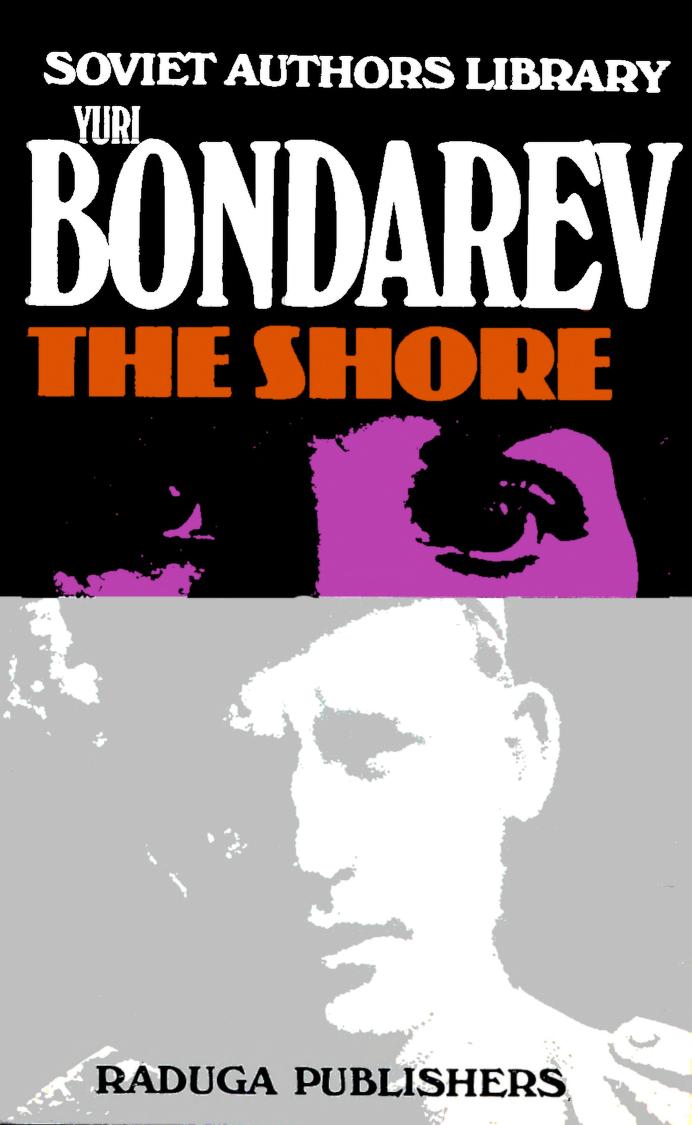
Yuri Bondarev’s The Shore is a profound exploration of human resilience and the moral complexities of war. Set during World War II, the novel follows the journey of a Soviet soldier who, amidst the brutalities of battle, reflects on his past and contemplates his future. Bondarev delves into themes of love, loss, and the enduring human spirit, presenting a poignant narrative that highlights the psychological and emotional impacts of war. Through vivid character portrayals and intricate storytelling, The Shore offers a compelling look at the personal and collective struggles faced by individuals during one of history’s most tumultuous periods.
Translated from the Russian by Keith Hammond
Illustrated by Sergei Geta
Designed by Timur Samigulin
You can get the book here and here
Foreword by Y. Idashkin 7
Part One. ON THE OTHER SIDE 21
Part Two. MADNESS 107
Part Three. NOSTALGIA 335

“Hot Snow” by Yuri Bondarev is a gripping war novel set during the Battle of Stalingrad in World War II. It tells the story of a Red Army anti-tank battery facing a relentless German assault led by General von Manstein. Despite overwhelming odds and severe losses, the Soviet soldiers manage to halt the German advance. The novel highlights themes of bravery, sacrifice, and camaraderie among the soldiers, and ends with General Lieutenant Bessonov awarding the surviving soldiers for their heroic efforts. Bondarev’s own experiences as a battery commander during the war add a layer of authenticity and emotional depth to the narrative.
Translated from the Russian by Robert Daglish
Note: Scan quality is very poor, but readable.
You can get the book here and here
The film adaptation of the book can be seen here

The Heroic Life of Nikolai Ostrovsky” by S. Tregub details the inspiring journey of Nikolai Ostrovsky, a Soviet writer and Communist activist, known for his novel “How the Steel Was Tempered.” Despite being stricken with severe illness that left him blind and paralyzed, Ostrovsky remained a dedicated revolutionary and writer. Tregub’s biography emphasizes Ostrovsky’s perseverance, ideological commitment, and his role as a symbol of Soviet resilience and determination during challenging times.
Translated from the Russian by Helen Altschuler
Designed by Y. Rakuzin
You can get the book here and here
CONTENTS
Childhood—Adolescence—Youth 9
Illness. The Struggle to Return to the Ranks 24
The Writing of “How the Steel Was Tempered” 34
Return to the Ranks 47
Sochi, Orekhovaya Ulitsa, 47 61
In Moscow 80
The Summer of 1936 93
Ostrovsky’s Last Months 106
“How the Steel Was Tempered” .118
“Born of the Storm” .128
Always in the Ranks .141

Lazar Lagin’s ‘The Old Genie Hottabych’ is a delightful story about Volka, a young Soviet boy who finds an ancient genie named Hottabych in an old jug. When Hottabych tries to fit into Volka’s world, his magic leads to all sorts of funny and crazy adventures. As the genie learns about modern life, Volka and Hottabych become good friends. The story is full of magic, friendship, and lots of laughs, making it a fun read for kids who love fantastical tales.
Translated from the Russian by Fainna Solasko
Illustrated and Designed by B. Markevich
You can get the book here and here
Contents
A Most Unusual Morning 9
The Strange Vessel 12
The Old Genie 15
The Geography Examination 37
Hottabych’s Second Service 40
An Unusual Event at the Movies 50
A Troubled Evening 59
A Chapter Which Is a Continuation of the Previous One 64
A Restless Night 67
The Unusual Events in Apartment 72
A No Less Troubled Morning 75
Why S. S. Pivoraki Became Less Talkative 83
An Interview with a Diver 86
Charting a Flight 90
The Flight 95
Zhenya Bogorad’s Adventures Far Away in the East 99
Tra-la-la, O ibn Alyosha! 104
Meet My Friend 107
Have Mercy on Us, O Mighty Ruler! 116
It’s So Embarrassing to Be an Illiterate Genie 121
Who’s the Richest? 127
A Camel in the Street 133
A Mysterious Happening in the Bank 139
Hottabych and Sidorelli 153
A Hospital Under the Bed 156
One in Which We Return to the Barking Boy 167
Hottabych and Mr. Moneybags 170
Hassan Abdurrakhman ibn Hottab’s Story of His Adventures After Leaving the Shop 173
The Same and Mr. Moneybags 181
Extra Tickets 183
Ice-Cream Again 185
How Many Footballs Do You Need? 188
Hottabych Enters the Game 192
The Situation Becomes More Tense 200
Reconciliation 202
Where Should They Look for Omar? 205
The Story Told by the Conductor of the Moscow-Odessa Express of What Happened on the Nara-Maly Yaroslavets Line 211
The Strange Sailing Ship 213
Aboard the “Sweet Omar” 220
The “VK-1” Magic-Carpet-Seaplane 224
Hottabych Is Lost and Found Again 231
The Vessel From the Pillars of Hercules 234
The Shortest Chapter of All 235
Dreaming of the “Ladoga” 243
A Commotion at the Central Excursion Bureau 247
Who Is Most Famous? 253
The Unexpected Encounter 260
What Interferes with Sleeping? 262
Shipwrecked? 267
Hottabych at His Best 274
“Salaam, Sweet Omar!” 284
Omar Asaf Bares His Claws 294
What Good Optical Instruments Can Lead To 300
Hottabych’s Fatal Passion 302
Hottabych’s New Year Visit 308
Epilogue 308
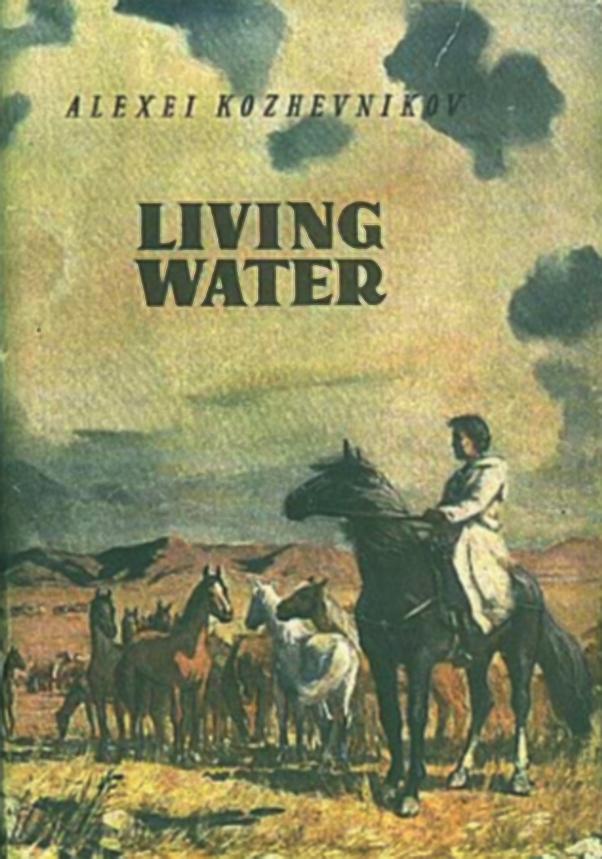
The story highlights the collective efforts and struggles of Soviet citizens to implement large-scale irrigation systems, thereby turning barren land into fertile fields. Set in post-World War II Soviet Union, the novel emphasizes themes of perseverance, community, and the triumph of human will over environmental challenges. This work, written in the style of Socialist Realism, reflects the broader goals of the Communist Party in improving agricultural productivity and living standards.
Translated from the Russian by Bernard Isaacs
Illustrated by D. Piatkin
Designed by B. Schwarz
Original scan by DLI, this is a cleaned, optimised scan.
You can get the book here and here

“Our Summer” by Yelena Uspenskaya, originally published in 1954, is a novel that delves into the experiences of a group of Soviet children during their summer vacation. Set against the backdrop of post-World War II Soviet Union, the story captures the innocence, adventures, and camaraderie of youth while subtly reflecting the values and societal changes of the era. The narrative is enriched with vivid descriptions and a deep sense of nostalgia, making it a compelling read about childhood and the impact of historical context on everyday life.
Translated from the Russian by Ivy Litvinova and Margaret Wettlin
Illustrated by B. Semyonov Designed by I. Litvishko
Original scan by DLI, this is a cleaned, optimised scan.

This book chronicles the pivotal role of Soviet diplomacy during the Great Patriotic War, offering a detailed examination of the USSR’s strategic maneuvers and alliances. From the initial challenges faced at the outbreak of war to the eventual victory over Nazi Germany, the narrative underscores the resilience and foresight of Soviet leadership. Highlighting key events such as the Moscow Conference on Military Supplies, the formation of the three-power coalition, and the significant turning points at Stalingrad and Kursk, the book showcases the Soviet Union’s unwavering commitment to defeating fascism. The comprehensive analysis of international conferences, including Tehran, Crimea, and Berlin, illustrates the USSR’s crucial influence in shaping the post-war world order. With an emphasis on the Soviet Union’s diplomatic triumphs and its steadfast pursuit of global peace and security, this book is an essential read for understanding the profound impact of Soviet diplomacy in the Second World War.
This is a cleaned, optimised scan of
https://archive.org/details/RoadtoGreatVictory/mode/2up
A 1985 Soviet work. Scanned by Alex Boykowich.
From Thomas Mrett’s collection on the Internet Archive
https://archive.org/details/@ismail_badiou
Translated from the Russian by Lev Bobrov
Designed by Gennady Gubanov
You can get the book here and here
Introduction 7
Chapter I. SOVIET DIPLOMACY AT THE OUTBREAK OF THE GREAT PATRIOTIC WAR 9
-Priorities of Soviet Foreign Policy
—The British and U.S. Stance as Regards the U.S.S.R.
—Soviet-British Agreement of July 12, 1941
—Harry Hopkins’ Visit to Moscow—Soviet Accession to the Atlantic Charter
—Moscow Conference on Military Supplies
—The Second Front Issue
—Churchill—A Dubious Ally
—The U.S.S.R. and the Governments in Exile—Relations with Southern Neighbors
—The Soviet Union and Militarist Japan
Chapter II. THREE-POWER COALITION FORMED.57
-International Import of the German Defeat at Moscow—Eden in Moscow
—United Nations Declaration of January 1, 1942—Soviet-British Treaty of Alliance (May 26, 1942)
—Communique on the Second Front Issue
—Soviet-American Agreement of June 11, 1942—U.S.S.R. and the Free French
—Churchill in Moscow: No Second Front in 1942—Unfair Play over Supplies
Chapter III. SOVIET DIPLOMACY AT THE TURNING POINT OF THE WAR 109
-The Tide Turns
—The International Position of the U.S.S.R. after the Battle of Stalingrad
—Churchill’s Anti-Soviet Collusion with the Turks
—Britain and the U.S. Refuse to Open a Second Front in 1943
—After the Battle of Kursk
—The U.S.S.R. and Post-War Peace Settlement
Chapter IV. THE TEHRAN CONFERENCE 148
-The Tripartite Conference of Foreign Ministers
—On the Eve of the Tehran Conference
—The Tehran Conference Opened. Second Front in Debate
—Post-War Germany
—The Polish Question
—International Security Organization. The Colonial Question—Finland’s Withdrawal from the War
—Three-Power Declaration on Iran
Chapter V. 1944: LIBERATING MISSION 179
-Armistice with Finland Signed
—Romania Defeated. Armistice Agreement
—Soviet Action to Get Bulgaria out of the War
—Fascist Hungary Defeated—Treatment of Germany Considered
—The U.S.S.R. and the Question of Poland’s Future
—Soviet-Czechoslovak Relations
—The U.S.S.R. and New Yugoslavia
—The U.N. Charter Framed—Treaty of Alliance Between the U.S.S.R. and France, December 10, 1944
Chapter VI. THE CRIMEA CONFERENCE 213
-The Front-Lines in Early 1945
—The Conference Opened—Hastening the Defeat of the Aggressors
—The German Question
—The Credit Issue
—International Security Organization Established
—Declaration on Liberated Europe
—The Polish Question—The Yugoslav Question
—Convention on the Straits
—U.S.S.R. and the Japanese Aggressors
Chapter VII. VICTORY OVER GERMANY 250
The End of the War in Europe
—Truman Tough on the U.S.S.R.
—San Francisco Conference. U.N. Charter Drafted
—The Polish Governmental Question Settled
—Soviet-Yugoslav Treaty of Mutual Assistance, April 11, 1945
Chapter VIII. THE CONFERENCE OF BERLIN 275
-Procedures for Peace Settlement
—The German Problems—The Polish Problems
—Policy Towards Italy, Romania, Bulgaria, Hungary and Finland
—The Problem of Navigation on the Danube
—Attitude to Fascist Spain
—German Military Units Preserved by Britain
—The War in the Far East
Conclusion 318
Name Index 321

This book deals with the problems the newly-independent African countries are meeting with in their development. It is an attempt to analyse the qualitative changes in the composition and position of the social, class and political forces since the acquisition of national independence and to investigate the conditions and possibilities for these countries’ development along the path of social progress. The author’s main aim is to draw attention to the new features and events that make it easier to understand the basic laws and distinguishing traits of the present-day African revolution.
Translated from the Russian by G. Ivanov-Mumjiev
Designed by S. Danilov
You can get the book here and here
This is a cleaned, optmised scan of
https://archive.org/details/AfricaPolEconIdeo
A 1972 Soviet work. Scanned by Alex Boykowich.
From Thomas Mretts collection on the Internet Archive.
CONTENTS
INTRODUCTION 5
THE AFRICAN REVOLUTION—A PART OF THE WORLD REVOLUTIONARY PROCESS13
MOTIVE FORCES OF THE AFRICAN REVOLUTION. 36
STRUGGLE FOR ECONOMIC EMANCIPATION 63
KEY PROBLEM OF NEWLY-INDEPENDENT AFRICAN STATES 96
SOCIALIST TRENDS IN AFRICA AND SCIENTIFIC SOCIALISM 119
AFRICA AND THE STRUGGLE OF THE TWO SYSTEMS 145
 Mir Books