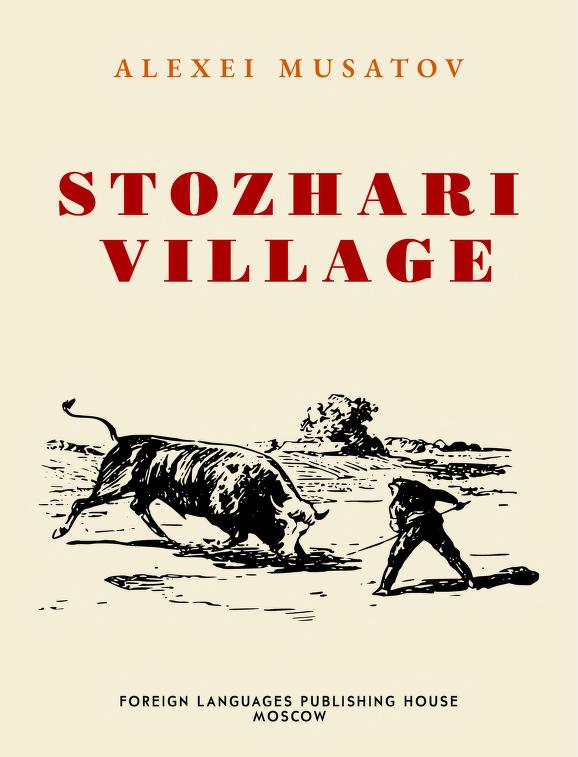
Stozhari Village (Soviet Literature for Young People) by Alexei Musatov

“Stozhari Village” by Alexei Musatov, published in 1950, is a vivid portrayal of rural life in a Ukrainian village. The novel captures the challenges and joys of the villagers as they navigate through the socio-political changes of the early 20th century. Musatov’s narrative is rich with detailed descriptions and a deep understanding of the community’s traditions, hardships, and resilience. The book offers a snapshot of a world in transition, reflecting broader themes of Soviet influence and the enduring spirit of the people.

Translated from the Russian By R. Dixon
Illustrated By O. Korovin

You can get the book here and here.

Original scan by DLI. This is a cleaned, optimised scan.

Posted in books | Leave a comment

The Second World War by G. Deborin

Deborin’s Second World War offers an in-depth exploration of the geopolitical, social, and military aspects of the global conflict. The book critically examines the ideological clashes between fascism, capitalism, and socialism that fueled the war, with a particular focus on the role of the Soviet Union. Deborin provides detailed narratives of key battles and campaigns, highlighting the strategies and decisions of military leaders. He also delves into the war’s impact on civilian populations and the significant contributions of the Soviet people to the eventual Allied victory. Through a Marxist lens, Deborin analyses the broader implications of the war on the international order and the subsequent Cold War era.

A Politico-military Survey
Edited by Major-general i. Zubkov

Translated from the Russian by vic Schneierson

You can get the book here and here.

This is a cleaned, optimised scan of this scan

A 1964 Soviet work. Scanned by Ismail, sent to him by Nathan O’Connor.

Table of Contents

Part I: THE PRELUDE TO WAR

– Chapter One: Aggressors and Helpmates 5
– Chapter Two: The Munich Deal and Its Aftermath 20

Part II: THE PHONEY WAR

– Chapter Three: Poland’s Military Debacle. The Soviet Union Blocks Germany’s “Drang nach Osten” 51
– Chapter Four: The French Tragedy 75
– Chapter Five: After France Surrendered 95

Part III: FASCIST AGGRESSION SPREADS. FIRST STAGE OF THE GREAT PATRIOTIC WAR

– Chapter Six: The Relation of Strength 125
– Chapter Seven: The Nazi Assault 151
– Chapter Eight: The Battle for Moscow 197
– Chapter Nine: War Breaks Out in the Pacific 223

Part IV: SOVIET COUNTER-OFFENSIVE. THE TURNING OF THE TIDE

– Chapter Ten: The Volga Victory 248
– Chapter Eleven: The Fight for North Africa 286
– Chapter Twelve: Battle of the Kursk Bulge 305
– Chapter Thirteen: The Teheran Conference 325

Part V: THE CRUCIAL VICTORIES

– Chapter Fourteen: The Offensive of 1944 344
– Chapter Fifteen: Allies Land in France 360
– Chapter Sixteen: Soviet Army Liberates Europe 375
– Chapter Seventeen: The Crimea Conference 406
– Chapter Eighteen: Berlin Operation and Germany’s Surrender 430
– Chapter Nineteen: The San Francisco and Potsdam Conferences 467
– Chapter Twenty: Japan Surrenders. The War Ends 482

The Summing Up 507

Index 548

Posted in books | Tagged , , , , , , , | Leave a comment

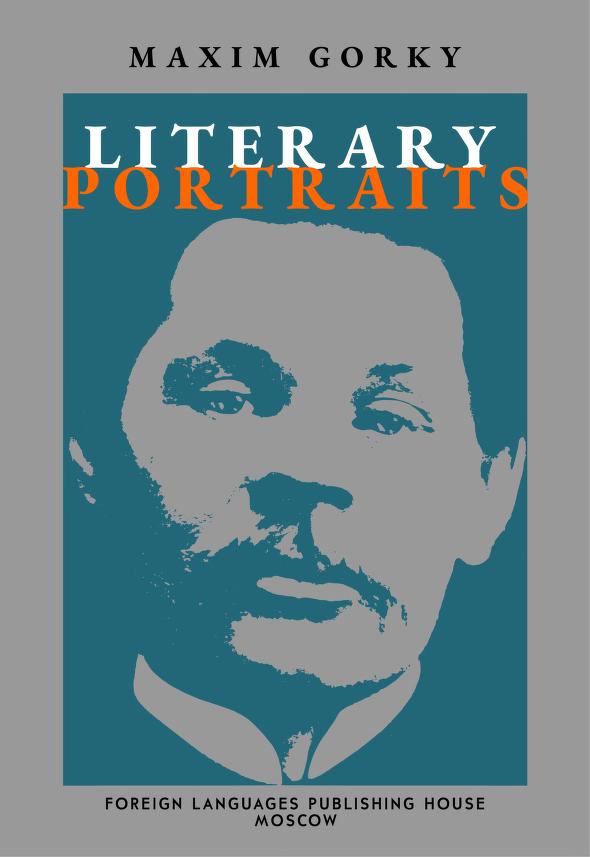
Literary Portraits by Maxim Gorky

This collection of literary portraits forms a gallery of life-like representations of some remarkable Russian authors. Here we have Tolstoi— “superhumanly wise,” Chekhov— “sagely modest,” Korolenko—“ calm and of an extraordinary simplicity,” Kotsubinsky—”at home In the Ideal world of beauty and good,” Garin- Mikhailovsky—”gifted, inexhaustibly cheerful,” Prishvln, who wrote about “the Earth, our Great Mother. Gorky’s unfailing interest In creative personalities, his keen observation, his ability to capture every characteristic word, gesture, intonation, his profound knowledge of the times producing these personalities, enabled him to penetrate the mysteries of such complex and sell-contradictory individuals as Tolstoi, Chekhov, Korolenko, and many others.
And in his contacts with his great contemporaries new and wonderful features of the author of these portraits — Alexei Maximovich Gorky — are unconsciously displayed.

Translated from the Russian By Ivy Litvinov

You can get the book here and here.

CONTENTS

LEV TOLSTOI 9
SOPHIA TOLSTAYA 103
ANTON CHEKHOV 134
VLADIMIR KOROLENKO AND HIS TIMES 169
VLADIMIR KOROLENKO 220
MIKHAIL KOTSUBINSKY 257
NIKOLAI GARIN-MIKHAILOVSKY 271
MIKHAIL PRISHVIN 300

Posted in books | Tagged , , , , | Leave a comment

Schoolboys by Nikolai Nosov

Have you ever wondered what it would be like to go on fun adventures with your friends every day? In Schoolboys join a group of lively schoolchildren as they explore their world! Follow along as they tackle school projects, solve mysteries, and have tons of laughs. This book is filled with exciting moments, silly pranks, and heartwarming friendships. Whether they’re in the classroom or playing outside, these schoolboys know how to make every day an adventure.

Translated from the Russian by Rose Prokofieva
Illustrated by V.N. Goryaev
Desicned by L.I. Fomina

Original scan by DLI, this is a cleaned, optmised scan.

You can get the book here and here.

Posted in books | Leave a comment

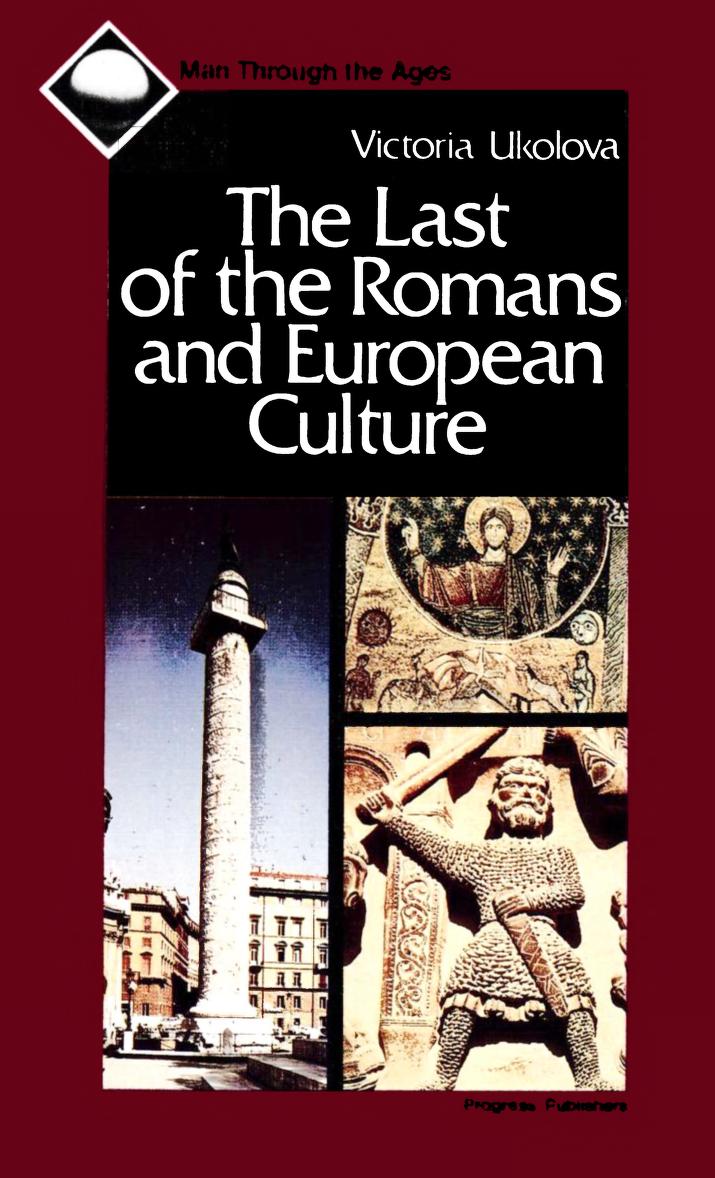
The Last Of The Romans And European Culture by Victoria Ukolova


This book is about the continuity of time, the cultural continuity of civilisations, and the ideological struggle that generated the growth of medieval culture. It explores the confrontation and interaction between Christianity and paganism, and between the Roman and barbarian worlds. More importantly, this book is about the Last of the Romans—those whose fame through the ages may not have been prodigious, but who, through their tireless labours, linked successive generations and succeeded in resisting barbarity.

About the author

Her study of Boethius, a thinker of the early Middle Ages, earned Victoria Ukolova a prize at the Second USSR Contest for Young Social Scientists in 1973. She was the last of Academician Sergei Skazkin’s students of the Middle Ages at Moscow University. After a few years at Akademgorodok in Novosibirsk, at the local university, she returned to Moscow. Today, she is head of the Chair on the Cultural History of Foreign Countries at the General History Institute of the USSR Academy of Sciences. More than a hundred of her works on the history of medieval European culture have been published so far, including monographs, articles, and translations of medieval authors into Russian.

Translated from the Russian by Vic Schneierson

You can get the book here and here.

This is a cleaned, optimised scan of this version
A 1989 Soviet work. Scanned by Ismail, sent to him by Leftypaul.
From Thomas Mrett’ Internet Archive collection.

Contents

A Few Words in Lieu of an Introduction 5

Chapter 1. The Eternal City, Christians and Barbarians 8
Chapter 2. From the Altar of Victory to the Holy City 25
Chapter 3. Pagan Wisdom and the Triumph of Authority 39
Chapter 4. Free Will and Providence 66
Chapter 5. Reticent Historians and Impassive Poets 90
Chapter 6. Scipio’s Dream and the Cosmic Riddle 119
Chapter 7. The Marriage of Philology and Mercury 151
Chapter 8. Political Zigzags and the Beauty of Logic 170
Chapter 9. The Wheel of Fortune and the Admonitions of Philosophy 236
Chapter 10. Three Defeats or the Happy Life of Flavius Cassiodorus 259
Chapter 11. The First Medieval Encyclopaedist 295
Chapter 12. Atoms and Angels 337
Chapter 13. Love of Wisdom or Saintly Simplicity? 361
Chapter 14. Homer’s Golden Chain and the Birth of the Medieval Culture 382

Posted in books | Tagged , , , , , , , | Leave a comment

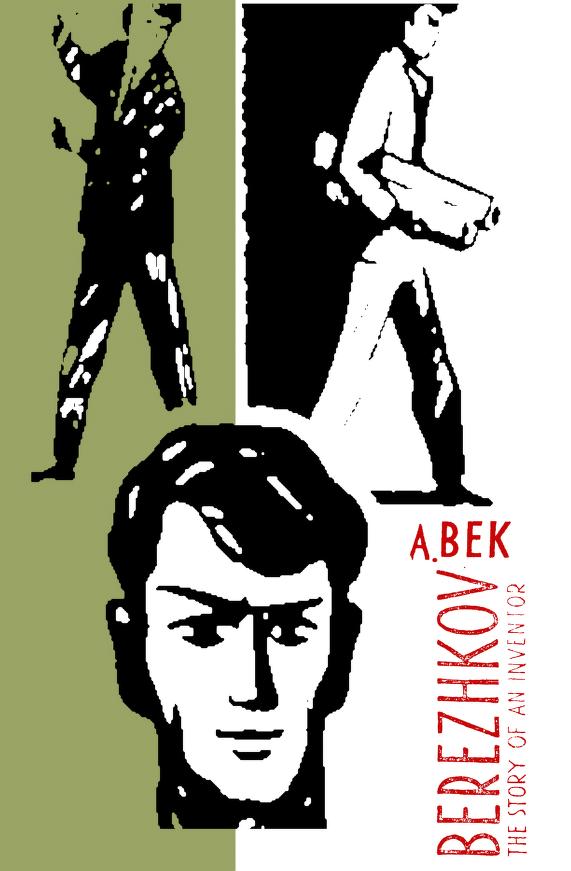
Berezhkov The Story Of An Inventor by Alexander Bek

Alexander Bek’s Berezhkov: The Story of an Inventor delves into the life and challenges of Alexei Berezhkov, a brilliant and dedicated Soviet inventor. The narrative follows Berezhkov’s tireless efforts to develop groundbreaking technologies amidst the tumultuous backdrop of political and bureaucratic obstacles. Through perseverance and ingenuity, Berezhkov navigates a landscape marked by skepticism and resistance, ultimately making significant contributions to Soviet scientific advancements. Bek’s portrayal of Berezhkov highlights the inventor’s resilience and unwavering commitment to innovation, offering a nuanced exploration of the intersection between creativity and the often harsh realities of the Soviet system.

Translated from the Russian By B. Isaacs
Designed By D. Bisti

You can get the book here and here.

Part One. The Adros Engine 9
Part Two. A Night of Stories 102
Part Three. Without Compass 158
Part Four. The ADVI-100 248
Part Five. New Year’s Eve 331
Part Six. “Alexei Berezhkov-31” 420
By Way of Epilogue 515

Original scan by DLI, this is a cleaned optimised scan.


Posted in books | Tagged , , , , , | Leave a comment

Landing the The Sturgeon

A Chinese picture story book for children.

Credits to the original scanner

Cleaned and optimised from the original scan

You can get the book here and here.

Posted in books | Leave a comment

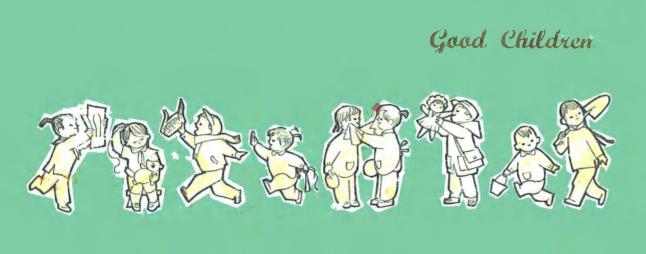
Good Children by Miao Yin-tang

A picture story book for children from China.

Credits to the original scanner

Cleaned and optimised from the original scan

You can get the book here and here.

Posted in books | Tagged , , , , | Leave a comment

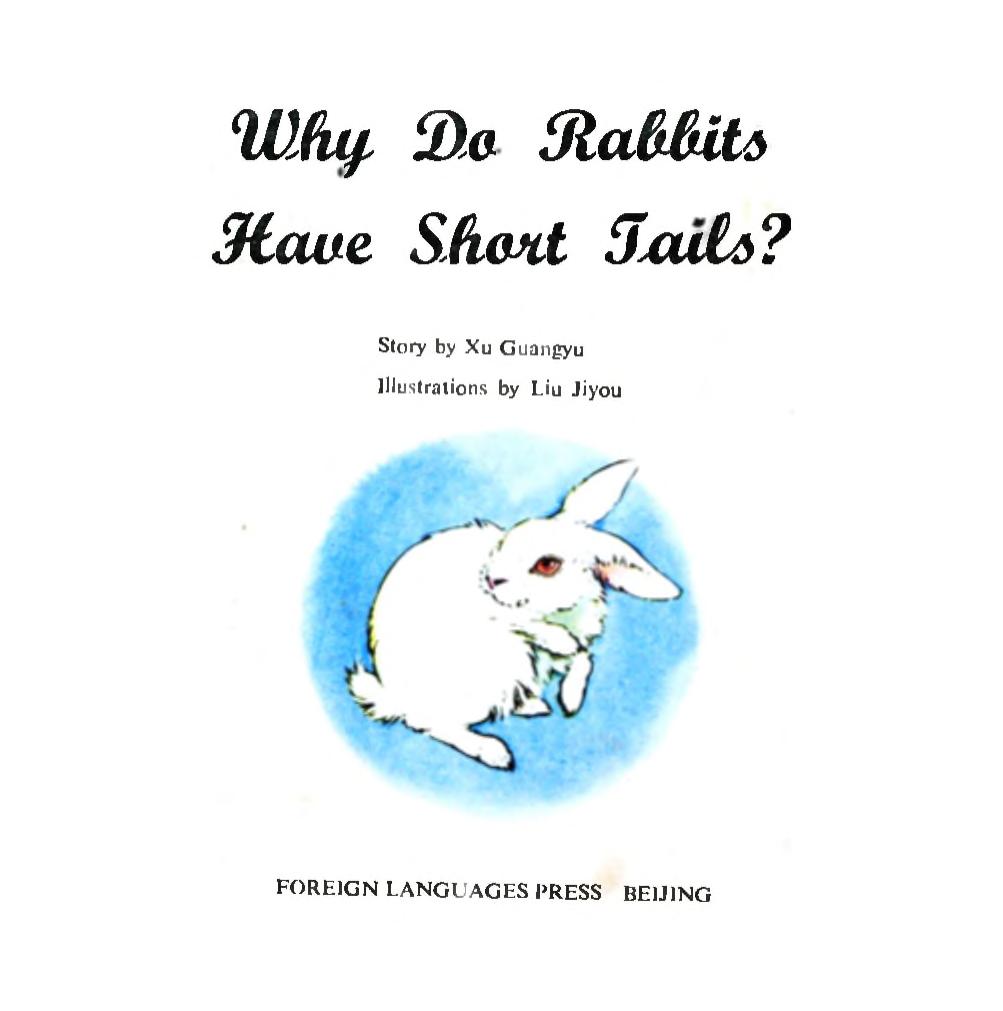
Why Do Rabbits Have Short Tails? by Xu Guangyu

A picture story book for children from China.
Illustrations by Liu Jiyou

Credits to the original scanner

You can get the book here and here.

Posted in books | Tagged , , | Leave a comment

The Ginseng Maiden

A picture story book for children from China.

Credits to the original scanner

You can get the book here and here.

Posted in books | Tagged , | Leave a comment