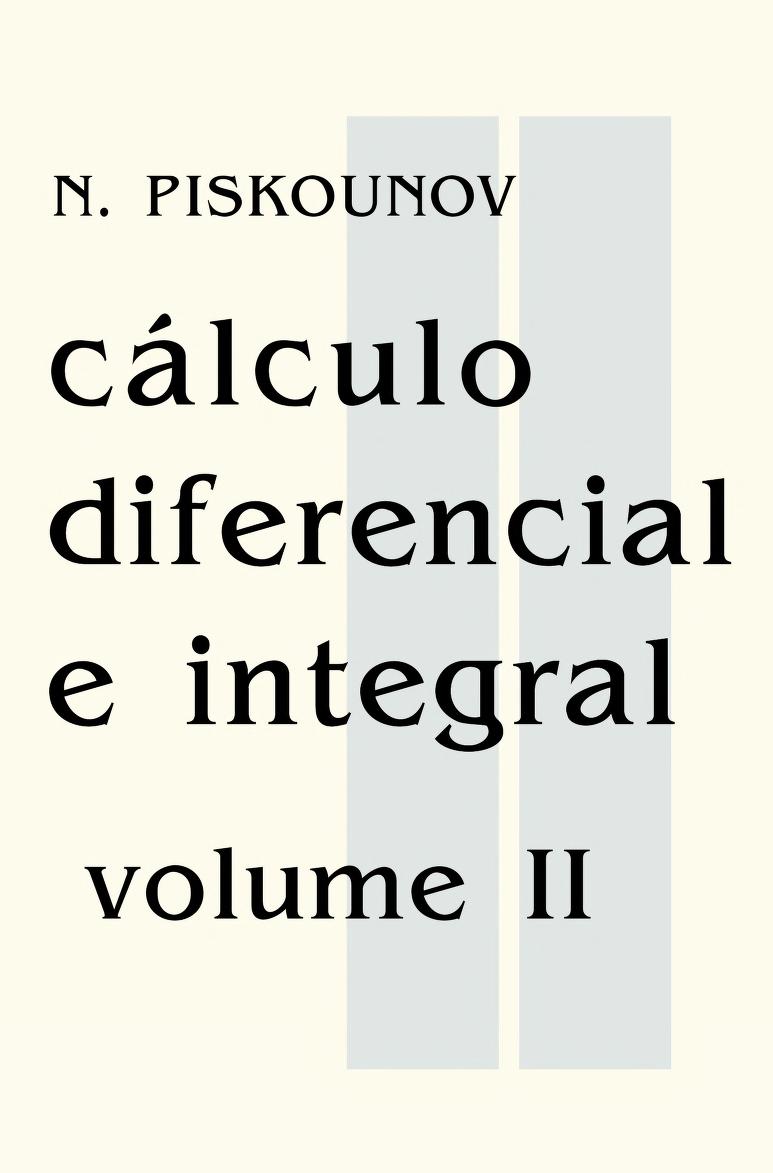
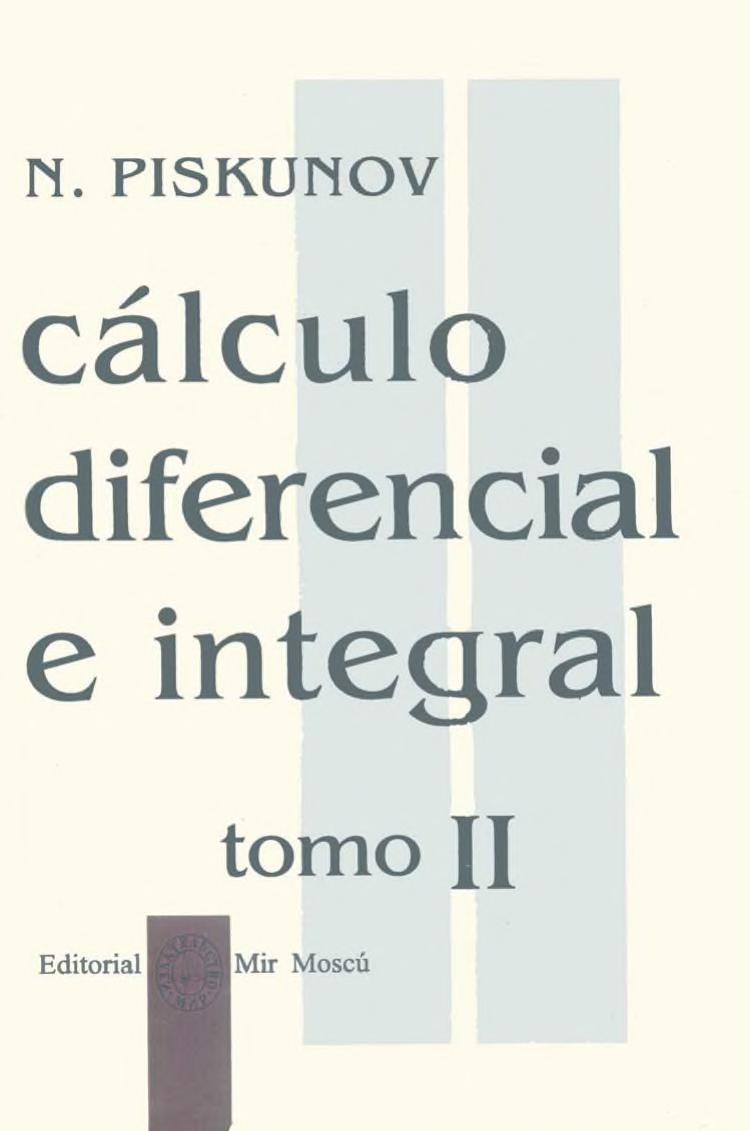
Neste post, veremos os tão esperados dois conjuntos de Volume diferencial e Cálculo Integral de N. Piskunov.
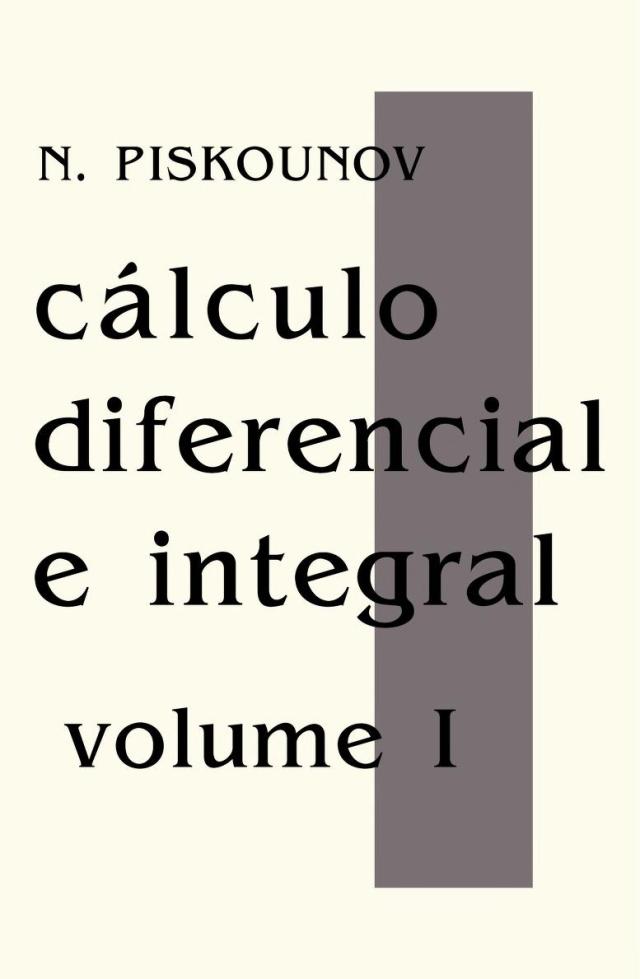
Sobre o livro
Livro de texto do falecido professor Nikolai Piskunov DSs (física e Matemática) é dedicado às divisões mais importantes da matemática superior. Esta edição revisada e publicada pela última vez em dois volumes
O primeiro volume trata dos seguintes tópicos: número, variável, Função, limite, continuidade de uma função, derivada e diferencial, certos teoremas sobre funções diferenciáveis, a curvatura de uma curva, Números Complexos, polinômios, funções de várias variáveis, aplicações de Cálculo Diferencial para geometria sólida, a Integral indefinida, a Integral definida, aplicações mecânicas da Integral Definida.
O segundo volume trata dos seguintes tópicos: Equações Diferenciais, Integrais múltiplas, integrais de linha e superfície, Séries, Séries de Fourier, equações da Física Matemática, Cálculo operacional e certas de suas aplicações, elementos da teoria da probabilidade e Estatística Matemática, matrizes.
Existem inúmeros exemplos e problemas em cada seção do curso muitos deles demonstram os laços entre matemática e outros sentidos, tornando o livro útil para o auto-estudo é um livro didático para escolas técnicas superiores que passou por várias edições em russo e também foi traduzido para francês e espanhol e português.
O livro foi traduzido do russo por Antonio Eduardo Pereira Teixeira e Maria Jose Pereira Teixeira. Os livros foram publicados pela Edições Lopes da Silva em 1997.
(Desculpas por quaisquer erros, estou usando a tradução automática.)
Todos os créditos para uploaders originais.
Versão em Português
Volume 1 here
Volume 2 here
Versión en Español
Volume 1 here
Volume 2 here
Conteudo
Volume 1
Capítulo I. número. VARIAVEL. FUNCAO
1.1 números reais. Números reais como pontos em uma escala numérica 11
1.2 O valor absoluto de um número real 12
1.3. Variáveis e constantes 14
1.4 o intervalo de uma variável 14
1.5 variáveis ordenadas. Variáveis crescentes e decrescentes. Variáveis Delimitadas 16
1.6 função 16
1.7 formas de representar funções 18
1.8 funções elementares básicas. Funções elementares 20
1.9 funções algébricas 24
1.10 sistema de coordenadas polares 26
Exercícios sobre o Capítulo 27
Capítulo 2. LIMITAR. CONTINUIDADE DE UMA FUNÇÃO
2.1 o limite de uma variável. Uma variável infinitamente grande 29
2.2 o limite de uma função 31
2.3 uma função que se aproxima do infinito. Funções limitadas 35
2.4 infinitesimais e suas propriedades básicas 39
2.5 teoremas básicos sobre limites 42
2.6 o limite da função sin x / x as x → 0 46
2.0. O número e 47
2.8 logaritmos naturais 51
2.9 continuidade das funções 53
2.10 certas propriedades de funções contínuas 57
2.11 comparando infinitesimais 59
Exercícios no Capítulo 2 61
Capítulo 3. DERIVADA E DIFERENCIAL
3.1 velocidade do movimento 65
3.2 A definição de uma derivada 67
3.3 significado geométrico da derivada 69
3.4 Diferenciabilidade das funções 70
3.5 a derivada da função y = x^{n}, n um número inteiro positivo 74
3.6 derivados das funções y = sin x, y = cos x 75
3.7 derivados de: uma constante, o produto de uma constante por uma função, uma soma, um produto e um quociente 75
3.8 a derivada de uma função logarítmica 80
3.9 a derivada de uma função composta 81
3.10 derivados das funções y = tan x, y = cot x , y = ln / x / 83
3.11 uma função implícita e sua diferenciação 85
3.12 derivadas de uma função de potência para um expoente real arbitrário, de função exponencial geral e de uma função exponencial composta 87
3.13 uma função inversa e sua diferenciação 89
3.14 funções trigonométricas inversas e sua diferenciação 92
3.15 fórmulas básicas de diferenciação 96
3.16 representação paramétrica de uma função 98
3.17 as equações de algumas curvas na forma paramétrica 99
3.18 a derivada de uma função representada parametricamente 102
3.19 funções hiperbólicas 104
3.20 o diferencial. 107
3.21 o significado geométrico do diferencial 111
3.22 derivados de ordens diferentes 112
3.23 diferenciais de ordens diferentes 114
3.24 derivados (de várias ordens) de funções implícitas e de funções representadas parametricamente 116
3.25 o significado mecânico da segunda derivada 118
3.26 as equações de uma tangente e de um normal. Os comprimentos de um subtangente e um subnormal 119
3.27 o significado geométrico da derivada do vetor de raio em relação ao ângulo polar 122
Exercícios sobre o Capítulo 3
Capítulo 4. ALGUNS TEOREMAS SOBRE FUNÇÕES DIFERENCIÁVEIS
4.1 um teorema sobre as raízes de uma derivada (teorema de Rolle) 133
4.2 o teorema do valor médio (teorema de Lagrange) 135
4.3 o teorema do valor médio generalizado (teorema de Cauchy) 136
4.4 o limite de uma razão de dois infinitesimais (avaliando formas indeterminadas do tipo 0/0 137
4.5 o limite de uma razão de duas quantidades infinitamente grandes (avaliando formas indeterminadas do tipo ∞/∞) 140
4.6 fórmula 145 de Taylor
4.7 expansão das funções e^{x}, sin x e cos x em uma série de Taylor 149
Exercícios sobre o Capítulo 4 152
Capítulo 5. INVESTIGAR O COMPORTAMENTO DAS FUNÇÕES
5.1 declaração do problema 155
5.2 aumento e diminuição de uma função 156
5.3 máximos e mínimos de funções 157
5.4 testando uma função diferenciável para máximo e mínimo com uma primeira derivada 164
5.5 testar uma função para o máximo e mínimo com uma segunda derivada 166
5.6 máximo e mínimo de uma função em um intervalo 170
5.7 aplicando a teoria dos máximos e mínimos de funções à solução de problemas 171
5.8 testar uma função para o máximo e o mínimo por meio da Fórmula 173 de Taylor
5.9 convexidade e concavidade de uma curva. Pontos de inflexão 175
5.10 assíntotas 182
5.11 plano geral para investigar funções e construir gráficos 186
5.12 investigando curvas representadas parametricamente 190
Exercícios sobre o Capítulo 5 194
Capítulo 6. A CURVATURA DE UMA CURVA
6.1 Comprimento Do Arco e sua derivada 200
6.2 curvatura 202
6.3 cálculo da curvatura 204
6.4 calcular a curvatura de uma curva representada parametricamente 207
6.5 Calculando a curvatura de uma curva dada por uma equação nas coordenadas polares 207
6.6 o raio e o círculo de curvatura. O centro da curvatura. Evolução e involução 208
6.7 as propriedades de um evolute 213
6.8 aproximando as raízes reais de uma equação 216
Exercícios sobre o Capítulo 6 221
Capítulo 7. NÚMEROS COMPLEXOS. POLINOMIO
7.1 números complexos. Definições básicas 224
7.2 operações básicas em números complexos 226
7.3 poderes e raízes de números complexos 229
7.4 função exponencial com expoente complexo e suas propriedades 231
7.5 fórmula de Euler. A forma exponencial de um número complexo 234
7.6 fatoração de um polinômio 235
7.7 as múltiplas raízes de um polinômio 238
7.8 fatoração de um polinômio no caso de raízes complexas 240
7.9 interpolação. Fórmula de interpolação de Lagrange 241
7.10 fórmula de interpolação de Newton 243
7.11 diferenciação numérica 245
7.12 sobre a melhor aproximação de funções por polinômios. Teoria de Chebyshev 246
Exercícios sobre o Capítulo 7 247
Capítulo 8. FUNÇÕES DE VÁRIAS VARIÁVEIS
8.1 definição de uma função de várias variáveis 249
8.2 representação geométrica de uma função de duas variáveis 252
8.3 incremento parcial e total de uma função 253
8.4 continuidade de uma função de várias variáveis 254
8.5 Derivadas Parciais de uma função de várias variáveis 257
8.6 uma interpretação geométrica das derivadas parciais de uma função de duas variáveis 259
8.7 incremento Total e diferencial total 260
8.8 Aproximação por diferenciais totais 263
8.9 utilização de um diferencial para estimar erros nos cálculos 264
8.10 a derivada de uma função composta. A derivada total. O diferencial total de uma função composta 267
8.11 a derivada de uma função definida implicitamente 270
8.12 derivativos parciais de ordens superiores 273
8.13 superfícies niveladas 277
8.14 derivada direcional 278
8.15 gradiente 281
8.16 fórmula de Taylor para uma função de duas variáveis 284
8.17 máximo e mínimo de uma função de várias variáveis 286
8.18 máximo e mínimo de uma função de várias variáveis relacionadas por equações dadas (máximos e mínimos condicionais) 293
8.19 obtenção de uma função com base em dados experimentais pelo método dos Mínimos Quadrados 298
8.20 pontos singulares de uma curva 302
Exercícios no Capítulo 8 307
Capítulo 9. APLICAÇÕES DO CÁLCULO DIFERENCIAL À GEOMETRIA SÓLIDA
9.1 as equações de uma curva no espaço 311
9.2 o limite e a derivada da função vetorial de um argumento escalar. A equação de uma tangente a uma curva. A equação de um plano normal 314
9.3 regras para diferenciar vetores (funções vetoriais) 320
9.4 a primeira e a segunda derivadas de um vetor em relação ao comprimento do arco. A curvatura de uma curva. O principal normal. A velocidade e aceleração de um ponto em movimento curvilíneo 322
9.5 avião Osculante. Binormal. Torção 330
9.6 o plano tangente e o normal a uma superfície 335
Exercícios sobre o Capítulo 9 338
Capítulo 10. PRIMITIVO
10.1 antiderivativo e a integral indefinida 341
10.2 tabela de integrais 343
10.3 algumas propriedades da integral indefinida 345
10.4 integração por substituição (mudança de variável) 347
10.5 integrais de algumas funções contendo um trinômio quadrático 350
10.6 integração por partes 352
10.7 frações Racionais. Frações racionais parciais e sua integração 356
10.8 decomposição de uma fração racional em frações parciais 359
10.9 integração de frações racionais 363
10.10 integrais de funções irracionais 366
10.11 integrais da forma ∫r(x,√(ax^2+bx+c)) dx 367
10.12 integração de certas classes de funções trigonométricas 370
10.13 integração de certas funções irracionais por meio de substituições trigonométricas 375
10.14 sobre funções cujas integrais não podem ser expressas em termos de funções elementares 377
Exercícios no Capítulo 10 378
Capítulo 11. A INTEGRAL DEFINIDA
11.1 declaração do problema. Somas inferiores e superiores 387
11.2 a integral definida. Prova da existência de uma integral definida 389
11.3 propriedades básicas da integral definida 399
11.4 avaliação de uma integral definida. A fórmula Newton-Leibniz 402
11.5 mudança de variável na integral definida 407
11.6 integração por partes 408
11.7 integrais impróprias 411
11.8 aproximando integrais definidas 419
11.9 fórmula 424 de Chebyshev
11.10 integrais dependentes de um parâmetro. A função gama 429
11.11 integração de uma função complexa de uma variável real 433
Exercícios sobre o Capítulo 11 433
Capítulo 12. APLICAÇÕES GEOMÉTRICAS E MECÂNICAS DA INTEGRAL DEFINIDA
12.1 áreas de computação em coordenadas retangulares 437
12.2 a área de um setor Curvilíneo nas coordenadas polares 440
12.3 o comprimento do arco de uma curva 441
12.4 computando o volume de um sólido das áreas de seções paralelas (volumes por corte) 447
12.5 o volume de um sólido de revolução 449
12.6 a superfície de um sólido de revolução 450
12.7 trabalho de Computação pela integral definida 452
12.8 coordenadas do centro de gravidade 453
12.9 computando o momento de inércia de uma linha, um círculo e um cilindro por meio de uma integral definida 456
Exercícios sobre o Capítulo 12 458
Índice 465
Volume 2
CAPÍTULO 1 EQUAÇÕES DIFERENCIAIS
1.1 declaração do problema. A equação de movimento de um corpo com resistência do meio proporcional à velocidade. Equacao
de uma catenária 11
1.2 definições 14
1.3 equações diferenciais de primeira ordem (noções gerais) 15
1.4 equações com variáveis separadas e separáveis. O problema da desintegração do rádio 20
1.5 equações homogêneas de primeira ordem 24
1.6 equações redutíveis a equações homogêneas 26
1.7 equações lineares de primeira ordem 29
1.8 equação de Bernoulli 32
1.9 equações diferenciais exatas 34
1.10 Fator de integração 37
1.11 o envelope de uma família de curvas 39
1.12 soluções singulares de uma equação diferencial de primeira ordem 45
1.13 equação de Clairaut 46
1.14 equação de Lagrange 48
1.15 trajetórias ortogonais e isogonais 50
1.16 equações diferenciais de ordem superior (fundamentos) 55
1.17 uma equação da forma y^{(n)} = f (x) 56
1.18 alguns tipos de equações diferenciais de segunda ordem redutíveis a equações de primeira ordem. Problema de velocidade de Escape 59
1.19 método gráfico de integração de equações diferenciais de Segunda Ordem 66
1.20 equações lineares homogêneas. Definições e propriedades gerais 68
1.21 equações lineares homogêneas de segunda ordem com coeficientes constantes 75
1.22 equações lineares homogêneas da enésima ordem com coeficientes constantes 80
1.23 equações lineares de segunda ordem não homogêneas 82
1.24 equações lineares de segunda ordem não homogêneas com coeficientes constantes 86
1.25 equações lineares não homogêneas de ordem superior 93
1.26 a equação diferencial das vibrações mecânicas 97
1.27 oscilações livres 98
1.28 oscilações forçadas 102
1.29 Sistemas de equações diferenciais ordinárias 106
1.30 Sistemas de equações diferenciais lineares com coeficientes constantes 111
1.31 sobre a teoria da estabilidade de Lyapunov 117
1.32 método de Euler de solução aproximada de equações diferenciais de primeira ordem 133
1.33 um método de diferença para solução aproximada de equações diferenciais com base na fórmula de Taylor. Método Adams 142
1.34 um método aproximado para integrar sistemas de equações diferenciais de primeira ordem 146
Exercícios sobre o Capítulo 1 146
CAPÍTULO 2 INTEGRAIS MÚLTIPLAS
2.1 integrais duplos 158
2.2 cálculo de integrais duplos 161
2.3 cálculo de integrais duplas (continuação) 166
2.4 cálculo de áreas e volumes por meio de integrais duplas 172
2.5 a integral dupla nas coordenadas polares 175
2.6 mudança de variáveis em uma integral dupla (caso geral) 182
2.7 computando a área de uma superfície 187
2.8 a distribuição de densidade da matéria e a integral dupla 190
2.9 o momento de inércia da área de um plano figura 191
2.10 as coordenadas do centro de gravidade da área de um plano figura 196
2.11 integrais triplos 197
2.12 avaliando uma integral tripla 198
2.13 mudança de variáveis em uma integral tripla 204
2.14 o momento de inércia e as coordenadas do centro de gravidade de um sólido 207
2.15 Computação integrada dependente de um parâmetro 209
Exercícios sobre o Capítulo 2 211
CAPÍTULO 3 INTEGRAIS DE LINHA E INTEGRAIS DE SUPERFÍCIE
3.1 integrais de linha 216
3.2 avaliação de uma linha integral 219
3.3 fórmula 225 de Green
3.4 condições para que uma integral de linha seja independente do caminho de integração 227
3.5 integrais de superfície 232
3.6 avaliação de Integrais de superfície 234
3.7 Stokes* fórmula 236
3.8 fórmula 241 de Ostrogradsky
3.9 o operador Hamiltoniano e algumas aplicações 244
Exercícios sobre o Capítulo 3
CAPÍTULO 4 SÉRIE
4.1 série. Soma de uma série 253
4.2 condição necessária para a convergência de uma série 256
4.3 comparando séries com termos positivos 258
4.4 teste de D’Alembert 260
4.5 teste de Cauchy 264
4.6 o teste integral para convergência de uma série 266
4.7 série alternada. Teorema de Leibniz 269
4.8 série mais e menos. Convergência absoluta e condicional 271
4.9 série funcional 274
4.10 série dizimada 275
4.11 a continuidade da soma de uma série 277
4.12 integração e diferenciação da série 280
4.13 série de potência. Intervalo de convergência 283
4.14 diferenciação da série de potência 288
4.15 série em poderes de x – a 289
4.16 série de Taylor e série de Maclaurin 290
4.17 expansão da série de funções 292
4.18 fórmula 294 de Euler
4.19 a série binomial 295
4.20 expansão da função ln (1 + x) em uma série de energia. Logaritmos computacionais 297
4.21 avaliação em série de Integrais Definidos 299
4.22 integração de equações diferenciais por meio da série 301
4.23 equação de Bessel 303
4.24 série com termos complexos 308
4.25 série de potência em uma variável complexa 309
4.26 a solução de equações diferenciais de primeira ordem pelo método de aproximações sucessivas (método de iteração) 312
4.27 prova da existência de uma solução de uma equação diferencial. Estimativa de erros em soluções aproximadas 313
4.28 o teorema da singularidade da solução de uma equação diferencial 318
Exercícios no Capítulo 4 319
CAPÍTULO 5 SÉRIE DE FOURIER
5.1 Definição. Declaração do problema 327
5.2 expansões de funções na série de Fourier 331
5.3 uma observação sobre a expansão de uma função periódica em uma série de Fourier 336
5.4 série de Fourier para funções pares e ímpares 338
5.5 A série de Fourier para uma função com período 339
5.6 sobre a expansão de uma função não periódica na série aFourier 341
5.7 aproximação média de uma determinada função por um polinômio trigonométrico 343
5.8 A integral Dirichlet 348
5.9 a convergência de uma série de Fourier em um determinado ponto 351
5.10 certas condições suficientes para a convergência de uma série de Fourier 352
5.11 análise harmônica prática 355 5.12 A série de Fourier em forma complexa 356
5.13 integral de Fourier 358
5.14 a integral de Fourier em forma complexa 362
5.15 expansão da série de Fourier em relação a um sistema ortogonal de funções 364
5.16 o conceito de um espaço de função linear. Expansão de funções na série de Fourier em comparação com a decomposição de vetores 367
Exercícios sobre o Capítulo 5 371
CAPÍTULO 6 EQUAÇÕES DA FÍSICA MATEMÁTICA
6.1 tipos básicos de equações da Física Matemática 374
6.2 derivando a equação da corda Vibratória. Formulando o problema do valor limite. Derivando equações de oscilações elétricas em
fios 375
6.3 solução da equação da corda Vibratória pelo método de separação de variáveis (o método de Fourier ) 378
6.4 a equação da condução de calor em uma haste. Formulação do problema do valor limite 382
6.5 transferência de calor no espaço 384
6.6 solução do primeiro problema de valor limite para a equação de condução de calor pelo método de diferenças finitas 387
6.7 transferência de calor em uma haste ilimitada 389
6.8 problemas que reduzem a investigação de soluções da equação de Laplace. Indicando problemas de valor limite 394
6.9 a equação de Laplace em coordenadas cilíndricas. Solução do problema de Dirichlet para um anel com valores constantes da função desejada nas circunferências interna e externa 399
6.10 a solução do problema de Dirichlet para um círculo 401
6.11 solução do problema de Dirichlet pelo método das diferenças finitas 405
Exercícios sobre o Capítulo 6 407
CAPÍTULO 7 CÁLCULOS OPERACIONAIS E ALGUMAS DE SUAS APLICAÇÕES
7.1 a função original e sua transformação 411
7.2 transformações das funções _ _ {0}(t). sin t, cos t 413
7.3 a transformação de uma função Com Escala Alterada da variável independente. Transformações das funções pecam em, cos em 414
7.4 a propriedade de linearidade de uma transformação 415
7.5 o teorema da mudança 416
7.6 as Transformações das funções e^{-𝛼t}, sinh 𝛼t, cosh 𝛼t, e^{-𝛼t} pecado 𝛼t, e^{-𝛼t} cos 𝛼t 416
7.7 diferenciação de transformações 417
7.8 as transformações dos derivados 419
7.9 tabela de transformações 420
7.10 uma equação auxiliar para uma dada equação diferencial 422
7.11 teorema da decomposição 426
7.12 exemplos de soluções de equações diferenciais e sistemas de equações diferenciais pelo método operacional 428
7.13 o teorema da convolução 429
7.14 as equações diferenciais das vibrações mecânicas. As equações diferenciais da teoria do circuito elétrico 432
7.15 solução da equação diferencial das oscilações 433
7.16 investigando oscilações livres 435
7.17 investigar oscilações mecânicas e elétricas no caso de uma força externa periódica 435
7.18 resolvendo a equação de oscilação no caso da ressonância 437
7.19 o teorema do atraso 439
7.20 a função delta e sua transformação 440
Exercícios sobre o Capítulo 7 443
CAPÍTULO 8 ELEMENTOS DA TEORIA DA PROBABILIDADE E ESTATÍSTICA MATEMÁTICA
8.1 evento aleatório. Frequência relativa de um evento aleatório. A probabilidade de um evento. O assunto da teoria da probabilidade 445
8.2 A definição clássica de probabilidade e o cálculo de probabilites 447
8.3 a adição de probabilites. Eventos aleatórios complementares 449
8.4 multiplicação de probabilites de independente e v e n t s 452
8.5 eventos dependentes. Probabilidade condicional. Probabilidade Total 454
8.6 probabilidade de causas. Fórmula 457 de Bayes
8.7 uma variável aleatória discrète. A lei de distribuição de uma variável aleatória discrète 460
8.8 frequência relativa e probabilidade de frequência relativa em ensaios repetidos 462
8.9 a expectativa matemática de uma variável aleatória discrète 466
8.10 variância. Desvio raiz-média-quadrado (padrão). Momentos 471
8.11 funções de variáveis aleatórias 474
8.12 variável aleatória contínua. Função de densidade de probabilidade de uma variável aleatória contínua. A probabilidade da variável aleatória cair em um intervalo especificado 475
8.13 a função de distribuição. Lei da distribuição uniforme 479
8.14 características numéricas de uma variável aleatória contínua 482
8.15 distribuição Normal. A expectativa de uma distribuição normal 485
8.16 variância e desvio padrão de uma variável aleatória normalmente distribuída 487
817 a probabilidade de um valor da variável aleatória cair em um determinado intervalo. A função Laplace. Função de distribuição Normal 488
8.18 erro provável 493
8.19 expressando a distribuição normal em termos do erro provável. A função Laplace reduzida 494
8.20 a regra três sigma. Distribuição de erros 496
8.21 erro aritmético médio 497
8.22 Módulo de precisão. Relações entre as características da distribuição de erros 498
8.23 variáveis aleatórias bidimensionais 499
8.24 distribuição Normal no plano 502
8.25 a probabilidade de uma variável aleatória bidimensional cair em um retângulo com lados paralelos aos eixos principais de dispersão
de acordo com a lei de distribuição normal 504
8.26 a probabilidade de uma variável aleatória bidimensional cair na elipse de dispersão 506
8.27 problemas da Estatística Matemática. Dados estatísticos 507
8.28 séries estatísticas. Histograma 508
8.29 determinar um valor adequado de uma quantidade medida 511
8.30 determinar os parâmetros de uma lei de distribuição. Teorema de Lyapunov. Teorema de Laplace 512
Exercícios sobre o Capítulo 8 516
CAPÍTULO 9 MATRIZES
9.1 transformações lineares. Notação de matriz 519
9.2 Definições Gerais envolvendo matrizes 522
9.3 transformação inversa 524
9.4 operações em matrizes. Adição de matrizes 526
9.5 transformando um vetor em outro Vetor por meio de uma matriz 529
9.6 matriz inversa 531
9.7 inversão da matriz 532
9.8 Notação matricial para sistemas de equações lineares e soluções de sistemas de equações lineares 534
9.9 resolvendo sistemas de equações lineares pelo método da matriz 535
9.10 mapeamentos ortogonais. Matrizes ortogonais 537
9.11 o autovetor de uma transformação linear 540
9.12 a matriz de uma transformação linear sob a qual os vetores de base
são autovetores 543
9.13 transformando a matriz de uma transformação linear ao mudar
a base 544
9.14 formas quadráticas e sua transformação 547
9.15 a classificação de uma matriz. A existência de soluções de um sistema de equações lineares 549
9.16 diferenciação e integração de matrizes 550
9.17 Notação matricial para sistemas de equações e soluções diferenciais
de sistemas de equações diferenciais com coeficientes constantes 552
9.18 notação de matriz para uma equação linear da ordem n 557
9.19 resolvendo um sistema de equações diferenciais lineares com coeficientes variáveis pelo método de aproximações sucessivas usando matriz
Notação 558
Exercícios sobre o Capítulo 9 563
Apêndice 565
Índice 567