

A picture story book for children.
Note: Scan quality is extremely poor.
A picture story book for children.
Note: Scan quality is extremely poor.
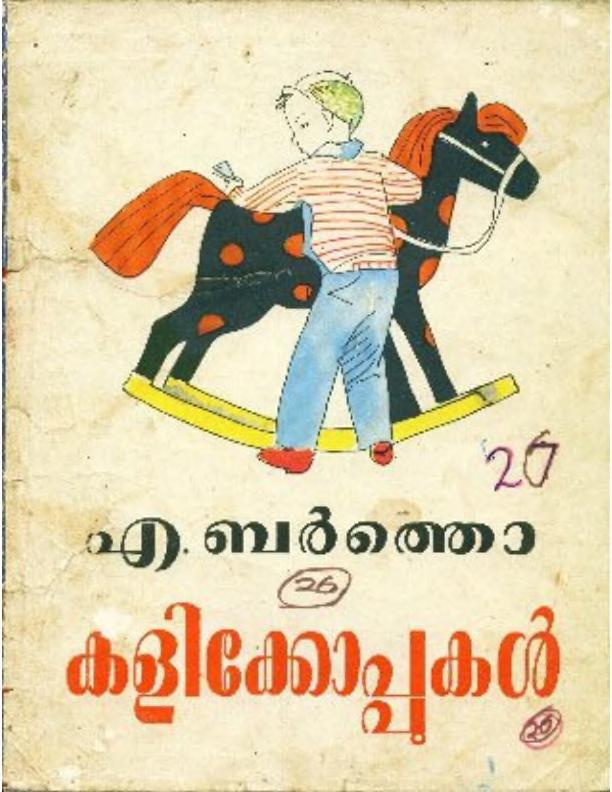
A picture story book for children.
Note: Scan quality is extremely poor.
You can get the book here and here
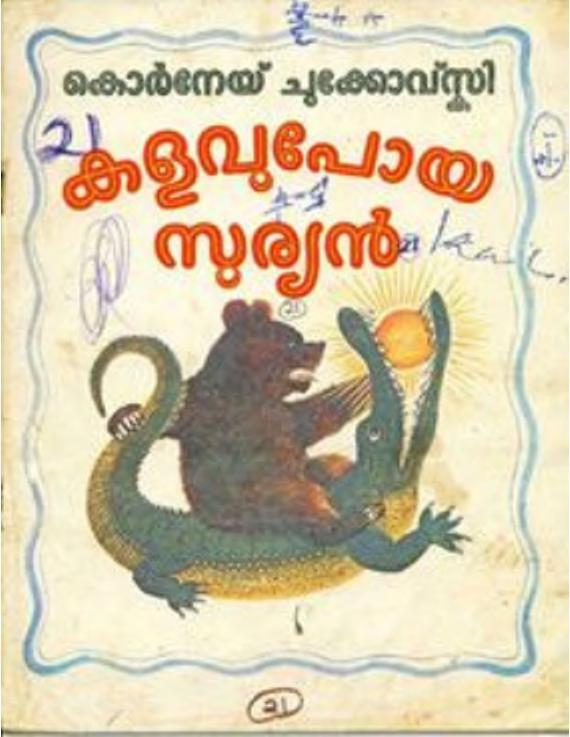
A picture story book for children.
Note: Scan quality is extremely poor.
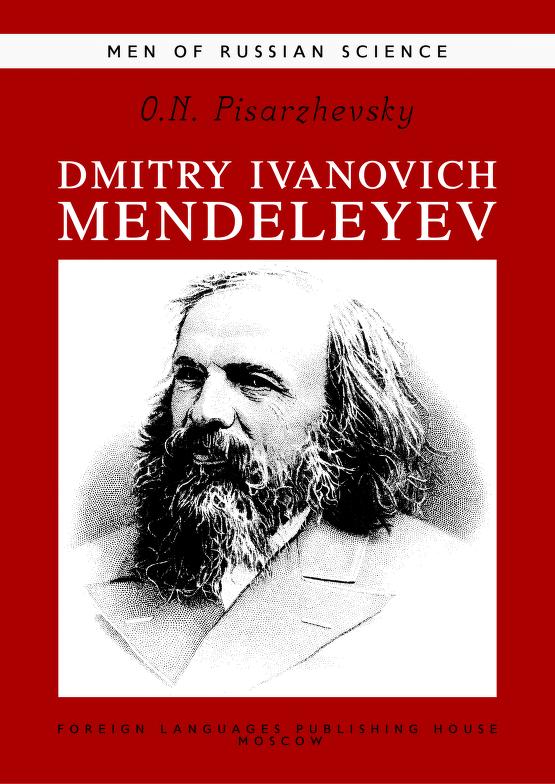
This book deals with the life and works of the great Russian scientist Dmitry Ivanovich Mendeleyev. Mendeleyev’s work had many features that were typical of advanced Russian natural science as a whole. He possessed a breadth of vision that led him into many fields of scientific work.
Original scan by DLI, this is a cleaned, optimised scan.
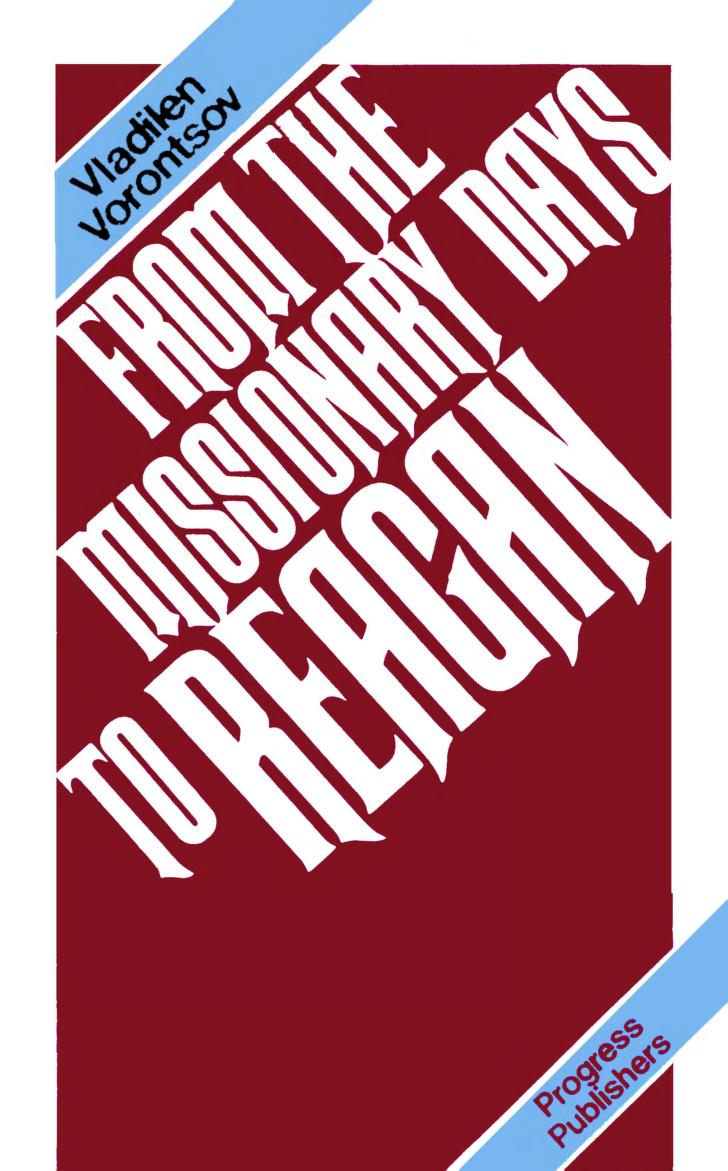
In this book V. B. Vorontsov, D. Sc. (Hist.), offers a history-oriented analysis of the policies pursued by the USA and China in the Pacific, the contradictions between them, and their tactics relative to third nations in the period from the 1960s to the early 1980s. The reader is led up to the conclusions to be drawn from the historical lessons learned by the governments of the USA and China in the process of their attempts to form a military-political alliance.
Translated from the Russian by David Skvirsky
Designed by Vladimir Bisengaliev
This is a cleaned, optimised version of
https://archive.org/details/frommissionarydaystoreagan
A 1987 Soviet work. Scanned by Alex Boykowich.
From Thomas Mrett’s IA collection.
You can get the book here and here
Introduction 9
Chapter One. Missionaries “Discover” China: Hopes and Disappointments 19
Chapter Two. The US Fiasco in China (1940s) 35
Chapter Three. “Asia First” 58
Chapter Four. On the Road of Confrontation 78
Chapter Five. The Dulles Policy and Its Reassessment 98
Chapter Six. Turn Towards Partnership 130
Chapter Seven. US Far Eastern Commitments: Test of Credibility 172
Chapter Eight. Balancing in a Tense Situation 196
Chapter Nine. Leftist Liberalism and Right-Wing Anti-Communism 222
Conclusion 258

Katharine Susannah Prichard’s The Roaring Nineties is a historical novel set in the 1890s during the Western Australian gold rush. It chronicles the lives of prospectors, miners, and their families as they navigate the harsh realities of frontier life. The novel vividly depicts the economic boom, social upheaval, and the exploitation of workers, interwoven with themes of love, ambition, and resilience. Prichard’s rich storytelling captures the spirit and struggles of the era, offering a critical perspective on the human cost of rapid industrial and economic change.

Maxim Gorky’s Tales of Italy is a collection of short stories that explore the lives and struggles of the working class in Italy. Written during Gorky’s travels in the country, these stories capture the essence of Italian life through vivid descriptions and compelling character portrayals. Each tale delves into the themes of poverty, injustice, and human resilience, reflecting Gorky’s socialist ideals and empathy for the downtrodden. The collection offers a poignant and critical look at society, highlighting the universal quest for dignity and justice amidst adversity.
Translated from the Russian by Rose Prokofieva
Illustrated by T.V. Shishmareva
You can get the book here and here
CONTENTS
THE STRIKE 1
CHILDREN OF PARMA .19
FLOWERS .27
THE TUNNEL 33
THE CITY 41
MIDDAY 45
THE WEDDING .53
THE PROPAGANDIST 61
THE MOTHER 75
THE MONSTER 99
THE MOTHER OF A TRAITOR .111
THE FISHERMAN’S BEHEST .123
THE SENTENCE .131
HOW GIOVANNI BECAME A SOCIALIST .143
BROTHER AND SISTER 165
THE INTELLIGENTSIA .181
THE TROUBLE-MAKER .191
VENDETTA 205
GIOVANNI TUBA .213
OLD CECCO 223
THE NATIVITY .235
NUNCIA .249
CARLONE GALIARDI .259
YOUNG ITALY 265
HATRED .277
PEPE 287
EASTER 297


“How the Steel Was Tempered”
How the Steel Was Tempered is a Soviet novel by Nikolai Ostrovsky. It tells the story of Pavel Korchagin, a young man who becomes a dedicated revolutionary fighter during the Russian Civil War and subsequent socialist construction. Through personal hardship and immense physical suffering, Pavel embodies the virtues of self-sacrifice, perseverance, and loyalty to the communist cause. His journey from an enthusiastic youth to a battle-hardened, paralyzed soldier reflects the ideological tenets of socialist realism, emphasizing the triumph of the human spirit over adversity and the importance of collective over individual goals.
Nikolai Ostrovsky and His Struggles
Nikolai Ostrovsky, the author of How the Steel Was Tempered, faced significant personal struggles throughout his life. Born in 1904, he joined the Komsomol and later the Red Army, participating actively in the Russian Civil War. At the age of 19, he was severely injured, leading to paralysis and blindness due to a progressive illness. Despite these debilitating conditions, Ostrovsky wrote his novel using a special frame to guide his pen, dictating to his family, and later typing with one finger. His determination to continue his work despite immense physical suffering mirrored the resilience and dedication of his protagonist, making his life story an inspiring testament to perseverance and the human spirit.
Translated from the Russian by R. Prokofieva
Illustrations by A. Reznichenko
Designed by I. Tsarevich
Original scan by DLI, this is a cleaned, optimised scan.

A small book about rare animals in the world and their habitats.
Drawings by N. Charushin
Translated from the Russian by Jan Butler
You can get the book here and here
ইয়েলেনা উসপেনস্কায়ার” আমাদের গ্রীষ্ম”, মূলত 1954 সালে প্রকাশিত, একটি উপন্যাস যা গ্রীষ্মের ছুটিতে সোভিয়েত শিশুদের একটি গোষ্ঠীর অভিজ্ঞতার দিকে নজর দেয়৷ দ্বিতীয় বিশ্বযুদ্ধের পর সোভিয়েত ইউনিয়নের পটভূমিতে সেট করা, গল্পটি যুগের মূল্যবোধ এবং সামাজিক পরিবর্তনগুলিকে সূক্ষ্মভাবে প্রতিফলিত করার সময় যুবকদের নির্দোষতা, অ্যাডভেঞ্চার এবং বন্ধুত্বকে ক্যাপচার করে৷ বর্ণনাটি প্রাণবন্ত বর্ণনা এবং নস্টালজিয়ার গভীর অনুভূতি দিয়ে সমৃদ্ধ, এটি শৈশব এবং দৈনন্দিন জীবনে ঐতিহাসিক প্রেক্ষাপটের প্রভাব সম্পর্কে একটি বাধ্যতামূলক পাঠ করে তোলে৷
 Mir Books