Eleven Stories For Boys And Girls by Nikolai Nosov

In this post, we will see the book by Nikolai Nosov: Eleven Stories For Boys And Girls.

About the book

A collection of picture stories for children by Russian children’s author Nikolai Nosov.

There is much more to say about Nikolai Nosov and his work. Neither this introduction nor the book itself sets out to present all the writer’s best stories. The book includes just ten humorous stories and a longer one for younger children. Some may already be familiar to readers abroad, such as Mishka’s Porridge, The Telephone. Jolly Family. Story-Tellers, The Crucian Carp and Visiting Grandpa.
Each story is interesting in itself, but all of them together express the author’s aspiration “to show what a pure, wonderful being a child is. how receptive he is to goodness, what marvellous, intelligent, warm and poetical feeling he has in him and how much he needs attention, understanding and affection”.

All credits to Guptaji.

Introduction by I. Boronetsky

Translated from the Russian by Jim Riordan, Fainna Solasko and Rose Prokofieva

Drawings by Georgi Yudin

First printing Progress Publishers, Illustrations. 1981

Second printing 1984 Raduga Publishers. Illustrations. 1984

Note: Scan quality is uneven

You can get the book here

Contents

Nikolai Nosov. Translated by Jim Riordan 7

Visiting Grandpa. Translated by  13

The Crucian Carp. Translated by Jim Riordan 22

The Patch. Translated by Jim Riordan 31

Sasha. Translated by Jim Riordan 35

Bobby Visits Barboss. Translated by Jim Riordan 45

Story-Tellers. Translated by Fainna Solasko 54

And I’m Helping Too. Translated by Jim Riordan 61

Putty. Translated by Jim Riordan 75

Mishka’s Porridge. Translated by Rose Prokofieva 81

The Telephone. Translated by Rose Prokofieva 93

Jolly Family. Translated by Rose Prokofieva 106

Posted in books, children's books, raduga publishers | Tagged , , , , | Leave a comment

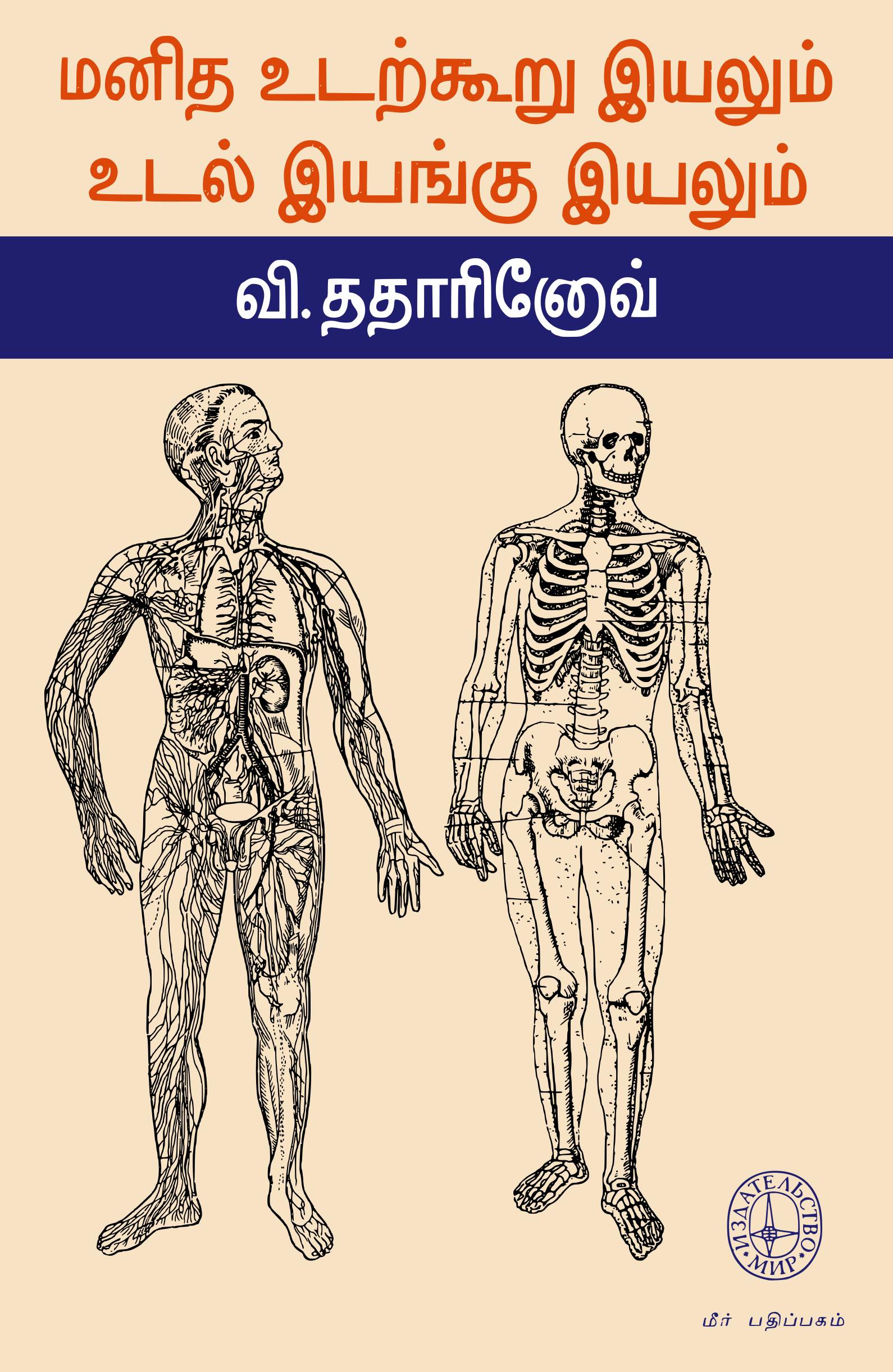
மனித உடற்கூறு இயலும் உடல் இயங்கு இயலும் மீர் பதிப்பகம் ( Human Anatomy And Physiology Tamil)

என்ற புத்தகத்தை இந்த பதிவில் காண்போம் மனித உடற்கூறு இயலும் உடல் இயங்கு இயலும் மீர் பதிப்பகம் ( Human Anatomy And Physiology in Tamil).

மனித உடற்கூறியல் மற்றும் உடலியல் பற்றிய பாடநூல்.

ரஷ்ய மொழியிலிருந்து மொழிபெயர்க்கப்பட்டுள்ளது.

அசல் ஸ்கேன் T.S. செல்வகுமாரனுக்கு நன்றிகள் பல.

நீங்கள் புத்தகத்தை இங்கே பெறலாம். 

Original scan (~225 M)

It would be great help if someone can post the table of contents and description of the book in Tamil.

Posted in books, life sciences, mir books, mir publishers, soviet | Tagged , , , , , , , , , , , , , , , , , , , , , , , , , | Leave a comment

The Clock by Volt Suslov

In this post, we will see the book The Clock by Volt Suslov.

About the book

A picture story book for children explaining time and clocks.

The book was translated from Russian by Fainna Solasko and was illustrated by A. Brey. The book was published in 1982 by Malysh Publishers.

All credits to Guptaji.

You can get the book here.

Follow us on The Internet Archive: https://archive.org/details/@mirtitles

Follow Us On Twitter: https://twitter.com/MirTitles

Write to us: mirtitles@gmail.com

Fork us at GitLab: https://gitlab.com/mirtitles/

Add new entries to the detailed book catalog here.

Posted in books, children's books, malysh publishers, popular science | Tagged , , , , , , , | Leave a comment

Evseika Goes Fishing by Maxim Gorky

In this post, we will see the book Evseika Goes Fishing by Maxim Gorky.

About the book

Five stories and fairy tales by Maxim Gorky for children.How These Stories and Fairy-Tales Came to be Written Vladimir Prikhod­ko

“My warmest greetings to the fine workers and scientists of the future. Live in harmony, as a musician’s fingers work so wondrously together. Learn to understand the importance of work and science, two forces which will solve all of life’s mysteries and which will overcome all obstacles along the way your fathers pointed out to you, the way towards a bright, happy and noble life.”
This is what Maxim Gorky wrote in one of his last letters to children, with whom he had been great friends all his life.

All credits to Guptaji.

 Translated by Galina Glagoleva
Drawings by Yuri Molokanov

The book was published in 1979 by Malysh Publishers.

You can get the book here.

Follow us on The Internet Archive: https://archive.org/details/@mirtitles

Follow Us On Twitter: https://twitter.com/MirTitles

Write to us: mirtitles@gmail.com

Fork us at GitLab: https://gitlab.com/mirtitles/

Add new entries to the detailed book catalog here.


Posted in books, children's books, children's stories, malysh publishers | Tagged , , , , , | Leave a comment

The Straw Bull Calf Ukrainian Folk Tale

In this post, we will see the book The Straw Bull Calf Ukrainian Folk Tale.

About the book

A picture story book of Ukrainian folk tales for children.

The book was translated from the Ukrainian by John Weir and illustrated by V. Lehkobit. The book was published in 1979 by Dnipro Publishers.

All credits to Guptaji.

You can get the book here.

Follow us on The Internet Archive: https://archive.org/details/@mirtitles

Follow Us On Twitter: https://twitter.com/MirTitles

Write to us: mirtitles@gmail.com

Fork us at GitLab: https://gitlab.com/mirtitles/

Add new entries to the detailed book catalog here.


Posted in books, children's books, dnipro, folk tales | Tagged , , , , , | Leave a comment

The Little Log House A Russian Folk Tale

In this post, we will see the book The Little Log House A Russian Folk Tale.

About the book

A picture story book of Russian folk tales for children .

The book was published in 1978 by Malysh Publishers.

Translated by Irina Zheleznova
Illustrated by M. Mezheninov

All credits to Guptaji.

You can get the book here.

Follow us on The Internet Archive: https://archive.org/details/@mirtitles

Follow Us On Twitter: https://twitter.com/MirTitles

Write to us: mirtitles@gmail.com

Fork us at GitLab: https://gitlab.com/mirtitles/

Add new entries to the detailed book catalog here.

Posted in books, children's books, malysh publishers | Tagged , , , , , , | Leave a comment

Little Fly So Sprightly by Kornei Chukovsky

In this post we will see the book Little Fly So Sprightly by Kornei Chukovsky.

A picture story book of insects and spiders for children .

Translated by Tom Botting and published by Malysh Publishers in 1981.

You can get the book here.

Posted in books | Tagged , , , , | Leave a comment

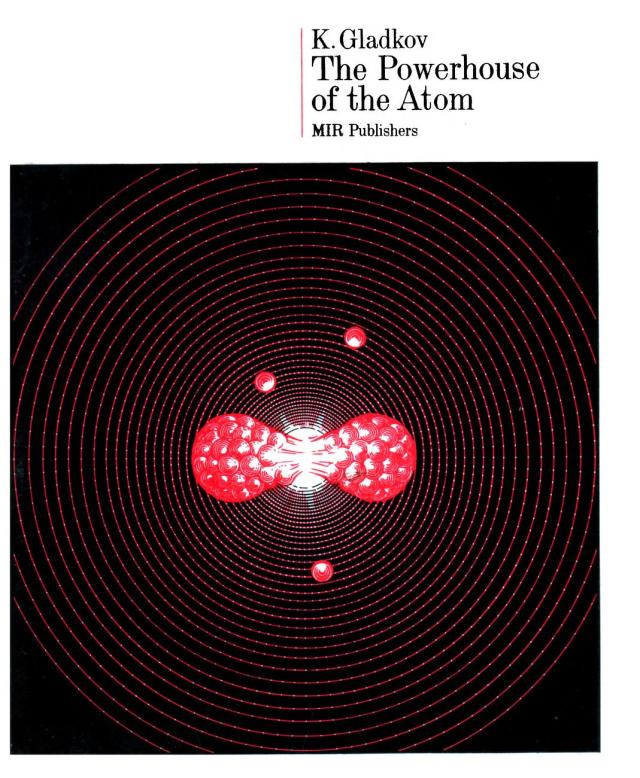
The Powerhouse Of The Atom – Gladkov

In this post we will see the book The Powerhouse of the Atom by K. Gladkov.
 

About the Book

The Powerhouse of the Atom is a compact encyclopaedic book for young readers on the structure of matter and atomic ener­gy, treating these themes historically and from the standpoint both of the pre­sent-day level of knowledge and the futu­re prospects of atomic and thermonuclear engineering. The original Russian edi­tion of the book was awarded the Rouge et Vert prize, the highest, award of the Brussels international exhibition of po­pular science books, in 1965. The present English translation is made from the se­cond, revised Russian edition. Although it is designed for extracurricu­lar reading by pupils of the senior forms of secondary schools, The Powerhouse of the Atom can be expected, because of the wide popular interest in power sour­ces of the future and nuclear physics, to appeal to a broad readership of all ages. Like the author’s earlier book The Atom from A to Z (Mir Publishers, 1971), The Powerhouse of the Atom has been transla­ted into French, Spanish, and Arabic, as well as English.

About the Author

The late Kirill Gladkov was a radi­ophysicist by training. He worked for many years in both industrial enterprizes and research institutions. For his scientific accomplishments, he recei­ved an USSR State prize. For a number of years, he wrote popular science ar­ticles and books on atomic energy, electronics, television, and high tempe­rature physics. Among his published works is The Atom from A to Z (Mir Publishers, 1971). At the time of his death, Kirill Gladkov was science edi­tor of Tekhnika Molodezhi (Engineering for the Young), one of the Soviet Union’s popular science journals.
Translated from the Russian by s. M. Semenov and H. C. Creighton
You can get the book here.

Contents

Chapter I ON THE EVE OF A GREAT DISCOVERY


A Dream of the Impossible 9

‘Plum Pudding’ 11

Becquerel’s Mistake 14


Chapter II RADIOACTIVITY


A Polish Girl’s Discovery 17

The Radioactive Families 21

Almost ‘Perpetual Motion’ 25


Chapter III ANOTHER RIDDLE OF NATURE


The Great Emptiness 27

How is the Atom Constructed? 29

What is Meant by ‘Energy Level’ and ‘Elec­tron-Volt’? 31

An Inquisitive Doctor 34

What is an Isotope? 35

An Atom-Sorting Machine 36

The World of Minute Particles and Enormous Energies 38

‘Atomic Artillery’ 36


Chapter IV THE SCIENTISTS’ TOOLS


How They Managed to Count Atoms 43

Fog That Makes the Invisible Visible 45

A Simpler Than Simple Instrument 47

‘Cold Boiling’ 48

A ‘Lilliputian Thunderstorm’ 50

Again That Photographic Plate 52

Larger Calibres 52

At New Cross Roads 57


Chapter V THE KEY TO THE ATOMIC NUCLEUS


New Radiation 61

Enter the Neutron 63

The Clue to Nuclear Structure 65

The Cap of Fortunatus 67

Artificial Radioactivity 69

Another Mistake! 71

The Family of Uranium Isotopes 75

The Cherished Goal Reached 75


Chapter VI ABOUT ‘HORRIBLE THEORY’


Almost Back at the Beginning 79

Particle-Waves and Wave-Particles 80

Paradoxes of Wave Motion 81

How Electromagnetic Waves Are Formed 83

What is Light? 83

Photons, the Particles of Light 83

The Great Law 89

‘What is Mass Defect’? 91

Nuclear Binding Energy 94

But What Is Radioactivity? 99

Briefly About Heat 104

The Thermonuclear Reaction 106


Chapter VII CONTROLLED NUCLEAR FISSION


Obtaining the First Artificial Elements 111

‘Atomic Matches’ 113

A Controlled Chain Reaction 114

Atoms and a Game of Billiards 115

Water That Is Heavier Than Water 117

Critical Mass 118

When It’s Not a Vice To Be Lale 120

A ‘Mirror’ for Neutrons 122

A ‘Bonfire’ in a Laboratory 123

The Atomic Bomb 124

Once More About Neutrons 125

The Road to ‘Transurania’ 128


Chapter VIII NUCLEAR REACTORS


What is a Reactor? 133

In Pencils and in Reactors 134

A Heavy-Water Reactor 136

A Homogeneous Reactor 138

Atomic ‘Flames’ Under Water 139


Chapter IX A BRAND-NEW INDUSTRY


Fertile Materials 143

How Uranium and Thorium are Factories for Nuclear Fuel 147

Nuclear Fuel from Man’s ‘Second Nature’ 149

Thorium-232 151

Stellar Fuel 152


Chapter X THE MARCH OF ATOMIC POWER


Refined 143 Nature’ 149

How Much Longer Will People Bum Money? 157

Steam Boiler vs Nuclear Reactor 158

The First One in the World 160

New Ideas 164

When One Log Becomes Two 169

The Dream Begat a Plan, the Plan a Dream 172

‘S P ’ 174

‘Teaser’ 175

‘Arbus’ 177

Self-Propelled Atomic Generator 178

‘Romashka’ 179

Atoms to Irrigate Deserts 181


Chapter XI THE ‘YOUNGER’ BROTHER OF ATOMIC ENERGY


What Does a Capful of Smoke Cost? 185

Precious Waste 187

‘Labelled’ Atoms 192

Isotopes in Biology 195

Isotopes in Medicine 197

Radiation Hazards 200

A Clock That Measures Millenia 202

‘Hot Labs’ and ‘Iron Hands’ 204


Chapter XII THE FUTURE OF ATOMIC POWER Blazing a New Trail 209


On Engines in General 209

The First Atomic Ice-Breaker—The ‘Lenin’ 212

Atomic Locomotives 215

Atomic Aircraft 216

Interplanetary Spaceships of the Future 219 Ion Engine 221

Photon Rockets 222

A Nuclear Battery 225


Chapter XIII WHAT ARE NUCLEAR FORCES?


A Strange Game 229

What Attracts Electrons to Protons 230

Enter a New Particle, the Meson 232

The Meson Family 233

Superheavy Particles or Hyperons 235

What Can There Be in Common Between a Drop of Water and an Atomic Nucleus? 236

The Puzzle of Particle Interaction 238

The Elusive Neutrino 239


Chapter XIV THE LATEST ON NUCLEAR STRUCTURE


What is a Nuclear ‘Model’? 243

When is a Light Projectile Better Than a Heavy One? 245

Regularities of Electron Showers 248

Small-Calibre Atomic ‘Artillery’ 249

New Discoveries, New Models 250

Can We See Atoms? 251

How They Peeped Inside a Proton 254


Chapter XV COMPETITION WITH SPACE Cosmic Rays 257


Cosmic Rays 257

About ‘Electron-Asses’, ‘Dirac’s Sea’, Anti-Particles, and Other Obscure Things 261

The First Anti-Particle—The Positron 262

There Should Also Be an Anti-Proton 263

Can Anti-Matter Exist? 268

Are There More Symmetries in the World of Microparticles? 268

How ‘Elementary’ are Elementary Particles? 270

Can a Part Be Larger Than the Whole? 271

When Two Times Two Is Too Much 274


Chapter XVI ARTIFICIAL ATOMS


The Positronium, an Artificial Atom 282

Two Photons or Three? 282

Two Photons or Three? 282

Why Spin Is Also Important 283

The Mesonic Atom 285


Chapter XVII CAN THE HYDROGEN BOMB BE TAMED?


What About Making Small Change? 289

The ‘Scream’ of Colliding Galaxies 290

Plasma, the Fourth State of Matter 291

The Miraculous Spark 295

The Energy of a Waterfall in a Glass Tube 297

A ‘Personage’ with a Thousand Whims 299

A Magnetic ‘Cage’ for a ‘Firebird’ 300

If Only… 303

Posted in books, mir books, mir publishers, popular science, science, soviet, technology | Tagged , , , , , , , , , , , , , , , , , , , , , | Leave a comment

Orientation, Gyroscopes Et Navigation Par Inertie Tome 2 by A. Ishlinsky

Dans cet article, nous verrons le livre Orientation, Gyroscopes Et Navigation Par Inertie Tome 2 by A. Ishlinsky.

À propos du livre

Le premier tome de cette monographie a été consacré essentielle­ ment à l’étude des questions spéciales de la géométrie et de la ciné­ matique, liées à la détermination de l’orientation des mobiles, ainsi que des gyroscopes installés à bord de ces mobiles. C’est seu­ lement dans le dernier chapitre qu’ont été étudiées les relations dif­

férentielles de la théorie de précession des gyroscopes, conformément auxquelles les plates-formes stabilisées par des gyroscopes (en parti­culier, par des gyroscopes à correction dite forte) peuvent, dans cer­tains cas, changer d’orientation.

Dans le deuxième tome, la place la plus importante est accordée aux questions de la dynamique. Nous y exposons la théorie des gyro­ scopes et des accéléromètres qui sont les éléments essentiels des systè­ mes de navigation par inertie et établissons les équations de fonc­ tionnement de certains systèmes concrets. C’est seulement à la fin de ce livre que nous reprenons les questions de la géométrie et de la cinématique mais, cette fois, en liaison avec certaines questions théoriques concernant les systèmes de navigation par inertie.

Traduit du russe par V. Kolimëev

L’édition française a été publiée en 1984 par les éditions Mir.

Un grand merci à Henri Leveque pour le scan original.

Vous pouvez obtenir le livre ici.

(J’ai utilisé la traduction automatique, toutes mes excuses pour les erreurs.)

Suivez-nous sur Internet Archive: https://archive.org/details/@mirtitles

Suivez-Nous Sur Twitter: https://twitter.com/MirTitles

Écrivez-nous: mirtitles@gmail.com

Rejoignez-nous sur GitLab: https://gitlab.com/mirtitles/

Ajoutez de nouvelles entrées au catalogue de livres détaillé ici.

Contenu


Posted in books | Tagged , , , , , | 1 Comment

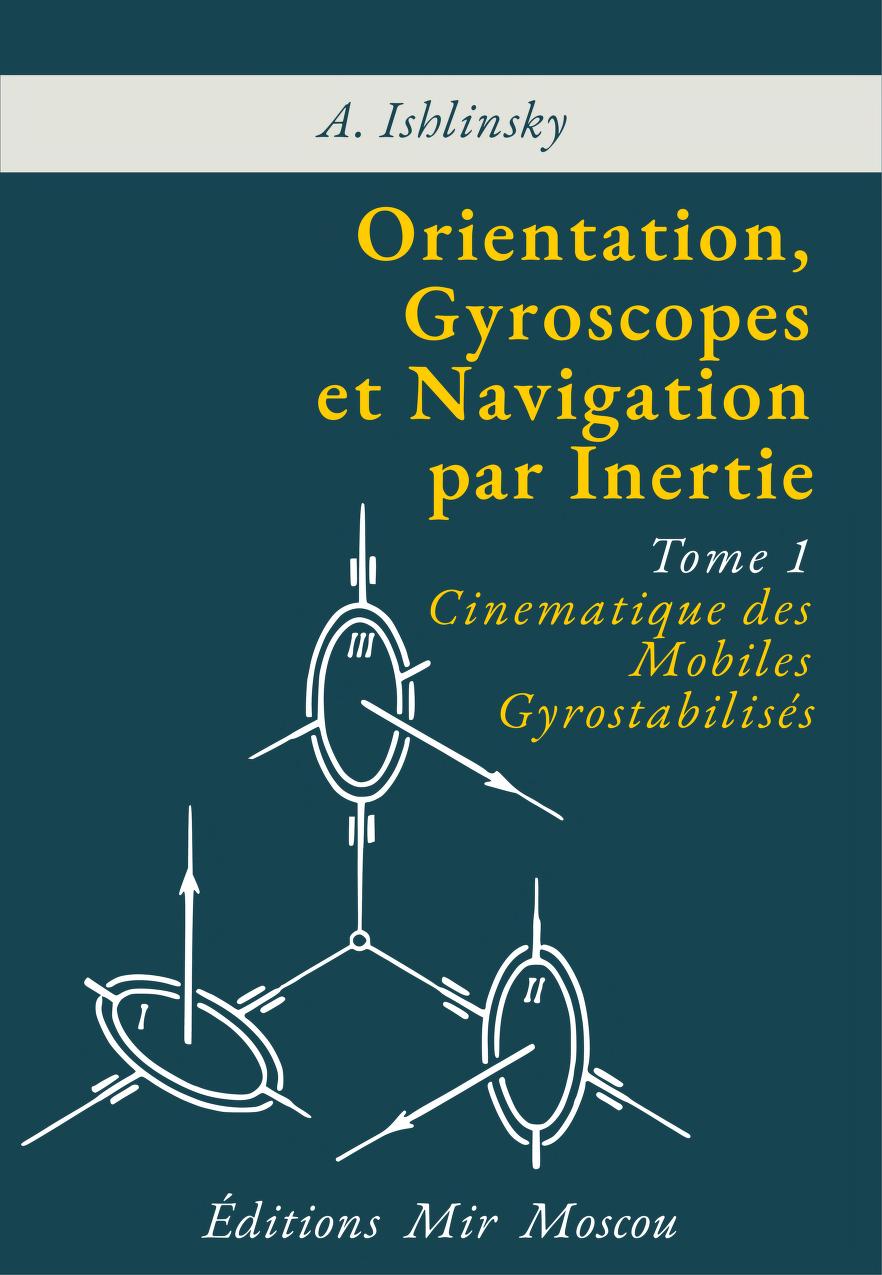
Orientation, Gyroscopes Et Navigation Par Inertie Tome 1 – par A. Ishlinsky

Dans cet article, nous verrons le livre Orientation, Gyroscopes Et Navigation Par Inertie Tome 1 – par A. Ishlinsky.

À propos du livre

Dans de nombreux cas d’importance pratique* le mouvement d’un véhicule guidé (avion* fusée* navire* etc.) doit s’effectuer de façon à ne présenter que de petits écarts par rapport à un programme donné. La réalisation de cette condi­tion exige que l’on règle convenablement l’intensité et la direction de la force qui communique le mouvement au véhicule. A cet effet, il faut connaître, à tout instant* l’orientation et la position du véhicule dans l’espace. Il apparaît que si le véhicule est porteur d’appareils gyroscopiques de précision* son orientation et sa position peuvent être déterminées sans avoir à tenir compte d’information supplémentaire provenant de l’extérieur et sans observer des repères terrestres. Il suffit de connaître la position et l’orientation du véhicule à l’instant initial et de déterminer ensuite* à l’aide de calculateurs* les coordonnées du mobile par une résolution continue d’un système d’équations. Ces équations peuvent être finies (algébriques ou trigonométriques) ou différentielles. Dans le premier cas* elles traduisent des relations de nature géométrique entre les paramètres qui déterminent l’orientation des gyroscopes et celle du véhicule. Dans le second cas* elles expriment des relations cinématiques (non holonomes) analogues. Des équations différentielles décrivent aussi le comportement des gyroscopes et
d*autres éléments d’un système destiné à la localisation d’un véhicule en mouve­ment. Ce système est appelé système de navigation par inertie, ou centrale à iner­tie* ou encore navigateur inertiel* parce que son fonctionnement est basé sur les propriétés d’inertie de la matière, c’est-à-dire sur les lois de la mécanique classique.
La présente monographie est consacrée à l’exposé des bases théoriques de la
navigation par inertie utilisant des gyroscopes. 5 l’établissement et à la résolu­tion des équations des principaux problèmes relatifs aussi bien à la détermination de l’orientation et de la position des objets mobiles qu’à l’étude du comporte­ ment des dispositifs gyroscopiques utilisés. Elle traite également de la théorie des gyroscopes et des appareils gyroscopiques (gyroscopes libres* gyropendules, gyrostabilisateurs, plates-formes gyroscopiques. gyrocompas. accéleromètres gyroscopiques* c’est-à-dire des appareils dont les indications constituent, pour les problèmes mentionnés plus haut, des variables indépendantes données qui interviennent dans des équations correspondantes).
La monographie examine uniquement la navigation par inertie des mobiles qui se déplacent à la surface de la Terre ou à une altitude constante donnée au- dessus de celle-ci. Malheureusement* le fonctionnement des navigateurs inertiels s’avère instable lorsqu’ils sont utilisés pour localiser un mobile qui change non seulement ses coordonnées géographiques mais également sa distance au centre de la Terre. Ils ne peuvent donc servir à une navigation de longue durée dans l’espace. De tels navigateurs inertiels peu stables ne sont utilisés qu’à bord des véhicules qui subissent pendant très peu de temps l’action des forces autres que les forces de gravitation (poussée, résistance aérodynamique, etc.). Certaines questions théoriques relatives à ces systèmes de navigation sont exposées par l’auteur dans sa monographie « Guidage par inertie des fusées balistiques *.
La partie principale du texte de la présente monographie est publiée pour la première fois. En outre, la monographie contient, sous une forme nouvelle, les résultats de certaines recherches que l’auteur a publiées’ précédemment dans des revues scientifiques de mécanique et en partie dans ses livres: « Mécanique des systèmes gyroscopiques » (principalement les paragraphes des deux premiers chapitres) et « Guidage par inertie des fusées balistiques » (paragraphe sur l’accéléromètre et annexe).
La monographie est publiée en deux tomes. Le premier — « Cinématique des mobiles gyrostabilisés » — traite essentiellement des questions géométriques et cinématiques relatives à l’orientation et à la stabilisation des mobiles. Le second tome — « Systèmes gyroscopiques de navigation par inertie* — de volume un peu plus grand, expose, en plus de la théorie de certains appareils et dispositifs gyroscopiques et du rappel de la mécanique du mouvement relatif, les bases théoriques de la mécanique des systèmes de navigation par inertie.
L’auteur tient à remercier particulièrement M. Temtchenko pour son aide efficace lors de la rédaction de la monographie et sa préparation à la publication. Il manifeste sa gratitude à V. Storojenko qui a bien voulu relire le.texte du manus­crit et susciter des améliorations importantes, et à V. Lidsky pour ses recom­mandations utiles sur l’exposé de la partie mathématique de la monographie.

Traduit du russe par V. Kolimêev

L’édition française a été publiée en 1984 par les éditions Mir.

Un grand merci à Henri Leveque pour le scan original.

Vous pouvez obtenir le livre ici.

(J’ai utilisé la traduction automatique, toutes mes excuses pour les erreurs.)

Suivez-nous sur Internet Archive: https://archive.org/details/@mirtitles

Suivez-Nous Sur Twitter: https://twitter.com/MirTitles

Écrivez-nous: mirtitles@gmail.com

Rejoignez-nous sur GitLab: https://gitlab.com/mirtitles/

Ajoutez de nouvelles entrées au catalogue de livres détaillé ici.

Contenu


Posted in french | Tagged , , | Leave a comment