Basic Electronics – Zherebtsov

In this post, we will see the book Basic Electronics by I. Zherebtsov.

About the book

 The subject-matter of the book co­vers a wide range of material specific to electronics – from the basic prin­ciples underlying it to sophisticated devices employed in a multitude of applications. Among other things, there is a fairly detailed discussion of semiconductor materials and devices, electron tubes, photocells, optoelect­ronic devices, and integrated circuits. The text is liberally illustrated and includes a discussion of reliability and testing. The book has been conceived as an aid in the study of electronics by college students, those relying on self-education, and hobbyists.
Docent Ivan P. Zherebtsov, Cand. (Pedagog. Sc.) taught electrical en­gineering and radio engineering at secondary educational establish­ments since 1928, has been lecturing on these subjects at colleges since 1946. Is a leading Soviet authority in the field of telecommunications. Has penned over 40 books and booklets many of which have been translated into foreign languages or published outside the Soviet Union. The most important of them are Radio Engi­neering (five editions), Basic Electro­nics (four editions). Electric and Magnetic Circuits (two editions), An Introduction to UHF-SHT Radio En­gineering (three editions). Honorary member of the A. S. Popov Scientific and Technical Society on Radio, Electronics, and Communications.

First published 1988 by Mir Publishers, Revised from the 1985 Russian edition

Translated from the Russian by Boris V. Kuznetsov

You can get the book here.

Follow us on The Internet Archive: https://archive.org/details/@mirtitles

Follow Us On Twitter: https://twitter.com/MirTitles

Write to us: mirtitles@gmail.com

Fork us at GitLab: https://gitlab.com/mirtitles/

Add new entries to the detailed book catalog here.

Contents

Preface 9


Introduction 10


I-1 Electronics Defined 10

I-2 A Brief Historical Outline 10

I-3 Requirements for Electronic Components 13

I-4 Semiconductor Devices in Electronics 16


PART ONE. SEMICONDUCTOR DEVICES


Chapter 1 Electric Conduction in Semiconductors 18


1-l Electrons in Solids 18

1-2 Intrinsic Electron and Hole Conduction. Drift Current 20

1-3 Extrinsic Conduction 24

1-4 Carrier Diffusion in Semiconductors 26


Chapter 2 P-N and Metal-Semiconductor Junctions 28


2-1 A P-N Junction with No External Voltage Applied 28

2-2 The Forward-Biased P-N Junction 31

2-3 The Reverse-Biased P-N Junction 33

2-4 The Metal-Semiconductor Junction 34


Chapter 3 Semiconductor Diodes 35


3-1 The Current-Voltage Characteristic of the Semiconductor Diode 35

3-2 The Capacitance of a Semiconductor Diode 37

3-3 The Temperature Behaviour of Semiconductor Diodes 38

3-4 The Operation of the Diode at Load 39

3-5 Semiconductor Diodes as Rectifiers 41

3-6 Series and Parallel Connection of Diodes 45

3-7 The Pulsed Operation of Semiconductor Diodes

3-8 Basic Types of Semiconductor Diodes 48


Chapter 4 Bipolar Transistors 53


4-1 General Principles 53

4-2 Physical Processes in a Transistor 54

4-3 Amplification by a Transistor 59

4-4 The Basic Circuit Configurations of Transistors

4-5 Bias Supply and Temperature Compensation for Transistors 64

4-6 Transistors in Amplifiers and Oscillators 67


Chapter 5 Characteristics and Parameters of Bipolar Transistors 68


5-1 Characteristics of Transistors 68

5-2 Parameters and Equivalent Circuits of Transistors 73


Chapter 6 Dynamic Operation of Bipolar Transistors 80


6-1 Calculation of Dynamic Operation of Transistors 80

6-2 The Effect of Temperature on the Performance of Transistors 86

6-3 The Frequency Behaviour of Transistors 88

6-4 Transistors as Switches 90

6-5 Frequency Changing by Semiconductor Devices 91

6-6 Inherent Noise in Transistors 95

6-7 Basic Types of Bipolar Transistors 97


Chapter 7 Field-Effect Transistors and Thyristors 102


7-1 Field-Effect Transistors 102

7-2 Thyristors 109


Chapter 8 Miscellaneous Semiconductor Devices


8-1 The Tunnel Diode 113

8-2 Microwave Semiconductor Diodes 117

8-3 Avalanche Diodes and Gunn Diodes 119

8-4 Heterojunction Devices 121

8-5 The Unijunction Transistor 122

8-6 Semiconductor Resistors 122


Chapter 9 An Outline of Integrated Circuits 123


9-1 General 123

9-2 Film and Hybrid Integrated Circuits 125

9-3 Monolithic Integrated Circuits 127

9-4 Charge-Coupled Devices and Integrated Injection Logic (I2L) Chips 135


PART TWO. ELECTRON TUBES

Chapter 10 Behaviour of Electrons in Electric and Mag­netic Fields 139

10-1 The Motion of Electrons in a Uniform Electric Field 139

10-2 The Motion of Electrons in a Nonuniform Electric Field 142

10-3 The Motion of Electrons in a Uniform Magnetic Field 143

Chapter 11 The Basic Structure and Operation of Electron Tubes 145

11-1 A General Outline and Classification of Electron Tubes 145

11-2 The Basic Structure and Operation of the Diode 146

11-3 The Basic Structure and Operation of the Triode 148

11-4 Electron Emission 149

11-5 The Parameters of Thermionic Cathodes 152

11-6 Cathodes 152

11-7 Directly and Indirectly Heated Cathodes 154

11-8 Anode and Grid Types for Vacuum Tubes 156

11-9 Vacuum in Vacuum Tubes. Tube Envelopes 158

11-10 Electrode Mounting and Electrode Leads 158


Chapter 12 Diodes 160

12-1 Physical Processes 160

12-2′ The Three-Halves Power Law 162

12-3 The Current-Voltage Characteristic of a Vacuum Diode

12-4 The Parameters of the Vacuum Diode 163

12-5 Dynamic Operation of a Vacuum Diode. Rectification of Alternating Current 165

12-6 Diode Types 166


Chapter 13 Vacuum Triodes 167


13-1 Physical Processes

13-2 Current Division 170

13-3 The Virtual Voltage and the Three-Halves Power Law 171

13-4 Characteristics of the Vacuum Triode 172

13-5 The Operating Conditions, Absolute Maximum Ratings and Parameters of the Vacuum Triode 175

13-6 Grid Current 181


Chapter 14 The Vacuum Triode in Operation at Load 182


14-1 General 182

14-2 An Amplifier Stage Using a Vacuum Triode 183

14-3 Amplifier Stage Parameters 187

14-4 The Analytical Method and the Equivalent Circuits of an Amplifier Stage 189

14-5 Graphical Analysis of Triode Performance at Load 192

14-6 The Vacuum Triode as an Oscillator 195

14-7 The Interelectrode Capacitances of a Vacuum Triode 195

14-8 Common-Grid and Common-Anode Stages 198

14-9 Limitations of the Vacuum Triode 199

14-10 Basic Types of Receiving-Amplifying Vacuum Triodes


Chapter 15 Tetrodes, Pentodes and Miscellaneous Tubes 199


15- 1 The Vacuum Tetrode 199

15-2 Secondary Electron Emission in the Vacuum Tetrode 202

15-3 The Pentode 203

15-4 Current Division in the Pentode 204

15-5 Connection of Tetrodes and Pentodes in Circuits 205

15-6 The Characteristics of Tetrodes and Pentodes 206

15-7 The Parameters of Tetrodes and Pentodes 208

15-8 The Interelectrode Capacitances of Tetrodes and Pentodes 208

15-9 The Beam Power Tetrode 210

15-10 The Characteristics and Parameters of the Beam Tetrode 211

15-11 The Dynamic Operation of Tetrodes and Pentodes 212

15-12 Variable-Mu Tubes 214

15-13 Basic Types of Tetrodes and Pentodes 215

15-14 Miscellaneous Tubes 215


Chapter 16 Cathode-Ray Tubes 217


16-1 General 217

16-2 The Electrostatic CRT 217

16-3 The Supply Circuits of the CRT 218

16-4 The Electron Gun of an Electrostatic CRT

16-5 Electrostatic Beam Deflection 222

16-6 Measurement and Visual Observation of Alternating Voltages with a Cathode-Ray Tube 223

16-7 Image Distortion in Electrostatic CRTs 225

16-8 The Magnetic CRTs 226

16-9 The Fluorescent Screen 229

16-10 Basic Types of CRTs for Oscilloscopes and TV 232

16-11 Shaped-Beam Character Display Tubes 233


Chapter 17 Gas-Discharge and Indicator Tubes 234


17-1 Gaseous Discharges 234

17-2 Forms of Gaseous Discharge 235

17-3 Glow Discharge 236

17-4 Voltage-Regulator Tubes 240

17-5 Circuits Using VR Tubes 242

17-6 Glow-Discharge Thyratrons 244

17-7 Character Display and Numerical Readout Devices 246

17-8 Miscellaneous Gas-Discharge Devices 249


Chapter 18 Tube Noise 250


18-1 Sources of Tube Noise 250

18-2 The Noise Performance of Vacuum Tubes 250


Chapter 19 Operation of Vacuum Tubes at Microwave Frequencies 252


19-1 The Effects of Interelectrode Capacitances and Lead Induc­tances 252

19-2 Electron-Inertia Effects 253

19-3 Electrostatically Induced Currents in the Circuits of Vacuum Tubes 254

19-4 The Input Resistance of and Power Dissipation in Tubes 257

19-5 Tubes in Pulse Operation 260

19-6 Microwave Vacuum Tubes 261


Chapter 20 Advanced Types of Microwave Tubes


20-1 General 263

20-2 The Drift-Tube Klystron 263

20-3 The Reflex Klystron 267

20-4 The Magnetron 270

20-5 Travelling-Wave and Backward-Wave Tubes 275

20-6 The Amplitron and the Carmatron 280


Chapter 21 Reliability and Testing of Electron Devices 281


21-1 Reliability and Testing of Semiconductor Devices 281

21- 2 Reliability and Testing of Tubes 283


PART THREE. PHOTOELECTRIC AND OPTOELECTRONIC DEVICES


Chapter 22 Photoelectric Devices 286


22- 1 Photoelectric Emission 286

22-2 Phototubes 287

22-3 The Photomultiplier Tube 288


Chapter 23 Semiconductor Optoelectronic Devices 290


23-1 General 290

23-2 Bulk Photoconductors (Photoresistors) 23-3 Photodiodes 292

23-4 Semiconductor Photovoltaic Cells

23-5 Phototransistors 294

23-6 Photothyristors 295

23-7 Light-Emitting Diodes (LEDs) 296

23-8 Optocouplers (Optoisolators) 298


Conclusion 301

Index 303

Posted in books | Tagged , , , , , , , , , , , , , , , , , | Leave a comment

Animal Babies – Alexei Laptev

In this post, we will see the book Animal Babies by Alexei Laptev.

About the book

An illustrated book about animal babies for children.

The book was translated from Russian and was illustrated by the author. The book was published by Progress Publishers.

All credits to Guptaji.

You can get the book here.

Follow us on The Internet Archive: https://archive.org/details/@mirtitles

Follow Us On Twitter: https://twitter.com/MirTitles

Write to us: mirtitles@gmail.com

Fork us at GitLab: https://gitlab.com/mirtitles/

Add new entries to the detailed book catalog here.


Posted in books, children's books, children's science, life sciences, progress publishers | Tagged , , , , , | Leave a comment

Maths Is Fun 1 – Vapnyar

In this post, we will see the book first part of Maths Is Fun by N. Vapnyar.

About the book

A fun book for children to learn mathematics through problems, posers and puzzles.

Illustrated by B. Rytman

The book was published in 1984 by Prosveshcheniye Publishers.

All credits to Guptaji.

You can get the book here.

Follow us on The Internet Archive: https://archive.org/details/@mirtitles

Follow Us On Twitter: https://twitter.com/MirTitles

Write to us: mirtitles@gmail.com

Fork us at GitLab: https://gitlab.com/mirtitles/

Add new entries to the detailed book catalog here.


Posted in books | Leave a comment

Birds Of The Russian Woods – Snegiryov

In this post, we will see the book Birds Of The Russian Woods – G. Snegiryov.

About the book

Many different birds live in the woods of Russia. Some, like the titmouse and woodpecker, have almost no fear of people. You can see them in the woods all year round. In winter they even appear in city parks. Others, like the wood-grouse, hawk, and raven, are very cautious and timid. At the slightest danger they hide in a thicket or fly away. Not everyone will notice them. Only those who know birds’ habits can hope to see them.

Translated from the Russian by Yugene Yankovsky

Illustrated by V. Federov

All credits to Guptaji.

You can get the book here.

Follow us on The Internet Archive: https://archive.org/details/@mirtitles

Follow Us On Twitter: https://twitter.com/MirTitles

Write to us: mirtitles@gmail.com

Fork us at GitLab: https://gitlab.com/mirtitles/

Add new entries to the detailed book catalog here.


Posted in children's books, children's science, malysh publishers | Tagged , , , , , | Leave a comment

Mergen And His Friends – A Nanai Folk Tale

In this post, we will see the book Mergen And His Friends – A Nanai Folk Tale.

About the book

A picture story book of Nanai folk tale for children.

Translated by Jim Riordan
Drawings by Gennady Pavlishin

The book was published in 1981 by Progress Publishers.

All credits to Guptaji and Mrs. Purwa Bharadwaj and Anupama Jha.

You can get the book here.

Follow us on The Internet Archive: https://archive.org/details/@mirtitles

Follow Us On Twitter: https://twitter.com/MirTitles

Write to us: mirtitles@gmail.com

Fork us at GitLab: https://gitlab.com/mirtitles/

Add new entries to the detailed book catalog here.

Posted in children's books, children's stories, folk tales, progress publishers | Tagged , , , , , , , | Leave a comment

उक्राइनी लोक कथाएं (Ukrainian Folk Tales Hindi)

इस पोस्ट में, हम उक्राइनी लोक कथाएं  यह पुस्तक देखेंगे

इस पुस्तक के बारे में

यूक्रेन से विभिन्न लोक कथाओं के साथ एक सचित्र पुस्तक.

पुस्तक का अनुवाद रूसी से  दव्ऱा किया गया था और इसके चित्रकार थे

यह पुस्तक प्रकाशकों द्वारा साल प्रकाशित की गई थी

सभी श्रेय गुप्तजी को

आप किताब यहाँ प्राप्त कर सकते हैं.

इंटरनेट आर्काइव पर हमें फॉलो करें: https://archive.org/details/@mirtitles

ट्विटर पर हमें फॉलो करें: https://twitter.com/MirTitles

हमें लिखें: mirtitles@gmail.com

गिटलैब में हमें फॉलो करें: https://gitlab.com/mirtitles/

यहां विस्तृत पुस्तक सूची में नई प्रविष्टियां जोड़ें


Posted in books, children's books, children's stories, folk tales, raduga publishers | Tagged , , , , , , , , , , , , | Leave a comment

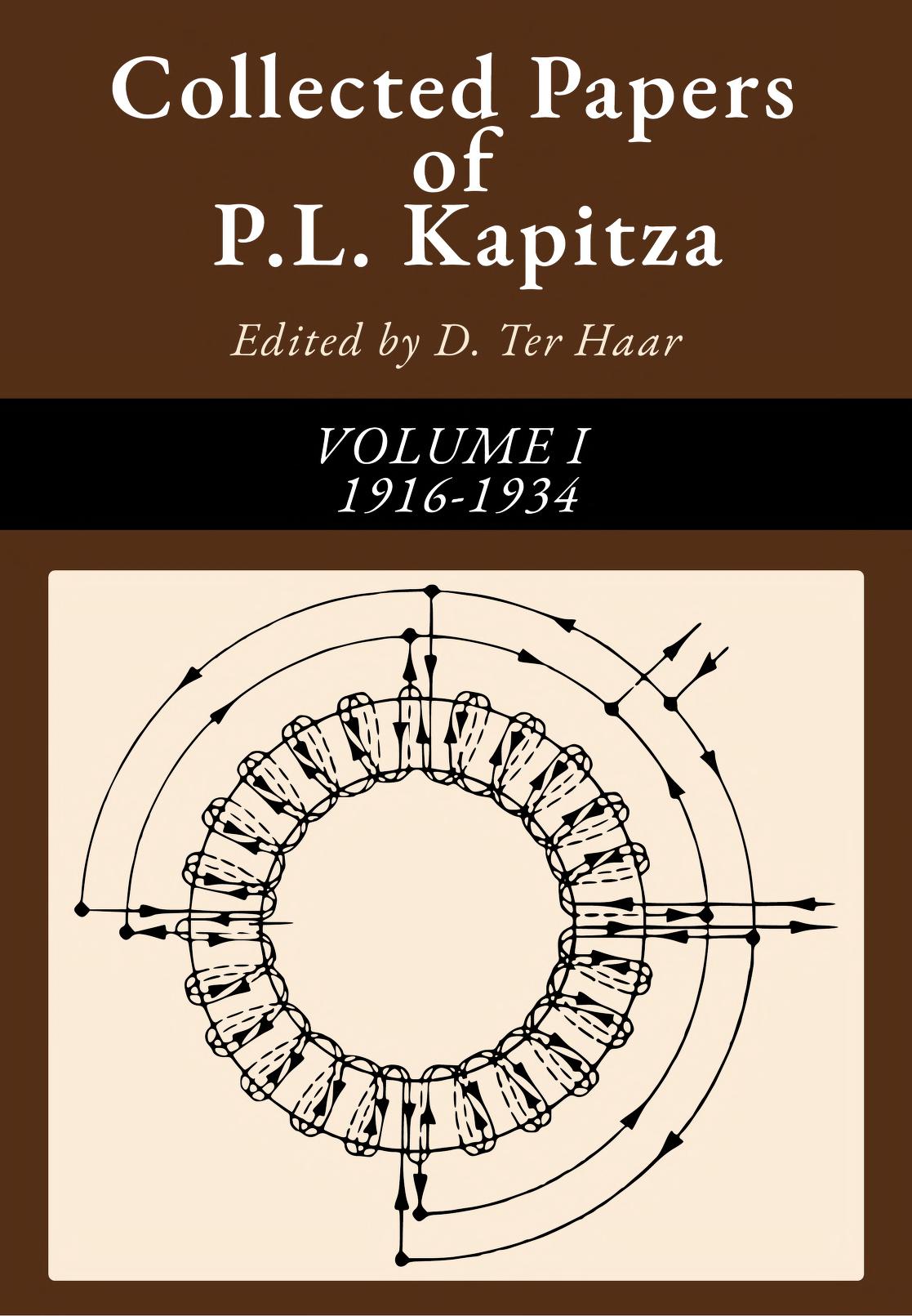
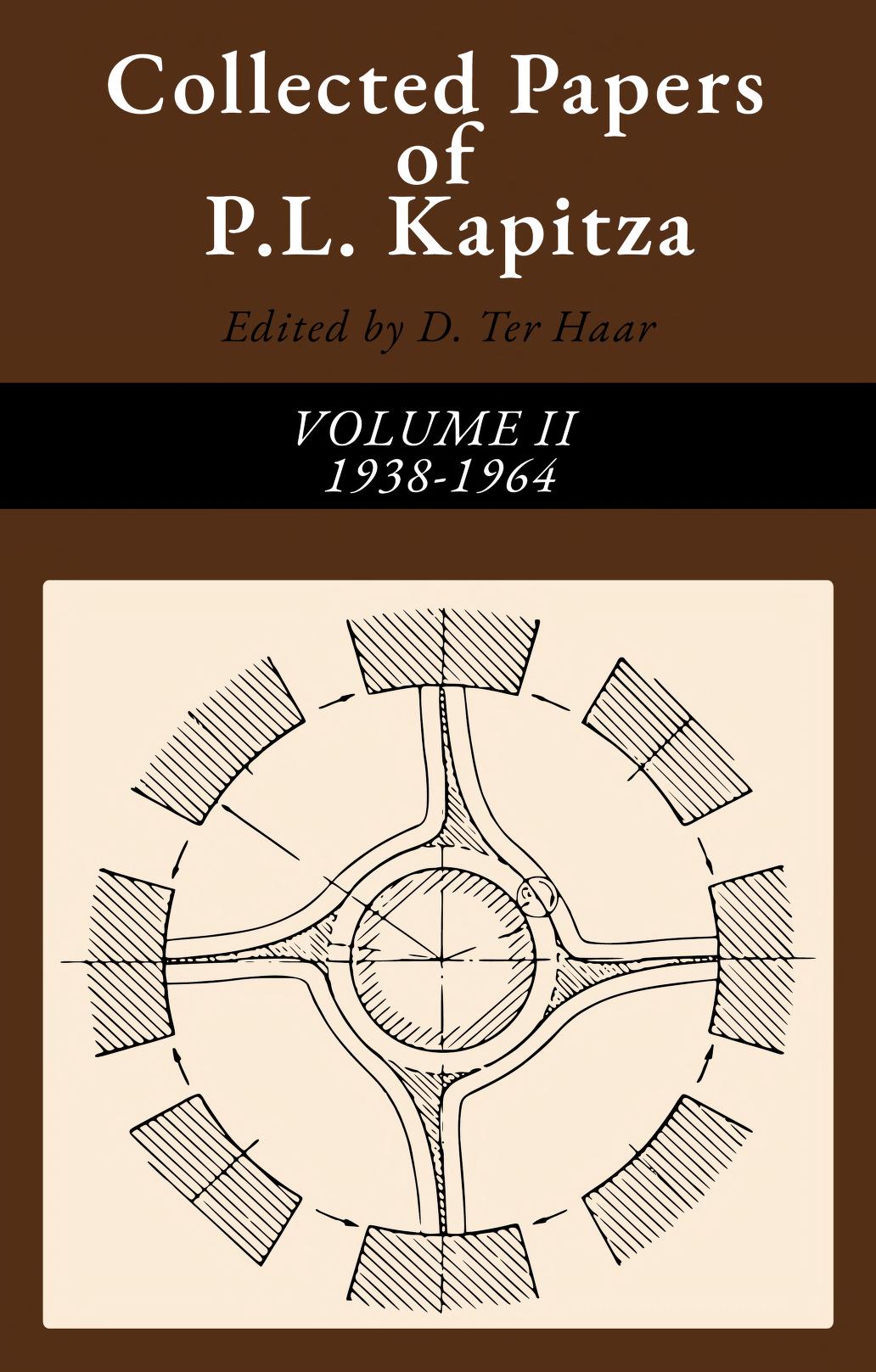
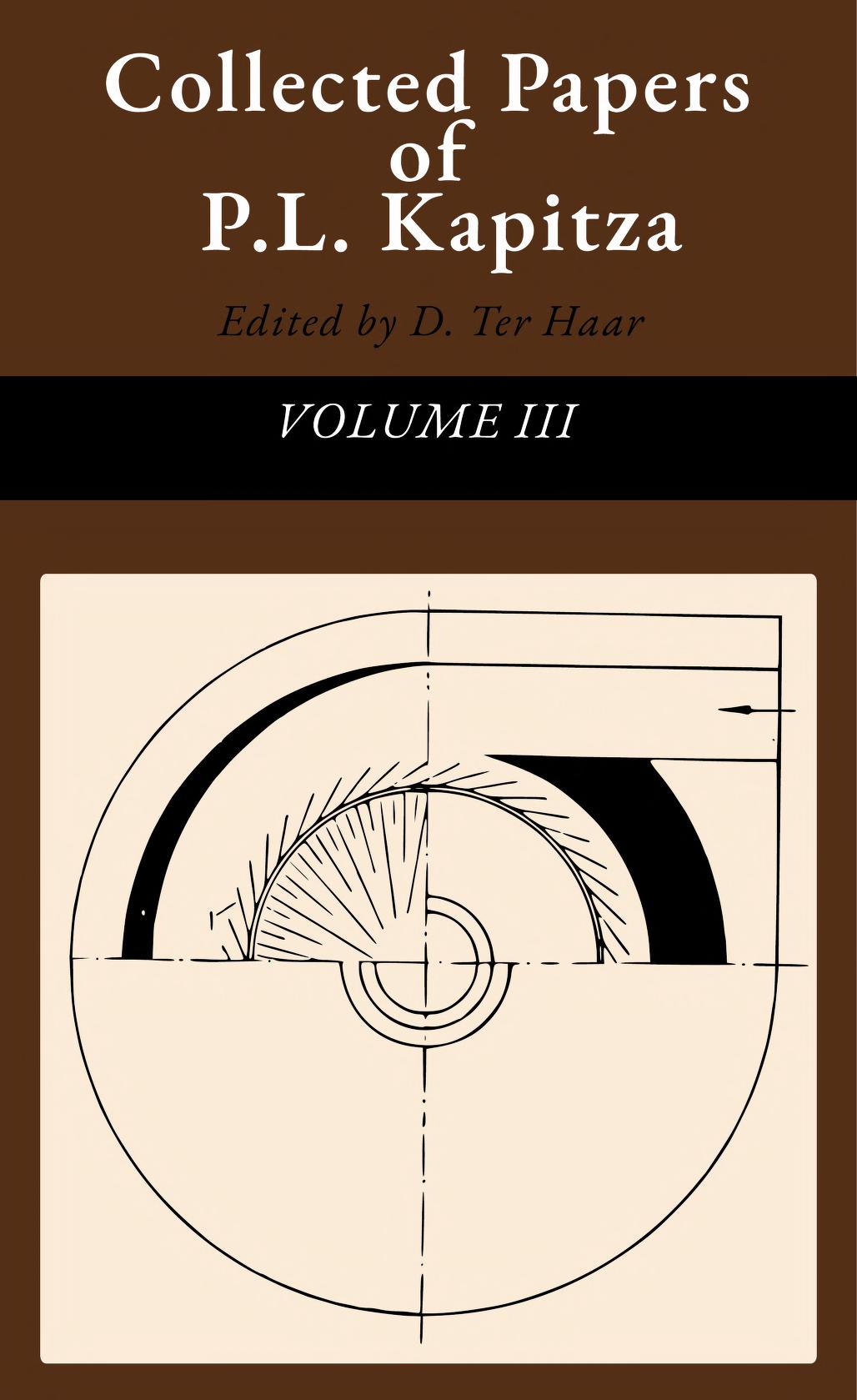
Collected Papers Of P. L. Kapitza in 3 Volumes

In this post, we will see the Collected Papers of P. L. Kapitza in three volumes .

About the books

Collected Papers of P. L. Kapitza, Volume I compiles the scientific papers written between 1916 and 1934 by Piotr Leonidovich Kapitza, a leading Soviet physicist and Nobel laureate. This book begins by introducing the life and career of P. L. Kapitza, which includes his studies and investigations of nuclear physics, strong magnetic fields, liquefaction, liquid helium, and high-power electronics. Other topics discussed include electron inertia in molecular ampere currents; Koch recording microphotometer; metallic conductivity and its change in a magnetic field; and methods of experimenting in strong magnetic fields. The liquefaction of helium by an adiabatic method; Zeeman and Paschen-Back effects in strong magnetic fields; and theoretical and empirical expressions for the heat transfer are also emphasized in this text. This compilation is a good reference for students and researchers conducting work on the biography and scientific contributions of P. L. Kapitza.

Collected Papers of P. L. Kapitza brings together the collected papers of Soviet physicist P. L. Kapitza in areas such as the viscosity of liquid helium below the ?-point; the Zeeman and Paschen-Back effects in strong magnetic fields; the influence of friction forces on the stability of high-speed rotors; heat transfer in helium II; and the formation of sea waves by the wind. Kapitza’s other papers explore heat transfer in a two-dimensional turbulent flow; dynamical stability of a pendulum when its point of suspension vibrates; and the hydrodynamic theory of lubrication in the presence of rolling. This volume is comprised of 25 chapters and begins with an analysis of Kapitza’s research on the viscosity of liquid helium below the ?-point, followed by his studies on the Zeeman and Paschen-Back effects in strong magnetic fields; liquefaction of air at low pressures; heat transfer and superfluidity in helium II; and the flow of thin viscous fluid layers under the action of a constant volume force, taking into account the surface tension. A pendulum with a vibrating suspension is also described, along with heat conductivity and diffusion in liquid medium under periodic flow conditions; the nature of ball-lightning; and symmetric electric oscillations of a perfectly conducting hollow cylinder of finite length. This book will be helpful to physicists and physics students.

Collected Papers of P. L. Kapitza, Volume III contains the scientific research papers, lectures, biographical accounts, and historical, philosophical, and sociological discussions of P. L. Kapitza.
The book is a compilation of various papers written and delivered by P. L. Kapitza that covers a wide range of topics. Research on strong magnetic fields; research work on helium, which won him the Stalin Prize; a brief account of the cod-liver-oil industry; and discussions on magnetic investigations and experiments on stereoscopic films are just some of the scientific papers presented. The compendium also contains several biographical papers on Newton, Benjamin Franklin and the Russian poet and scientist, Lomonosov; and non-scientific papers such as the banning of nuclear weapons, a discussion he had with Bertrand Russell; and papers that deal with some aspects of the best way to organize science.
Scientists, biographers, philosophers, historians, and students in the field of science will find this book an interesting read.


Credits to original uploader.

You can get

Volume 1 here

Volume 2 here

Volume 3 here

Follow us on The Internet Archive: https://archive.org/details/@mirtitles

Follow Us On Twitter: https://twitter.com/MirTitles

Write to us: mirtitles@gmail.com

Fork us at GitLab: https://gitlab.com/mirtitles/

Add new entries to the detailed book catalog here.


Contents

Posted in books, physics | Tagged , , , , , , , , , | Leave a comment

Analyse Mathématique – Kartachev, Rojdestvenski

Dans cet article, nous verrons le livre Analyse Mathématique par A. Kartachev et B. Rojdestvenski.

À propos du livre

Ce manuel est destiné aux étudiants de l’enseignement supérieur. Toutes les questions au programme d’analyse des écoles d’ingé­nieurs sont étudiées.
Ce manuel est le fruit de plusieurs années d’enseignement à l’Uni­versité d’Etat de Moscou, à l’Institut des ingénieurs physiciens de Moscou (MIFI) et à l’Institut physico-technique de Moscou (MFTI). Il prolonge et développe les thèses méthodologiques de l’ouvrage de B. Rojdestvenski Cours d’analyse mathématique (M., Xaouka, 1972, en russe).
Les auteurs ont opté pour un exposé concis susceptible de toucher un large éventail de lecteurs. La conception du cours, le caractère de l’exposé et l’agencement des sujets rompent avec la tradition. Ainsi la théorie des suites et la théorie des séries sont développées simultanément. Les notions de dérivées et d’intégrales indéfinie et définie sont examinées aussi simultanément et leurs propriétés font l’objet d’une étude globale. Deux types d’intégrales définies sont étudiés: l’intégrale de Newton (qui est égale à l’accroissement d’une primitive) et l’intégrale de Riemann. Quelques approches méthodo­logiques nouvelles sont utilisées pour étudier les fonctions de plusieurs variables.
Ces accrocs à la tradition permettent primo d’exposer la matière avec élégance et sans répétitions rébarbatives, secundo de signaler à l’avance aux étudiants les éléments d’analyse qui leur seront néces­saires dans l’étude de la physique et des disciplines de l’ingénieur. Enfin la démarche adoptée abrège sensiblement le volume de l’ou­vrage. ,
Au cours de la préparation de cet ouvrage les auteurs ont eu d’importantes discussions avec leurs collègues et amis sur divers problèmes d’analyse mathématique. Ils tiennent à remercier en premier lieu les collaborateurs des départements de physique mathé­matique appliquée et de mathématiques supérieures du MIFI, du département de mathématiques supérieures du MFTI et de l’Institut Keldych de mathématiques appliquées.
Les auteurs sont particulièrement reconnaissants au professeur D. Vassilkov pour ses multiples conseils et son importante contribu­tion à la préparation de cet ouvrage.

Un grand merci à Henri Leveque pour le scan original.

Traduit du russe par Djilali Embarek

L’édition française a été publiée en 1988 par les éditions Mir.

Vous pouvez obtenir le livre ici.

(J’ai utilisé la traduction automatique, toutes mes excuses pour les erreurs.)

Suivez-nous sur Internet Archive: https://archive.org/details/@mirtitles

Suivez-Nous Sur Twitter: https://twitter.com/MirTitles

Écrivez-nous: mirtitles@gmail.com

Rejoignez-nous sur GitLab: https://gitlab.com/mirtitles/

Ajoutez de nouvelles entrées au catalogue de livres détaillé ici.

Contenu


Posted in Éditions Mir, books, french, mathematics | Tagged , , , , , , | 1 Comment

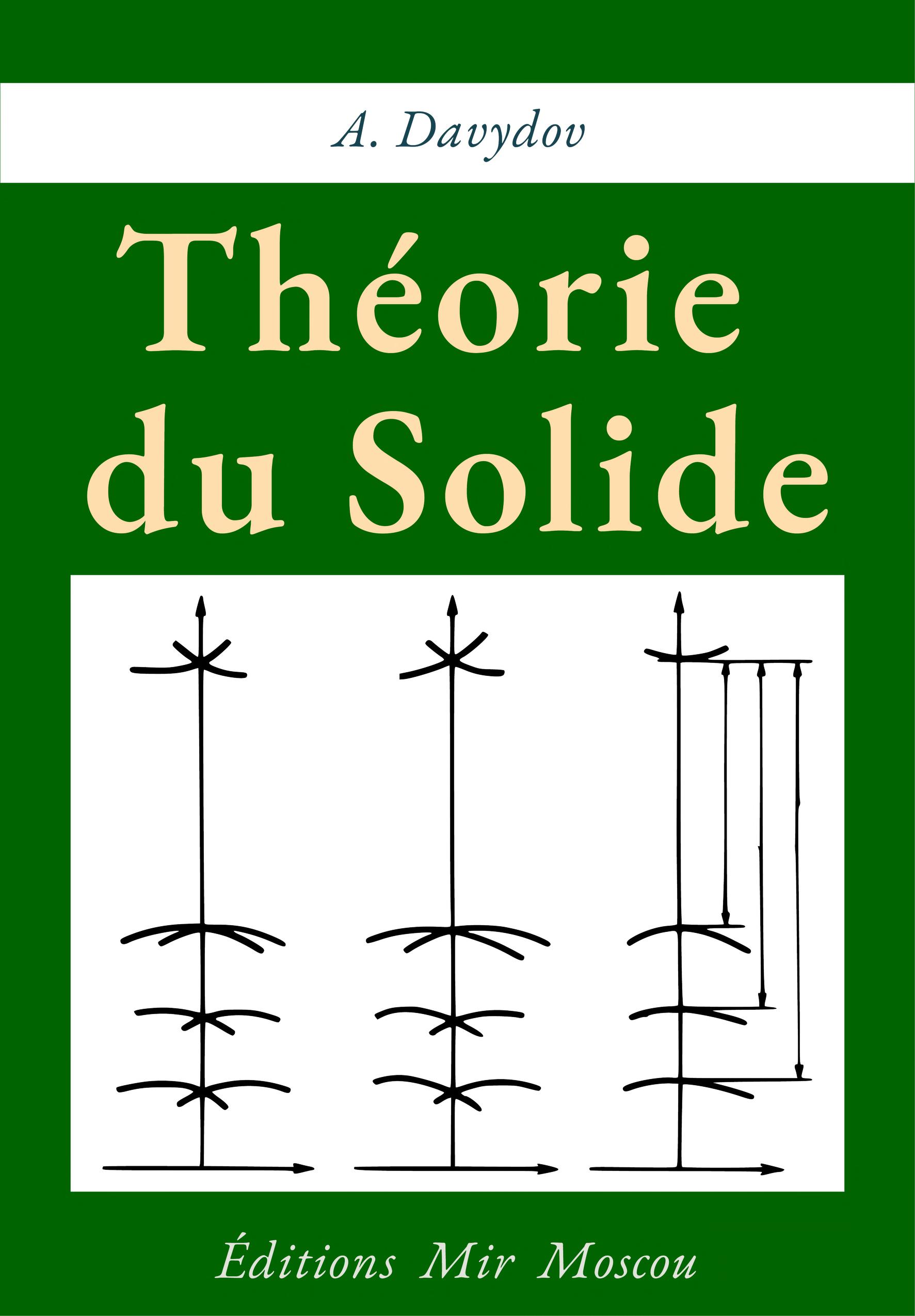
Théorie Du Solide – Davydov

Dans cet article, nous verrons le livre Théorie Du Solide par A. Davydov.

À propos du livre

Le livre soumis à l’attention du lecteur est une version complétée du cours de théorie du solide constitué par l’auteur et enseigné de 1969 à 1971 aux étudiants de la faculté de physique de l’université de Kiev.
La théorie du solide est l’une des divisions les plus importantes de la physique théorique. Elle apparut il y a environ cent ans et connut son plus grand développement après la mise en place de la mécanique quantique (1930 à 1950) et l’utilisation (après 1950) de l’appareil ma Ce livre expose les principaux modèles théoriques d’excitations élémentaires collectives — phonons, excitons, plasmons, magnons, apparaissant dans les solides et se manifestant dans différents phé­nomènes qui mettent en évidence les interactions des excitations élémentaires entre elles et avec les photons. L’exposé des principaux chapitres est fondé sur l’appareil mathématique actuellement utilisé en théorie quantique du solide — fonctions de Green, fonctions de corrélation, méthode de la matrice densité et autres. Pour lire ce livre, il n’est pas nécessaire de connaître ces méthodes, qui seront progressivement introduites. Les connaissances minimales requises sont habituellement enseignées à l’université dans les cours de mathé­matiques et de physique théorique.
Ce livre familiarise le lecteur avec les principales méthodes utilitées en théorie du solide, pour décrire les phénomènes physiques. Il ne prétend pas exposer les méthodes expérimentales et les résul­tats des recherches expérimentales. Les résultats expérimentaux sont seulement introduits pour illustrer la théorie et ne prétendent pas être complets.
Dans ce livre on accorde la plus grande attention à l’exposé des phénomènes collectifs se manifestant dans les solides qui présentent une symétrie translationnelle. La théorie des centres d’im­pureté est une partie importante de la physique du solide. Ces der­niers temps, son développement a fait l’objet d’un grand nombre de travaux dont les résultats ont été largement diffusés dans un grand nombre de revues et de monographies. C’est pourquoi ces questions n’ont pas été abordées dans le livre.
L’auteur espère que, après avoir étudié ce livre, le lecteur sera en état de comprendre n’importe quel travail original de recherche expérimentale ou théorique dans le domaine du solide.
Ce livre a été écrit pour les étudiants des facultés de physique et des établissements de hautes études. Il peut servir de manuel de référence pour les enseignants et les chercheurs.
En première lecture, on pourra laisser de côté les paragraphes marqués d’un astérisque. Cependant ceux-ci seront utiles pour ceux qui désirent contribuer par eux-mêmes au développement de la théorie du solide. Enfin dans un livre d’une telle importance, on a dû représenter des grandeurs physiques différentes par une même lettre. Mais toutes les désignations nécessaires ainsi que toutes les opérations mathématiques qu’il n’était pas nécessaire d’exposer in extenso sont précisées dans le texte pour chaque cas concret.
L’auteur exprime sa vive gratitude à ses amis et à ses collègues V. Agranovitch, A. Loubtchenko, E. Rashba, A. Sérikov, E. Miasnikov, B. Nitsovitch, E. Pétrov, A. Eremko, Y. Gaididey et V. Loktev, qui ont pris part au développement des théories introduites dans ce livre, ainsi qu’à E. Kaner, qui a relu le manuscrit du chapitre six en faisant d’importantes remarques.
L’auteur exprime sa reconnaissance aux lecteurs qui voudront bien lui communiquer les principales insuffisances de ce livre.

Un grand merci à Henri Leveque pour le scan original.

Traduit du russe par Marc Pierre

L’édition française a été publiée en 1980 par les éditions Mir.

Vous pouvez obtenir le livre ici.

(J’ai utilisé la traduction automatique, toutes mes excuses pour les erreurs.)

Suivez-nous sur Internet Archive: https://archive.org/details/@mirtitles

Suivez-Nous Sur Twitter: https://twitter.com/MirTitles

Écrivez-nous: mirtitles@gmail.com

Rejoignez-nous sur GitLab: https://gitlab.com/mirtitles/

Ajoutez de nouvelles entrées au catalogue de livres détaillé ici.

Contenu


Posted in Éditions Mir, books, french, physics | Tagged , , , , , , , | Leave a comment

Cours D’électrotechnique – Kassatkine, Pérékaline

Dans cet article, nous verrons le livre Cours D’électrotechnique par A. Kassatkine et M. Pérékaline.

À propos du livre

Un cours sur la technologie électrique et les machines.

Traduit du russe par Ch. Bir

Un grand merci à Henri Leveque pour le scan original.

L’édition française a été publiée en 1967 par les éditions Mir.

Vous pouvez obtenir le livre ici.

(J’ai utilisé la traduction automatique, toutes mes excuses pour les erreurs.)

Suivez-nous sur Internet Archive: https://archive.org/details/@mirtitles

Suivez-Nous Sur Twitter: https://twitter.com/MirTitles

Écrivez-nous: mirtitles@gmail.com

Rejoignez-nous sur GitLab: https://gitlab.com/mirtitles/

Ajoutez de nouvelles entrées au catalogue de livres détaillé ici.

Contenu


Posted in Éditions Mir, books, engineering, french, soviet, technology | Tagged , , , , , , , , | Leave a comment