

A story of October revolution told in pictures,
All credits to sovietbooksinbengali blog.



La mayor parte de los métodos de la resolución aproximada de las ecuaciones se basa en la idea de las aproximaciones sucesivas. Este idea se usa no sólo con las ecuaciones sino también en otros problemas. Su exposición está al alcance de la Enseñanza Media.
Contenido:
Prefacio
1. Introducción
2. Aproximaciones sucesivas
3. Aquiles y la tortuga
4. División en las computadoras
5. Extracción de raíces cuadradas por el método de aproximaciones sucesivas
6. Aplicación del método de aproximaciones sucesivas a la extracción de raíces con exponente natural
7. Método de iteraciones
8. Significado geométrico del método de iteraciones
9. Aplicaciones contraídas
10. Aplicaciones contraídas y el método de iteraciones
11. Método de cuerdas
12. Método de cuerdas perfeccionado
13. Derivada de un polinomio
14. Método de newton para resolución aproximada de las ecuaciones algebraicas
15. Significado geométrico de la derivada
16. Significado geométrico del método de Newton
17. Derivada de las funciones cualesquiera
18. Cálculo de las derivadas
19. Elección de las primeras aproximaciones
20. Método combinado para resolver las ecuaciones
21. Criterio de la convergencia del proceso de iteraciones
22. Rapidez de la convergencia del proceso de iteraciones
23. Resolución de los sistemas de ecuaciones lineales por el método de aproximaciones sucesivas
24. Resolución de los sistemas de ecuaciones no lineales por el método de aproximaciones sucesivas
25. Distancia modificada
26. Criterios de la convergencia del proceso de aproximaciones sucesivas para los sistemas de ecuaciones lineales
27. Aproximaciones sucesivas en la geometría
28. Conclusión
Ejercicios
Resoluciones
Traducido del Ruso por K. P. Medkóv
Créditos al cargador original.

A l’usage des chimistes, ingénieurs, élèves des écoles techniques
Traduit du russe par A. Krjijevski
Un grand merci à Henri Leveque pour le livre
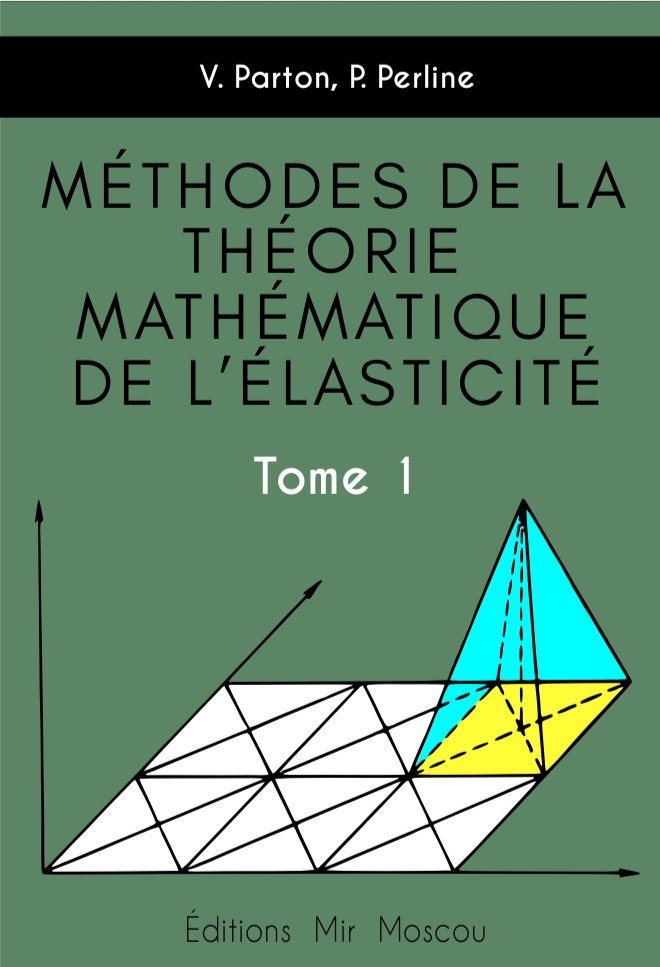
Le présent ouvrage est une traduction en français du cours de Méthodes de la théorie mathématique de l’élasticité, réparti en deux volumes. Le premier volume traite des notions auxiliaires essentielles à la compréhension du cours, tandis que le second est consacré à l’application de diverses méthodes mathématiques à la résolution de problèmes d’élasticité. La version française a été modifiée pour inclure des exemples revus et pour réduire le contenu sur l’utilisation de la variable complexe, tout en intégrant des résultats récents. Les auteurs expriment leur gratitude envers les traducteurs et soulignent l’influence de savants français renommés sur les questions abordées dans l’ouvrage.


L’objectif du cours « Prospections détaillées de champs de pétrole et de gaz » est d’assurer aux géologues futurs des connaissances et le savoir-faire qui leur permettraient de rechercher efficacement les champs de pétrole et de gaz, d’établir leur type, leur valeur commerciale et de choisir le système rationnel de prospection du champ. Ce manuel est destiné à l’enseignement technique secondaire spécial et constitue la traduction en français de la seconde édition parue en U.R.S.S. en 1979.
Traduit du russe par O. Partchevski
Un grand merci à Henri Leveque pour le livre

L’ouvrage « Fondements de la théorie des oscillations » est une traduction revue et augmentée de la seconde édition russe. Il vise à démontrer au lecteur le caractère rationnel et systématique de l’étude des processus vibratoires à travers des exemples de systèmes courants et les méthodes d’analyse correspondantes, tout en expliquant la physique sous-jacente. La structure du livre reflète le cours donné par l’auteur à la faculté de physique de l’Université de Moscou, destiné aux étudiants en radiophysique et électronique. Plutôt que d’apporter de nouvelles données, l’ouvrage se concentre sur la nature spécifique des processus oscillatoires et les différentes classes de systèmes oscillants, chacune étant abordée selon une méthode appropriée. Ce manuel est conçu pour aider ceux qui étudient les processus oscillatoires dans divers systèmes dynamiques. Pour les spécialistes de la radiophysique et de la radiotechnique, il sert de référence essentielle, tandis qu’il est également utile pour d’autres domaines souhaitant comprendre les caractéristiques des processus oscillatoires. Les auteurs espèrent que ce livre sera bénéfique pour les lecteurs dans leur travail.
Sous la direction de V. MIGOULINE
Traduit du russe par Valéry Platonov
Un grand merci à Henri Leveque pour le livre

Cet aide-mémoire offre une vue d’ensemble sur la théorie des probabilités, la théorie des processus aléatoires, et la statistique mathématique, en introduisant les concepts, axiomes, théorèmes et formules fondamentaux. Il expose les méthodes probabilistes essentielles, comme les fonctions caractéristiques, les transformations de Laplace, et les équations différentielles appliquées aux processus markoviens, accompagnées d’exemples pratiques. L’ouvrage est divisé en trois parties : la première couvre les bases de la théorie des probabilités et les méthodes analytiques pour les théorèmes limites ; la seconde explore la théorie des processus aléatoires, incluant les processus stationnaires et les martingales ; la troisième aborde la statistique mathématique, en particulier les tests d’hypothèses et les estimations de paramètres. Bien que limité en contenu appliqué pour des raisons de concision, il touche brièvement à des domaines comme la fiabilité, les jeux stochastiques, et les files d’attente. Ce guide permet une lecture flexible, avec un index pour faciliter l’approfondissement des sujets.
Traduit du russe par Djilali Embarek
Un grand merci à Henri Leveque pour le livre
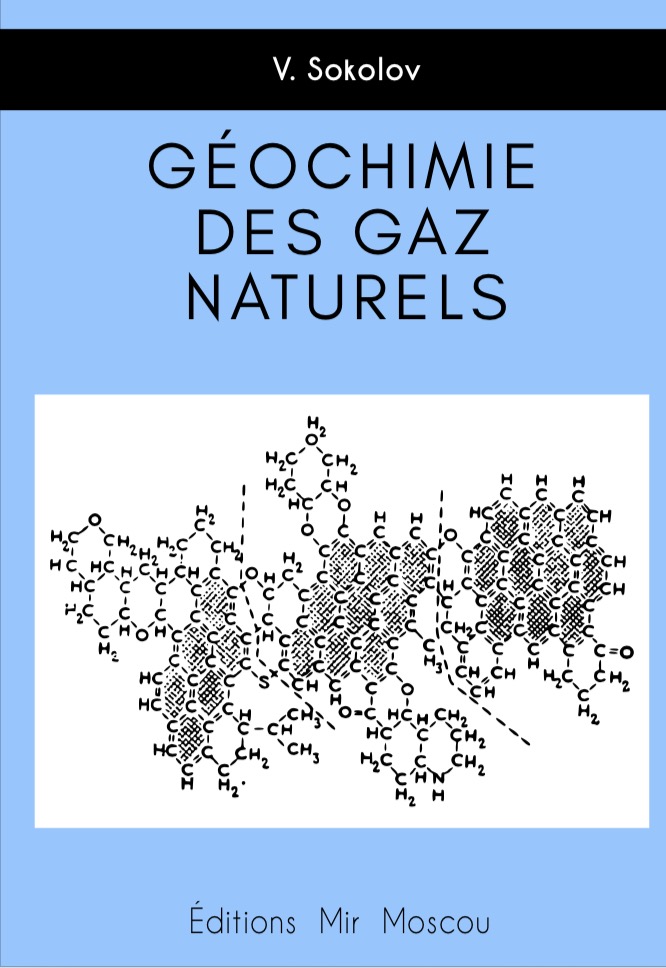
Un livre sur la géochimie du gaz naturel et du pétrole.
Traduit du russe par V. Khavkine et revu par S. Gougeov
Un grand merci à Henri Leveque pour le livre
 Mir Books