

A collection of articles by Boris Ponamarev on issues of international politics.
Translated from the Russian by Vic Schneierson
Designed by Gennady Gubanov
This is a cleaned, optimised version of original scan
From Pulsar152’s Archive collection.
A collection of articles by Boris Ponamarev on issues of international politics.
Translated from the Russian by Vic Schneierson
Designed by Gennady Gubanov
This is a cleaned, optimised version of original scan
From Pulsar152’s Archive collection.

Man has always had a great curiosity about the future, about what life may be like tomorrow. This curiosity is part of his intellectual inquisitiveness which prompts him^£o picture the contours of
future society, inspired by the hope that he will finally be able to cast off the age-old
fear of implicable fate and become the master of his own destiny
Translated from the Russian
You can get the book here and here
This is a cleaned, optimsied version of original scan
From Pulsar152’s collection

लोहे की अंगूठी क. पौस्तोवस्की की एक संवेदनशील और भावनात्मक कहानी है, जो मानवीय करुणा, स्मृति और छोटे-छोटे कार्यों के गहरे प्रभाव को दर्शाती है।
यह कहानी एक डॉक्टर के इर्द-गिर्द घूमती है, जिसे एक दूरस्थ गाँव में नियुक्त किया गया है। एक तूफ़ानी रात को एक छोटी बच्ची उसकी माँ के इलाज के लिए डॉक्टर को बुलाने आती है। डॉक्टर बच्ची की निष्ठा और माँ-बेटी के प्रेम से बहुत प्रभावित होता है। वह महिला का इलाज कर वापस चला जाता है और समय के साथ यह घटना भूल जाता है। कई साल बाद, जब वह खुद बीमार होता है, तो उसे एक पत्र और एक छोटी सी लोहे की अंगूठी मिलती है — वही बच्ची, अब एक युवा महिला बन चुकी है, जिसने डॉक्टर द्वारा दी गई उस अंगूठी को अब तक सहेज कर रखा है। यह अंगूठी, जो कभी एक खिलौने के रूप में दी गई थी, अब गहरे मानवीय जुड़ाव और आभार का प्रतीक बन जाती है।
कहानी ग्रामीण जीवन की सादगी, मानव संवेदना और दयालुता के स्थायी प्रभाव को बड़े ही मार्मिक ढंग से प्रस्तुत करती है। पौस्तोवस्की की भाषा सरल है, लेकिन भावों से परिपूर्ण, जो पाठक के मन में गहराई तक उतरती है।
अनुवादकः योगेन्द्र कुमार नागपाल
चित्रकार: त० येर्योमिना
All credits to the original uploader.
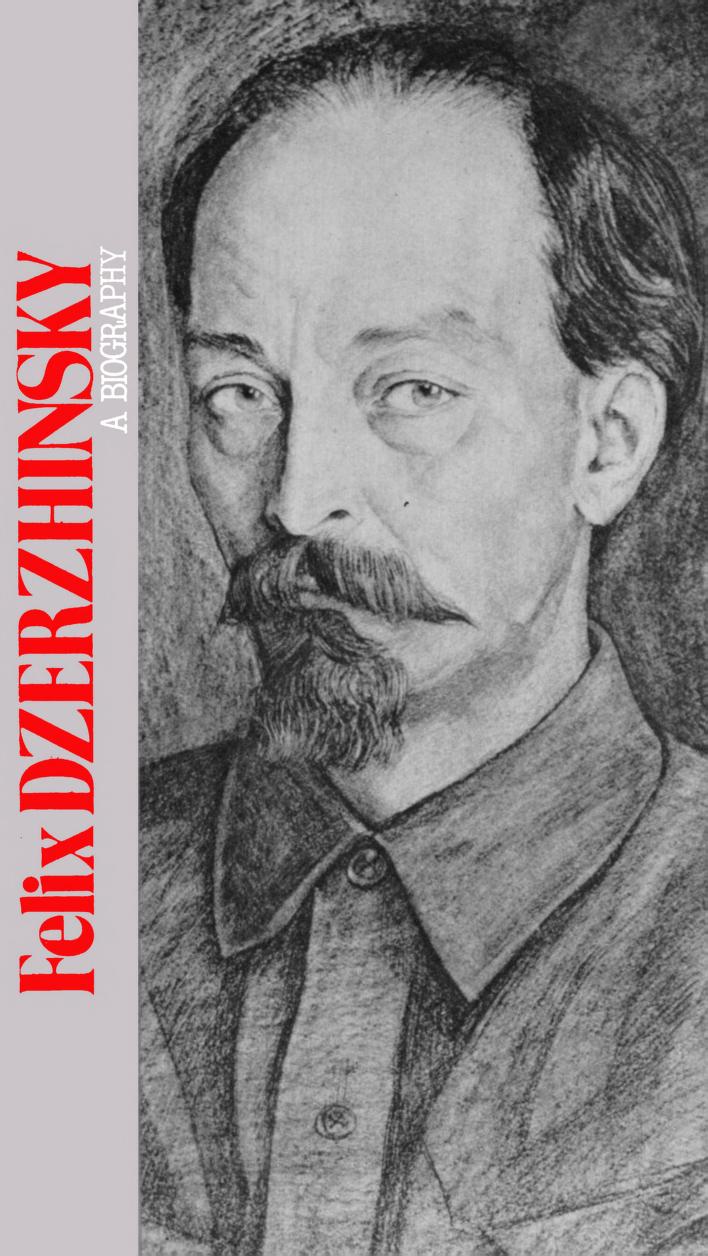
This is a biography of Felix Dzerzhinsky, an outstanding figure in the Communist Party and die Soviet state, Lenin’s closest friend and staunch supporter, a fiery revolutionary and a true internationalist who was totally committed to the cause of socialism and communism in the Soviet Union. His entire life exemplified selfless service to die Party and die people.
Translated from the Russian by Natalia Betskaya
Designed by Alexander Anno
You can get the book here and here
A cleaned, optimised scan version of original scan
From Some Place Else’s Archive collection
—
Introduction
Contents 5
Chapter One Childhood and Youth. Early Career as a Revolutionary 10
Chapter Two Party Work on the Eve of and During the First Russian Revolution (1899-1907) 31
Chapter Three The Years of Reaction and the New Revolutionary Upsurge. Prison and Exile (1907-February 1917) 57
Chapter Four Fighting for the Victory of the Socialist Revolution (March-October 1917) 67
Chapter Five Protecting the Revolution 82
Chapter Six Work as the Vecheka Chairman During the Civil War and Foreign Armed Intervention 98
Chapter Seven At the People’s Commissariat for Internal Affairs 122
Chapter Eight At the Civil War Fronts 135
Chapter Nine Guarding the Security of the Soviet State 149
Chapter Ten The People’s Commissar for Transport 169
Chapter Eleven At the Helm of Socialist Industry 189
Chapter Twelve Dzerzhinsky: A Political Figure of Leninist Type 237
Conclusion
Notable Dates in Dzerzhinsky’s Life and Work. 1877-1926 243
Siberia is a vast territory stretching thousands of kilometers from the Far East to the Urals, with immense and diverse natural wealth.
A favorable combination of natural and economic factors is leading to the establishment of large production complexes of national and global significance. The key to unlocking the natural wealth of the remote and almost inaccessible regions of Siberia is the Baikal-Amur Railway, which is linked to the long-term plan for exploiting the Eastern part of the Soviet Union.
This book covers the distribution of productive forces, the construction of major industrial enterprises and electric power stations, the development of transportation, the laying of gas pipelines, and the emergence of new cities.
The author, Prof. Boris Orlov, D.Sc. (Economics), has lived and worked in Siberia for many years, which accounts for the vivid and absorbing narration.
Translated from the Russian by David Marks
Designed by Victor Batishchev
You can get the book here and here
This is a cleaned, optimised version of original scan
> A 1977 Soviet work. Scanned by Ismail, sent to him by a user named Misdreavus.
> Not included in the scan was an erratum slip stating the following: “Page 109, line 7 from top should read: duced 1,000 million cubic metres of gas, which”
From Thomas Mrett’s Archive Collection.
Foreword 5
1. FROM THE BEGINNINGS TO THE PRESENT DAY 9
The Principal Stages of Economic Development 10
The Establishment of Siberian Science 34
2. THE SPRINGBOARD OF ECONOMIC GROWTH 48
Why Should Siberia’s Growth Rate Be Higher Than That of the Country as a Whole? 49
The Union of Science and Industry as the Accelerator of Economic Growth 66
3. INDUSTRY STRIDES AHEAD 83
The Future of Siberian Coal 85
Siberian Oil and Gas—“The Discovery of the Century” 93
The Future of Chemicals 116
The Siberian Power Industry 121
New Metallurgical Centres 131
Timber Complexes 142
Mechanical Engineering and Other Industries 148
The Baikal-Amur Railway — the Project of the Century 157
4. THE ECONOMIC DEVELOPMENT OF THE SIBERIAN REGION 161
The Theory of Population is a symposium is which demographers and social scientists from the Soviet Union, Hungary, Poland and the German Democratic Republic have contributed and treated population problems and aspects of demography from a Marxist standpoint.
The papers devote much attention to a complex, all-round approach to the study of population, and discuss the methodology of demography and methods of inquiring into demographic processes. The authors make a detailed and circumstantial review of current population problems and consider the demographic outlook for human society.
—
This work presents the results of a major project in population studies undertaken by social and natural scientists under the auspices of the Centre for Population Studies of the Economics Faculty of Moscow State University.
The authors have reached very interesting conclusions meriting serious consideration from their analysis of the objective laws and patterns of population development, and their perfecting of the methodology of studying socio-demographic processes. Effective treatment of population problems calls for joint work by a broad circle of social and natural scientists from several fields, and will continue to do so. Only in that way can really new results be obtained in the field of theory and methodology, particularly in studying the interrelations of economic and demographic processes in developed socialist society. Such an approach will make it possible to consolidate the social and economic basis for forecasting population; and the significance of demographic forecasting in macroeconomic planning practice can hardly be exaggerated.
The institution of the scientific specialities of population economics and demography—an outcome of the active theoretical work of Soviet demographers—imposes great obligations on scientists concerned with population studies. And it opens up broad prospects for new creative work in developing Soviet science.
ESSAYS IN MARXIST RESEARCH
Translated from the Russian by
Herbert C. Creighton
Designed by S. Jioyeu
This is a cleaned, optimised version of scan by Ismail, sent to him by InDefenseOfToucans.
From Thomas Mrett’s Archive Collection
THE AUTHORS
E. A. ARAB-OGLY
V. V. BODROVA
A. Y. BOYARSKY
F. BURGCHARDT (GDR)
L. Y. DARSKY
Y. N. GUZEVATY
B. S. KHOREV
G. M. KOROSTELEV
S. A. KOVALEV
V. P. KOVALEVSKY
V. I. KOZLOV
A. Y. KVASHA
A. M. MERKOV
A. A. MINTS
L. OSADNIK (GDR)
N. V. PANKRATYEVA
V. V. POKSHISHEVSKY
E. ROSSET (POLAND)
R. S. ROTOVA
Y. G. SAUSHKIN
B. Y. SMULEVICH
A. P. SUDOPLATOV
V. A. SYSENKO
E. SZABADI (HUNGARY)
B. T. URLANIS
D. I. VALENTEY
E. VALKOVICS (HUNGARY)
A. G. VOLKOV
CONTENTS
Foreword 5
Introduction 7
Section One. Regularities of Demographic Processes 23
Chapter 1. Historical Laws of Population Development 23
Chapter 2. Population Reproduction 49
Chapter 3. Population Distribution 70
Section Two. Methodology of Population Studies 84
Chapter 1. The System of Scientific Knowledge about Population 85
Chapter 2. Population Geography 98
Chapter 3. Ethnical Demography 108
Chapter 4. Sociological Aspects of Demographic Behaviour 120
Chapter 5. Social Hygiene 127
Section Three. Methodological Principles of Studying Demographic Trends 135
Chapter 1. Statistical Methods 136
Chapter 2. Tables of Fertility 157
Chapter 3. Mathematical Models 168
Chapter 4. Economic Age Pyramids 200
Chapter 5. Methods of Factor Analysis 216
Chapter 6. Problems of Demographic Forecasting 221
Section Four. World Population and Resources 228
Chapter 1. World Population Growth 230
Chapter 2. Population and Environment 241
Chapter 3. Energy and Natural Resources 248
Chapter 4. Food Resources 262
Chapter 5. Land Resources 277
Chapter 6. The Outlook for the Growth of World Population 285
Section Five. Current Population Problems 295
Chapter 1. Demographic Investments 295
Chapter 2. Social Production—Personal Needs—Natality 303
Chapter 3. The “Ageing” of Population 313
Chapter 4. Problems of Modern Urbanisation 326
Chapter 5. Demographic Processes in the Socialist Countries of Europe 342
Chapter 6. Population Problems in Developing Countries 354
Chapter 7. “Family Planning” Programmes in Developing Countries 364
Chapter 8. Wars and Population 371
Section Six. Bourgeois Population Theories 384
Chapter 1. The Evolution of Malthusianism 384
Chapter 2. Sociological Theories of Population 394
Chapter 3. The Apologetic Role of Modern Bourgeois Demography 400
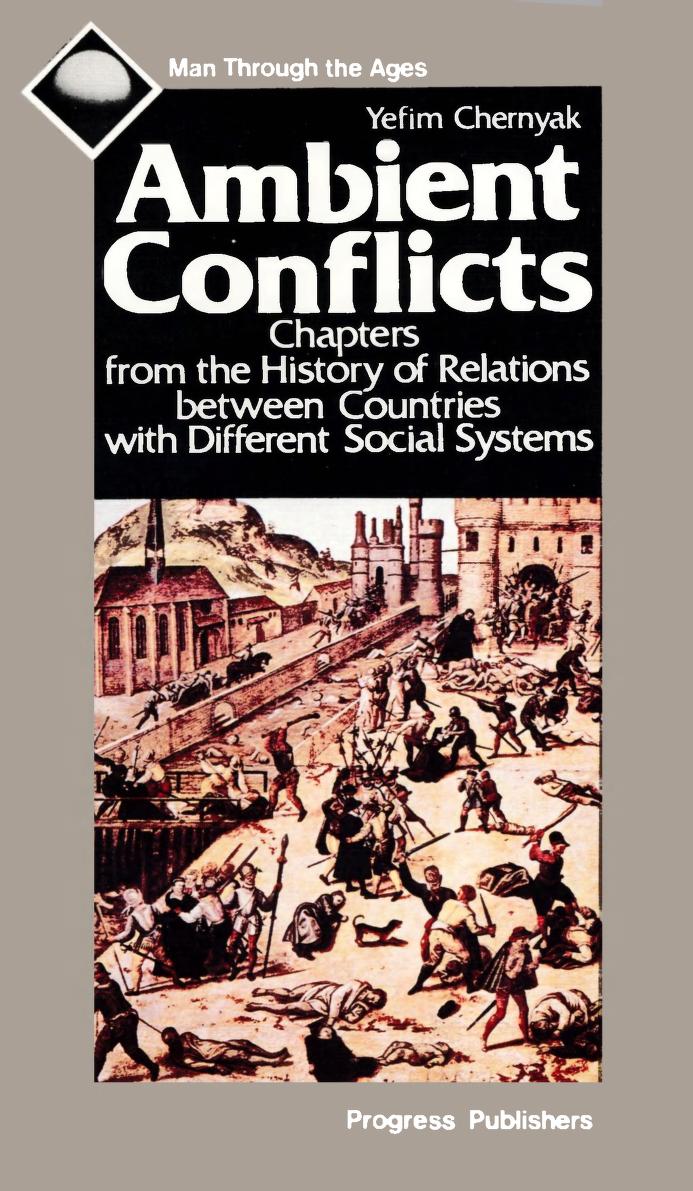
Chapters from the History of Relations between Countries with Different Social Systems
Yefim Chernyak, D. Sc. (Hist.), specialises in the theoretical aspects of world history, the social history of Great Britain, and the history of international relations. He has written more than a score of books and other works.
This book is the first study ever made of ambient conflicts in world history, that of confrontation in the sphere of relations between states with different social systems.
The book may be recommended as a highly academic study and an original form of analysis abounding in descriptions of historical episodes and thumbnail portrayals of historical figures.
Designed by Vadim Novikov
Translated from the Russian by Vic Schneierson
You can get the book here and here.
This is a cleaned, optimised version of scan by Ismail, sent to him by Nathan O’Connor.
From Thomas Mrett’s collection on the Archive.
In Lieu of a Foreword 5
Holy Throne and Holy Empire 11
Divided Europe 19
A Mirage 24
Humanists and Jesuits 33
He Who Holds Power, His Is the Faith 40
Bloody Mary 49
The Sack of Rome 52
A Sinister Trinity 58
The Ottoman Invasion 70
At the Walls of Vienna 76
The “Golden Age” of Persecutions 84
The Profane Alliance 89
The Letter of Francis I 94
The Shadow of El Escorial Over Europe 100
Act Two 112
The Vindication of Catherine de Medici 118
A Web of Conspiracies 135
One More Onslaught 151
The Barricades of Henry Guise and the Mass of Henry of Navarre 156
Decline and Fall 176
Behind Ravaillac’s Back 219
The Astrologer 224
A Breather Before the Thirty Years War 234
Cardinal Richelieu and Anne of Austria 242
Retribution 258
An Endless Epilogue 264
From the Skies Down to Earth 280
The Roots and Fruits of Education 292
“Revolutionary War” Advocated 301
The Motley Coalition 307
Antipodes that Resemble Each Other 319
A Penetrating Cynicism 332
Controversy Over the Holy Alliance 338
The First Thirty Years 353
Struggle of the Worlds 372

Diplomatic Co-Operation Between the USSR, USA and Britain During the Second World War 1941-1945
Translated from the Russian by Don Danemanis
Designed by Sergei Danilov
You can get the book here and here.
This is a cleaned, optimised version of scan by Ismail, sent to him by Tim Rosenberg.
From Thomas Mrett’s Archive collection
CONTENTS
INTRODUCTION 5
CHAPTER I. The Beginning of Anglo-Soviet Co-operation . 19
CHAPTER II. The USA, and Nazi Germany’s Invasion of the Soviet Union 39
CHAPTER III. The Atlantic Charter and the First Three-Power Conference in Moscow (1941) 49
CHAPTER IV. The Battle for Moscow and Inter-Allied Relations 63
CHAPTER V. The USA Enters the Second World War. Consolidation of the Anti-Hitler Coalition 77
CHAPTER VI. Anglo-American Strategy 90
CHAPTER VII. Anglo-Soviet and Soviet-American Negotiations in the Spring of 1942 99
CHAPTER VIII. No Second Front in 1942 111
CHAPTER IX. The Allied Landing in North Africa and the “French Problem” 123
CHAPTER X. The Turning Point in the War and Anglo-American Diplomacy 132
CHAPTER XI. Still No Second Front in 1943 155
CHAPTER XII. Italy’s Withdrawal from the Fascist Bloc and Inter-Allied Relations in the Summer of 1943 173
CHAPTER XIII. The Moscow Conference and Problems of the Post-War Order of the World 196
CHAPTER XIV. Summit Meetings: Teheran and Cairo 214
CHAPTER XV. The Allies on the Eve of Europe’s Liberation 236
CHAPTER XVI. The Soviet Army Liberates Eastern Europe 261
CHAPTER XVII. Opening of the Second Front. The Allies and Liberated France 294
CHAPTER XVIII. Big-Three Talks at the End of 1944: Dumbarton Oaks, Quebec, Moscow 307
CHAPTER XIX. The Crimea Conference 325
CHAPTER XX. The Allies and the Liberated Countries 357
CHAPTER XXI. Hitler Germany Capitulates 370
CHAPTER XXII. At the Crossroads 381
CHAPTER XXIII. The Berlin Conference. Victory 399
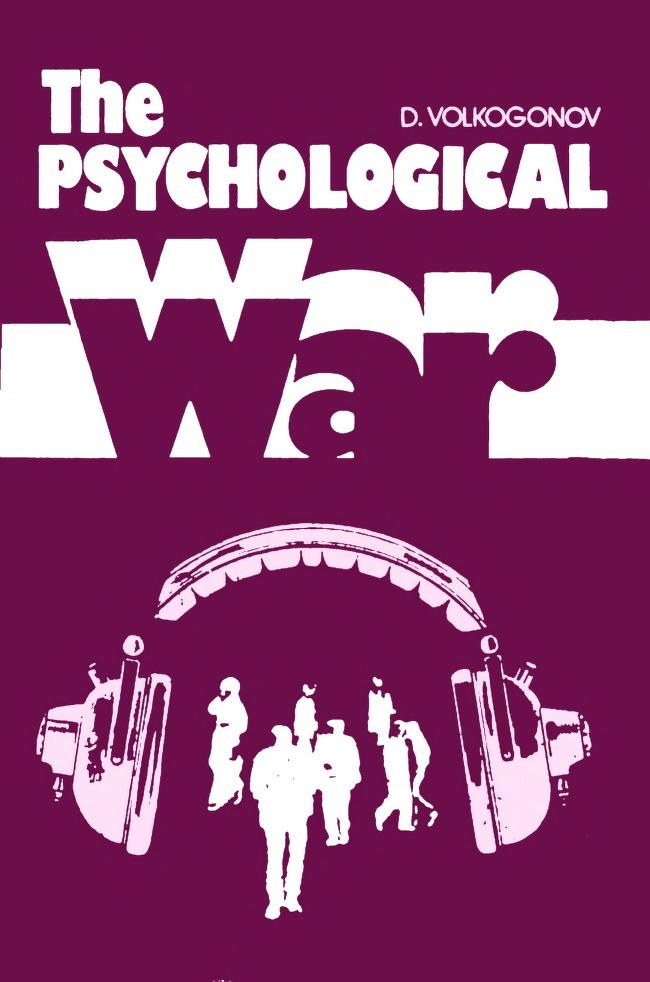
This book examines the psychological war which certain well-known quarters in the West are waging against the socialist world, fostering enmity, suspicion and bitterness in social consciousness. We all live in one house, the planet called Earth. And if we want to survive, we have to learn to understand one another, to coexist under one roof, something the strategists of the psychological war are trying to prevent us from doing
Prof. Dmitri Volkogonov, a professional soldier, is engaged in scientific work. His fields of research include the methodological problems of military theory and practice, critical analysis of bourgeois ideology, counter-propaganda, and military ethics. He is the author of 20 books, including Officers’ Ethics (1973), Military Ethics (1976), A Methodology of Ideological Education (1980), The Phenomenon of Heroism (1985), and approximately 500 studies, many of which have been published abroad in translation.
Translated from the Russian by Sergei Chulaki
Designed by Akhmet Mussin
You can get the book here and here.
This is a cleaned, optimised version of scan by Ismail, sent to him by Crickwich.
From Thomas Mrett’s Archive collection
CONTENTS
Introduction 5
Chapter 1. Social Consciousness as an Arena of Struggle 11
Chapter 2. The Phenomenon of Psychological Warfare 36
Chapter 3. The Psychological War and History 61
Chapter 4. The Mechanism of Psychological Warfare 88
Chapter 5. The Means of Psychological Warfare 119
Chapter 6. The Machinery of Psychological Warfare 153
Chapter 7. The Creation of Myths and the Intensification of Psychological Warfare 186
Conclusion 235
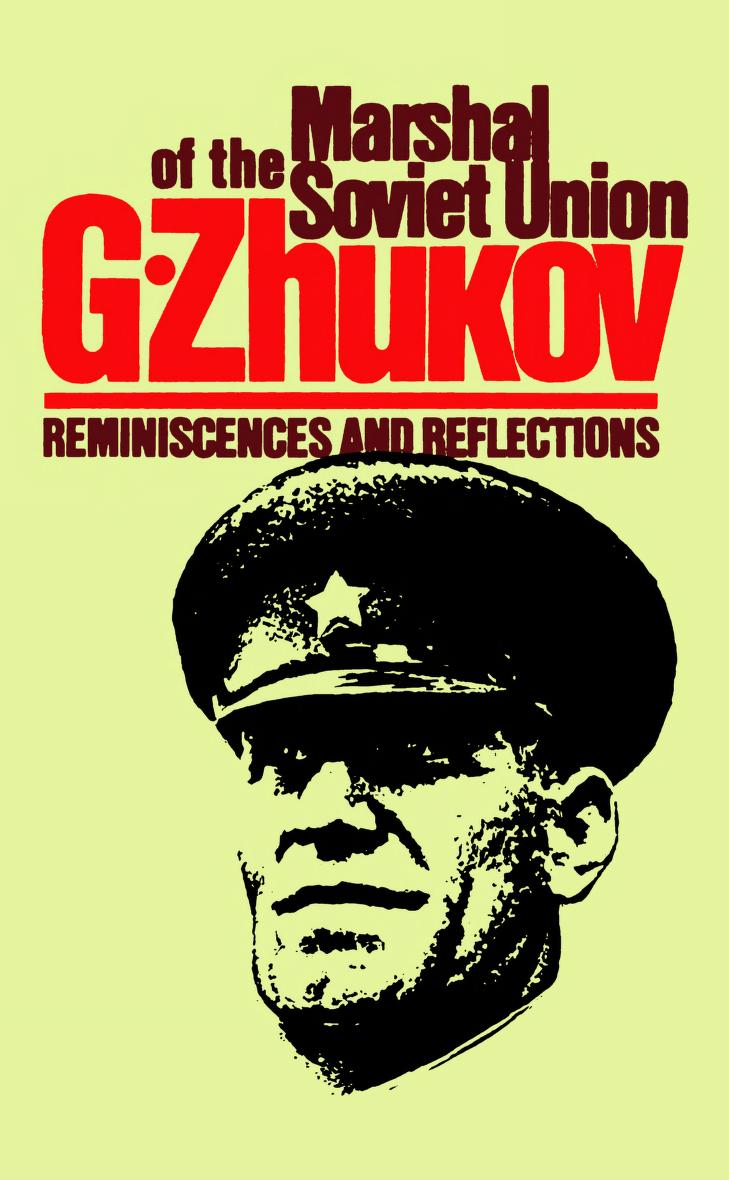
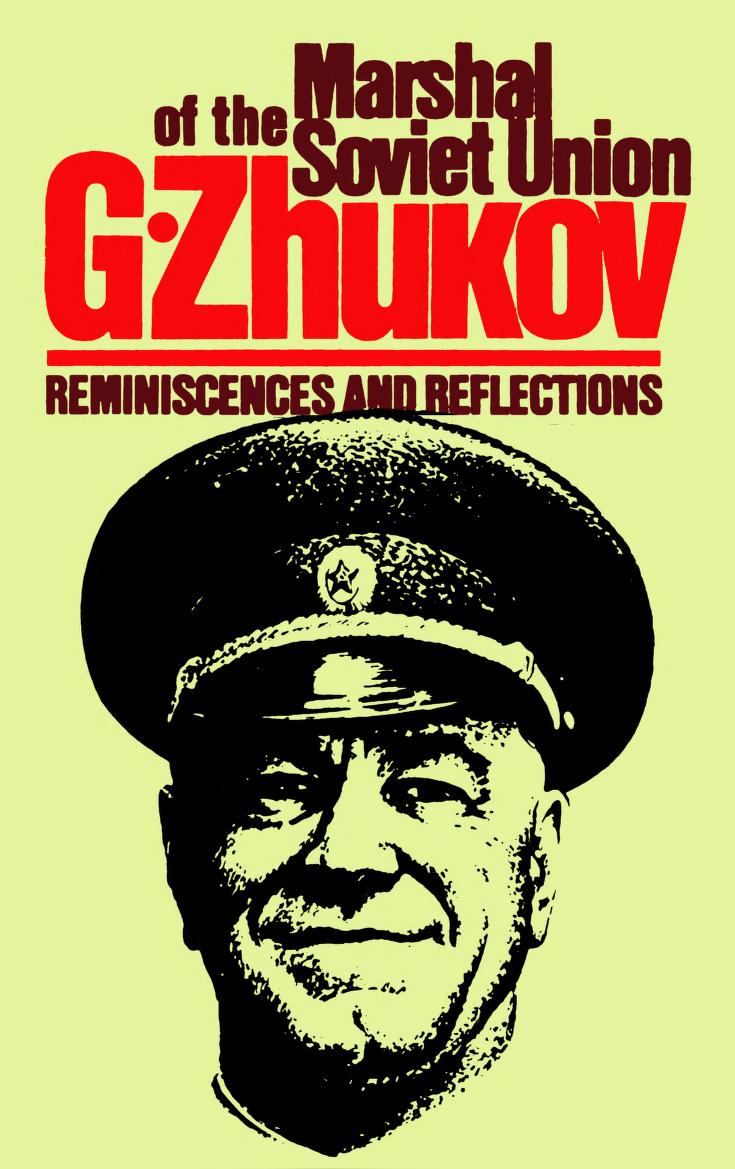
Marshal Georgi Zhukov (1896–1974) was a distinguished Soviet military leader and a key figure in the Soviet victory during World War II. He joined the Soviet Army in 1918 and rose to become Chief of General Staff by 1941. As Deputy Supreme Commander from 1942, he led crucial operations including the Soviet counteroffensive at Yelnya, the defence of Leningrad and Moscow, and the decisive battles of Stalingrad and Kursk. He also directed the breakthrough of the Leningrad blockade and commanded the First Byelorussian Front in the final assault on Berlin. Zhukov accepted Germany’s unconditional surrender on 8 May 1945.
After the war, he served as Minister for Defence and received numerous Soviet and international honours, including four Hero of the Soviet Union awards. This text, based on both personal memory and official records, presents Zhukov as a brilliant strategist, deeply respected by his peers, known for his clarity, courage, decisiveness, and composure under pressure. His leadership played a central role in the Soviet Union’s defeat of Nazi Germany.
Marshal of the Soviet Union
A.M. VASILEVSKY
Translated from the Russian by N. Burova (Chs. 22, 23), R. Daglish (Ch. 15),
P.Garb (Ch. 16), G. Kozlov (Ch. 17), S. Sossinsky (Ch. 21), M. Sydney
(Chs. 14, 18, 19, 20)
Designed by Alexander Smirnov
This is a cleaned, optimised scan by Ismail, sent to him by Christian Kellum.
From Thomas Mrett’s Archive Collection.
You can get the Volume 1 here and here.
You can get the Volume 2 here and here.
Volume 1
Foreword 7
CHAPTER 1. Childhood and Youth 17
CHAPTER 2. A Soldier’s Life 43
CHAPTER 3. I Take Part in the Civil War 58
CHAPTER 4. Regimental and Brigade Commander 94
CHAPTER 5. At the Red Army’s Cavalry Inspectorate. In command of the 4th Cavalry Division 128
CHAPTER 6. The 3rd and 6th Cavalry Corps of the Byelorussian Military District 165
CHAPTER 7. The Undeclared War on the Khalkhin G o l 177
CHAPTER 8. In Command of Kiev Special Military District . 207
CHAPTER 9. Eve of the War 227
CHAPTER 10. The War Begin s 280
CHAPTER 11. The Supreme Command G H Q 334
CHAPTER 12. The Enemy Yelnya Salient Is Eliminated .375
CHAPTER 13. The Fighting for Leningrad 415
Volume 2
CHAPTER 14. The Battle of Moscow 7
CHAPTER 15. The Ordeal Continues (1942) 68
CHAPTER 16. Strategic Nazi Defeat at Stalingrad 109
CHAPTER 17. The Crushing Defeat of the Nazi Troops in the Kursk Bulge 144
CHAPTER 18. Fighting for the Ukraine 212
CHAPTER 19. Liberation of Byelorussia and the Ukraine 264
CHAPTER 20. From the Vistula to the O d e r 301
CHAPTER 21. The Berlin Operation 342
CHAPTER 22. Unconditional Surrender of Nazi Germany 389
CHAPTER 23. The Potsdam Conference. The Control Council for
Governing Germany 429
Conclusion 474
Name Index 482
 Mir Books