An Unwritten Story By Somerset Maughan Novellas Raduga by Yu. Nagibin

Yuri Nagibin (b. 1920) published his first short story in 1940 while he was still a student at the Institute of Cinematography in Moscow. In June 1941, Nagibin volunteered for active duty and was posted to the front lines as a war correspondent for the Trud (Labour) newspaper.

The range of Nagibin’s themes is exceptionally broad: he has written about the war, dramatic aspects of contemporary life, childhood and children, hunting and nature, and much else. More than 50 collections of Nagibin’s stories have been published to date, with an aggregate of over 20 million copies sold. Collections of his works have been published in Chile, France, Great Britain, Holland, Italy, Japan, and the USA.

Nagibin has also written a number of film scripts, including The Little Girl and the Echo, which won the Grand Prix in Cannes and a silver sails award in Locarno. The Japanese film director Akira Kurosawa also used Nagibin’s script for his film Dersu Uzala, which won an Oscar.

This volume contains Nagibin’s better-known stories.

You can get the book here and here

Contents

Author’s Foreword. Translated by J. C. Butler 7
Echo. Translated by Natalia Lukoshkova 23
We Shall Live. Translated by Diana Russell 50
The Green Bird with the Bright Red Head. Translated by Graham Whittaker 73
Wanted Urgently! Grey Human Hair. Translated by J. C. Butler 92
Somewhere Near the Conservatoire. Translated by Robert Daglish 141
The Hushed Spring. Translated by J. C. Butler 231
The Outsider. Translated by Eve Manning 251
The Beautiful Horse. Translated by J. C. Butler 317
Envoy from a Mysterious Land. Translated by Valentina Jacque 331
The River of Heraclitus. Translated by Graham Whittaker 352
An Unwritten Story by Somerset Maugham. Translated by S. Kotlobye 418

Posted in books | Tagged , , , | Leave a comment

Anton Chekhov And His Times

An anthology of reminiscences of Anton Chekhov by various authors and contemporaries. The second part contains Chekhov’s correspondences in the form of letters with various writers and other contemporaries.

Translated from the Russian by Cynthia Carlile (Reminiscences) and
Sharon McKee (Letters)

Designed by Boris Kazachkov

Compiled by Andrei Turkov

You can get the book here and here

Contents

Introduction 7

Part One. REMINISCENCES 15
K. A. Korovin. From My Meetings with Anton Chekhov 16
V. G. Korolenko. Anton Pavlovich Chekhov .24
T. L. Shchepkina-Kupernik. On Chekhov 38
V. I. Nemirovich-Danchenko. Chekhov 74
M. M. Chitau. The Premiere of The Seagull (Reminiscences) .94
M. M. Kovalevsky. On A. P. Chekhov 100
K. S. Stanislavsky. A. P. Chekhov at the Arts Theatre (Reminiscences) 106
Maxim Gorky. A. P. Chekhov .175
I. A. Bunin. Chekhov 194
O. L. Knipper-Chekhova. About A. P. Chekhov 221
Notes .244

Part Two. LETTERS 249
To Alexander P. Chekhov. Between 20 and 29 February 1883 250
To Nikolai A. Leikin. Between 21 and 24 August 1883 257
To Nikolai A. Leikin. 12 October 1885 258
To Alexei S. Suvorin. 21 February 1886 .260
To Dmitry V. Grigorovich. 28 March 1886 .261
To Nikolai P. Chekhov. March 1886 .263
To Alexander P. Chekhov. 10 May 1886 267
To Maria V. Kiseleva. 29 September 1886 268
To Maria V. Kiseleva. 14 January 1887 .270
To Vladimir G. Korolenko. 17 October 1887 274
To Alexander P. Chekhov. 24 October 1887 275
To Alexander P. Chekhov. 20 November 1887 275
To Dmitry V. Grigorovich. 12 January 1888 .277
To Yakov P. Polonsky. 18 January 1888 .280
To Dmitry V. Grigorovich. 5 February 1888 .282
To Alexei S. Suvorin. 30 May 1888 .284
To Alexei N. Pleshcheyev. 15 September 1888 289
To Alexei N. Pleshcheyev. 4 October 1888 290
To Dmitry V. Grigorovich. 9 October 1888 291
To Alexei S. Suvorin. 18 October 1888 293
To Alexander S. Lazarev-Gruzinsky. 20 October 1888 .298
To Alexei S. Suvorin. 27 October 1888 .300
To Alexei S. Suvorin. 3 November 1888 .303
To Alexei S. Suvorin. 23 December 1888 307
To Alexei S. Suvorin. 7 January 1889 .308
To Alexei S. Suvorin. 7 May 1889 309
To Alexei S. Suvorin. 15 May 1889 .311
To Alexei S. Suvorin. 18-23 December 1889 .313
To Alexei S. Suvorin. 9 March 1890 .314
To Mikhail I. Tchaikovsky. 16 March 1890 317
To Alexei S. Suvorin. 1 April 1890 .318
To Vukol M. Lavrov. 10 April 1890 .318
To Alexei S. Suvorin. 9 December 1890 320
To Alexei S. Suvorin. 25 November 1892 322
To Alexei S. Suvorin. 3 December 1892 324
To Alexei S. Suvorin. 27 March 1894 325
To Anatoly F. Kony. 11 November 1896 .326
To Vladimir I. Nemirovich-Danchenko. 26 November 1896 .328
To Fyodor D. Batiushkov. 23 January 1898 .329
To Alexandra A. Khotyaintseva. 2 February 1898 .329
To Alexei S. Suvorin. 6 February 1898 330
To Olga G. Chekhova. 22 February 1898 .332
To Pavel F. Iordanov. 21 September 1898 .333
To Vladimir I. Nemirovich-Danchenko. 21 October 1898 .334
To Alexei M. Peshkov (Maxim Gorky). 16 November 1898 .334
To Alexei M. Peshkov (Maxim Gorky). 3 December 1898 .335
To Pavel F. Iordanov. 25 January 1899 337
To Alexander I. Urusov. 1 February 1899 337
To Lidia A. Avilova. 18 February 1899 338
To Alexei S. Suvorin. 4 March 1899 339
To Ivan I. Orlov. 18 March 1899 339
To Alexei M. Peshkov (Maxim Gorky). 25 April 1899 340
To Pavel F. Iordanov. 15 May 1899 .341
To Alexei M. Peshkov (Maxim Gorky). 3 September 1899 341
To the Moscow Arts Theatre. 1 October 1899 .342
To Olga L. Knipper. 4 October 1899 343
To Vladimir I. Nemirovich-Danchenko. 24 November 1899 .344
To Olga L. Knipper. 2 January 1900 345
To Mikhail O. Menshikov. 28 January 1900 346
To Olga L. Knipper. 9 August 1900 348
To Ivan A. Bunin. 15 January 1902 .348
To Alexander N. Veselovsky. 25 August 1902 .349
To Sergei P. Diaghilev. 30 December 1902 350
To Alexander I. Sumbatov-Yuzhin. 26 February 1903 .351
To Sergei P. Diaghilev. 12 July 1903 352
To Vladimir G. Korolenko. 15 July 1903 .353
To Vladimir L. Kign-Dedlov. 10 November 1903 .353
To Alexander V. Amfiteatrov. 13 April 1904 .354
Notes 357

Posted in books | Leave a comment

Afghan Diary by Mike Davidow

Afghan Diary by Mike Davidow offers a vivid and intimate portrayal of Afghanistan during a time of significant turmoil. Through the diary format, Davidow provides a deeply personal account that blends his own experiences with sharp socio-political analysis. His detailed observations bring to life the everyday struggles and resilience of the Afghan people, while also shedding light on the broader political dynamics at play. The book’s strength lies in its ability to humanize the complexities of Afghan society, offering readers a nuanced and compelling insight into a nation often misrepresented or misunderstood.

You can get the book here and here

Contents


Ancient Afghanistan Is Making Up for Lost Time 5

A Look Back to See Ahead 12

The Truth About Soviet Soldiers in Afghanistan 18

The Revolution on the Land 26

The Cultural Revolution in the Shanee Village and

a Girls’ School in Kabul 31

The Truth About a People’s Army 39

The Dead End of Counterrevolution 45

The National Fatherland Front 51

The Youth-Guardians of the Revolution 58

The Revolution and Women 64

More Than Six Decades of Soviet Aid 69

The Significance of the Afghan Revolution 76

Posted in books | 2 Comments

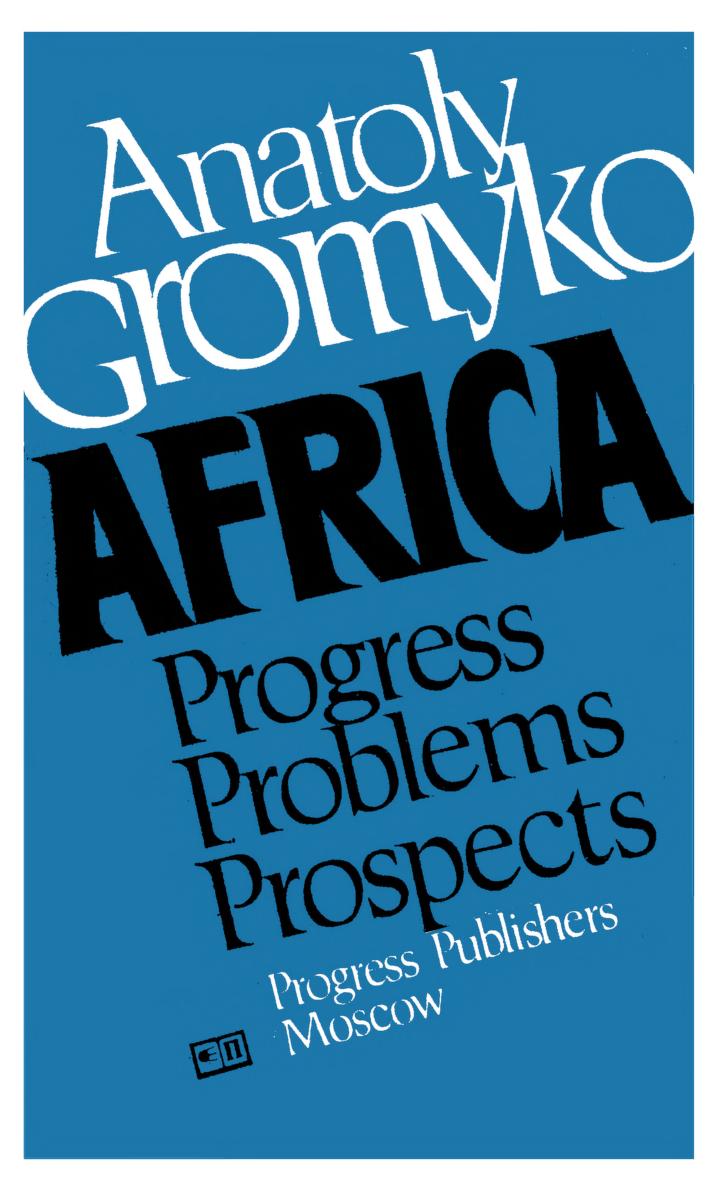
Africa Progress, Problems, Prospects by Anatoly Gromyko

(An Analysis of the 1960s-1970s)

This book is devoted to current problems such as the struggle to bring down the last bastions of colonialism and racism on the continent, the distinctive features of the rise and course of the class struggle in newly emerged African states, the international role of these states and their relations with the socialist world and with the capitalist powers. In order to present a clear pic­ture of the most acute problems facing Africa at the threshold of the 80s it was necessary to bring in a large amount of factual material. The author received active assistance in preparing this monograph from meetings and conversations with scholars, go­vernment and political leaders, and representatives of the Afri­can public.


Anatoly Gromyko is the Director of the USSR Academy of Sciences Institute of Africa. He is a professor of history and holds the degree of Doctor of Sciences. His published works include the books The United States Congress: Elections, Organization, Powers (1967), The 1,036 Days of President Kennedy (1968), The Foreign Policy of the USA: Lessons and Reality—the 60s and 70s (1978), and The Conflict in the South of Africa (1979). He has been awarded the State Prize of the USSR (1980) and the International SIMBA Prize (1980).

Translated from the Russian by Dudley Hagen Designed by Alexei Ostromentsky

Credits to the original uploaders, this is a cleaned optimised scan.

You can get the book here and here

CONTENTS

Africa on the Threshold of the 80s: Achievements and Problems

– Chapter 1. The October Revolution and Africa 11
– Chapter 2. Soviet Authors on Current Issues in the Study of Africa 20
– Chapter 3. The Current Stage in the National Liberation Movement 34
– Summing Up the National Liberation Struggle at the Threshold of the 80s 34
– The Organization of African Unity in the Anti-Imperialist National Liberation Struggle 41

Chapter 4. Africa: Problems of Overcoming Backwardness and the Search for Paths of Development 52

– Social and Economic Backwardness in African Countries: Causes and Consequences 52
– The Search for New Paths of Social and Economic Development 61

Chapter 5. The Socialist Orientation: A New Reality on the African Continent 75

– The Theory and Practice of the Socialist Orientation 75
– The Working Class in the African Countries: the Leading Force in Social Development 91

Chapter 6. The Influence of International Factors on the Development of Countries of the Socialist Orientation 98

– The Multiform Influence of Existing Socialism 101
– Basic Aspects of the Foreign Policy of Countries of the Socialist Orientation 105
– Support for Countries of the Socialist Orientation by Revolutionary and Peace-Loving Forces 112
– Subversion by Imperialism 115

Part II: Soviet-African Co-operation: An Important Factor in World Development

– Chapter 1. Some Results of the Development of Soviet-African Relations 121
– Chapter 2. Co-operation between the USSR and African Countries: Tendencies and Prospects 139
– The Objective Basis of the USSR’s Ties with African Countries 139
– The Development of Political Ties 142
– Economic, Scientific, and Technological Co-operation 144
– Co-operation Between African Countries and the CMEA Countries 159
– Contacts Between the Soviet and African Public 169

Part III: Imperialism: The Chief Threat to Social Progress in Africa

– Chapter 1. The Economic Interests of the Imperialist Powers in Africa 176
– Export of Raw Materials from Africa by Western Countries 176
– Export of Foreign Capital to African Countries 180
– Economic Pressures Exerted by Imperialism on African Countries 183

– Chapter 2. The Main Features of the Policy of Imperialism in Africa 190
– Some of the Methods of Imperialist Policy in Africa 190
– The Policy of the Imperialist Powers in the South of Africa 195
– Doctrines and Conceptions Intended to Justify Imperialist Policy in Africa 201

– Chapter 3. The USA: The Chief Threat to the Independence and Social Progress of the Countries of Africa 206
– Economic Factors in the USA’s African Policy 206
– The Chief Strategic Goals and Tactical Devices of US Policy in Africa 213

– Chapter 4. The Policy of Other Imperialist Powers Towards Africa 221
– Britain: the Policy of Maneuvering 221
– France: Struggle for the Preservation of Interests 227
– The Federal Republic of Germany: Attempts to Strengthen Positions 233
– Japan: Striving for Activation 236

Conclusion 241

Posted in books | Tagged , , , , | Leave a comment

The Jewish Autonomous Region by D. Bergelson

A short booklet describing life in the Jewish autonomous region in Soviet Russia.

Artist: H. Klering


You can get the book here and here

Posted in books | Tagged , , | Leave a comment

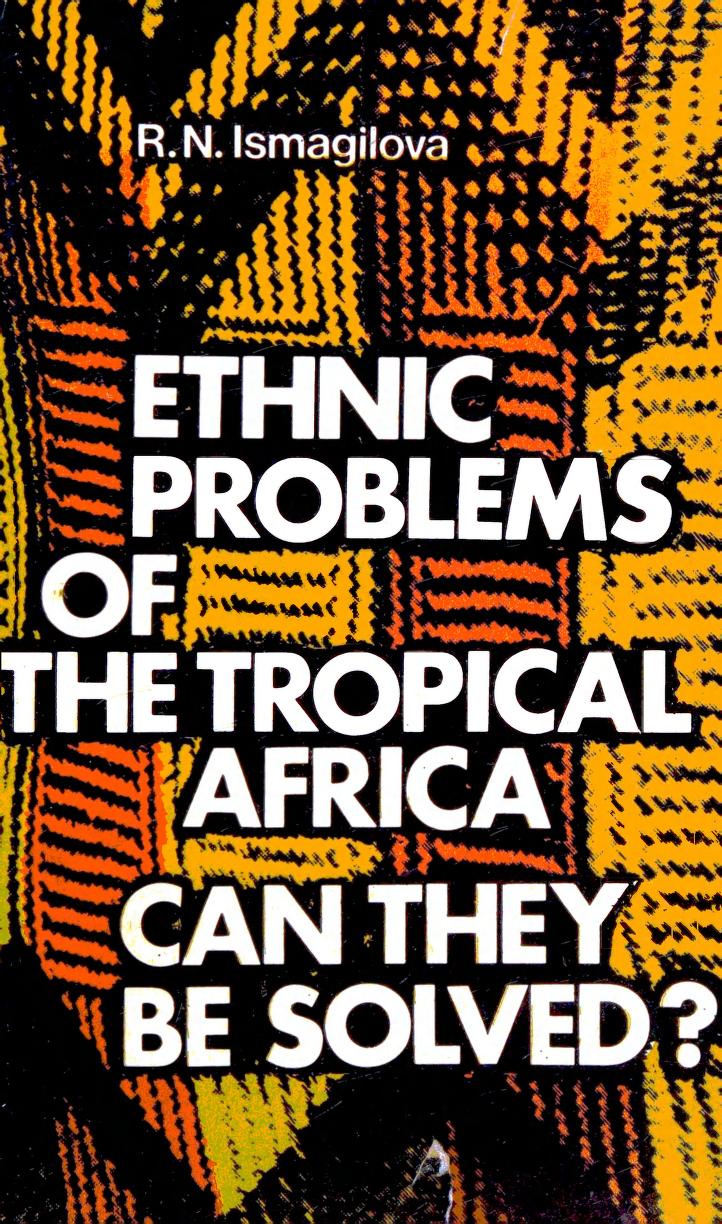
Ethnic Problems Of Tropical Africa Can They Be Solved? by R. N. Ismagilova

Dr. Ismagilova’s book on the ethnic problems of Tropical Africa is the first monograph in Marxist African studies to extensively cover these issues in this region. The author utilizes a wealth of diverse source materials and literature in various languages, along with her personal observations in seventeen African countries. The book’s value lies in its ability to highlight and differentiate the general and specific aspects of the complex ethnic evolution of Tropical Africa, demonstrating the applicability of general laws and patterns of social and ethnic development in African conditions.

Dr. Ismagilova discusses the role of the ethnic factor in contemporary Tropical Africa, its impact on political life, and the efforts of governments to implement social and economic measures. She reveals the social roots and nature of ethnic contradictions and antagonisms in this area, discusses the principles set out in African government and party programs for addressing national issues, and describes the steps taken by several governments in this regard.

Additionally, Dr. Ismagilova examines the special nature of ethnic processes and national integration in Africa, emphasizing the close link between ethnic problems and social and economic reform programs. She outlines possible methods for addressing the ethnic problems of Tropical Africa, dedicating a special chapter to the approaches used in the Soviet Union. Dr. Ismagilova believes that the ethnic problems in Tropical Africa can be resolved through consistent and profound social reforms, acknowledging that this will be a lengthy process of social evolution, not easily addressed through administrative solutions, and ultimately requiring a profound transformation of African society.

Dr. Roza Ismagilova: A Leading Soviet Africanist

Dr. Roza Ismagilova, a leading Soviet Africanist with over twenty-five years of experience in the history and social anthropology of Africa, was born in Tomsk, Siberia, to a Tatar geologist. Educated in Kazakhstan and Uzbekistan, she observed the national policies of the Communist Party of the Soviet Union. After graduating in history from Central Asian University in Tashkent, she pursued postgraduate studies at the Institute of Ethnography of the USSR Academy of Sciences in Moscow, earning her Candidate’s degree in 1955 and her doctorate in history in 1971. Dr. Ismagilova worked at the Institute of Ethnography until 1960, when she joined the newly founded Africa Institute of the Academy, where she has been a staff member since its inception.

A skilled linguist, Dr. Ismagilova speaks Tatar and Russian (her mother tongue), and has studied Kazakh, Uzbek, German, French, English, Portuguese, and Swahili. She has visited seventeen African countries, conducting on-site studies of ethnic problems, and has participated in numerous international conferences, symposia, and seminars. An editor of several scientific publications, her own works (in Russian) include The Peoples of Kenya under the Colonial Regime (1956), The Peoples of Nigeria. Ethnic Composition and Brief Ethnographic Description (1963), and Ethnic Problems of Contemporary Tropical Africa (1973).

Translated from the Russian by A.N. Uthernitt
Designed by D. Anikeev

Credits to the original uploaders, this is a cleaned optimised scan.

You can get the book here and here

Contents


Introduction
Page 7

Chapter One: Forms of National Oppression under the Colonial Regime
Page 22

Chapter Two: Effect of the Ethnic Factor in Consolidating National Independence and Socio-Economic Development
Page 43

Chapter Three: The Nature and Roots of Ethnic Tensions and Conflicts
Page 79

Chapter Four: Ways and Methods of Dealing with Ethnic Problems
Page 99

1. Principles for Dealing with Ethnic Problems in Government and Party Programmes
Page 100

2. The Tackling of Ethnic Problems in Practice
Page 135

Chapter Five: Difficulties in Dealing with Ethnic Problems
Page 184

1. Discrepancies between Ethnic and Political Boundaries
Page 184

2. Self-Determination and Separatism
Page 191

Chapter Six: The Interaction of National and Social Factors
Page 199

Chapter Seven: Is It Possible to Live without Ethnic Conflicts?
Page 241

Conclusion
Page 260

References and Selected Bibliography
Page 271

Geographical Index
Page 294

Ethnic Index
Page 298

Name Index

Page 301

Posted in books | Tagged , , , | Leave a comment

Methodology Of History by E. Zhukov

The book, with an introduction by Z. Udaltsova, delves into the field of history as a scientific discipline. It begins by exploring the subject matter and cognitive theories related to historical science, emphasizing the partisanship present in ideological battles within the field. The second section addresses the laws governing the world historical process, including sociological and historical laws, socio-economic formations, social revolutions, the periodization of history, and social progress. The final section, “The Researcher’s Laboratory,” discusses the nature of historical facts and sources. The book concludes by examining the relationship between history and contemporary times, offering a comprehensive look at the methodology and philosophical underpinnings of historical research.

World History: Studies by Soviet Scholars ( l )

Edited by M.Gonoharuk and F.Belelyubsky,

You can get the book here and here

Z. Udaltsova – Introduction 5

Section I. History as a Scientific Discipline
The Subject of Historical Science 11
The Theory of Cognition of the Human Past 23
Partisanship in the Battle of Ideas in Historical Science 38

Section II. The Laws of the World Historical Process
Sociological and Historical Laws 59
Socio-Economic Formations 80
Social Revolutions 101
The Division of History into Periods (the Periodisation
of History) 122
Social Progress 155

Section III. The Researcher’s Laboratory
The Historical Fact 173
The Historical Source 185

Conclusion. History and Our Times 195

Posted in books | Tagged , , , , , , , | Leave a comment

Samarkand A Guide Book by I. Umnyakov, Y. Aleskerov

This is a book about the fascinating city of Samarkand, a city rich in the splendid relics of ancient Central Asian civilisations.

There is many a legend surrounding its history. Its praises have been sung by the writers and poets of old and it has been the home of great scholars and architects whose works still stand in all their glory to delight and amaze us.

Translated by Kathleen Cook Designed by Leonid Shkanov
Photographs by: V. Panov, G. Zelman, N. Rakhmanov, D. Smirnov, V. Gippenreiter, A. Shagin, N. Granovsky, TASS, APN

You can get the book here and here

INTRODUCTION 5

SAMARKAND OVER THE CENTURIES
History up to the Revolution 13
Spread of New Ideas 29

TO GREET THE DAWN
The Fight for Freedom 39
Birth of a New Life 44

SAMARKAND TODAY AND TOMORROW
Industry and Agriculture 55
Building and Town Planning 62
Education 68
Science and Culture 76
Health 83
Samarkand Tomorrow 87

ANCIENT MONUMENTS
Afrasiab 99
Bibi Khanum Mosque 106
Bibi Khanum Mausoleum 110
Gur Emir Mausoleum 111
Ak Sarai Mausoleum 117
Ruhabad Mausoleum 118
Shah Zindeh 118
Registan 131
Ulugh Beg Madrasah 135
Ulugh Beg Observatory 139
Ishrat Khan 144
Khoja Abdu-Darun, Khoja Abdu-Birun
and Chupan Ata Mausoleums 145
Zarafshan Bridge 147
Shaibanid Dahma 147
Shir Dor Madrasah 147
Tilla Kari Madrasah 151
Chor Su 153

REVOLUTIONARY MONUMENTS

First Library 157
Underground Printing Press 159
Officers’ Club 162
Freedom Monument 164
Museum of the History
of Culture and Art 167
Lenin Statue 171
The Registan and the Revolution 174
Monument to Fallen Heroes 178

Contents 184

Posted in books | Tagged , , , , , , , , | Leave a comment

The Moscow Theatres by V. Kommisarzhevsky

Victor Komissarzhevsky is a well-known producer and dramatic critic. He was a pupil of Nikolai Khmelyov, a prominent personality of the Soviet stage, and has produced several highly successful plays at the Yermolova Theatre, which Khmelyov founded. These included a dramatization of Pavlenko’s Happiness, dealing with the return of Soviet people from the war to civilian life, Andrei Globa’s poetic drama Pushkin, depicting the famous Russian poet’s tragic life, Nazim Hikmet’s Crank, and others. He imparted very interesting touches to plays by Maxim Gorky and Ivan Turgenev. His interpretation of Shakespeare’s A Midsummer Night’s Dream is noteworthy, all the more so because of the excellent acting of the great Kachalov. One of the latest of Komissarzhevsky’s productions is Oscar Wilde’s Lady Windermere’s Fan at the Moscow Maly Theatre. The author of this book is also known as a cinema director.

Apart from Komissarzhevsky’s work at the theatre, he became prominent as a stage critic and theorist. In Talks Given by a Producer, he explores the problems of the scenic image and action; Khmelyov at the Producer’s Desk is a comprehensive study of his methods that was well received by art critics. Komissarzhevsky’s work is not purely academic; he also deals with stage problems of the day in the columns of magazines and newspapers.

Note: Some content is lost at margins.

Translated from the Russian by Vic Schneierson and W. Perelman

You can get the book here and here

Contents

A Little History 7

At the Bolshoi 51

Ostrovsky House 83

Two Nights at the art Theatre 111

Moscow at Seven-thirty 141


Posted in books | Tagged , , , , , , , | Leave a comment

A Short History Of The USSR by S. Schmidt, K. Tamovsky, I. Berkhin

Progress Guides to the Social Sciences

Written by prominent Soviet historians, this is a popular textbook intended for a wide range of readers beginning to study the history of the Soviet Union. The book is a very short account of the history of the USSR’s peoples from ancient times to our day. Attention is focused on the country’s contemporary history, ushered in by the Great October Socialist Revolution. The authors describe the principal stages in the country’s development and its role in world history.

Translated from the Russian by Sergei Sossinsky

You can get the book here and here

Contents

Introduction 5

Chapter 1. Slave-Owning States and the Communities of European and Asian Tribes on the Territory of the Soviet Union (First Millennium B.C.-Early Centuries A.D.) 7

Chapter 2. Early Feudal States in Transcaucasia and Central Asia 12

Chapter 3. Ancient Russia 17

Chapter 4. Years of Oppression by the Horde 27

Chapter 5. The Rise of Moscow 32

Chapter 6. The 17th Century: the Age of Rebellion 46

Chapter 7. The Early 18th Century in Russia; The Establishment of Absolute Monarchy. The Reforms of Peter the Great 52

Chapter 8. The Age of Palace Conspiracies. Russia in the Middle and Second Half of the 18th Century 59

Chapter 9. The First Half of the 19th Century in Russia. The Patriotic War of 1812. The Crisis of Serfdom 71

Chapter 10. Socio-Economic Development in Russia After the Reform 82

Chapter 11. From the Narodnik Movement to Marxism. The Beginning of Lenin’s Revolutionary Activities 87

Chapter 12. The Eve of the First Revolution in Russia. The Revolution of 1905-1907: the First Popular Revolution of the Imperialist Epoch 95

Chapter 13. From Reaction to a New Revolutionary Upheaval. Russia’s Culture in the Second Half of the 19th Century and the Early 20th Century 108

Chapter 14. The Years of the World War. The Second Revolution in Russia 118

Chapter 15. From the Fall of Autocracy to the Victory of the Great October Socialist Revolution 128

Chapter 16. The Building of the Soviet State and Its Creative Activities 138

Chapter 17. The Imperialist Intervention and Civil War. Elimination of Post-War Economic Ruin 155

Chapter 18. The Formation of the Multinational State—the Union of Soviet Socialist Republics 174

Chapter 19. Lenin’s Plan for Building Socialism in the USSR 179

Chapter 20. The USSR Becomes an Industrialised Power 182

Chapter 21. Socialist Transformations in the Soviet Village 195

Chapter 22. The Cultural Revolution in the USSR 206

Chapter 23. The Triumph of Socialism in the USSR 214

Chapter 24. The USSR in the Second World War and the Defeat of Fascism 226

Chapter 25. The Restoration and Further Development of the Country’s Socialist Economy 238

Chapter 26. The Rise of a Developed Socialist Society 246

Chapter 27. Extensive Communist Development in the USSR (1960s-1970s) 268

Chapter 28. The Constitution of a Developed Socialist Society 288

Chapter 29. Basic Trends in the Foreign Policy of the USSR in the Post-War Period 297

Posted in books | Tagged , , , , , , | Leave a comment