The Lost Girl And The Scallywags by Galina Demykina

In this post, we will see the book The Lost Girl And The Scallywags by Galina Demykina.

WHO DWELLS WITHIN THIS BOOK

Within this book there dwells a little girl with pigtails. Her name is Zoya. And she is very fond of drawing. She always keeps a pencil and a sketchbook handy in her pocket, and paints and a painting book on the table. W e shall also meet Zoya ’s Mother and Aunt Janina. Aunt Janina
is the one in glasses: she doesn’t wear them all the time, only when she’s nervous. She has put them on now so that you won’t mix her up with Mother. We must make the acquaintance, too, of Luba Vilkina, who has short hair. Try to remember her for later. That’s all for the moment. Other characters will appear in due course. It all begins very simply.

The book was translated from Russian by James Riordan and was illustrated by Vasily Shulzhenko. The book was published in 1977 by Progress Publishers.

All credits to Guptaji.

You can get the book here.

Follow us on The Internet Archive: https://archive.org/details/@mirtitles

Follow Us On Twitter: https://twitter.com/MirTitles

Write to us: mirtitles@gmail.com

Fork us at GitLab: https://gitlab.com/mirtitles/

Add new entries to the detailed book catalog here.


Posted in books | 2 Comments

Ultraweak Luminescence Accompanying Biochemical Reactions – Vladimirov

In this post, we will see the book Ultraweak Luminescence Accompanying Biochemical Reactions Yu. A. Vladimirov.


About the book

In this book we will endeavor to demonstrate that although biochemical or photochemical reactions leading to the formation of products entering into the chemiluminescence reaction are not the same in different systems, the final stages of the process, ending with the luminescence of a quantum, have many features in common and only their comparison in a study of different systems
makes possible an understanding of many very important characteristics of the luminescence mechanism. In accordance with this idea the author has striven /4. not only to demonstrate the widespread occurrence of ultraweak luminescence in biological systems, but also most importantly to consider the biochemical reac­tion mechanisms facilitating the process and the actual transformation of the chemical reaction energy into molecular excitational energy; in other words,
we have attempted to approach the problem of ultraweak luminescence from the biochemical and biophysical points of view.

Translation of ”Sverkhslabyye svecheniya pri biokhimicheskikh reaktsiya.”
USSR Academy of Sciences, Institute of Biological Physics.
Izdatel’stvo “Nauka.” Moscow, 1966

Published by NASA Technical Translation in 1967

You can get the book here.

Original scan by NASA Technical Translation.

Follow us on The Internet Archive: https://archive.org/details/@mirtitles

Follow Us On Twitter: https://twitter.com/MirTitles

Write to us: mirtitles@gmail.com

Fork us at GitLab: https://gitlab.com/mirtitles/

Add new entries to the detailed book catalog here.

Contents

Posted in biology, books, chemistry, NASA Technical Translations, physics | Tagged , , , , | Leave a comment

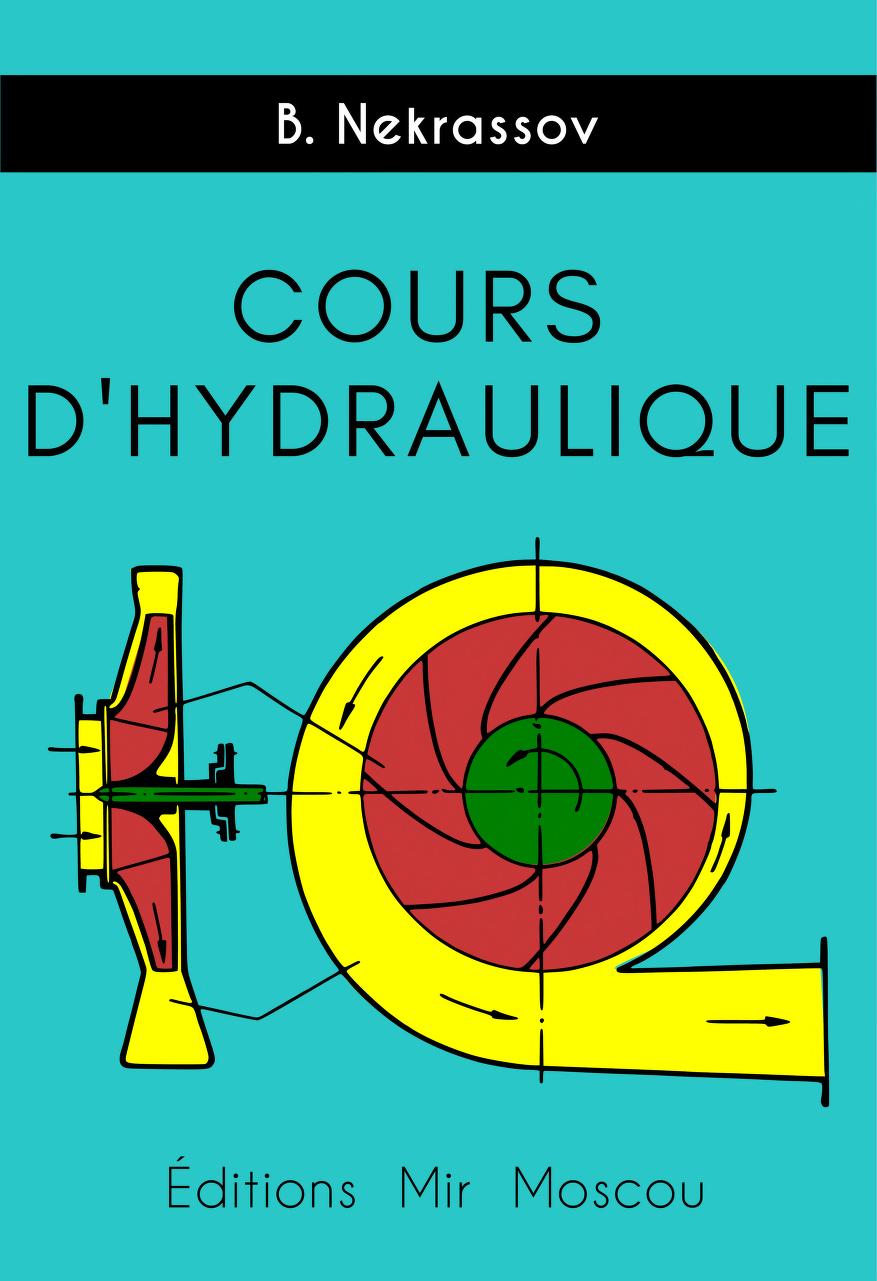
Cours D’ Hydraulique par B. Nekrassov

Dans cet article, nous verrons le livre Cours D’ Hydraulique par B. Nekrassov.

À propos du livre

Le livre couvre les aspects fondamentaux de l’hydraulique, des écoulements laminaires et turbulents. Le livre traite également des pompes, des compresseurs et des centrifugeuses.

Traduit du russe par G. Dountchevski

Un grand merci à Henri Leveque pour le scan original.

L’édition française a été publiée en 1978 par les éditions Mir.

Vous pouvez obtenir le livre ici.

(J’ai utilisé la traduction automatique, toutes mes excuses pour les erreurs.)

Suivez-nous sur Internet Archive: https://archive.org/details/@mirtitles

Suivez-Nous Sur Twitter: https://twitter.com/MirTitles

Écrivez-nous: mirtitles@gmail.com

Rejoignez-nous sur GitLab: https://gitlab.com/mirtitles/

Ajoutez de nouvelles entrées au catalogue de livres détaillé ici.

Posted in Éditions Mir, mathematics, physics | Tagged , , , , , , , , , | Leave a comment

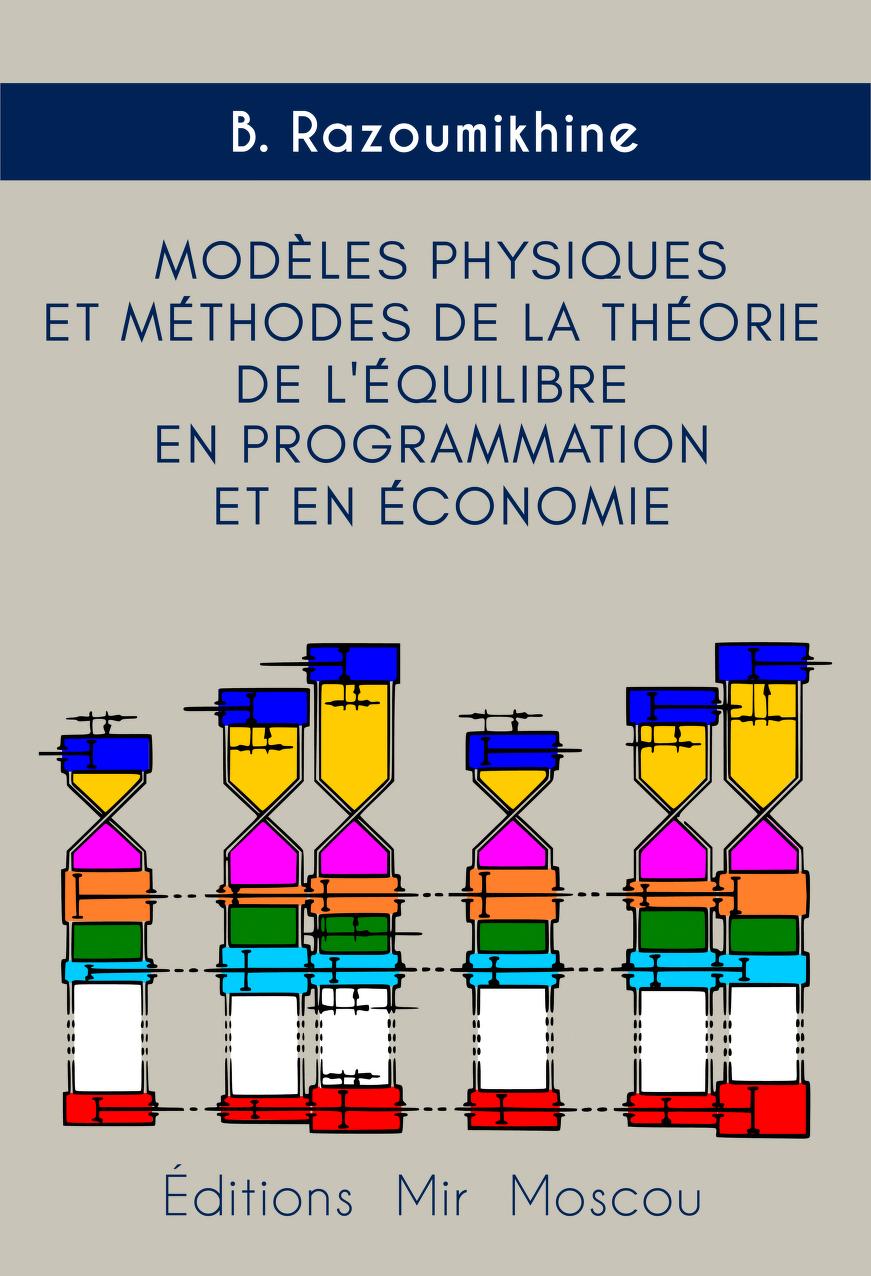
Modèles Physiques Et Méthodes De La Théorie De L’ Équilibre En Programmation Et Économie by B. Razoumikhine

Dans cet article, nous verrons le livre Modèles Physiques Et Méthodes De La Théorie De L’ Équilibre En Programmation Et Économie par B. Razoumikhine.

À propos du livre

L’auteur se propose en premier lieu d’étendre les principes et les méthodes de la mécanique analytique et de la thermodynamique aux problèmes de programmation mathématique et d’économie mathé­ matique. Pour comprendre les résultats obtenus point n’est besoin d’une culture mathématique très élevée car on se borne à des modèles physiques et mécaniques simples et on n’utilise en fait de modèles de milieux continus que les liquides incompressibles et les gaz parfaits. Comme chaque modèle représente un primai et son dual à la fois, les résultats essentiels de la théorie des équations et des inéquations linéaires, de la programmation linéaire et non linéaire et de l’écono­ mie mathématique acquièrent un support physique sensible (à la différence que dans le premier cas on prend pour paramètres d’état indépendants des variables extensives et dans le second des varia­ bles intensives). L’état d’équilibre du modèle définit donc les vecteurs optimaux des problèmes associés et il y a entre ces vecteurs des relations simples résultant de l’équation de Clapeyron-Mendéléev. Il en est de même des modèles économiques dynamiques qui s’inter­ prètent comme étant des transformations quasi ou pseudo-statiques des systèmes physiques.
De nombreuses pages sont consacrées à des méthodes numériques qui mettent en équations le passage des systèmes physiques d’un état initial quelconque à la position d’équilibre. L’idée de base est ici de commander ces phénomènes en introduisant successivement des liaisons redondantes provisoires indépendantes du temps, ce qui per­ met de décomposer l ’évolution spontanée vers l ’équilibre cherché en plusieurs processus élémentaires dont la description mathématique ne présente pas de difficulté. La convergence des algorithmes corres­ pondants découle des principes généraux de la thermodynamique.
La valeur des idées et des principes se mesure au nombre de bran­ ches scientifiques où ils trouvent des applications utiles, si bien que l’auteur estimera avoir atteint son but s’il arrive à montrer que les principes de la mécanique analytique et de la thermodynamique s’appliquent efficacement à la recherche économique.

 Traduit du russe par Irina Pêtrova.

L’édition française a été publiée en 1978 par les éditions Mir.

Un grand merci à Henri Leveque pour le scan original.

Vous pouvez obtenir le livre ici.

(J’ai utilisé la traduction automatique, toutes mes excuses pour les erreurs.)

Suivez-nous sur Internet Archive: https://archive.org/details/@mirtitles

Suivez-Nous Sur Twitter: https://twitter.com/MirTitles

Écrivez-nous: mirtitles@gmail.com

Rejoignez-nous sur GitLab: https://gitlab.com/mirtitles/

Ajoutez de nouvelles entrées au catalogue de livres détaillé ici.

Posted in Éditions Mir, french | Tagged , , , , , , , , | Leave a comment

Méthodes Mathématiques En Théorie De La Fiabilité – Principales caractéristiques de fiabilité et leur analyse statistique par Gnedenko, Beliaev, Soloviev

Dans cet article, nous verrons le livre Méthodes Mathématiques En Théorie De La Fiabilité – Principales caractéristiques de fiabilité et leur analyse statistique par B. Gnedenko; Y. Beliaev; A. Soloviev.

À propos du livre

Les problèmes de la théorie de la fiabilité sont multiformes. Ils touchent les aspects technologiques, économiques, constructifs, physico-chimiques et d ’organisation et témoignent de la nécessité d ’élaborer un appareil mathématique développé adapté à la spécificité des questions soulevées. C’est pourquoi il est fort naturel que voient le jour divers ouvrages consacrés à la théorie de la fiabilité et l ’éclairant chacun sous un certain angle de vue. Nous n ’avons considéré dans notre livre que les méthodes mathématique de certaines branches de la théorie de la fiabilité. Un bref aperçu du contenu de ce livre permettra de s ’en convaincre. Le premier chapitre présente un caractère d’introduction. Nous y exposons les principales notions de la théorie des probabilités et de la statistique mathématique ainsi que les énoncés des principaux théorèmes sur lesquels nous nous appuierons par la suite. Dans ce même chapitre nous avons donné également les principales propriétés de la transformation de Laplace que nous utiliserons aux chapitres 5 et 6.
Le second chapitre est consacré aux questions fondamentales, à l ’exposé des principales notions de la théorie de la fiabilité et à l ’étude des liaisons entre ses principales caractéristiques numériques. Nous nous écartons ici quelque peu de l’interprétation traditionnelle du terme de « fiabilité » et nous donnons, semble-t-il, une approche suffisamment large, permettant d’englober les diverses définitions qui ont été proposées daa&^la Littérature scientifique.
Nous estimons que cette approche théorique ensembliste de la théorie de la fiabilité et de ses principales notions permet dans la plus grande mesure d ’élucider les phénomènes qu’elle étudie et doit par conséquent faire l ’objet d ’un exposé clair et net.Les chapitres trois et quatre ont un caractère statistique. On y expose les méthodes d ’estimation des paramètres de fiabilité d ’après les résultats des essais, ainsi que les voies permettant de vérifier divers types d ’hypothèses sur la fiabilité. On formule également certaines propositions de la statistique mathématique, sur lesquelles nous nous appuyons. Une notable partie de ces chapitres est consacrée au cas de la distribution exponentielle, qui, pour le moment, joue un rôle dominant dans la théorie de la fiabilité. Dans les chapitres cinq et six on étudie l ’important procédé permettant d ’élever la fiabilité des systèmes, la réservation. Au chapitre cinq on étudie divers problèmes de réservation sans renouvellement, au chapitre six la réservation avec renouvellement.
Le chapitre sept-est consacré aux problèmes de contrôle de la qualité de la production. Dans les questions du contrôle courant nous nous sommes bornés à l ’énoncé des problèmes. Notre attention a été concentrée sur les problèmes du contrôle d ’acceptation. Nous n ’avons donné que quelques schémas généraux, dont certains ne sont pas entièrement élaborés au point de vue scientifique. Ce chapitre se distingue quelque peu des autres. Son contenu, ainsi que les méthodes qui y sont exposées peuvent être utiles en premier lieu aux employés des services de contrôle, ainsi qu’aux ingénieurs et aux techniciens chargés des questions de contrôle de la qualité et de la fiabilité.Le texte comporte de nombreux graphiques dont une grande partie n ’est présentée qu’à titre d ’illustration.

Traduit du russe par Guy Der-Megreditchian

L’édition française a été publiée en 1972 par les éditions Mir.

Un grand merci à Henri Leveque pour le scan original.

Vous pouvez obtenir le livre ici.

(J’ai utilisé la traduction automatique, toutes mes excuses pour les erreurs.)

Suivez-nous sur Internet Archive: https://archive.org/details/@mirtitles

Suivez-Nous Sur Twitter: https://twitter.com/MirTitles

Écrivez-nous: mirtitles@gmail.com

Rejoignez-nous sur GitLab: https://gitlab.com/mirtitles/

Ajoutez de nouvelles entrées au catalogue de livres détaillé ici.

Posted in Éditions Mir, french, mathematics | Tagged , , , , , | Leave a comment

Zoology – Textbook For 6th And 7th Forms – Shalayev, Rykov

In this post, we will see the book Zoology – Textbook For 6th And 7th Forms
by V. F. Shalayev and N. A. Rykov.

About the book

A textbook of zoology for schools. Covers basics of classification of animals and describes features of each class.

The book was translated from Russian by O. G. Tabachnikova was published in 1966 by Prosveshcheniye Publishing House.

Credits to original uploader.

You can get the book here.

Follow us on The Internet Archive: https://archive.org/details/@mirtitles

Follow Us On Twitter: https://twitter.com/MirTitles

Write to us: mirtitles@gmail.com

Fork us at GitLab: https://gitlab.com/mirtitles/

Add new entries to the detailed book catalog here.

Posted in books | 2 Comments

Plasma Turbulence – Kadomtsev

In this post, we will see the book Plasma Turbulence by B. B. Kadomtsev.

About the book

This book is a translation of a review by Academician B. B. Kadomtsev of the I. V. Kurchatov Institute, Moscow, which was written at my suggestion in order to have available in concise form the essence of the large body of papers on this difficult yet important subject. It was originally published in Russian in Volume 4 of “ Problems in Plasma Theory ”, edited by M. A. Leontovich (1964).
Academician Kadomtsev is a leading authority on plasma turbulence, and he and his colleagues have contributed many of the original papers on the subject. It is now well known that some form of turbulence is very frequently and often disastrously present in experiments on the confinement of hot plasma. It is not impossible that in the quest for a thermonuclear plasma we shall ultimately have to deal with a more or less turbulent state, and the understanding of this state is therefore important to nuclear fusion research. I believe this book will contribute greatly towards such an under­ standing and help to stimulate further work on the subject.
Translated from the Russian by L. C. Ronson
Translation edited by M. G. Rusbridge

Credits to original uploader.

You can get the book here.

Follow us on The Internet Archive: https://archive.org/details/@mirtitles

Follow Us On Twitter: https://twitter.com/MirTitles

Write to us: mirtitles@gmail.com

Fork us at GitLab: https://gitlab.com/mirtitles/

Add new entries to the detailed book catalog here.

Contents

Posted in books, mathematics, physics, soviet | Tagged , , , | Leave a comment

Problems of Plasma Theory – Volkov, Sagdeyev, Sivukhin

In this post, we will see the book Problems Of Plasma Theory by T. F. Volkov; R. Z. Sagdeyev; D. V. Sivukhin.

About the book

A collection of articles discussing issues of plasma theory

Hydrodynamic Description of a Strongly Rarefied Plasma (T.F. Volkov) 3

Collective Processes and Shock Waves in a Rarefied Plasma (R. Z. Sagdeyev) 22

Coulomb Collisions in a Fully Ionized Plasma (D. V. Sivukhin) 88


Translation of “Voprosy Teorii Plazmy”. No. 4, pp. 1 -187, Moscow,
Atomizdat, 1964

The book was translated from Russian by was published in 1965 by NASA Technical Translations.

You can get the book here.

Original scan by NASA Technical Translation.

Follow us on The Internet Archive: https://archive.org/details/@mirtitles

Follow Us On Twitter: https://twitter.com/MirTitles

Write to us: mirtitles@gmail.com

Fork us at GitLab: https://gitlab.com/mirtitles/

Add new entries to the detailed book catalog here.

Contents

Posted in books, NASA Technical Translations, physics | Tagged , , , , | 3 Comments

High Frequency Properties of Plasma – Sinel’nikov

In this post, we will see the book High Frequency Properties Of Plasma
by K. D. Sinel’nikov ( Ed.).

About the book

These articles present the results derived from theoretical and experimental investigations of high frequency plasma properties: the methods of high fre­ quency plasma heating, propagation of electromagnetic
waves in a magnetoactive plasma, thermal radiation of
a plasma, and development of instabilities when employing high frequency methods of plasma heating. A description is provided of experimental equipment developed for high frequency heating and containment of a plasma.

This collection is designed for scientific researchers and engineers dealing with the problems of a plasma and its technical application, as well as for students and graduate students in the physics departments of universi­ties and physical-technical institutes.

The book was translated from Russian by was published in 1965 by NASA Technical Translations.

Translation of “Vysokochastotnyye Svoystva Plazmy.” Academy of Sciences, Ukrainian SSR, Izdatel’stvo “Naukova Dumka,” Kiev, 1965.

You can get the book here.

Original scan by NASA Technical Translation.

Follow us on The Internet Archive: https://archive.org/details/@mirtitles

Follow Us On Twitter: https://twitter.com/MirTitles

Write to us: mirtitles@gmail.com

Fork us at GitLab: https://gitlab.com/mirtitles/

Add new entries to the detailed book catalog here.

Contents

SECTION I: HIGH FREQUENCY PLASMA HEATING 1
INVESTIGATION OF THE ENERGY OF CHARGED PARTICLES EMANATING FROM A MAGNETIC TRAP DURING HIGH FREQUENCY HEATING N. I. Nazarov, A. I. Yermakov, V. T. Tolok 1
MEASUREMENT OF THE PERPENDICULAR ENERGY COMPONENT AND THE PLASMA DECAY TIME DURING HIGH FREQUENCY HEATING N. I. Nazarov, A. I. Yermakov, V. T. Tolok  6
HIGH FREQUENCY ENERGY ABSORPTION BY A PLASMA IN ION CYCLOTRON RESONANCE IN STRONG, HIGH FREQUENCY FIELDS V. V. Chechkin, M. P. Vasii’yev, L. I. Grigor’yeva, B. I. Smerdov. 11
INVESTIGATION OF CONDITIONS PRODUCING A DENSE PLASMA IN A METALLIC CHAMBER AND ITS HIGH FREQUENCY HEATING O. M. Shvets, S. S. Ovchinnikov, V. P. Tarasenko, L. V. Brzhechko, 0. S. Pavlichenko, V. T. Tolok 22
HIGH FREQUENCY PLASMA HEATING K. N. Stepanov 33
DIELECTRIC CONSTANT OF A PLASMA IN A DIRECT PINCH MAGNETIC FIELD AND IN A DIRECT HELICAL MAGNETIC FIELD V. F. Aleksin, V. I. Yashin 55
SECTION II: LINEAR PLASMA OSCILLATIONS 64
KINETIC THEORY OF ELECTROMAGNETIC WAVES IN A CONFINED PLASMA A. N. Kondratenko  64
KINETIC THEORY OF A SURFACE WAVE IN A PLASMA WAVE GUIDE M. F. Gorbatenko, V. I. Kurilko 75
SINGULARITIES OF AN ELECTROMAGNETIC FIELD IN A NONUNIFORM, MAGNETOACTIVE PLASMA V. V. Dolgopolov  80
EXCITATION OF A MAGNETOHYDRODYNAMIC WAVE GUIDE IN A COAXIAL LINE S. S. Kalmykova, V. I. Kurilko  89
THEORY OF MAGNETOHYDRODYNAMIC WAVE SCATTERING AT THE END OF A WAVE GUIDE V. I. Kurilko 91
DETERMINATION OF PLASMA TEMPERATURE AND DENSITY DISTRIBUTION BY REFRACTION AND DAMPING OF A BEAM V. L. Sizonenko, K. N. Stepanov. 100
SECTION III: PLASMA NONLINEAR OSCILLATIONS AND WAVE INTERACTION 110
EXCHANGE OF ENERGY BETWEEN HIGH FREQUENCY AND LOW FREQUENCY OSCILLATIONS IN A PLASMA V. D. Fedorchenko, V. I. Muratov, B. N. Rutkevich 110
DISSIPATION OF PLASMA OSCILLATIONS EXCITED IN A CURRENT- CARRYING PLASMA Ye. A. Sukhomlin, V. A. Suprunenko, N. I. Reva, V. T. Tolok. 119
DAMPING OF INITIAL PERTURBATION AND STEADY FLUCTUATIONS IN A COLLISIONLESS PLASMA A. I. Akhiyezer, I. A. Akhiyezer, R. V. Polovin. 127
CHARGED PARTICLE INTERACTION WITH A TURBULENT PLASMA I. A. Akhiyezer  133
THEORY OF NONLINEAR MOTIONS OF A NONEQUILIBRIUM PLASMA I. A. Akhiyezer 136
NONLINEAR PROCESSES IN A UNIFORM AND ONE-COMPONENT PLASMA N. A. Khizhnyak, A. M. Korsunskiy 143
INDUCED SCATTERING OF LANGMUIR OSCILLATIONS IN A PLASMA LOCATED IN A STRONG MAGNETIC FIELD
V. D. Shapiro, V. I. Shevchenko 151
NONLINEAR THEORY OF LOW FREQUENCY OSCILLATIONS EXCITED BY AN ION BUNDLE IN A PLASMA D. G. Lominadze, V. I. Shevchenko 159
NONLINEAR PHENOMENA IN A PLASMA WAVE GUIDE (ION CYCLOTRON RESONANCE AT A DIFFERENCE FREQUENCY) B. I. Ivanov. 172
SECTION IV: EXCITATION OF PLASMA OSCILLATIONS 180
RADIATION OF ELECTRONS IN THE PLASMA-MAGNETIC FIELD BOUNDARY LAYER V. V. Dolgopolov, V. I. Pakhomov, K. N. Stepanov  180
RADIATION OF LOW FREQUENCY WAVES BY IONS AND ELECTRONS OF A NON-ISOTHERMIC MAGNETOACTIVE PLASMA V. I. Pakhomov  183
BRAKING OF RELATIVISTIC PARTICLES IN LOW ATMOSPHERIC LAYERS V. B. Krasovitskiy, V. I. Kurilko 199
EXCITATION OF WAVES IN A CONFINED PLASMA BY MODULATED CURRENTS A. N. Kondratenko 203
Posted in Aerodynamics, books, mathematics, NASA Technical Translations, physics, soviet, technology | Tagged , , , , , , | Leave a comment

Zoology – Textbook for Schools – Naumov (Ed.)

In this post, we will see the book Zoology – Textbook for Schools edited by D. Naumov. The contributing authors are B. E. Bykhovsky; E. V. Kozlova; A. S. Monchadsky; D. V. Naumov; A. S. Sokolov; N. A. Rykov; P. V. Terentyev.

HOW TO USE THE TEXTBOOK

First get acquainted with the contents of the textbook. Some words in the text are printed in italics to make it easier to remember zoological terms. If the species of an animal is followed by an exclamation mark (‘), it means that this animal is rare and should be protected. On the margins of the book next to the questions and assignments you will see a red question mark (?), or a red triangle A, which means that the questions and assignments are given for review in order to remember the material better. If the assignment is marked by a red square , it should be accomplished by observing living animals, making experiments with them, or studying the structure of dissected animals.

Examine carefully the insides of the front and back covers of the textbook, where you will find reference data on zoology. An appendix is given at the end of the textbook, containing brief characteristics of the main phyla and classes of animals, as well as symbolic images of representatives of various classes. You will find the same images on the inside front cover, illustrating schematically the evolutionary trends of the main groups of the animal world. The index of main zoological terms indicates the pages where the terms are used.

Edited by D.Naumov
Translated from the Russian by M. Rosenberg
English translation edited by
T. A. Ginetsinskaya, D. Sc. (Biol.) and Cynthia Martin

The book was published in 1987 by Mir Publishers.

You can get the book here.

Follow us on The Internet Archive: https://archive.org/details/@mirtitles

Follow Us On Twitter: https://twitter.com/MirTitles

Write to us: mirtitles@gmail.com

Fork us at GitLab: https://gitlab.com/mirtitles/

Add new entries to the detailed book catalog here.

Posted in life sciences, mir books, mir publishers, soviet | Tagged , , , , , , , , , , , , , | Leave a comment