Méthodes Appliquées En Théorie Des Oscillations Non Linéaires par V. Starjinski

Dans cet article, nous verrons le livre Méthodes Appliquées En Théorie Des Oscillations Non Linéaires par V. Starjinski.

À propos du livre

L’ouvrage s’adresse aux ingénieurs mathématisants, aux chercheurs en mécanique et en mathématiques appliquées, ainsi qu’aux étudiants avancés et post-universitaires qui préparent leur thèse dans les facultés physico-techniques et physico-mathématiques.

Les origines du livre remontent à un cours professé par l’auteur dans la section Ingénieurs de la faculté de Mécanique-Mathématiques à l’Université Lomonossov de Moscou de 1956 à 1976. Grâce à la coopération bienveillante de mes collègues de la Chaire des Mathématiques appliquées de l’Université Lomonossov, quelques chapitres de ce livre ont vu le jour en 1970-1972 sous forme de cours polycopiés.

Tout ce que l’auteur se croit capable d’apprendre aux lecteurs en matière de théorie des oscillations et de la stabilité, il le doit en tout premier lieu aux chers Boris Boulgakov et Nikolaï Tchétaïev, qui nous ont quittés prématurément.

Le but de cette préface est, pour ainsi dire, de « situer » le livre aux yeux du lecteur. Nous croyons qu’il serait plus juste de l’intituler *Quelques variantes appliquées des méthodes utilisées en théorie des oscillations non linéaires*.

Traduit du russe par Vladimir Kotliar
Un grand merci à Henri Leveque pour le scan original.

L’édition française a été publiée en 1985 par les éditions Mir.

Vous pouvez obtenir le livre ici.

(J’ai utilisé la traduction automatique, toutes mes excuses pour les erreurs.)
Suivez-nous sur Internet Archive: https://archive.org/details/@mirtitles
Suivez-Nous Sur Twitter: https://twitter.com/MirTitles
Écrivez-nous: mirtitles@gmail.com
Rejoignez-nous sur GitLab: https://gitlab.com/mirtitles/
Ajoutez de nouvelles entrées au catalogue de livres détaillé ici.


Posted in books | Tagged , , , , | Leave a comment

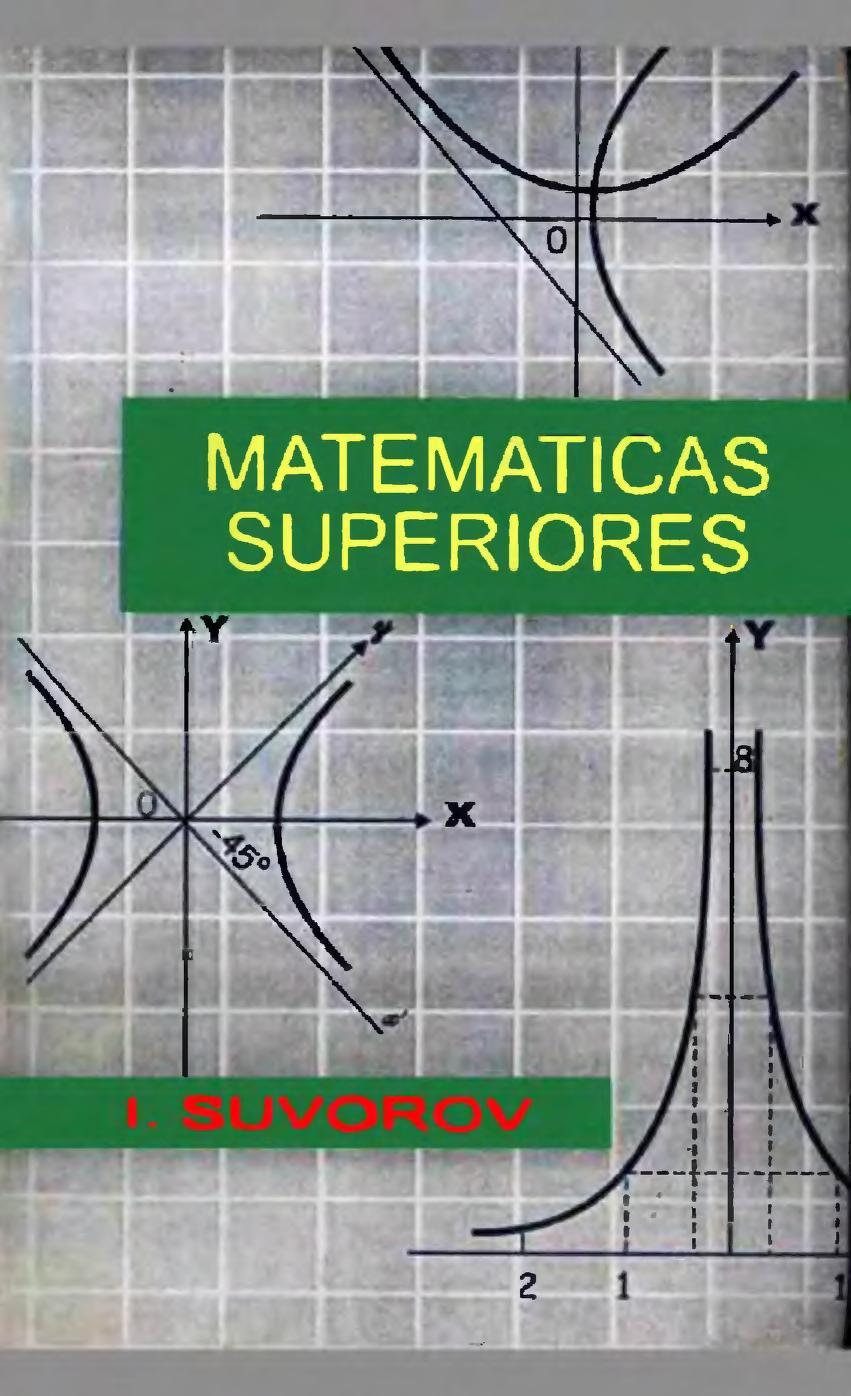
Analyse Mathématique par V. Ouvarov

Dans cet article, nous verrons le livre Analyse Mathématique par V. Ouvarov.

À propos du livre


Le présent ouvrage a son origine dans le cours oral donné par l’auteur à l’Université Lomonossov de Moscou aux étudiants de différentes spécialités : mathématiciens appliqués, ingénieurs, chimistes, économistes, psychologues, pédagogues, médecins, linguistes, et bien d’autres.

L’auteur s’est fixé pour objectif d’écrire un cours d’analyse mathématique à la fois rigoureux et complet. Pour atteindre ce but, il a revu la démonstration d’un grand nombre de théorèmes, modifié l’ordre traditionnel de l’exposé, réuni certaines sections (par exemple, les suites et les séries sont traitées simultanément dans un même chapitre), et adopté un ordre unique pour exposer des concepts similaires.

Adressant son ouvrage aux techniciens qui l’utiliseront dans leur travail quotidien, l’auteur a mis l’accent sur l’application des méthodes d’analyse mathématique au calcul approché. L’exposé est volontairement concis, rendant les exercices indispensables pour une meilleure assimilation du matériel. Le lecteur trouvera dans l’ouvrage de nombreux problèmes de caractère théorique et appliqué.

La lecture de ce cours n’exige pas de connaissances préliminaires plus amples que pour tout autre cours d’analyse mathématique. L’auteur espère ainsi toucher le plus large auditoire.

Traduit du russe par Lioudmila Vakhourkina
Un grand merci à Henri Leveque pour le scan original.

L’édition française a été publiée en 1988 par les éditions Mir.

Vous pouvez obtenir le livre ici.

(J’ai utilisé la traduction automatique, toutes mes excuses pour les erreurs.)
Suivez-nous sur Internet Archive: https://archive.org/details/@mirtitles
Suivez-Nous Sur Twitter: https://twitter.com/MirTitles
Écrivez-nous: mirtitles@gmail.com
Rejoignez-nous sur GitLab: https://gitlab.com/mirtitles/
Ajoutez de nouvelles entrées au catalogue de livres détaillé ici.


Posted in Éditions Mir | Tagged , , , , , , , , , , , | Leave a comment

Principes Numériques D’ Algèbre Linéaire par V. Voïvédine

Dans cet article, nous verrons le livre Principes Numériques D’ Algèbre Linéaire par V. Voïvédine.

À propos du livre


Début des années 1950. Les premières promotions des étudiants en analyse numérique voient s’ouvrir devant eux le monde passionnant de nouveaux problèmes encore jamais explorés. Puis, au lieu de cette perspective séduisante, une proposition insolite leur est faite : se consacrer à la rédaction des programmes susceptibles d’assurer le fonctionnement des calculatrices électroniques pour la résolution des problèmes d’algèbre linéaire. Cette proposition n’a pas inspiré un grand enthousiasme.

On comprend sans peine la raison. Nous avons été formés dans l’esprit des cours classiques de la faculté des Mathématiques. La présentation de l’algèbre linéaire était si claire, si nette, qu’il était impossible de mettre en doute la résolution totale de tous les problèmes principaux relatifs à ce domaine des mathématiques.


Traduit du russe par Valentin Polonski
Un grand merci à Henri Leveque pour le scan original.
L’édition française a été publiée en 1980 par les éditions Mir.

Vous pouvez obtenir le livre ici.

(J’ai utilisé la traduction automatique, toutes mes excuses pour les erreurs.)
Suivez-nous sur Internet Archive: https://archive.org/details/@mirtitles
Suivez-Nous Sur Twitter: https://twitter.com/MirTitles
Écrivez-nous: mirtitles@gmail.com
Rejoignez-nous sur GitLab: https://gitlab.com/mirtitles/
Ajoutez de nouvelles entrées au catalogue de livres détaillé ici.


Posted in Éditions Mir | Tagged , , , , | 1 Comment

Résistance Des Matériaux Problèmes Et Questions Choisis par V. Feodossiev

Dans cet article, nous verrons le livre Résistance Des Matériaux Problèmes Et Questions Choisis par V. Feodossiev.

À propos du livre

Le présent ouvrage n’est pas un recueil de problèmes dans le sens habituel du mot. Il contient des problèmes destinés non pas à des débutants, mais à des lecteurs se trouvant sur le point de terminer le cours de résistance des matériaux. Son dessein n’est pas de donner un exposé exhaustif de tout le cours, mais d’attirer l’attention du lecteur sur certains problèmes délicats qui sont souvent négligés dans le cours ordinaire ou qui échappent souvent à l’attention de l’étudiant, non seulement au cours de sa formation, mais encore au cours de son activité ultérieure. Le degré de difficulté des problèmes est également varié.


Traduit du russe par M. Segasayo
Un grand merci à Henri Leveque pour le scan original.

L’édition française a été publiée en 1977 par les éditions Mir.

Vous pouvez obtenir le livre ici.

(J’ai utilisé la traduction automatique, toutes mes excuses pour les erreurs.)
Suivez-nous sur Internet Archive: https://archive.org/details/@mirtitles
Suivez-Nous Sur Twitter: https://twitter.com/MirTitles
Écrivez-nous: mirtitles@gmail.com
Rejoignez-nous sur GitLab: https://gitlab.com/mirtitles/
Ajoutez de nouvelles entrées au catalogue de livres détaillé ici.


Posted in books | Tagged , | Leave a comment

Transformations Intégrales Et Calcul Opérationnel par V. Ditkine; A. Proudnikov

Dans cet article, nous verrons le livre Transformations Intégrales Et Calcul Opérationnel par V. Ditkine; A. Proudnikov.

À propos du livre

Les méthodes se rattachant aux transformations intégrales trouvent un vaste champ d’applications en analyse mathématique ces derniers temps. Elles ont été utilisées avec succès dans la résolution d’équations différentielles et intégrales, dans l’étude des fonctions spéciales et le calcul d’intégrales. L’avantage de ces méthodes réside dans le fait qu’elles permettent de construire des tables des transformations directes et inverses des diverses fonctions rencontrées dans les applications.

Dans cet ouvrage, on considère les transformations intégrales les plus répandues. Une première partie de cinq chapitres est consacrée aux principes de la théorie. Le premier chapitre expose des éléments de théorie des transformations de Fourier et certaines de leurs applications. Le second chapitre, qui est le plus important et le plus long, traite de la transformation de Laplace, ainsi que de celle de Mellin. Le troisième chapitre a pour objet la transformation intégrale de Bessel, ou plus précisément les transformations intégrales ayant une fonction de Bessel pour noyau : les transformations de Hankel, Meijer, et Kontorovitch-Lébédev. Dans le chapitre quatre, les auteurs passent brièvement en revue d’autres transformations intégrales. Le cinquième chapitre est réservé aux principes de la théorie du calcul opérationnel.

Traduit du russe par Djilali Embarek
L’édition française a été publiée en 1978 par les éditions Mir.

Un grand merci à Henri Leveque pour le scan original.
Vous pouvez obtenir le livre ici.

(J’ai utilisé la traduction automatique, toutes mes excuses pour les erreurs.)
Suivez-nous sur Internet Archive: https://archive.org/details/@mirtitles
Suivez-Nous Sur Twitter: https://twitter.com/MirTitles
Écrivez-nous: mirtitles@gmail.com
Rejoignez-nous sur GitLab: https://gitlab.com/mirtitles/
Ajoutez de nouvelles entrées au catalogue de livres détaillé ici.

.
Posted in books | Tagged , , , , , , , | Leave a comment

Geometric Transformations 2 by I. M. Yaglom

In this post, we will see the book Geometric Transformations 2 by I. M. Yaglom.

About the book

This volume is Part II of “Geometric Transformations” by I. M. Yaglom, following the previously published Part I. The original Russian edition (1955) combined Parts I and II, while Part III was a separate volume. An English translation of Part III is forthcoming. This book is not an introduction to plane geometry; it assumes the reader has some prior knowledge and focuses on similar figures and transformations that preserve similarity.

Part II contains 83 problems, central to the book, which readers should attempt before consulting the provided solutions. The English edition renumbers the problems for clarity, with a chart included to compare with the original Russian numbering.

This work explores elementary geometry, emphasizing two foundational ideas: the deductive method and geometric transformations with their group-theoretic basis. These ideas are pivotal for advancing into non-Euclidean geometry. The book aims for simplicity and clarity, avoiding rigorous definitions and complex terminology to aid less experienced readers, though this sacrifices some precision for well-prepared readers.

Problems throughout the book help readers test their understanding, focusing on methods rather than results. Readers are encouraged to solve at least one problem from each group and then study the solutions. The book includes many construction problems, valued for their logical interest rather than practical execution.

You can get the book here.
Follow us on The Internet Archive: https://archive.org/details/@mirtitles
Follow Us On Twitter: https://twitter.com/MirTitles
Write to us: mirtitles@gmail.com
Fork us at GitLab: https://gitlab.com/mirtitles/
Add new entries to the detailed book catalog here.


Posted in books | Tagged , , , , , , , | Leave a comment

Geometric Transformations 1 by I. M. Yaglom

In this post, we will see the book Geometric Transformations 1 by I. M. Yaglom.

About the book

This book, part of the New Mathematical Library series, aims to make key mathematical concepts accessible to high school students and general readers. These volumes often cover topics outside the standard high school curriculum, varying in difficulty. Readers may need to focus more on certain sections but generally require minimal technical knowledge.

Mathematical books can’t be read quickly or fully understood on the first pass. Readers should feel free to skip and return to complex parts. Learning mathematics effectively involves solving problems, so readers are encouraged to engage actively with the material using paper and pencil.

This work focuses on elementary geometry, exploring significant ideas like the deductive method and geometric transformations, which lead to non-Euclidean geometry. The book prioritizes simplicity and clarity over rigor, avoiding complex definitions and terms to aid understanding.

Problems in the book test comprehension and encourage practice. Readers should attempt at least one problem from each group, consulting provided solutions. The book emphasizes methods over results, using problems to illustrate concepts rather than focusing on three-dimensional propositions, keeping the primary ideas intact.

You can get the book here.
Follow us on The Internet Archive: https://archive.org/details/@mirtitles
Follow Us On Twitter: https://twitter.com/MirTitles
Write to us: mirtitles@gmail.com
Fork us at GitLab: https://gitlab.com/mirtitles/
Add new entries to the detailed book catalog here.


Posted in books | Tagged , , , , , , , , | Leave a comment

Geometric Transformations Volume 1 Euclidean And Affine Transformations by P.S. Modenov; A.S. Parkhomenko

In this post, we will see the book Geometric Transformations Volume 1 Euclidean And Affine Transformations by P.S. Modenov; A.S. Parkhomenko.

About the book

This is the first volume of a two-volume translation of the Russian book Geometric Transformations, by Modenov and Parkhomenko. This volume embraces Chapters I—IV; Vol­ume 2 (Projective Transformations) contains the translation of the original Chapters V and VI.
The treatment is elementary, and should be accessible to the high school senior. The prerequisites amount to some famil­ iarity with Euclidean geometry, including the use of coordi­ nates, elementary trigonometry, and linear equations (up to determinants). A little knowledge of vectors and conics might also be helpful. However, the material covered or referred to ranges much further, and should be of interest to a very broad spectrum of readers, from high school senior to college teacher.
This book is not designed to be a standard text. As will be seen from the introduction, the material covered is not usually included in the curriculum, and its style is more suitable for browsing than for systematic class study. The purpose of the book is rather to introduce the reader to a fascinating and not at all difficult area of geometry, at the same time acquainting him painlessly with some of the simpler methods and concepts of advanced mathematics. Since the topic is one for which everyone will have some intuitive feeling, and the exposition is consistently straightforward, there is no danger that the reader will find himself suddenly out of his depth.
This book is intended for use in geometry seminars in universities and teacher-training colleges. It may also be used as supplementary reading by high school teachers who wish to extend their range of knowledge. Finally, many sections may be used as source material for school mathematics clubs under the guidance of a teacher.
The subject matter is those transformations of the plane that preserve the fundamental figures of geometry: straight lines and circles. In particular, we discuss orthogonal, affine, pro­ jective, and similarity transformations, and inversions.
The treatment is elementary, though in a number of in­ stances (where a synthetic treatment seems more cumbersome) coordinate methods are used. A little use is also made of vec­ tor algebra, but the text here is self-contained.
In order to clarify a number of points, we give some elemen­ tary facts from projective geometry; also, in the addendum to Chapter I of Volume 2 (the topology of the projective plane), the structure of the projective plane is examined in greater detail.

You can get the book here.
Follow us on The Internet Archive: https://archive.org/details/@mirtitles
Follow Us On Twitter: https://twitter.com/MirTitles
Write to us: mirtitles@gmail.com
Fork us at GitLab: https://gitlab.com/mirtitles/
Add new entries to the detailed book catalog here.


Posted in books | Tagged , , , , , , | Leave a comment

Geometric Transformations Volume 2 Projective Transformations by P.S. Modenov; A.S. Parkhomenko

In this post, we will see the book Geometric Transformations Volume 2 Projective Transformations by P.S. Modenov; A.S. Parkhomenko.

About the book

This book is intended for use in geometry seminars at universities and teacher-training colleges. It may also serve as supplementary reading for high school teachers seeking to extend their knowledge. Additionally, many sections can be used as source material for school mathematics clubs under a teacher’s guidance.

The subject matter covers transformations of the plane that preserve fundamental geometric figures: straight lines and circles. Specifically, it discusses orthogonal, affine, projective, and similarity transformations, as well as inversions. The treatment is elementary, though coordinate methods are used where a synthetic approach is more cumbersome. A little vector algebra is also employed, but the text is self-contained.

This is the second volume of a two-volume translation of the Russian book *Geometric Transformations* by Modenov and Parkhomenko. It contains translations of Chapters V (with Appendix) and VI of the original, presented here as Chapters I and II, respectively.

The greater portion of this volume focuses on projective transformations, which are collinearity-preserving transformations of the projective plane. Many mappings of the ordinary plane that preserve collinearity are best understood as defined on an extended object called the projective plane. Notably, the affine transformations discussed in Chapter IV of the first volume (*Euclidean and Affine Transformations*) are conveniently regarded as projective transformations that fix the ideal line.

Chapter I begins with the motivation for constructing the projective plane, followed by various alternative constructions. It then proves most of the basic facts and outlines some applications. Chapter II addresses an independent topic at the same level of sophistication. However, the appendices to Chapter I introduce more advanced concepts without detailed motivation or treatment. Readers who are unprepared should not hesitate to read through them, absorbing what they can and taking the rest on faith. These sections provide glimpses into the methods and concerns of modern geometry and algebra.

Overall, this book is probably suitable for undergraduate readers. However, interest and ability are more important for benefiting from it than the quantity of previous knowledge.

You can get the book here.
Follow us on The Internet Archive: https://archive.org/details/@mirtitles
Follow Us On Twitter: https://twitter.com/MirTitles
Write to us: mirtitles@gmail.com
Fork us at GitLab: https://gitlab.com/mirtitles/
Add new entries to the detailed book catalog here.


Posted in books | Tagged , , , , , , , , | Leave a comment

Mathematical Aspects Of The Three Body Problem In The Quantum Scattering Theory by L. D. Faddeev

In this post, we will see the book Mathematical Aspects Of The Three Body Problem In The Quantum Scattering Theory by L. D. Faddeev.

About the book

The book consists of eleven sections and four appendices. In § 1 the operators in question are rigorously defined in Hilbert space, i. e. , their domain of definition is specified and their self-adjointness proved. Here are also formulated the basic conditions imposed on the potentials which in the rest of the book are tacitly assumed to be fulfilled. §§ 2 and 4, and §§ 3, 5, 6, 7, respectively, deal with the resolvents of energy operators for two and three bodies; the resolvents are expressed in term s of integral operators, and integral equations are set up and investigated in order to derive estimates for the kernels and examine their singularities in the variable z near the real axis. The obtained results are applied in §§ 8 and 9 to the proof of eigenfunction expansion theorems, and in §§10 and 11 to the time- dependent formulation of the scattering problem and the construction of the scattering operator. Appendix I gives the derivation of some properties of functions which satisfy the Holder condition, and of singular integrals containing these functions. Appendices II and III give proofs of estimates of some integrals applied in the text. Appendix IV contains remarks and references to the literature which are not mentioned in the main text.

This book is a translation of
MATEMATICHESKIE VOPROSY KVANTOVOI TEORII RASSEYANIYA
DLYA SISTEMY TREKH CHASTITS In: Trudy Matematicheskogo Instituta
imeni V. A. Steklova. LXIX
Izdatel’stvo Akademii Nauk SSSR Moskva-Leningrad
1963

You can get the book here.
Follow us on The Internet Archive: https://archive.org/details/@mirtitles
Follow Us On Twitter: https://twitter.com/MirTitles
Write to us: mirtitles@gmail.com
Fork us at GitLab: https://gitlab.com/mirtitles/
Add new entries to the detailed book catalog here.


Posted in books | Tagged , , , , , , , | Leave a comment